What element is formed in stars?
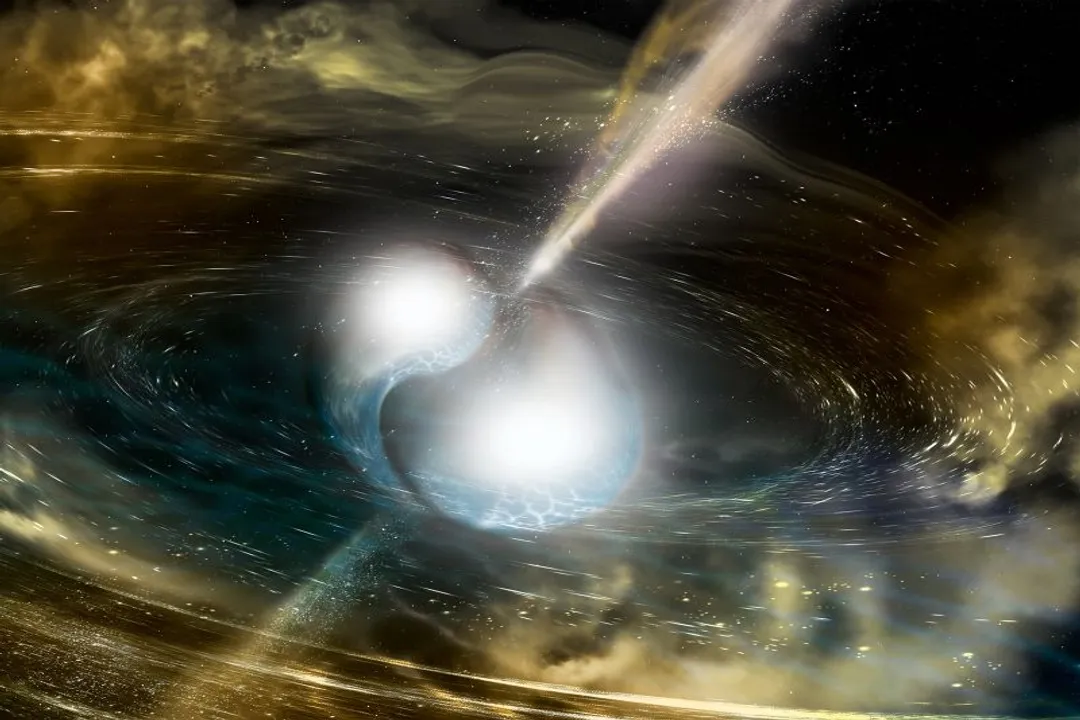
The universe is a cosmic recycling plant, and stars are the furnaces where the raw material—mostly simple hydrogen—is cooked into everything else we see, from the carbon in our bodies to the iron in our blood. Nearly every atom not created in the first few moments of the Big Bang was forged within the extreme conditions found inside a star over billions of years. [4][9] This entire process, the creation of new atomic nuclei from pre-existing ones, is known as stellar nucleosynthesis. [1][6]
# Initial Composition
When we look up at the night sky, we are looking at immense balls of plasma, primarily composed of the two lightest elements: hydrogen and helium. [3][7] A typical star, like our own Sun, is predominantly hydrogen, often making up about three-quarters of its mass, with helium constituting nearly a quarter. [7][8] The remaining small percentage accounts for everything else, from trace amounts of heavier elements present in the star's initial cloud of formation to the slightly higher concentrations of these heavier elements created during the star’s long life. [8] The existence of these trace heavier elements—sometimes referred to by astronomers as "metals"—is critical, as they are the seeds for the next generation of stars and planets. [8]
# Hydrogen Burning
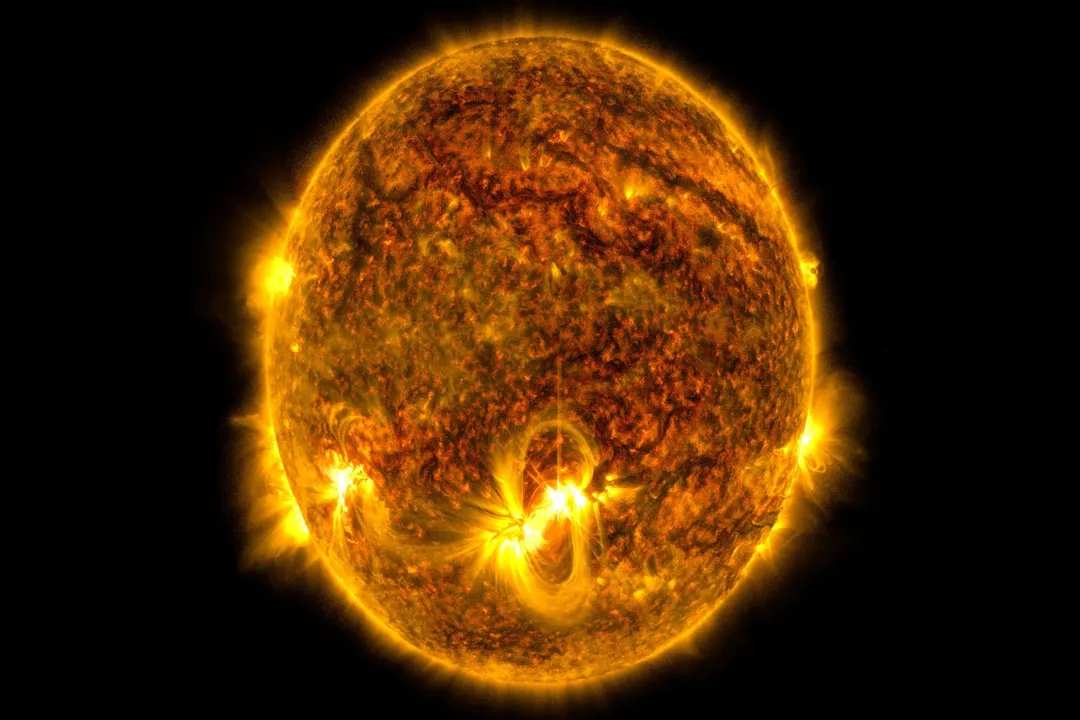
The engine that powers a star and drives element formation is nuclear fusion, which occurs in the star's intensely hot and dense core. [5] For the majority of a star's active life, known as the main sequence phase, the star's energy comes from converting hydrogen into helium. [1][5] This reaction typically proceeds through the proton-proton chain or the CNO cycle, depending on the star's mass. [1] During this prolonged phase, the sheer gravitational pressure creates temperatures high enough (around million Kelvin for the Sun) to overcome the electrostatic repulsion between atomic nuclei, allowing them to fuse. [5] This conversion releases tremendous amounts of energy, creating the outward pressure that balances the inward crush of gravity, keeping the star stable. [3] While this process creates helium, it does not immediately produce elements heavier than helium; it simply burns the available hydrogen fuel. [1]
# Core Evolution
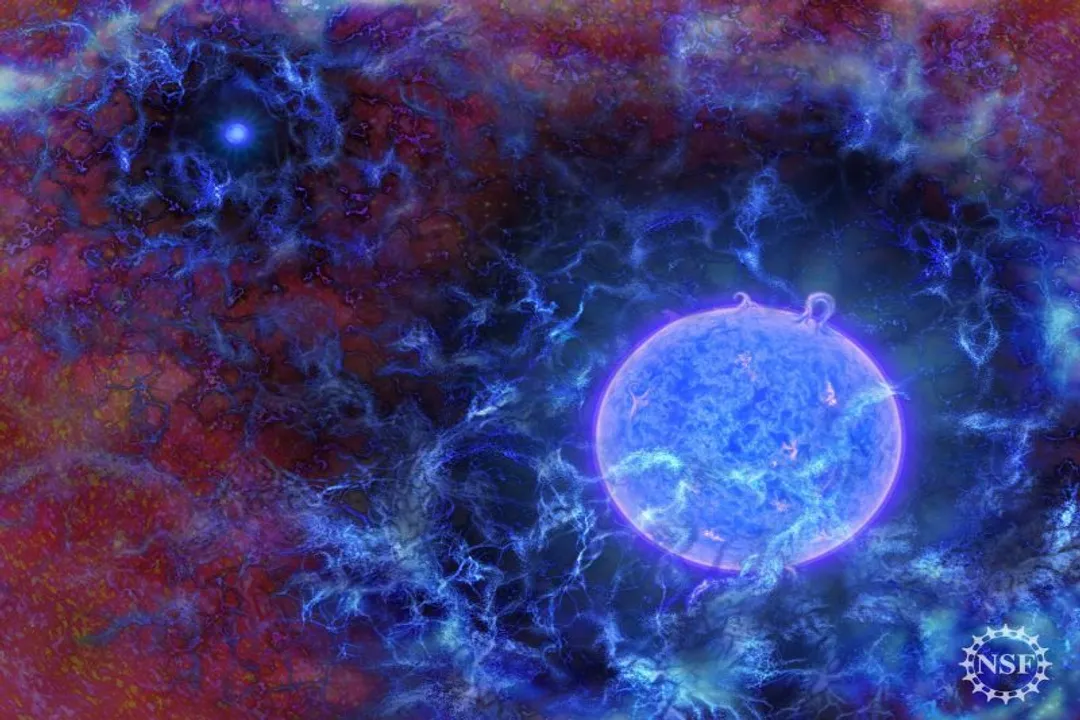
What happens next depends entirely on how massive the star is. [3] For a star like the Sun, once the hydrogen fuel in the core is exhausted, the core contracts and heats up until the helium itself can begin to fuse. This marks the transition into a giant phase. [1]
# Helium Fusion
When the core reaches approximately million Kelvin, helium nuclei, or alpha particles, can fuse together in a process called the triple-alpha process. [1] In this reaction, three helium nuclei combine to form a single nucleus of carbon (). [1] Carbon can then capture another helium nucleus to create oxygen (). [1] In stars of modest mass, like our Sun, this is often the final major stage of nucleosynthesis before the star sheds its outer layers. [5] The elements formed in these stages—carbon and oxygen—are absolutely fundamental to life as we know it. [4] We can trace the oxygen we breathe and the carbon backbone of organic molecules directly back to these quiescent fusion cycles in ancient, sun-like stars. [2]
# Massive Star Stages
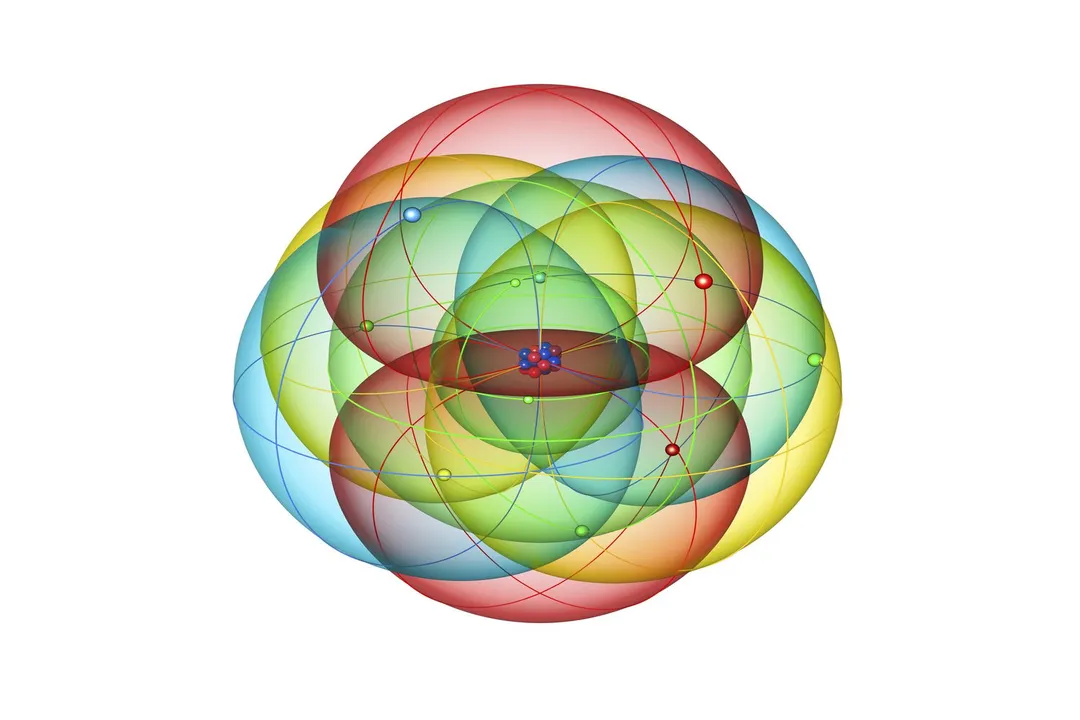
Stars significantly more massive than the Sun, perhaps eight times the mass of our Sun or more, have cores hot enough and dense enough to continue the fusion process long after carbon and oxygen are formed. [3][5] As these massive stars evolve, they develop an "onion-skin" structure, with layers fusing different elements simultaneously around the core. [1]
# Shell Burning
The star fuses carbon into heavier elements such as neon (), magnesium (), silicon (), and sulfur () in successive burning shells. [1][5] Each subsequent stage requires higher temperatures and pressures, meaning each fuel-burning phase lasts for a shorter duration than the one before it. [1] This layered structure leads to the creation of elements up to iron (). [5] The process builds up the atomic nuclei one step at a time—carbon fusing to form heavier elements, which then act as the fuel for the next, hotter reaction. [6]

# The Iron Limit
The progression of fusion, building elements up the periodic table one by one, abruptly halts at iron. [1][10] Iron has the most stable nucleus of all the elements. [5][10] When two lighter nuclei fuse to create iron, the process does not release energy; instead, it consumes energy from the surrounding plasma. [1][5][10] Once the core is dominated by iron, the energy source that supports the star against its own gravity suddenly vanishes. [1] This leads to the catastrophic collapse of the core in a fraction of a second, triggering a Type II supernova explosion. [1][5]
It is interesting to consider the efficiency of this process. A star might spend billions of years fusing hydrogen, only to spend its final few days assembling that iron core. For instance, the silicon-burning phase, which creates elements just shy of iron, might only last a day or two, while the final assembly of iron itself might conclude in just one week in a very massive star. [1] This dramatic energy drain is the physical switch that dictates the death of the star and the creation of the heaviest elements. [10]
If we chart the energy released versus the resulting element, we see a clear peak at iron. This means that forcing iron nuclei together requires an energy input, unlike fusing hydrogen or helium, which provide an energy output. [10] This fact underpins why nature cannot fashion gold or uranium through simple, slow core fusion. [1]
# Supernova Creation
The incredible violence of a core-collapse supernova is the only mechanism energetic enough to forge elements heavier than iron, and it does so through a rapid capture of neutrons. [1][5]
# Rapid Capture
During the final moments of the core collapse, the immense pressure and temperatures result in a flood of neutrons. [1] The r-process (rapid neutron-capture process) occurs here, where atomic nuclei are bombarded with neutrons so quickly that they capture many neutrons before they have time to radioactively decay. [1][5] This allows for the creation of extremely heavy, neutron-rich isotopes, which then decay into the stable, heavy elements we observe, such as gold (), platinum (), and uranium (). [1][5] Without the supernova's explosive environment, these elements simply wouldn't exist in any significant quantity in the universe. [9]
# Slow Capture
While the supernova handles the truly heavy hitters, many elements between iron and bismuth are formed through the s-process (slow neutron-capture process). [1] This process happens over longer timescales, often in the late stages of less massive stars, like asymptotic giant branch stars. [1] Here, neutrons are captured slowly enough that the resulting unstable isotopes have time to undergo beta decay into stable elements before capturing another neutron. [1] This accounts for elements like strontium () and barium (). [1]
It’s quite a contrast: the quiet, prolonged burning in a red giant creates intermediate elements, while the most violent event in the cosmos—a supernova—is required for the truly heavy ones. [1][5]
# Stellar Offspring
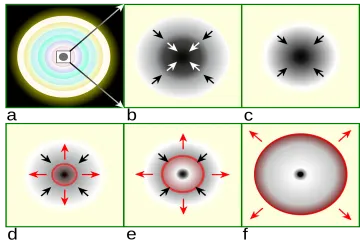
The elements created in a star's lifetime—from the helium built in Main Sequence stars to the iron built in massive cores—are eventually returned to the interstellar medium. For smaller stars, this happens gradually as they puff off their outer layers to form planetary nebulae. [5] For massive stars, it happens spectacularly via the supernova explosion, which blasts the newly synthesized materials across vast distances. [1][5]
This enriched gas then mixes with existing interstellar clouds, forming the next generation of stars, planets, and, eventually, living things. [4][9] Every atom of carbon, oxygen, or iron in your body—and indeed, in the Earth beneath your feet—was once part of an ancient star that lived and died. [2] Thinking about our own Sun, while it is currently fusing hydrogen to helium, it is not massive enough to ever create elements heavier than oxygen or carbon in its core, though later stages of its evolution might allow for limited shell burning. [1][5] The solar system owes its heavier materials, like the silicon in rocks or the iron in the core, to previous, much larger stars that expired long ago. [9]
To better appreciate the scale of creation, one can visualize the general path of nucleosynthesis based on stellar mass, noting that while hydrogen and helium are primordial, everything else is stellar:
| Element Group | Primary Origin Process | Typical Stellar Location |
|---|---|---|
| Helium () | Fusion (Proton-Proton/CNO) | Main Sequence Core |
| Carbon (), Oxygen () | Triple-Alpha Process | Evolved Giant Cores |
| Neon () through Iron () | Sequential Shell Burning | Massive Star Cores |
| Elements heavier than | Neutron Capture (-process, -process) | Supernova Explosions |
| [1][5] |
This progression highlights an important, non-obvious point: the lifetime of a star dictates the type of element it can contribute to the universe. A star like the Sun will only enrich the cosmos with a bit more helium and perhaps some very light and from its outer layers later on, whereas a star times the Sun's mass is the direct factory for nearly all the heavy elements found in terrestrial planets. [3] When you hear about "star stuff," remember that the type of star matters tremendously for the specific ingredients being mixed into the cosmic batter. [9] The sheer abundance of carbon and oxygen across the universe is a testament to the long, stable lives of medium-sized stars, whereas the rare elements like gold are markers of extreme, short-lived stellar deaths. [1][2]
Related Questions
#Citations
Stellar nucleosynthesis - Wikipedia
The stars within us | NSF - U.S. National Science Foundation
Star Basics - NASA Science
The Elements: Forged in Stars | PBS LearningMedia
Honest question: if Iron is the heaviest element created in stars, how ...
Stellar Nucleosynthesis: How Stars Make All of the Elements
How elements are formed - Science Learning Hub
What are stars made of? - Cool Cosmos - Caltech
Star - Fusion, Nucleosynthesis, Elements - Britannica
Stellar Evolution - Chandra X-ray Observatory