What elements are stars made of?
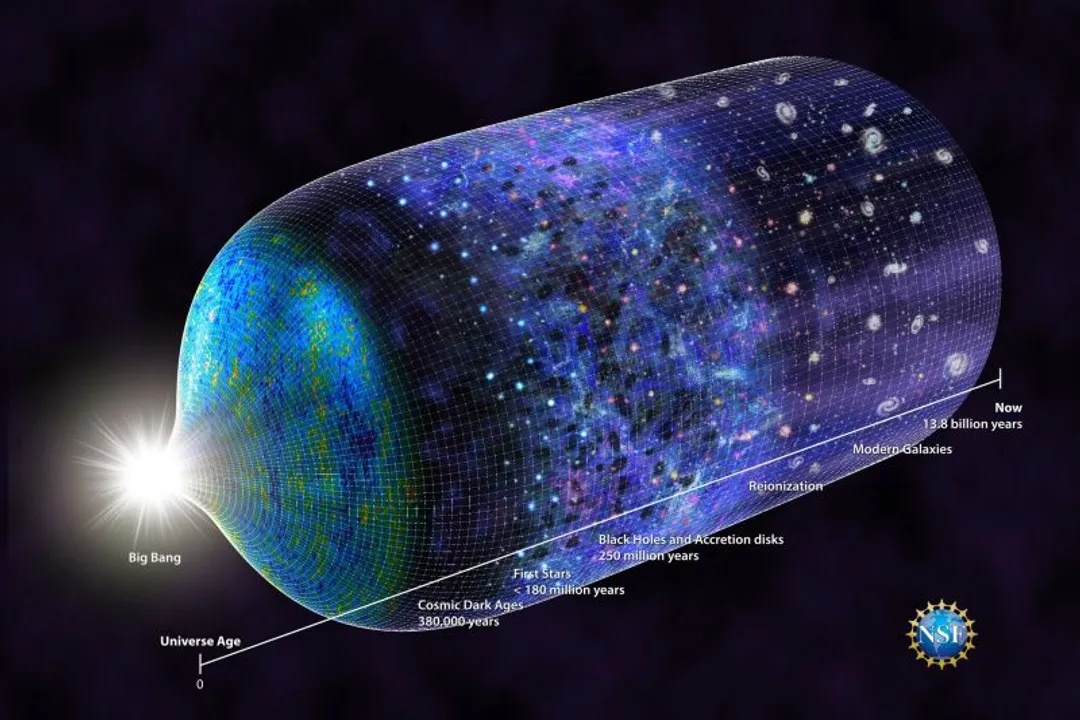
The vast majority of what we see twinkling in the night sky—the light that has traveled for years, decades, or millennia to reach our eyes—is made of just two elements: hydrogen and helium. These elements form the fundamental building blocks of nearly every star in the universe, from the smallest red dwarfs to the most massive blue giants. For an object to truly be classified as a star, it must generate its own energy through nuclear fusion happening deep within its core, and that process almost exclusively begins with hydrogen.
# Elemental Majority
To put the composition into perspective, look at our own Sun, which serves as a typical example. If you could somehow weigh all the material that makes up our star, you would find that roughly seventy-five percent of its mass is hydrogen, and about twenty-four percent is helium. This leaves barely one percent—the remainder—to account for everything else: oxygen, carbon, neon, iron, and all the other known elements on the periodic table.
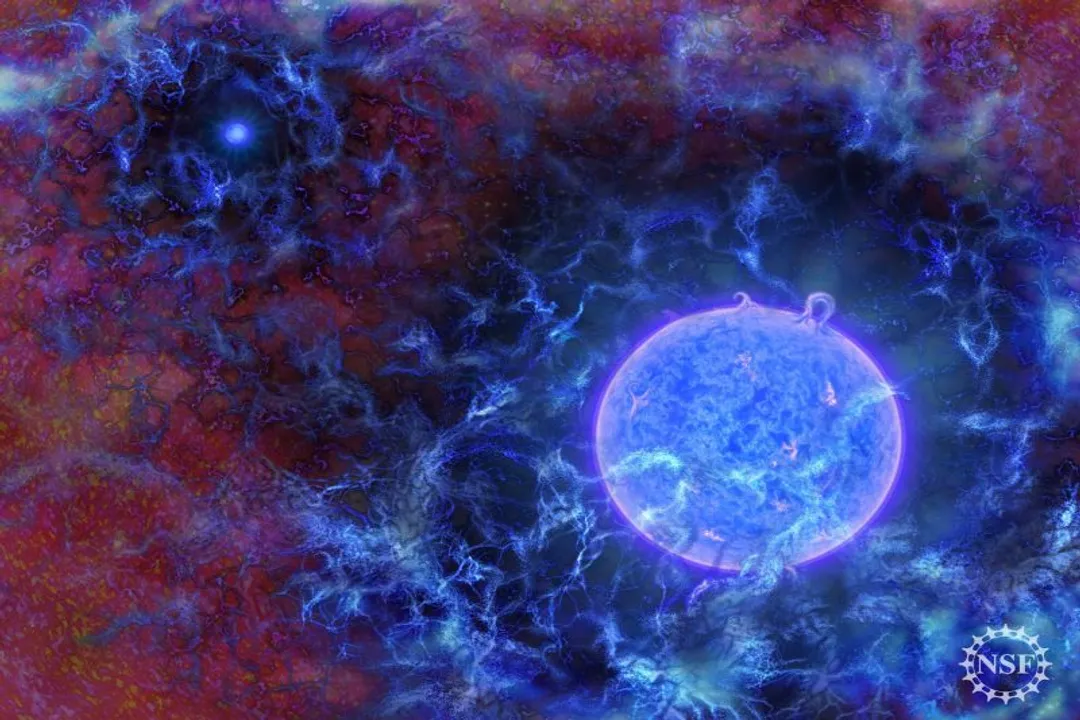
The reason for this overwhelming dominance of the two lightest elements stems directly from the conditions of the early universe and the physics of stellar birth. When the first stars formed, the universe itself was primarily composed of hydrogen and helium, which were created during the Big Bang. Stars are born from massive clouds of gas and dust—nebulae—where gravity causes these raw materials to collapse. Since hydrogen is the most abundant element available in these stellar nurseries, it naturally becomes the primary fuel source. Helium, the second most abundant, is generally the direct product of hydrogen fusion, meaning it accumulates as the star ages. Other elements, often collectively referred to by astronomers as "metals" (though this includes non-metals like oxygen), only exist in trace amounts initially.
If we were to look at the chemical makeup of a very young star, one that has just begun its life and hasn't spent much time fusing elements, the H/He ratio would be even more pronounced. It’s an interesting thought experiment: if the Sun contained only one percent of these heavier elements, and the Earth is largely composed of elements that make up that tiny fraction, imagine the sheer density of the materials that formed our planet compared to the diffuse nature of the star's bulk. This small percentage is incredibly significant for planetary formation and life itself.
# Stellar Forging
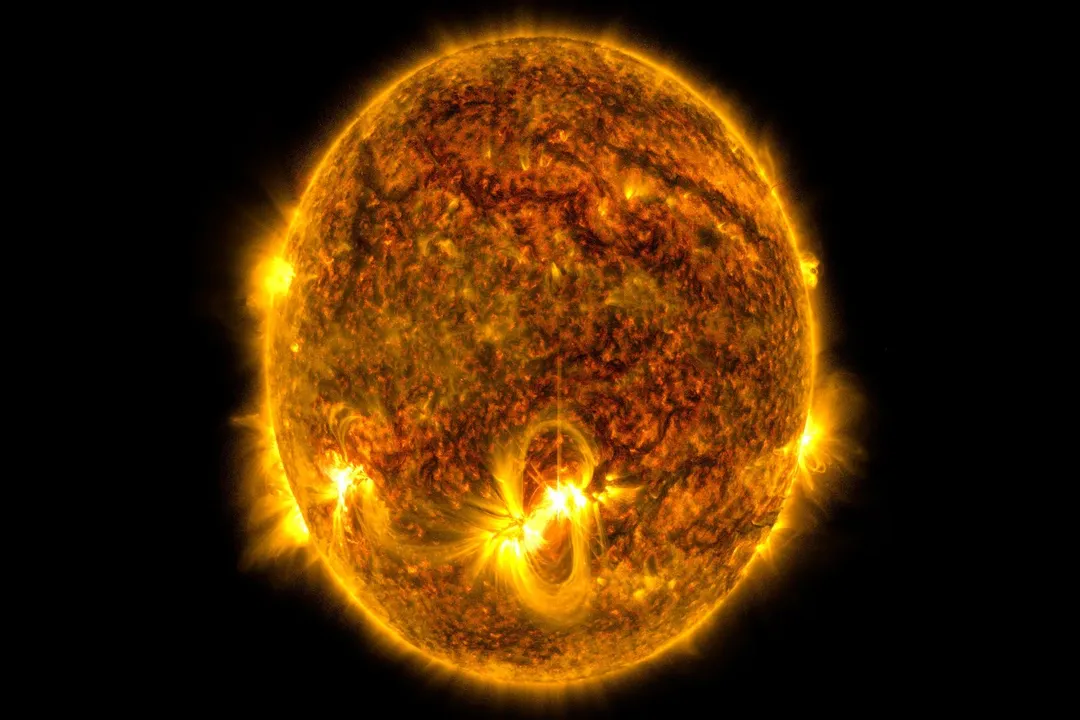
While hydrogen and helium start the show, the real chemical excitement happens inside the star over millions or billions of years. The intense heat and pressure generated by gravity contracting the stellar material create the conditions necessary for nuclear fusion. In the core of a star like the Sun, hydrogen nuclei fuse together to form helium. Once the core hydrogen is depleted, the core contracts further, heats up more, and fusion can begin on heavier elements.
As a star ages and its mass dictates its ultimate fate, it begins to fuse helium into carbon, and subsequently, carbon can fuse into elements like oxygen and neon. For stars significantly more massive than the Sun, this process continues, creating increasingly heavy elements right up to iron. Iron is a critical turning point; fusing iron consumes energy rather than releasing it, which halts the outward pressure supporting the star and often leads to a catastrophic collapse.
This creation of elements through fusion is the ultimate source of nearly every atom necessary for complex chemistry, geology, and biology. The elements we find in rocks, water, and our own bodies—the carbon in our DNA, the oxygen we breathe, the calcium in our bones—were not present in the primordial cloud; they were forged in the nuclear furnaces of long-dead stars.
# Creating Heavyweights
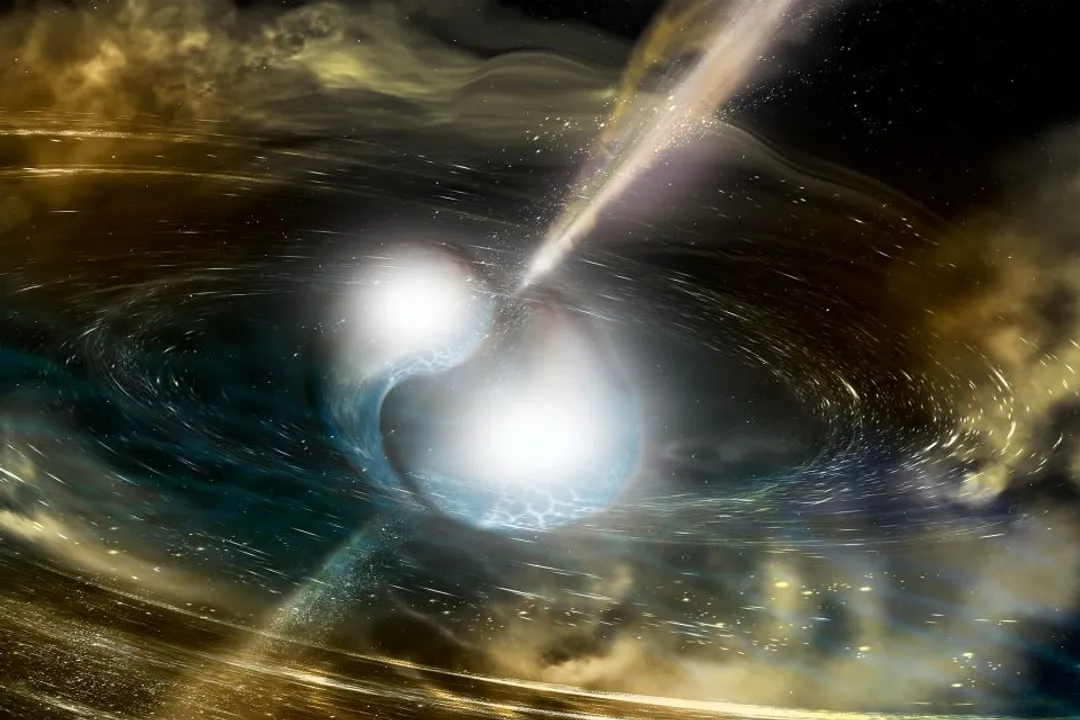
Elements heavier than iron, such as gold, silver, and uranium, require even more extreme energy events than standard core fusion to create. These elements are typically synthesized during explosive events, most notably supernovae, which are the violent deaths of massive stars. During the rapid neutron capture process that occurs in these explosions, atomic nuclei rapidly absorb neutrons, transforming them into these very heavy, stable elements. It’s a fascinating realization that the gold in a piece of jewelry or the platinum in a circuit board owes its existence to the death of a star billions of years ago, long before our solar system even formed. The sheer violence of these cosmic explosions is what is needed to overcome the energy barrier required to manufacture these rarest materials.
# Observing Abundance
Astronomers don't need to dissect a star to figure out its composition; they analyze the light it emits. When light passes through the cooler outer layers of a star, specific wavelengths are absorbed by the atoms present there, creating dark lines in the star's spectrum. By analyzing which wavelengths are missing, scientists can determine the star's elemental makeup. This technique allows for the measurement of elemental abundances across various stellar populations.
Generally, the older the star, the lower its proportion of "metals" (elements heavier than helium). Stars born early in the universe, sometimes called Population II stars, have very low metallicity, sometimes less than one percent of the Sun's metallicity, because there hadn't been many cycles of stellar birth, death, and recycling yet. Our Sun is considered a Population I star, meaning it is relatively young in cosmic terms, having formed from gas clouds enriched by the deaths of previous generations of stars.
If you were to look at a stellar population near the center of a galaxy, you might notice that the average metallicity is higher than in the more distant outer regions. This stratification occurs because successive generations of stars in the galactic core have had more opportunities to enrich the surrounding gas clouds with newly synthesized heavy elements through stellar winds and supernovae.
# Contextualizing Trace Elements
It can be difficult for a layperson to grasp how significant the difference is between one percent and, say, half a percent in the context of an object as massive as the Sun. Consider that the Sun's total mass is about kilograms. If the non-H/He fraction is indeed only 1-2%, that still represents an incomprehensibly large amount of matter composed of elements like carbon and oxygen. If we take the lower estimate of 1% of , that's of "heavy" material. To put that into a terrestrial frame of reference, that mass of heavy elements alone is roughly 330 times the total mass of the planet Earth! This sheer volume, distributed throughout the star, highlights how even a tiny percentage represents an enormous reservoir of complex atoms that fuel the development of planets.
# The Stellar Legacy
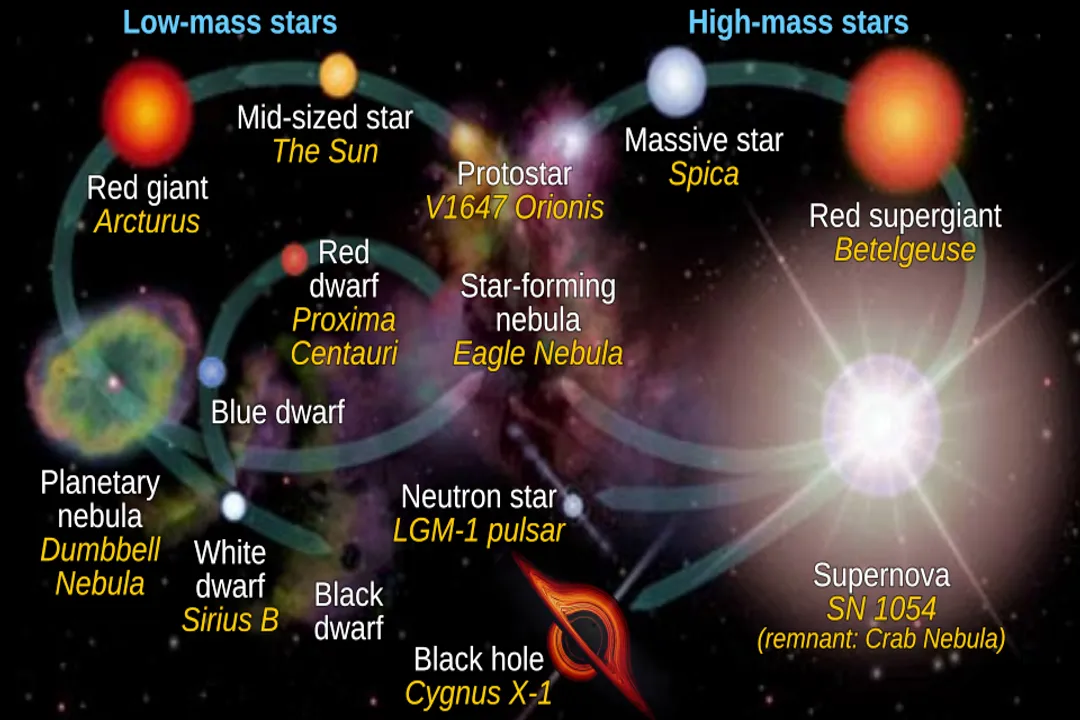
The entire narrative of stellar chemistry is one of recycling and transformation. Stars are not static entities; they are factories that process the most fundamental ingredients into the building blocks of everything we know. When a star dies, either gently through the shedding of its outer layers or violently in a supernova, it spews these newly created elements back into the interstellar medium. This enriched gas mixes with existing clouds, seeding the next generation of stars and planetary systems with the necessary materials for rocky worlds and, eventually, life.
For instance, the formation of Earth required a cloud already rich in silicates (formed from oxygen and silicon, forged in stars) and iron (formed in massive stars or supernovae). Every breath you take, every cup of coffee you drink, is a testament to this long, violent, and beautiful cosmic cycle.
As you look up tonight, remember that the light from a star might tell you its age based on its elemental signature, specifically its metal content. A star showing strong absorption lines for iron and silicon is one that has benefited from multiple cycles of stellar recycling, indicating it belongs to a relatively younger generation of stars in its region of the galaxy. Conversely, a star whose spectrum shows almost nothing but hydrogen and helium lines is a true celestial elder, reflecting the composition of the early universe. Understanding the elemental breakdown is key to understanding the star's past and its future energy output.
# Decoding the Spectrum
A practical takeaway for anyone interested in astrophysics is that learning to recognize the basic spectral types indirectly teaches you about composition. While you won't be doing the math yourself, knowing that spectral analysis relies on absorption lines means that any study or image that highlights a star's spectrum—even an artistic rendering of one—is demonstrating the physical proof of its elemental makeup. If you ever see a simplified chart showing different colored stars with corresponding black lines across their light, that's the fingerprint of chemistry in action. This foundational method, spectroscopy, is one of the most powerful tools we have for remote cosmic analysis, allowing us to determine temperature, velocity, and, critically, composition without ever leaving our solar system.
Related Questions
#Citations
Star Basics - NASA Science
What are stars made of? - Cool Cosmos - Caltech
Star - Wikipedia
What Are Stars Made Of? - Layers of the Sun and More at Little ...
The stars within us | NSF - U.S. National Science Foundation
The Elements: Forged in Stars | PBS LearningMedia
Why are stars made from hydrogen and helium and not other ...
Elemental Abundances | Center for Astrophysics | Harvard ...
If elements (gold for example) are made in stars, what is the physical ...
You are literally made of stars. Here's the science. Every atom in ...