What element is fused in the core of a star?
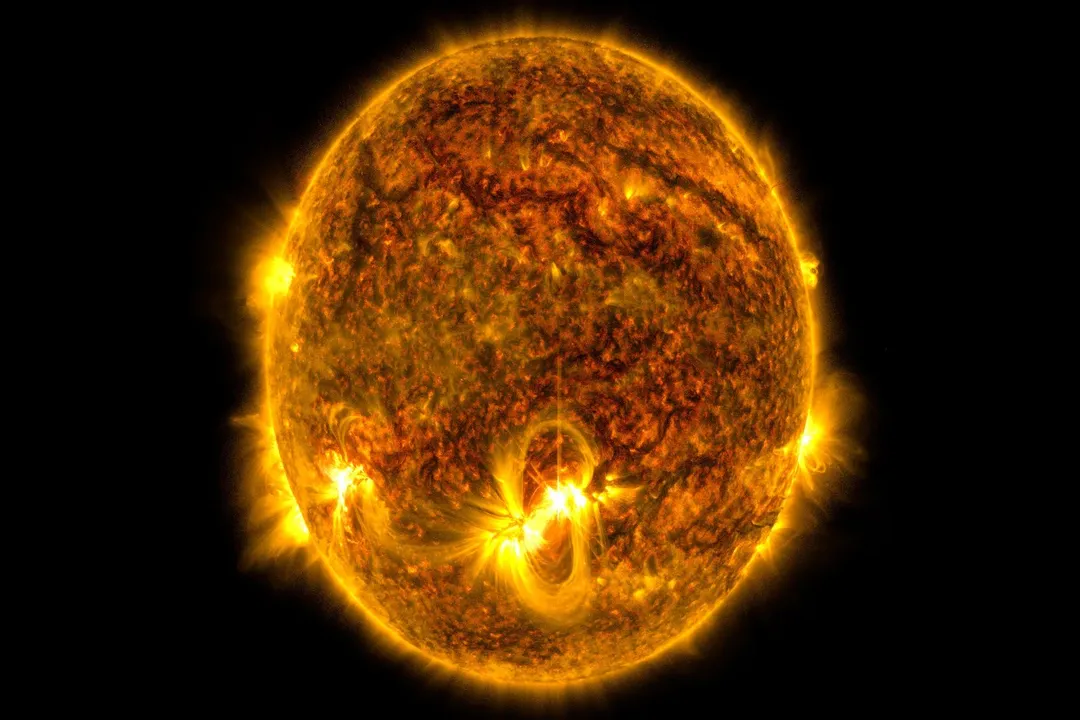
The engine driving a star's brilliance and keeping it from collapsing under its own immense gravity is a process called nuclear fusion, which occurs deep within its incredibly hot and dense core. [2][5] This fusion is not a singular event but a series of reactions that transmute lighter atomic nuclei into heavier ones, releasing vast amounts of energy in the process. [1][7] In essence, the element fused in the core changes depending on the star's life stage and, most significantly, its initial mass. For the vast majority of a star's life, the primary element being fused is hydrogen, transforming it into helium. [4][6]
# Stellar Ignition
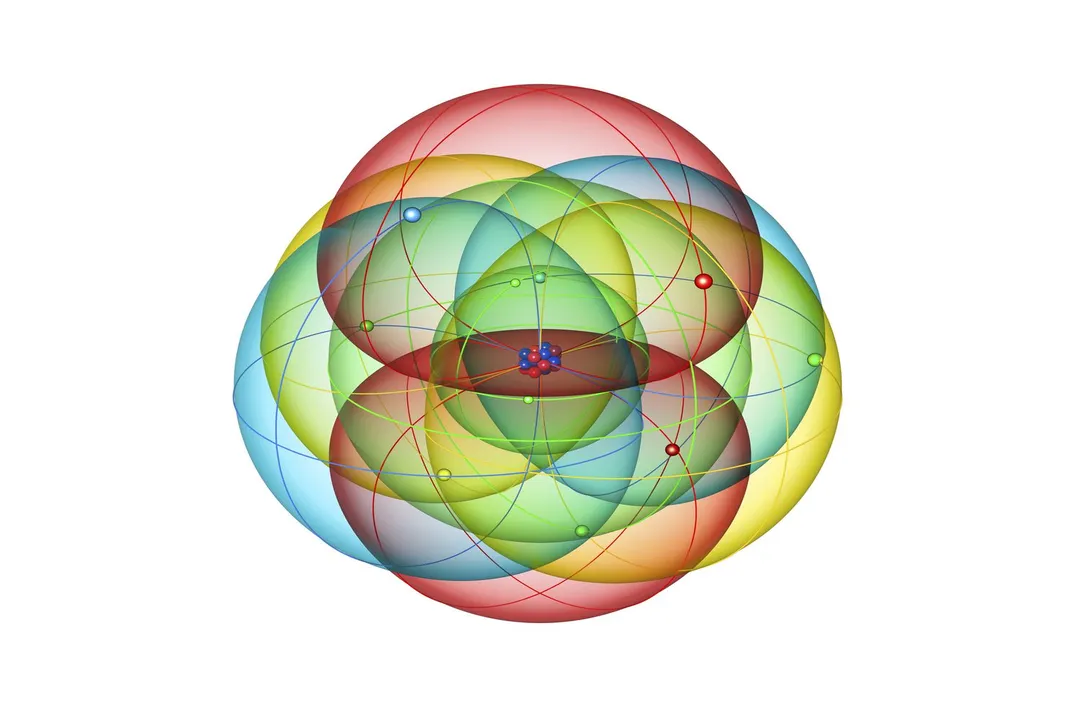
A star begins its life when a massive cloud of gas, predominantly hydrogen, collapses under gravity. [2] As the cloud shrinks, the pressure and temperature at its center skyrocket. This core compression must reach a staggering threshold—millions of degrees Kelvin—before nuclear fusion can commence. [6] For a typical star like our Sun, this ignition point is around 10 million Kelvin. [1] When the core reaches this temperature, atomic nuclei move fast enough to overcome their natural electrostatic repulsion (the tendency for positive charges to push each other away) and fuse together. [5]
The initial fusion pathway is the conversion of hydrogen nuclei (protons) into helium nuclei. [6] This is the longest phase of a star’s existence, known as the main sequence. [7] The two primary ways this hydrogen burning occurs are the proton-proton (p-p) chain and the CNO cycle. [1]
# Hydrogen Conversion Routes
The p-p chain is the dominant energy source for stars with masses up to about $1.5$ times that of the Sun. [1] This process involves several steps, starting with two protons fusing to form a deuterium nucleus, eventually leading to a stable helium-4 nucleus. [1][6] It is a relatively slow, gentle process, which is why the Sun has been shining steadily for billions of years. [7]
The CNO cycle, which uses carbon, nitrogen, and oxygen as catalysts, becomes the more significant energy producer in stars more massive than the Sun. [1][6] These stars have hotter cores, allowing the CNO cycle to proceed much faster than the p-p chain, resulting in a significantly shorter lifespan despite their larger fuel supply. [1]
When considering the initial fuel source, the core of a newly formed star is essentially pure hydrogen plasma. The transformation, therefore, is the fusion of hydrogen into helium. [1] The element being fused is hydrogen, and the product element created is helium. [6]
# Core Evolution
As hydrogen is consumed in the core, the resulting helium, which is inert under the current core conditions, begins to accumulate. [1] Since helium nuclei are "heavier" (requiring more energy to fuse) and the accumulation of inert helium effectively shrinks the hydrogen-burning shell, the core contracts further, increasing the temperature and pressure again. [6] This contraction raises the core temperature high enough to ignite the next stage of fusion, provided the star has sufficient mass. [7]
# Helium Burning
If the star is massive enough—at least $0.5$ times the Sun's mass, though stars like our Sun require an external process like the gravitational contraction of the core to eventually reach the necessary temperature—the core temperature will eventually climb to about $100$ million Kelvin. [1] At this point, helium fusion begins. [7]
The primary mechanism for fusing helium is known as the triple-alpha process. [1] In this reaction, three helium nuclei (also called alpha particles) fuse almost simultaneously to create a single nucleus of carbon (). [1][6] Occasionally, a fourth helium nucleus can collide with the newly formed carbon to create oxygen (). [1]
It is fascinating to note the stark difference in energy requirements between the primary stages. Our Sun spends about 10 billion years fusing hydrogen, but once helium ignition occurs, the star only spends about 100 million years in the helium-burning phase. [7] This transition highlights how the energy barrier for the next step in fusion is significantly higher than the previous one, demanding much hotter conditions, which naturally favors more massive stars that can achieve those core temperatures faster. [1]
# Massive Star Cycles
For stars significantly more massive than the Sun—generally those exceeding about $8$ solar masses—the process does not stop at carbon and oxygen. [9] These stellar giants can achieve the core temperatures and pressures necessary to fuse progressively heavier elements in concentric shells, creating an "onion-like" structure near the end of their lives. [1][4][9]
The fusion sequence proceeds rapidly once the helium stage is complete:
- Carbon fusion produces Neon (), Sodium (), and Magnesium (). [1]
- Neon fusion creates Oxygen () and Magnesium (). [1]
- Oxygen fusion yields Silicon (), Sulfur (), and Phosphorus (). [1]
- Silicon fusion culminates in the formation of iron () and nickel (). [1][4]
In these massive stars, each subsequent stage of burning lasts for a dramatically shorter period than the last. [9] While the hydrogen burning phase might last millions of years, the silicon burning phase, which produces iron, can last only a single day. [1]
# The Iron Barrier
The element that is ultimately the final product of fusion in the core of a massive star is iron. [1][7] This is not because iron is simply the last element that can be formed, but because it represents a fundamental barrier in stellar nucleosynthesis. [4] Iron has the most tightly bound nucleus of all elements. [1] Fusing elements lighter than iron releases energy (exothermic reaction), which supports the star against gravity. [6] However, fusing iron consumes energy (endothermic reaction). [1][7] Once the core is predominantly iron, it can no longer generate the thermal pressure needed to counteract gravity, leading to catastrophic collapse. [4][9]
# Element Locations
The location of fusion determines where the resulting elements reside within the star. In main-sequence stars like the Sun, the core is where the hydrogen-to-helium conversion happens. [6] After the core runs out of hydrogen, it becomes inert helium ash. [1]
In very massive stars undergoing shell burning, the star develops distinct layers where different elements are fusing. [1][9] The center holds the heaviest, most recently fused element (iron), surrounded by shells fusing lighter elements moving outward toward the surface layers which are still burning hydrogen. [1][4] Interestingly, due to gravity and density stratification, heavier elements created in previous stages tend to sink toward the center over time, even before the final collapse. [3] If the star is massive enough, elements created deeper in the core are denser and migrate inward, which is why the iron core forms centrally, sitting beneath the shells of oxygen, neon, and carbon fusion, which themselves sit beneath the hydrogen shell. [3]
# Beyond Iron
Since iron fusion consumes energy rather than releasing it, all elements heavier than iron cannot be forged through standard core fusion processes in a stable star. [1][4] The creation of elements like gold, silver, or uranium requires an energy input far greater than what hydrostatic equilibrium allows the core to provide. [7] These heavier elements are forged in the explosive aftermath of the core's collapse—specifically, during a supernova explosion. [1][4] The immense energy of the supernova provides the necessary conditions for rapid neutron capture (the r-process), creating nuclei heavier than iron and scattering all the star's synthesized elements out into the galaxy. [4][7]
To summarize the primary element being fused in the core:
| Star Stage | Core Element Fused | Product Element Formed | Temperature Requirement |
|---|---|---|---|
| Main Sequence (Sun-like) | Hydrogen () | Helium () | |
| Giant Phase (Massive Stars) | Helium () | Carbon (), Oxygen () | |
| Advanced Burning (Very Massive) | Carbon (), Neon (), Oxygen (), Silicon () | Elements up to Iron () |
Understanding the core element is, therefore, a question of stellar evolution. While hydrogen is the fuel for $90%$ of a star's life, the ultimate fate of the star depends on the heavier element that finally halts the energy generation process in that central furnace—which is iron for stars that end their lives via core collapse. [9] The sheer physics of nuclear binding energy dictates this iron limit, making it a universal endpoint for stellar life cycles. [1]
Related Questions
#Citations
Stellar nucleosynthesis - Wikipedia
Star Basics - NASA Science
If heavier elements 'sink' towards the core of a star, why does fusion ...
The Elements: Forged in Stars | PBS LearningMedia
Stars shine through fusion, which happens when atomic nuclei ...
Nuclear Fusion in Protostars | ASTRO 801
Stellar Nucleosynthesis: How Stars Make All of the Elements
Glossary term: Stellar Core - IAU Office of Astronomy for Education
High-Mass Stars | Research Starters - EBSCO