How do stars produce elements throughout their life cycle?
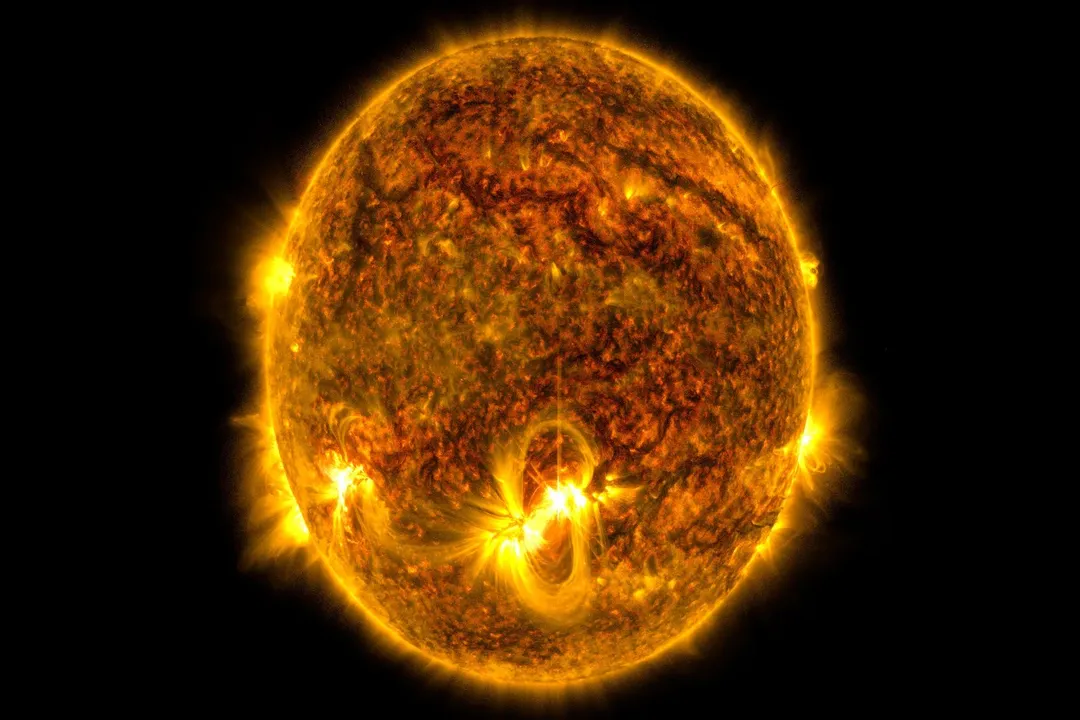
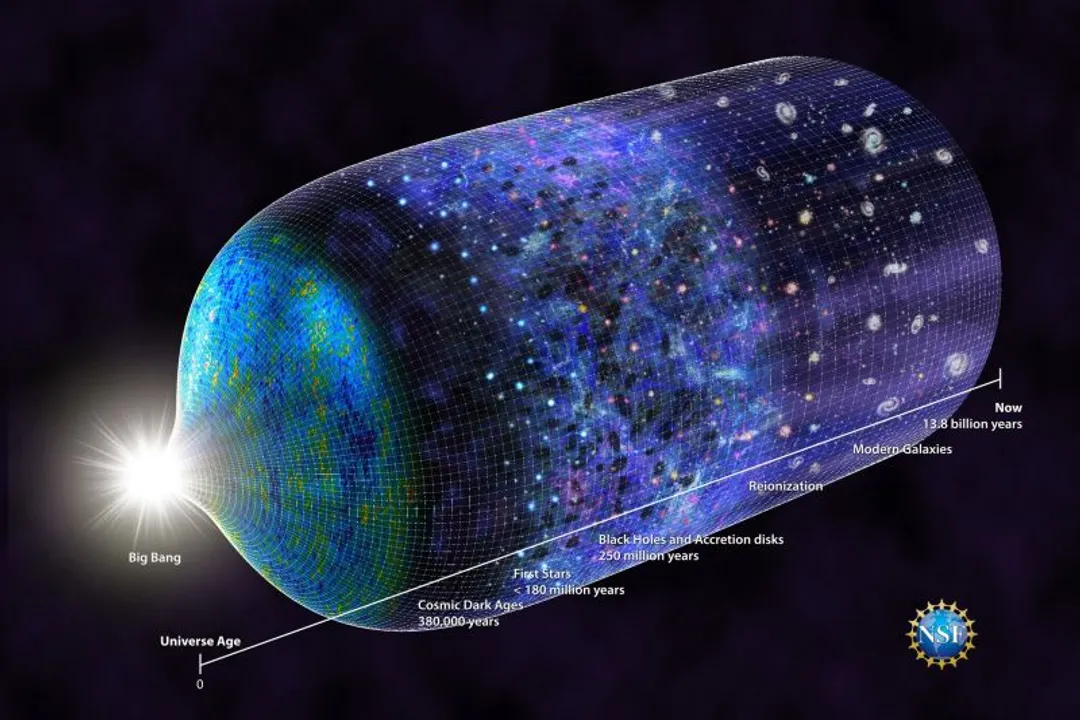
Stars are not just distant, unchanging pinpricks of light; they are the universe’s original, colossal element factories. Everything we see, from the deepest reaches of space to the materials composing our own bodies, was forged inside these celestial furnaces through a process that spans billions of years. [4][10] Understanding how stars produce elements requires tracing their entire life story, a cycle beginning in cold gas clouds and ending in spectacular cosmic explosions or quiet fade-outs. [7]
# Birth Nebula
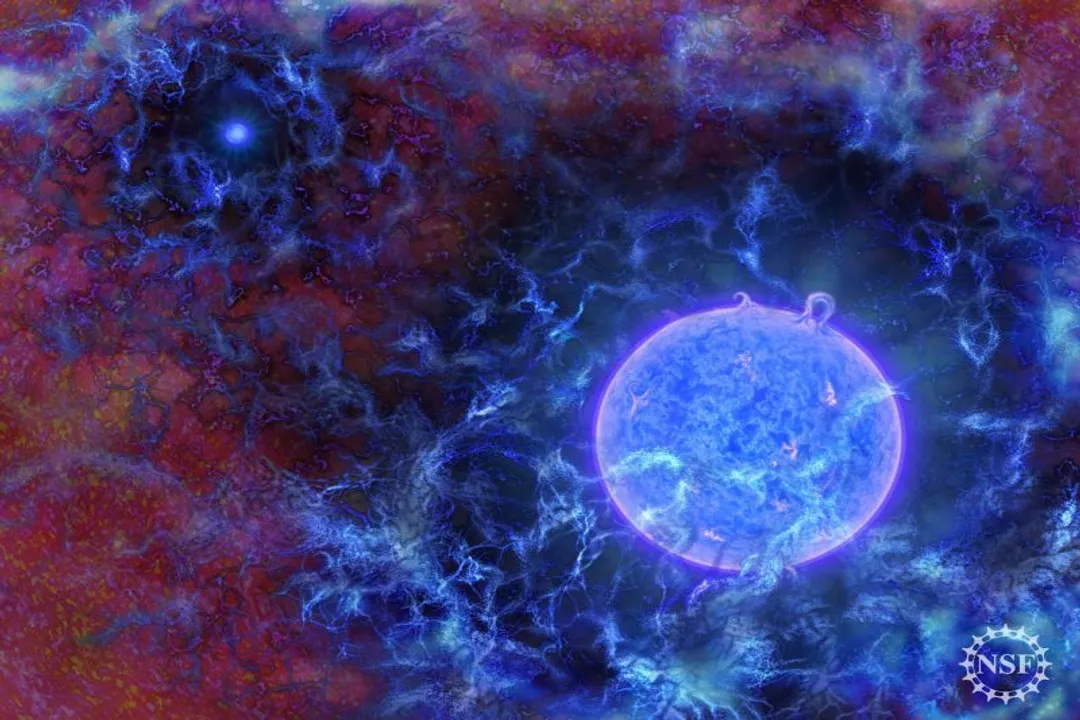
The story of element creation begins long before a star ignites. Stars originate within vast, cold clouds of gas and dust known as nebulae. [3][7] These clouds are primarily composed of hydrogen and helium, the two lightest elements created in the Big Bang. [2][10] Within these stellar nurseries, slight gravitational disturbances—perhaps from a passing shockwave or the collision of gas clouds—cause localized clumps to form. [7] As gravity pulls the material inward, the clump contracts, and the material begins to heat up due to the conversion of gravitational energy into thermal energy. [3][5] This dense, collapsing core is called a protostar. [7] For millions of years, the protostar continues to gather mass until the core temperature and pressure reach a critical threshold, marking the true beginning of its element-producing life. [3][5]
# Main Sequence
When the core temperature surpasses approximately 10 million Kelvin, nuclear fusion ignites, and a star officially joins the main sequence. [5][7] This is the longest phase of a star’s existence, and for stars like our Sun, it can last for around 10 billion years. [3][6] During this stable period, the star produces energy by fusing hydrogen nuclei into helium nuclei in its core. [2][8]
The primary reaction pathway for this process depends on the star’s mass. In lower-mass stars, such as the Sun, the Proton-Proton Chain (p-p chain) dominates. [2] This chain involves a series of steps where hydrogen atoms smash together to eventually form one helium atom, releasing immense amounts of energy, along with particles like neutrinos and positrons. [2][10]
In stars significantly more massive than the Sun—those over about 1.3 times the Sun's mass—the CNO cycle (Carbon-Nitrogen-Oxygen cycle) takes over. [2] Although carbon, nitrogen, and oxygen act as catalysts in this cycle, the net result is the same: hydrogen is converted to helium. [2] A critical point here is that while the main sequence primarily cooks hydrogen into helium, the presence of these heavier elements acts as a high-efficiency conduit for fusion in massive stars. [2]
The balance achieved during the main sequence is a delicate equilibrium: the outward pressure generated by the continuous nuclear fusion perfectly counteracts the relentless inward crush of gravity. [9][1] As long as the star has hydrogen fuel in its core, this state of hydrostatic equilibrium is maintained. [1][9]
# Post-Main
Once the hydrogen fuel in the core is exhausted, the equilibrium breaks, and the star begins its transition into old age, which looks vastly different depending on its initial mass. [3][5]
# Helium Burning
For Sun-like stars, once core hydrogen fusion ceases, the core contracts and heats up further. [7] When the core reaches temperatures around 100 million Kelvin, helium fusion can begin. [2][5] This stage involves the triple-alpha process, where three helium nuclei (alpha particles) fuse almost simultaneously to create one carbon nucleus. [2][8] Carbon can then capture another helium nucleus to form oxygen. [2] In stars of this mass range, this is generally as far as the fusion process goes in the core. [2] After the helium is depleted, the star sheds its outer layers, forming a planetary nebula, and the dense, hot core left behind becomes a white dwarf. [3][6] These remnants are too cool and lack the necessary mass to reignite fusion, effectively becoming cosmic embers. [3]
# Massive Stars
Stars born with many times the Sun’s mass continue fusing heavier elements after helium is spent. [5] Because of their immense gravity, the cores reach much higher temperatures and pressures, allowing fusion to proceed to heavier elements in successive shells, creating an "onion-like" structure. [2][6]
The process proceeds sequentially:
- Carbon fusion creates neon, sodium, and magnesium. [2]
- Neon fusion creates oxygen and magnesium. [2]
- Oxygen fusion produces silicon and sulfur. [2]
- Finally, silicon fuses into elements near iron (), such as nickel. [2][5]
Iron holds a unique and fatal place in this process. Fusing elements lighter than iron releases energy (exothermic), which supports the star against gravity. [2] However, fusing iron requires an input of energy (endothermic) rather than releasing it. [2][5] Once the core is predominantly iron, the star loses its energy source instantaneously, leading to catastrophic collapse. [2]
When considering the sheer volume of element production, it's interesting to compare the lifespans. A star like the Sun might spend 10 billion years primarily making carbon and oxygen, whereas a massive star might reach the iron core stage in mere millions of years. [3] However, the sheer number of low-to-intermediate mass stars dominating the galaxy’s population means that their slow, steady output over eons may contribute a greater total mass of elements like carbon and oxygen to the interstellar medium than the fleeting, dramatic output of the rarest, most massive stars. [10]
# Element Creation
The entire mechanism by which stars build up heavier elements is called stellar nucleosynthesis. [2] While core fusion builds elements up to iron, elements heavier than iron—like gold, uranium, and even heavier isotopes of silver and lead—require far more extreme, short-lived conditions found only during stellar death. [2][4]
# Slow Neutron Capture
The s-process, or slow neutron capture process, is responsible for creating roughly half of the elements heavier than iron, including elements like barium and lead. [2][4] This process occurs primarily during the late stages of intermediate-mass stars, such as when they are becoming AGB (Asymptotic Giant Branch) stars, or in supernovae. [2] In the s-process, atomic nuclei are bombarded by a slow stream of neutrons. [2] If a nucleus captures a neutron, it becomes unstable and decays into a heavier element before it has time to capture another neutron. [4] This slow accumulation allows for beta decay to occur, shifting the element up the periodic table one step at a time. [2]
# Rapid Neutron Capture
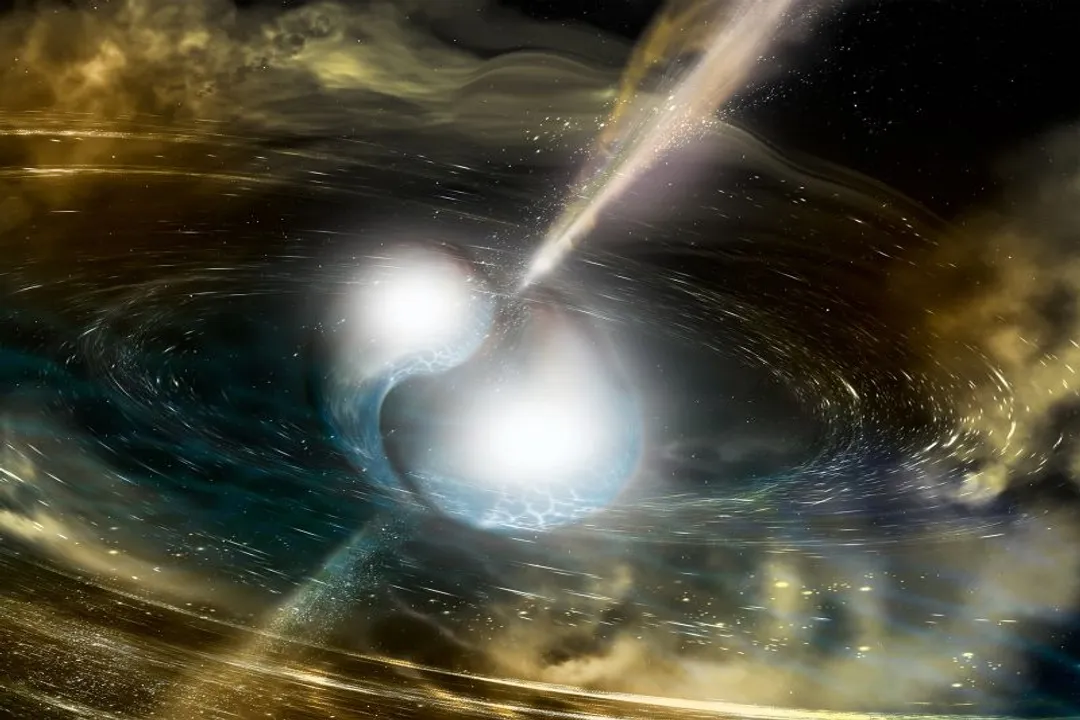
The creation of the heaviest, most neutron-rich elements—those beyond iron that are not made by the s-process—requires the r-process, or rapid neutron capture process. [2] This is a much more violent affair, requiring an incredibly high density of free neutrons flooding the environment for a very short time. [4] The extreme conditions necessary for the r-process are thought to occur during the core-collapse supernova explosion of a massive star, or potentially during the merger of two neutron stars. [2][4] In the r-process, nuclei capture neutrons so quickly that they do not have time to undergo radioactive decay, resulting in the creation of the heaviest known elements in a massive burst. [4]
# Stellar Demise
The final act of a star dictates how its synthesized material is returned to the cosmos, enriching the next generation of stars and planets. [6]
# Gentle Fading
For stars up to about eight times the mass of the Sun, the end is relatively quiet. [7] As mentioned, the star puffs off its outer layers as a planetary nebula, which disperses newly created elements like carbon and oxygen into the surrounding interstellar medium. [3][6] The remaining core stabilizes as a white dwarf. [3] The matter ejected here provides the raw ingredients for subsequent star formation and planetary systems. [10]
# Violent Endings
Massive stars, however, die in an event of staggering power: a supernova. [3][5][7] When the iron core collapses, it creates an intense shockwave that rebounds outward, blasting the star's outer layers into space at incredible speeds. [7]
During this explosion, the necessary energy and density are achieved for nucleosynthesis past iron, as described by the r-process. [2][4] The supernova blast wave not only generates the heaviest elements but also sweeps up and distributes all the elements the star created throughout its life—from the initial helium to the silicon and iron created in the final burning stages—across interstellar space. [2][6] Without these cataclysmic events, elements heavier than iron would be exceedingly rare in the universe. [4]
The remnant left after a supernova depends on the core's remaining mass. If the remnant mass is between about 1.4 and 3 solar masses, the collapse halts due to neutron degeneracy pressure, forming an incredibly dense neutron star. [3] If the remaining core mass exceeds this limit, gravity overwhelms all known forces, and the core collapses into a black hole. [3][5] Even these exotic remnants are products of the stellar lifecycle, born from the most extreme element-forging environments. [9]
# Cosmic Legacy
The cycle is continuous. The gas and dust ejected by dying stars—enriched with elements like carbon, oxygen, iron, and gold—mix back into the nebulae from which new stars will form. [4][6] Stars are thus responsible for creating virtually every element heavier than lithium, including the silicon in sand, the calcium in bones, and the oxygen we breathe. [1][4][10]
If you were to look closely at an object made today, like the steel frame of a modern building, you would be observing a mixture of materials forged over cosmic timescales. The iron itself would likely trace its origin to the core collapse of a massive star that exploded billions of years ago, while the lighter carbon atoms within the steel might have taken their own separate, billion-year path inside a smaller star like our Sun. [10] This understanding reframes our perspective: we are not merely observers of stellar processes; we are, quite literally, made from their remnants. [4][10] This constant recycling ensures that each new generation of stars and planets is built from richer, more complex chemical stock than the one before it. [5]
Related Questions
#Citations
Star Basics - NASA Science
Stellar nucleosynthesis - Wikipedia
Stellar Evolution - | The Schools' Observatory
The stars within us | NSF - U.S. National Science Foundation
Life Cycle of Stars - WorldWide Telescope Ambassadors
The Life Cycle of Stars | National Air and Space Museum
Stars and their life-cycle (article) | Khan Academy
Life Cycle of Stars - BYJU'S
Stellar Structure and Evolution | Center for Astrophysics | Harvard ...
Stellar Life Cycle | Earth Science - Lumen Learning