Are stars necessary for life?
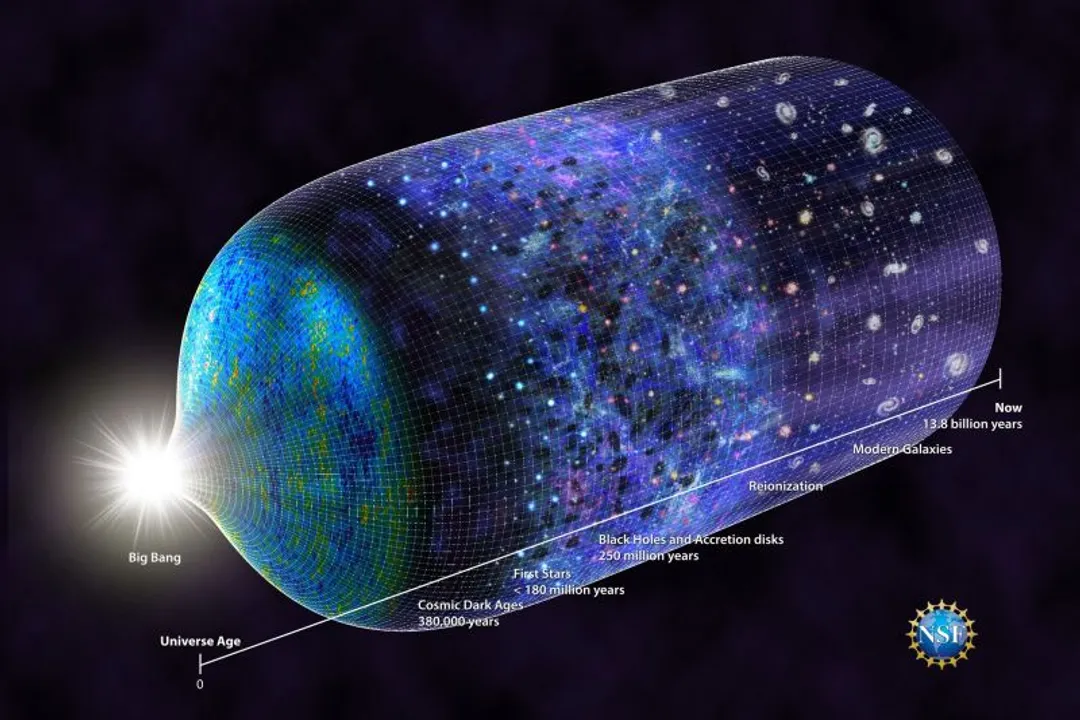
The presence of a star appears, at first glance, to be the most self-evident requirement for life as we comprehend it, given that our entire biosphere on Earth is utterly dependent on the Sun. Yet, looking closely at the cosmic evidence and theoretical possibilities reveals a much more complex relationship: while stars are the indispensable architects of life's chemistry, they might not be strictly necessary for sustaining all forms of biological processes. The very building blocks that construct a living cell—the carbon, oxygen, and heavier elements essential for complex organic chemistry—are forged deep within stellar cores and then scattered across the galaxy when those stars die. Without the cycle of stellar birth, life, and death, the raw materials for biology simply would not exist in the universe.
# Stellar Alchemy
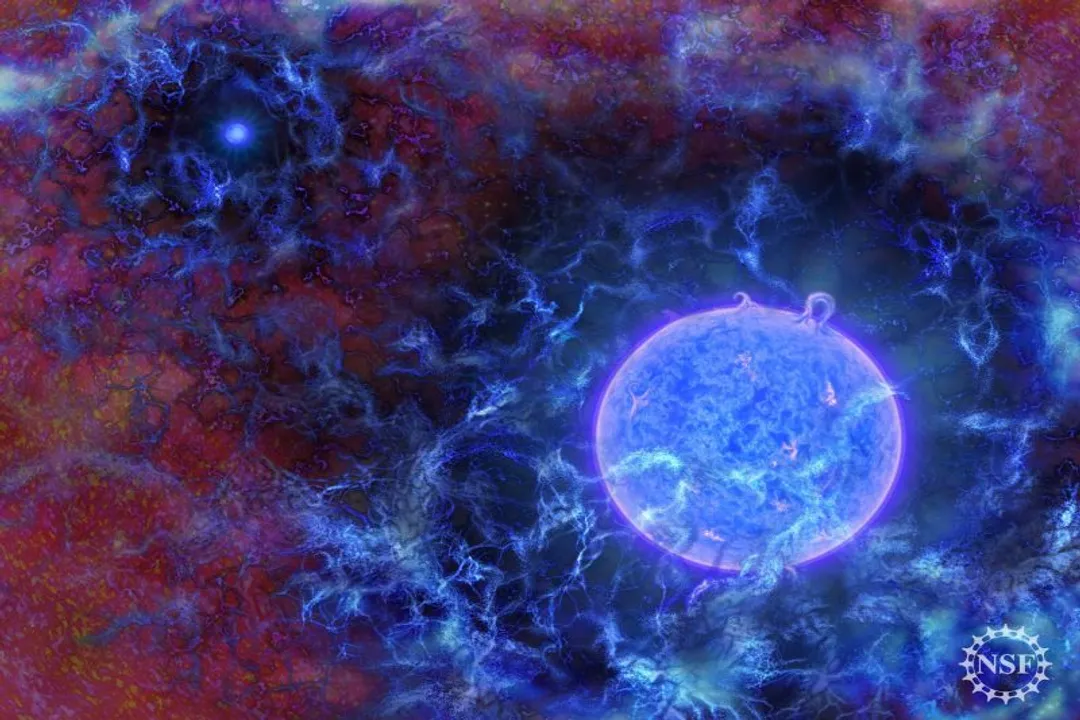
The most profound argument for the necessity of stars rests on nucleosynthesis, the process by which elements are created. A star's entire lifespan is, in many ways, a massive element factory. During its main sequence phase, a star fuses hydrogen into helium, providing the steady energy output necessary for stable planetary orbits and surface environments, like the one supporting life on Earth.
However, the elements crucial for biology—the metals in astronomical terms, meaning anything heavier than hydrogen and helium—require more dramatic stellar events. Elements like carbon, the backbone of terrestrial life, and oxygen, vital for metabolism and water, are produced later in a star’s life, often during the final, explosive stages of massive stars known as supernovae. These cataclysmic events not only create these elements but also provide the necessary kinetic energy to disperse them throughout interstellar space, seeding the next generation of star systems and their accompanying planets. If we trace the atoms in our bodies back through time, we find they were synthesized inside ancient, long-dead stars. This suggests that for life dependent on complex chemistry, stars are not just helpful; they are the progenitors of the necessary matter.
# Energy Systems
Beyond manufacturing the ingredients, stars are the primary drivers of energy flow for most life. On Earth, sunlight powers photosynthesis, the process that forms the base of nearly every food chain. This massive influx of radiation keeps the planet warm enough for liquid water to persist on the surface, a condition widely considered essential for life's emergence and continuation. The stability of our star, the Sun, over billions of years has provided the necessary timeframe for evolution to proceed.
Consider the potential for life on exoplanets orbiting other stars. A significant part of exoplanet research focuses on identifying planets within the habitable zone, the region where a planet could maintain liquid water on its surface due to the star's energy output. This search inherently prioritizes stars because they provide the most accessible, high-energy, long-term power source for surface-based biological activity.
If we map the requirement for life to the requirement for liquid water, then a star is the most common mechanism for achieving that state for a planetary surface. The temperature an orbiting body maintains is directly related to the luminosity of its parent star.

# Subsurface Possibilities
Despite the powerful case for stellar necessity based on chemistry and surface energy, the concept of life existing without direct stellar input remains a compelling area of scientific thought. Life does not strictly require sunlight if an alternative energy source can power its basic metabolic needs.
One compelling scenario involves life existing in subsurface oceans, insulated from the harsh radiation of space and independent of the energy generated by a parent star. Jupiter's moon Europa and Saturn's moon Enceladus are prime examples of worlds that may harbor vast liquid water oceans beneath icy shells, kept warm by tidal heating from their massive parent planets, not their distant sun. In these environments, the energy driving chemosynthesis—the use of chemical reactions rather than light—would come from geothermal vents on the seafloor. This process relies on chemical gradients, often fueled by the reaction of water with rock (serpentinization), providing the necessary energy for microbes to thrive.
This leads to an important distinction: stars are necessary for surface life and for producing the elements of life, but perhaps not for the sustenance of all possible life forms.
To compare these energy regimes, one can look at the sheer scale of energy flux. The flux of solar energy reaching Earth at its orbital distance is significant enough to drive an entire global ecosystem. Conversely, the energy released from hydrothermal vents, while sufficient to support localized chemosynthetic communities, is dramatically lower in total output when compared to the daily energy input from the Sun hitting the Earth's surface. This suggests that if life can exist without a star, it would likely be limited to smaller, less complex ecosystems, at least initially, simply due to the lower energy throughput available from geothermal sources compared to a main-sequence star.
# Stellar Variety
The universe contains billions of stars, and the question of why we have not yet found life elsewhere often turns to the nature of those stars. Not all stars are good candidates for hosting life-bearing planets. Very massive stars burn through their fuel quickly, often living and dying before complex life has time to evolve. Conversely, very low-mass stars, like red dwarfs, are extremely long-lived, but their habitable zones are very close in, leading to tidal locking—where one side of the planet permanently faces the star—and intense stellar flares that can strip away atmospheres.
This implies that even when we agree stars are necessary, the type of star matters immensely for the longevity and stability required for complex life to emerge. It suggests a selection effect: only a specific subset of stars—perhaps G-type like our Sun, or certain stable K-dwarfs—offer the required combination of element abundance (from prior stellar generations) and long-term energy stability.
# Building Complexity
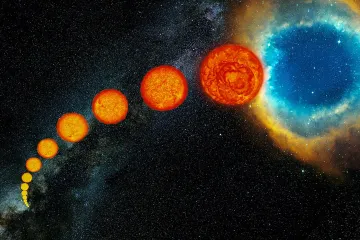
An interesting point to consider when evaluating stellar necessity is the timeline of element enrichment. For a planet to form with enough heavy elements to build rock, water, and complex molecules, it needs to orbit a star that formed relatively late in cosmic history, long after the first massive stars exploded. A star born too early might lack the necessary "metals" to form a rocky world capable of supporting surface life or an atmosphere rich in biologically useful gases. Therefore, a star's age and its position within the galaxy's history directly influence its ability to host life-bearing planets because they dictate the chemical inventory available for accretion. This historical context adds another layer of requirement beyond just the star's present energy output.
# Theoretical Limitations
While the subsurface life model offers a pathway independent of stellar light, it still relies on elements created by stars. The essential heavy elements like phosphorus, sulfur, and iron, vital for DNA, proteins, and planetary cores (which drive plate tectonics and magnetic fields), must have been synthesized in massive stars and scattered long ago. A rogue planet adrift in interstellar space, far from any star, might potentially host a subsurface ocean warmed by residual heat or radioactive decay, but its chemistry would be limited to whatever elements were present when it formed. Without an ongoing replenishment or synthesis mechanism—which only stars provide—that isolated biosphere might eventually run out of the necessary reactive chemicals to sustain metabolism, even through chemosynthesis.
This means that while a star is not needed for the day-to-day energy supply of an already established subsurface biosphere, it was almost certainly necessary for the initial creation of that biosphere's fundamental chemical structure. If we define "necessary" as the originator of the life-enabling chemical toolkit, then stars are mandatory. If "necessary" only refers to the continuous energy input for an already existing ecosystem, then objects like icy moons orbiting gas giants, or even rogue planets, offer alternatives. The distinction hinges on whether the origin of life is viewed as a single event tied to initial chemistry, or a continuous process requiring ongoing energy.
# Synthesis of Requirements
To summarize the dependency, we can categorize the roles a star plays in supporting life as we know it:
| Role | Direct Stellar Contribution | Alternative Possibility |
|---|---|---|
| Chemical Building Blocks | Nucleosynthesis of C, O, Fe, etc. | None identified; pre-existing elements only. |
| Surface Energy/Heat | Radiant energy drives photosynthesis/liquifies water | Tidal heating (moons) or radioactive decay (rogue planets). |
| Planetary Formation | Gravitational influence and protoplanetary disk | Accretion from interstellar medium (less likely for complex bodies). |
Ultimately, the existence of life without any star is chemically improbable on any long-term timescale because the universe's heavy element budget is finite and only replenished by stellar death. Life originating in a stellar nursery requires that initial factory. Life sustained far away, like in a deep ocean beneath ice, requires the initial construction materials delivered by that factory. The only theoretical scenario where a star is not necessary involves a self-contained system that somehow manages to cycle and maintain chemical complexity without replenishment—a scenario that stretches the known laws of thermodynamics and chemical kinetics over cosmic timescales. Therefore, for life to begin anywhere, the influence of a prior star (or multiple stars) must have occurred to provide the essential elements.
#Videos
Could Life Survive Without a Star? - YouTube
Related Questions
#Citations
Life Without Stars? A 2023 paper implies that most of the life in our ...
Why do we need stars? | Ask Dr. Universe
Why are there billions of stars with no life? Are they useless? - Quora
The stars within us | NSF - U.S. National Science Foundation
Stars in an Exoplanet World - NASA Science
It's elementary – life on Earth is down to the stars - Monash Lens
Could Life Survive Without a Star? - YouTube
Do all stars have the potential to have life supporting planets?
Why the Stars are So Important. - Devon McArthur