Is life possible without stars?
The assumption that life requires the steady, visible light and warmth of a sun is deeply ingrained in our search for extraterrestrial biology, yet current scientific thought allows for fascinating possibilities entirely independent of a nearby star. [2] When we consider worlds adrift in the cold void, the common images of frozen, dead spheres are increasingly being challenged by models suggesting that internal processes, rather than external radiation, could be the lifeblood of distant planets. [1][3]
# Stellar Dependence
For decades, the hunt for extraterrestrial life has centered on the concept of the habitable zone. [6] This region, sometimes called the "Goldilocks zone," is defined by the distance from a star where temperatures are theoretically just right for liquid water to exist on a planet's surface. [6] This definition inherently ties habitability to the energy output of a main-sequence star. [6] If a planet orbits too close, water boils; too far, it freezes solid. [6] We look for planets similar to Earth, orbiting stars similar to our Sun, because that is the only established template we have for surface liquid water supporting known life forms. [5]
However, this perspective inherently dismisses a vast portion of the cosmos: the planets that have been ejected from their nascent solar systems, known as rogue planets, or those orbiting brown dwarfs or white dwarfs, which either produce vastly different energy profiles or have exhausted their main fuel. [1][2] If the majority of planetary mass in the galaxy is not tied to stars—a possibility suggested by recent astrophysical findings—then our focus on stellar orbits might be missing the vast majority of potential biological real estate. [1]
# Adrift Worlds
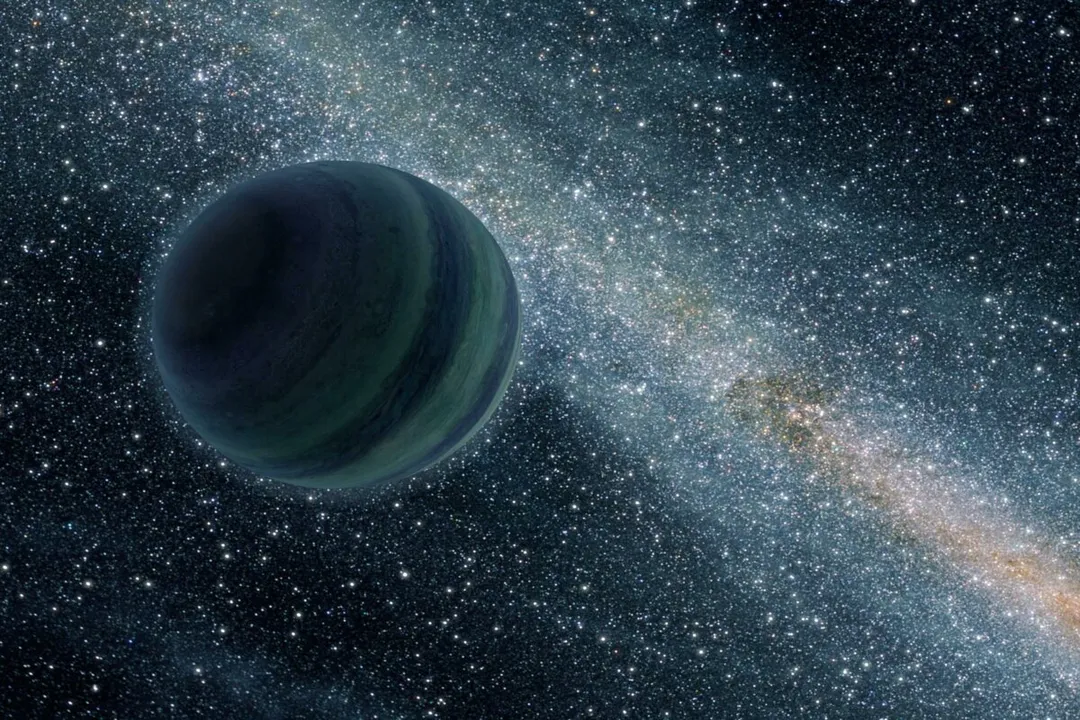
Planets unbound by a gravitational anchor—rogue planets or free-floating planets—represent a substantial population in the Milky Way. [1][9] They wander interstellar space, receiving virtually no light or heat from a central star. [2][3] This environment seems immediately hostile, marked by extreme cold on the surface. [2]
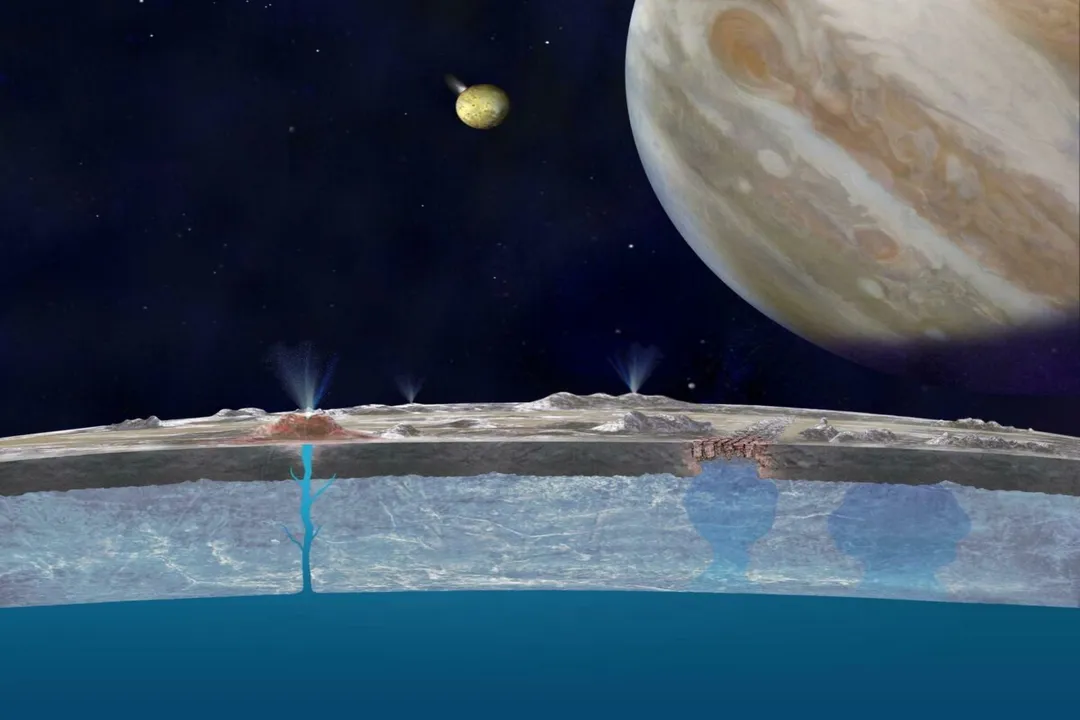
Yet, research suggests that these worlds are not necessarily barren voids. [1] A 2023 paper, discussed in astronomical circles, implies that the most common habitable planets in the galaxy might actually be these lonely wanderers, rather than Earth-like worlds in traditional orbits. [1] This shifts the paradigm from looking for surface oceans to looking for subsurface oceans sustained by internal mechanisms. [1] While a planetary body needs sufficient mass to retain an atmosphere and internal heat, the presence of a star becomes irrelevant for habitability if those internal conditions are met. [2] If a planet is massive enough, it can retain the heat generated by its formation and ongoing radioactive decay, keeping water liquid beneath an insulating ice shell. [1][2]
# Internal Heat
The key to survival without stellar radiation is geothermal energy. [2] On Earth, life thrives deep in the oceans near hydrothermal vents, powered by heat rising from the planet's interior, independent of the Sun. [2] Rogue planets could maintain similar internal heating mechanisms. [1]
There are several potential heat sources for a starless world:
- Radioactive Decay: The decay of radioactive isotopes within the planet's core and mantle produces a constant, albeit slow, release of thermal energy. [1] This process is reliably long-lasting. [2]
- Tidal Heating: While less likely for a truly free-floating world, a planet captured by a massive object, like a gas giant or a black hole, could experience tidal flexing that generates significant internal heat. [2]
- Residual Accretion Heat: Massive planets retain heat leftover from their original formation process for billions of years. [2]
Considering Earth's deep biosphere provides a crucial framework. The microbial life found miles beneath the surface or thriving near black smokers demonstrates that the energy threshold for sustaining basic biological processes is far lower than what is needed to support complex, surface-based ecosystems reliant on photosynthesis. [2] If a rogue planet has a sufficiently thick icy crust—perhaps hundreds of kilometers deep—it could insulate a vast subsurface ocean where such life could flourish for eons. [1] For instance, a world with a geothermal heat flux equivalent to only a few watts per square meter could be enough to prevent the entire ocean from freezing solid. [1]
It’s interesting to compare the energetic demands. A terrestrial surface ecosystem, like a forest, requires a solar flux in the range of several hundred watts per square meter to drive photosynthesis and maintain its structure, demanding a steady, high-energy input. Conversely, the deep subsurface chemosynthetic ecosystems on Earth can operate on energy budgets orders of magnitude smaller, deriving power from chemical gradients fueled by rock-water interactions. A rogue planet only needs to maintain the lower energy budget to host life, making its long-term survival prospects potentially more stable than planets orbiting certain types of aging, variable stars.
# Society Structure
If intelligent life were to evolve on a rogue planet, its entire societal structure would be dictated by the absence of a day/night cycle and the scarcity of visible light. [8] There would be no solar energy to capture directly, forcing technology to rely exclusively on internal planetary power, such as geothermal tapping or perhaps advanced fusion reactors if they achieved that technology level. [8]
A civilization would likely develop almost entirely beneath the surface, protected from the intense cold and cosmic radiation permeating the vacuum. [8] Their world would be one of artificial illumination, perhaps using bioluminescence from native flora or fauna, or advanced electrical lighting, creating an entirely synthetic, enclosed environment. [8] Culture, architecture, and even psychology would adapt to the permanent, unchanging "night" of their existence, fundamentally different from surface-dwelling species that structure time around diurnal cycles. [8] This presents a unique challenge: developing a civilization without ever gazing up at a sky filled with stars, relying instead on the geology beneath their feet for existence. [8]
# Cosmic Context
The possibility of a galaxy teeming with subsurface, starless biospheres has implications for one of astronomy’s great unsolved puzzles: the Fermi Paradox. [7] This paradox questions the contradiction between the high probability estimates for the existence of extraterrestrial civilizations and the lack of observable evidence for them. [7] If life is primarily found on rogue planets, they would be exceptionally difficult to detect using current exoplanet-hunting methods that rely on observing stellar light curves or atmospheric absorption spectra caused by starlight. [7] They are, by definition, dark and isolated targets. [2]
While established methods focus on looking for biosignatures in the light passing through the atmosphere of a star-orbiting planet, detecting life on a rogue world would require entirely different techniques, such as detecting unusual heat signatures or gravitational microlensing events that reveal their mass. [1][7] The sheer number of these potentially habitable, dark worlds could explain why the galaxy appears quiet—the life is simply hidden from our stellar-centric instruments. [1]
Another point of consideration emerges when we think about long-term galactic settlement or communication. If a rogue civilization mastered energy generation from their planetary core, they would possess an energy source that is fundamentally constant and independent of stellar evolution timelines. While they would lack the raw energy flux of a planet close to a young, bright star, their power source would not suffer from the eventual death of a star, offering a type of long-term stability unavailable to stellar neighbors. This longevity might shift their developmental priorities away from rapid expansion and towards deep, internal engineering and resource management.
# Detection Challenges
Finding life on a starless world presents an immense technical hurdle. Unlike searching for biosignatures in the atmosphere of an exoplanet where starlight is filtered through the air, on a rogue world, there is no light source for remote sensing. [2] The primary method for identifying these planets involves detecting the slight dimming of distant background stars as the rogue planet passes in front of them—a technique called microlensing. [2]
However, microlensing events are brief and random. [2] To catch a habitable rogue planet during such an event, and then detect a subtle atmospheric difference, requires incredible patience and sensitivity, possibly requiring space-based telescopes capable of sustained, high-precision monitoring of billions of background stars simultaneously. [2] The current search methods are more geared toward finding planets around stars, such as through transit or radial velocity methods. [6] The few known candidates for rogue planets are generally inferred or discovered via very specific gravitational events, not routine observation. [2] Until new detection paradigms are established, these potentially numerous wet, warm, dark oceans remain astronomically silent, hiding in plain sight across the interstellar medium. [1]
#Videos
Could Life Survive Without a Star? - YouTube
Related Questions
#Citations
Life Without Stars? A 2023 paper implies that most of the life in our ...
Is life possible on rogue planets and moons? | The Planetary Society
Could Life Survive Without a Star? - YouTube
Can a star system with no visible stars contain life? - Quora
Does life exist outside of the solar system? | Center for Astrophysics
The Habitable Zone - NASA Science
Fermi paradox - Wikipedia
Society without stars - science based - Worldbuilding Stack Exchange
Could life survive on planets with no star? #rogue #planet - Facebook