What makes it possible for the solar system to support life?

The ability of our solar system to host life, particularly on Earth, hinges on a delicate balance of location, chemistry, and planetary mechanics that allows one of life's most fundamental prerequisites—liquid water—to exist. Life, as we currently understand it, requires certain conditions: the presence of key chemical building blocks, a source of energy, and a medium in which those components can interact, typically water. [7][1][8] Without this precise cocktail, the complex self-replicating chemistry that defines biology simply cannot get started or be sustained. [6]
# Liquid Water
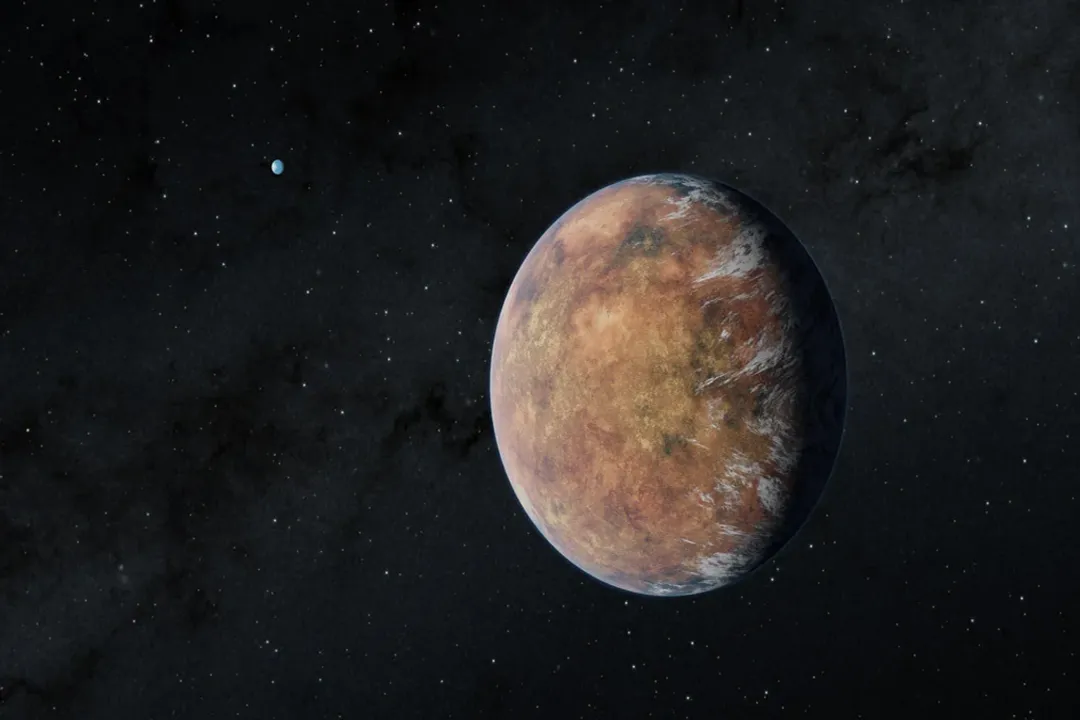
The primary constraint often discussed when assessing habitability is the presence of liquid water. [7] Water is an extraordinary solvent, meaning it dissolves many other substances, allowing chemical reactions necessary for life to occur within it. [8] On Earth, nearly every biological process relies on water as a medium. [7] For water to remain liquid, a planet must maintain a stable temperature range, not too hot for it to boil away into space, and not too cold for it to freeze solid, locking away the essential solvent. [1] While water ice exists throughout the solar system, the stability of surface or subsurface liquid water dictates surface habitability for complex organisms. [2] This simple requirement immediately filters the vastness of space down to a very select few places within our cosmic neighborhood.
# Goldilocks Zone
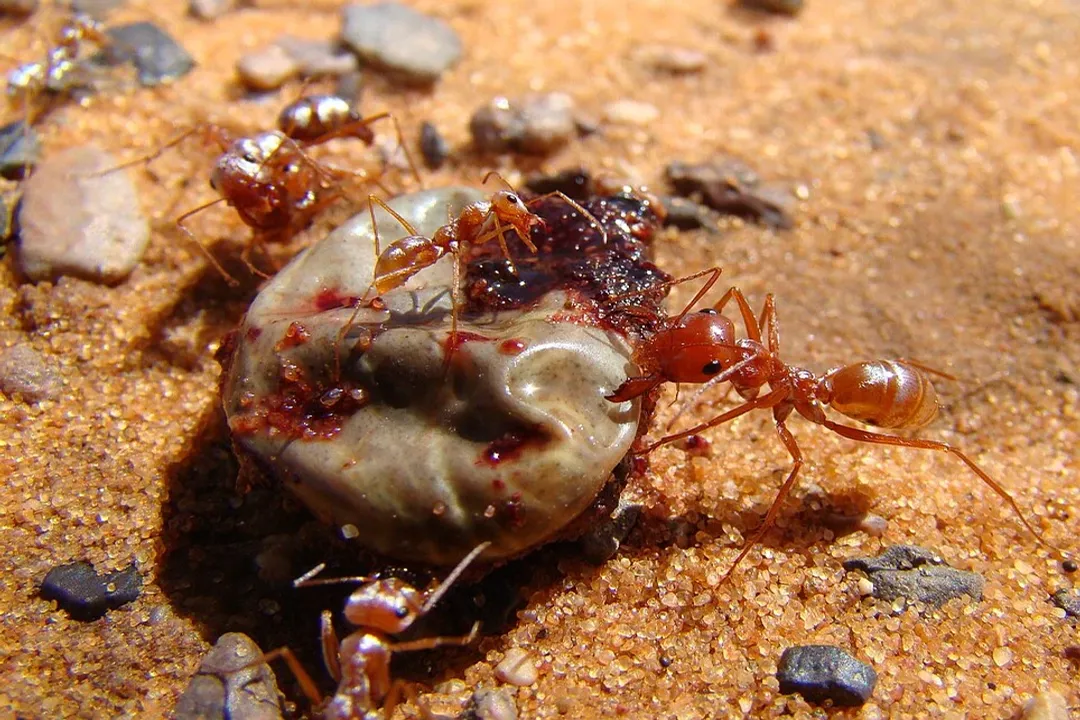
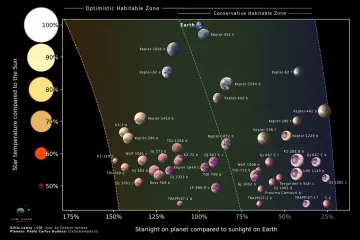
This requirement for liquid water directly leads to the concept of the Habitable Zone, often nicknamed the "Goldilocks Zone". [3] This is the orbital region around a star where a planet can maintain liquid water on its surface, assuming it has an atmosphere of sufficient density. [9] The location of this zone is entirely dependent on the star's energy output; a hotter, brighter star pushes the zone further out, while a cooler, dimmer star pulls it closer in. [3][9]
For our Sun, the habitable zone exists roughly between the orbits of Venus and Mars. [2] Venus orbits too close to the Sun, resulting in a runaway greenhouse effect that boils away surface water, making it incredibly hot—hot enough to melt lead. [1] Mars orbits on the outer edge; it is cold enough that much of its water has frozen into polar ice caps or become subsurface ice. [2] Earth sits squarely in the middle, benefiting from the perfect equilibrium that permits vast oceans. [1] It is fascinating to consider that if the Sun were slightly less massive or slightly dimmer, Earth’s orbit would place us where Mars is now, turning our planet into an icy wasteland, or if it were slightly more massive, we would be orbiting near Venus, making it a furnace. [3] This realization underscores how much of our apparent "good fortune" is simply a matter of stellar physics and orbital mechanics.
# Planetary Shielding
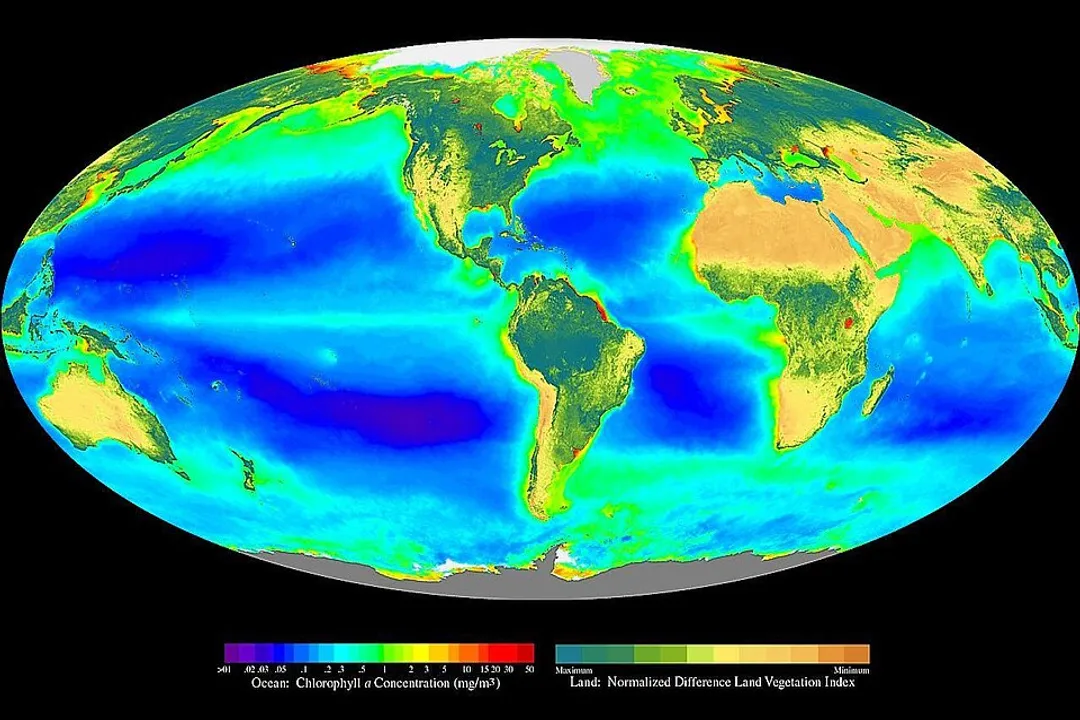
While location determines the potential for liquid water, the physical characteristics of the planet itself are what secure that potential over geological timescales. [1] A planet needs more than just the right temperature; it needs protection from the harsh realities of space. [1][2]
One crucial element is a substantial atmosphere. [1][7] The atmosphere serves multiple roles: it helps regulate temperature by trapping heat, preventing extreme temperature swings between day and night, and it protects the surface from incoming meteors and cosmic radiation. [1] Earth's atmosphere contains the necessary nitrogen and oxygen for complex life. [7]
Equally vital is a strong magnetic field, or magnetosphere. [2] This field is generated by the movement of molten iron in Earth's core—a dynamic, spinning liquid metal layer. [1] This magnetosphere acts as an invisible shield, deflecting the constant stream of charged particles emitted by the Sun, known as the solar wind. [1] Without this protection, the solar wind would slowly strip away the atmosphere over billions of years, just as evidence suggests happened on Mars. [2] The relative lack of a strong global magnetic field on Mars is a key reason why its atmosphere is so thin today, unable to hold onto surface water. [2]
To illustrate the importance of these dual protections, consider the atmospheric pressure component. On Earth, the pressure allows water to remain liquid across a broad temperature range. If Earth’s atmospheric pressure were somehow reduced to that of Mars (less than 1% of Earth's), surface water would boil away at temperatures well below freezing, demonstrating that temperature alone is insufficient for liquid water stability. [7]
# Basic Elements
Moving past the planetary environment, the fundamental chemistry must be present. [6] Life on Earth is carbon-based, and while scientists are open to other chemistries, carbon's ability to form four stable bonds makes it ideal for creating the long, complex molecular chains necessary for biological machinery. [8][7] The solar system must possess these essential elements scattered across its bodies, brought together through processes like accretion and delivered to a suitable body. [8]
The core chemical requirements often cited include:
- Carbon: The backbone of organic molecules. [8]
- Hydrogen and Oxygen: Essential components of water. [8]
- Nitrogen: Critical for proteins and nucleic acids (DNA/RNA). [8][7]
- Phosphorus and Sulfur: Necessary for cell structure and energy transfer. [8]
The presence of these elements, known as CHNOPS, is widespread throughout the galaxy, but the concentration and accessibility within a liquid medium on a world are the factors that truly matter for habitability. [8][7]
# Solar System Candidates
When examining the solar system through this lens, Earth is the singular success story, but a few other bodies present intriguing possibilities, primarily for microbial life. [2]
| Body | Location Relative to HZ | Liquid Water Potential | Key Habitability Factor |
|---|---|---|---|
| Earth | Mid-HZ | Abundant Surface/Subsurface | Stable climate, strong magnetosphere, ideal chemistry [2] |
| Mars | Outer Edge (Past) | Subsurface Ice/Brine | Thin atmosphere, weak magnetic field, cold surface [2] |
| Europa | Far Outside HZ | Subsurface Ocean | Tidal heating provides energy, protected by ice shell [2] |
| Enceladus | Far Outside HZ | Subsurface Ocean | Tidal heating, hydrothermal activity confirmed [2] |
While Mars once possessed conditions that could have supported life, its decline involved losing its protective atmosphere and magnetic field. [2] The potential for life on icy moons like Jupiter's Europa or Saturn's Enceladus offers a fascinating counterpoint to the traditional habitable zone concept. [2] These moons are far outside the HZ, yet internal heating from tidal forces—gravitational kneading by their giant host planets—may maintain vast liquid water oceans beneath thick ice shells. [2] In these environments, life would not rely on sunlight but on chemical energy derived from hydrothermal vents on the seafloor, similar to deep-sea ecosystems found on Earth. [2] This suggests that the definition of a life-supporting environment is much broader than simply the distance from the primary star.
# Life Beyond Planets
The focus on Earth-like planets residing in the traditional Habitable Zone reflects our own experience, yet astrobiologists are increasingly considering environments far removed from those parameters. [5][6] The idea that life must be tethered to a planet within the HZ may be too restrictive for the universe at large. [4]
The key requirement might not be a planet at all, but rather the sustained presence of liquid water and an energy source, which can be provided through mechanisms other than stellar radiation. [4] Subsurface oceans, powered by tidal flexing, as seen on Europa and Enceladus, are prime examples where the energy source is gravitational rather than solar. [2][4]
Furthermore, complex organic molecules, the building blocks of life, have been detected in meteorites and interstellar space, suggesting that the raw materials are delivered throughout the solar system, not just concentrated on one world. [8] Even simple single-celled organisms, like certain microbes found deep within Earth's crust or surviving in extreme conditions, suggest life is incredibly tenacious and adaptable. [5] This tenacity implies that if the necessary conditions—liquid water, energy, and chemistry—are met, even transiently or in niche locations, life might gain a foothold. [6] Perhaps life arises wherever conditions permit, even in the dark, cold depths of an ocean on a moon orbiting a gas giant, rather than only on the sunny surface of a terrestrial world. [5] Considering these disparate habitats forces us to broaden our search beyond simply looking for "Earth 2.0" and instead search for the chemical processes themselves. [6]
Related Questions
#Citations
What makes a planet habitable - SEEC - NASA
Planetary habitability in the Solar System - Wikipedia
What Is the Habitable Zone? | The Planetary Society
Does Life Really Need Planets? Maybe Not - Universe Today
Why Earth? Looking for Life on Other Worlds
Life in the Universe | Center for Astrophysics | Harvard & Smithsonian
Conditions That Support Life - Learn Genetics Utah
Eight ingredients for life in space | Natural History Museum
The Habitable Zone - NASA Science