What are the three conditions that support life on Earth?

The unique combination of factors that allows life, as we understand it, to thrive on Earth is not a matter of cosmic chance alone; it's the result of several precise, interacting environmental conditions being met simultaneously. While many celestial bodies possess some of the ingredients necessary for biology, our planet maintains a critical balance that sustains complex ecosystems across billions of years. If we distill the requirements down to the most fundamental necessities for terrestrial biology, three primary conditions stand out: the presence of liquid water, an accessible energy source, and the right chemical building blocks. However, these three pillars rest upon an equally vital foundation, namely Earth's precise orbital distance and its protective systems.
# Water's Domain
Perhaps the most cited requirement for life is the presence of liquid water. Water is often called the universal solvent because of its molecular structure, which allows it to dissolve many different substances, making those chemicals available for biological processes. This dissolving ability is key; life needs to transport materials both within a cell and across an organism, and water performs this function exceptionally well.
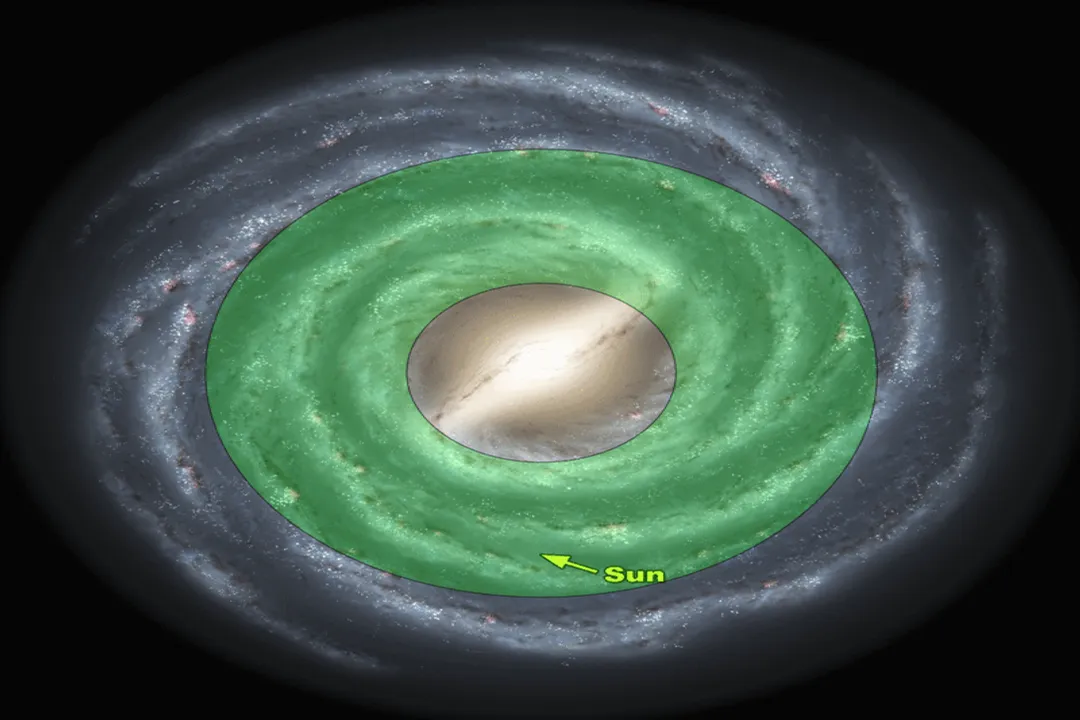
For water to be liquid, the temperature must be right, which brings us to Earth's orbital position, sometimes referred to as the "habitable zone" or the "Goldilocks Zone". This designation isn't merely a quaint name; it describes the narrow region around a star where a planet can maintain surface temperatures suitable for liquid water. If Earth orbited much closer to the Sun, like Venus, surface water would boil away into the atmosphere, leading to a runaway greenhouse effect. Conversely, if our orbit were significantly further out, like Mars, water would freeze solid, locking away the necessary solvent for biological reactions.
It is fascinating to consider the sheer narrowness of this "just right" condition. If Earth's average distance from the Sun were to shift by just a few percent, the stable, vast oceans we depend upon would cease to exist in their current form. This orbital sweet spot ensures that water can cycle between liquid, solid, and gas phases—essential for weather patterns and geological processes—but critically, it keeps enough of it liquid for cellular function.
# The Atmospheric Blanket
The presence of liquid water itself is closely tied to the atmosphere, which serves several protective roles. An atmosphere is not just a gas layer; it is a pressure regulator and a thermal buffer. The atmosphere maintains enough surface pressure to keep water in its liquid state across a wide range of temperatures, rather than letting it sublimate directly from ice to vapor. Furthermore, the atmosphere, along with Earth's magnetic field, shields the surface from harmful high-energy radiation from space. Without this protection, the energy that sustains life could just as easily destroy complex organic molecules before they ever organized into functioning cells.
A common misconception is that simply having an atmosphere is enough. The composition matters immensely. Earth's atmosphere, rich in nitrogen and oxygen (the latter being a direct product of life itself), provides the necessary gases for respiration and other metabolic functions. On a planet lacking this specific atmospheric profile, even with liquid water, the available chemical reactions for sustained life would be drastically different or entirely absent.
# Powering Life
Life is an active state; it requires a constant input of energy to maintain order against the natural tendency toward decay and randomness. On Earth, this energy is supplied primarily through two major sources: sunlight and internal geothermal heat.
# Solar Radiation
The most evident energy driver is the Sun. Photosynthetic organisms, from microscopic algae to massive forests, capture solar radiation and convert it into chemical energy stored in organic compounds. This process forms the base of nearly every food web on the planet. The energy captured by these primary producers is then transferred up through the trophic levels—herbivores consuming plants, carnivores consuming herbivores, and so on. Without this constant, reliable stream of external solar power, the complex energy hierarchies that define Earth's biosphere could not exist.
# Internal Furnace
While sunlight dominates the surface energy budget, the Earth’s interior provides a constant, independent source of power. This energy comes from the slow decay of radioactive isotopes deep within the planet and residual heat from the planet’s formation. This internal engine drives plate tectonics, volcanism, and the circulation of heat and materials through the mantle and crust.
This geophysical activity is more than just a source of heat for specialized deep-sea vent ecosystems; it acts as a planetary thermostat over vast geological timescales. The movement of tectonic plates is crucial for cycling carbon between the atmosphere, the oceans, and the rocks—a process known as the carbon-silicate cycle. It's worth noting that this tectonic recycling is arguably the unsung hero of habitability. A planet that is geologically dead, like Mars, might have had water billions of years ago, but without plate tectonics to actively regulate atmospheric carbon dioxide levels, it lost its stable surface temperature buffer, causing its water to freeze or escape. Earth’s internal dynamism locks in the external energy requirement by keeping the atmosphere stable across eons. This long-term energy recycling is what differentiates a briefly habitable world from one that sustains life for billions of years.

# The Chemical Recipe
Life requires specific raw materials to construct its structure and facilitate its functions. The chemical basis for all known life on Earth relies on six key elements, commonly abbreviated as CHNOPS: Carbon, Hydrogen, Nitrogen, Oxygen, Phosphorus, and Sulfur.
Carbon is the structural backbone. Its unique ability to form four stable bonds allows it to create the long, complex chains and rings necessary for proteins, DNA, RNA, and lipids. Hydrogen and Oxygen form water, which is both the solvent and a participant in many reactions. Nitrogen is essential for proteins and nucleic acids, while Phosphorus is critical for energy transfer molecules like ATP and for the structure of DNA. Sulfur appears in many vital amino acids and proteins.
While the presence of these elements is necessary, their availability in biologically accessible forms is the deciding factor. The elements must be present in forms that can be incorporated into organic molecules—they need to be dissolved, suspended, or gaseous, not locked away in unreactive mineral deposits.
Consider the comparison between Earth and, say, Jupiter. Jupiter has massive quantities of Hydrogen and Helium, but lacks the complex, solid rocky structure and the specific blend of heavier elements concentrated enough to form the kind of chemistry required for carbon-based life. Earth's formation process, which concentrated heavier elements into its crust and mantle while maintaining liquid water on the surface, provided the necessary concentration gradients for these building blocks to be organized by energy flow. If we were to speculate on a starting point for life on a different world, one might start by prioritizing the search for readily available, non-gaseous pools of carbon, perhaps ancient mineral deposits or subsurface ice pockets where chemical reactions could begin sheltered from radiation, as the mere existence of the elements isn't enough; their phase and location matter for initiation.
# Beyond the Big Three
While water, energy, and chemistry are the core ingredients, the longevity of life on Earth necessitates a fourth, structural requirement that often supports the other three: planetary stability. This involves magnetic fields and a proper planetary mass.
# Magnetic Shield
A functioning planetary magnetic field is a significant component of habitability that often goes unmentioned alongside the "big three". This field, generated by the movement of molten iron in the planet's outer core—a process related to the planet's internal heat and rotation—acts as a deflector shield. It pushes away the solar wind, a stream of high-energy charged particles emitted by the Sun. Without this magnetosphere, the solar wind could slowly erode and strip away the atmosphere over geological time, exposing the surface to lethal radiation and eventually causing the loss of liquid water through atmospheric escape. Mars, for example, lost much of its ancient atmosphere and water after its core cooled and its magnetic field shut down. Earth's continuous internal heat generation keeps this shield active, offering long-term protection essential for evolution across billions of years.
# Planetary Size
The mass of the planet is also fundamentally important for maintaining the other conditions. If a planet is too small, its gravity is insufficient to hold onto a substantial atmosphere over cosmological timescales; gases simply drift away into space. If a planet is too large, it might accrete too much gas during formation, becoming a gas giant like Jupiter, where life as we know it could not form on a solid surface. Earth's mass is perfectly tuned: enough gravity to retain the necessary atmospheric pressure and volatiles like water, but not so much as to pull in a crushing envelope of hydrogen and helium.
When we look across the galaxy, the search for extraterrestrial life often begins by filtering for exoplanets that meet these criteria: Goldilocks Zone orbit, presence of water signatures in their atmosphere, presence of life-indicator chemistry, and evidence of magnetic/atmospheric stability. Earth represents the ultimate success story of meeting all these conditions simultaneously and maintaining that delicate equilibrium for nearly four billion years. The persistence of life here is a testament not just to the presence of water, but to the planet's ability to sustain the conditions necessary for water to remain liquid, chemically active, and protected from the harshness of space.
Related Questions
#Citations
Life on Earth
Why is the Earth habitable?
What conditions are required for life?
What Are The Requirements For Life To Arise And Survive?
Conditions That Support Life
9 Things That Make Earth the Perfect Place for Life | Discovery
APES ch 3 and 4 Flashcards
Why Earth Supports Life