What are three main requirements for life on Earth?

The fundamental question of what permits life to exist, not just on Earth but potentially elsewhere, distills down to a surprisingly consistent set of non-negotiable prerequisites. While the variety of organisms on our planet seems infinite, from deep-sea vents to the upper atmosphere, the basic chemical and physical scaffolding supporting all these forms appears remarkably uniform. Scientists who study astrobiology and biochemistry converge on a few essential needs that must be present for life to initiate, persist, and evolve. [1][3][8] These requirements are not merely suggestions; they are the physical laws that chemistry and biology must obey when assembling complex, self-sustaining systems capable of reproduction and metabolism. [5] When considering life on Earth, three pillars rise above all others: a liquid medium for reactions, the correct chemical inventory, and a steady influx of energy.
# Liquid Medium
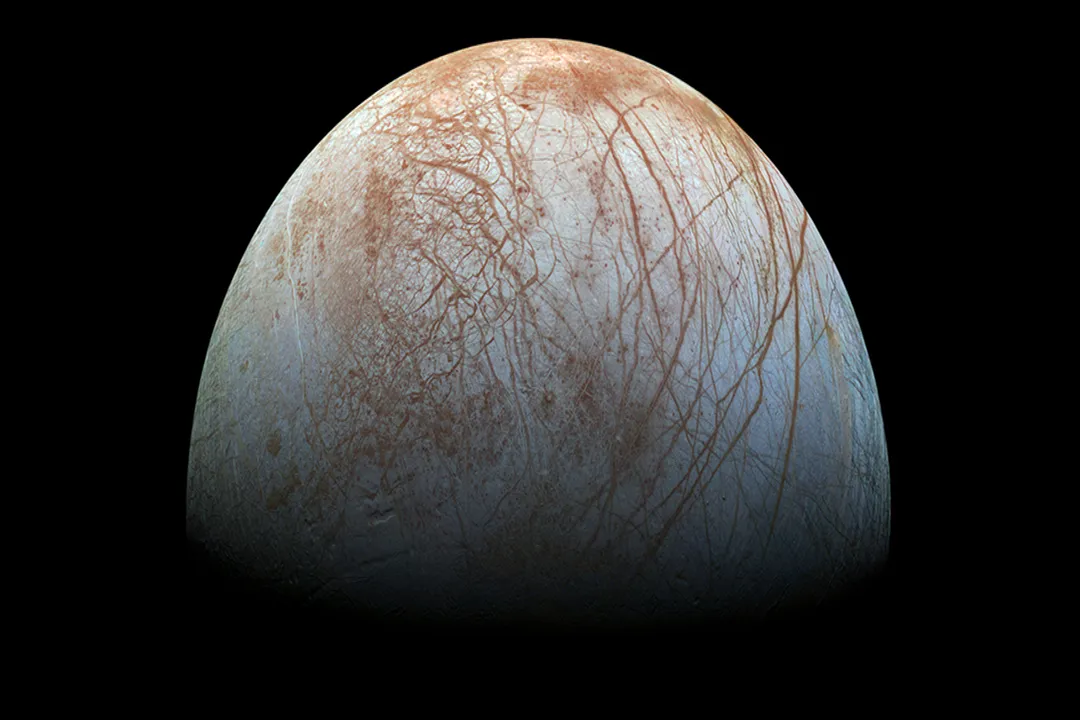
The most universally agreed-upon necessity for life as we understand it is the presence of a liquid solvent, overwhelmingly pointing to water (). [1][3][5][8] Water is not just a background element; it is the very stage upon which the drama of life unfolds. [5] On Earth, nearly all biological processes—from enzyme catalysis to nutrient transport—occur within an aqueous environment. [2]
What makes water so uniquely suited for this role? Its polarity allows it to dissolve a vast array of other chemical compounds, acting as a near-universal solvent. [5] This capability is critical because it allows necessary chemicals to mix, react, and move throughout a cell or organism. [1] Furthermore, water remains liquid over a wide range of temperatures typical of Earth's surface, offering a stable medium for chemical activity. [3] This stability is important because the chemical reactions that form the basis of life—metabolism—are highly sensitive to temperature fluctuations. [2]
Consider the sheer volume of water necessary for Earth-based biology. Human physiology itself demands a very high percentage of body mass to be water, illustrating its structural and functional importance. [2] While scientists speculate about exotic alternatives, such as liquid methane or ammonia on other worlds, these solvents typically require far colder temperatures, which drastically slows down the rate of necessary chemical reactions. [3] Life on Earth, being carbon-based, is intrinsically tied to water's properties. Carbon's ability to form long, stable chains and rings (organic molecules) is maximized when those molecules are suspended and manipulated within liquid water. If life required a solvent where carbon chemistry was less flexible, the complexity we observe—the double helix of DNA, the structure of proteins—might never have materialized. [4]
An interesting comparison emerges when looking at the Earth's biosphere: the sheer energetic cost of maintaining internal water balance in terrestrial organisms highlights the challenge of working with this solvent. For instance, a human needs to constantly regulate the ratio of water to solutes to maintain homeostasis. [2] In an entirely different environment, say a planet with a much lower atmospheric pressure, the difficulty might shift from managing solute concentration to preventing the solvent from simply boiling away at relatively low temperatures, demonstrating that the liquid state is paramount, regardless of the specific molecular composition of the fluid. [9]
# Chemical Basis

Life is, at its essence, an intricate system of chemical organization, requiring specific raw materials to build its structures and power its functions. [3] For life on Earth, this inventory boils down to a small set of elements, commonly summarized by the acronym CHNOPS: Carbon (), Hydrogen (), Nitrogen (), Oxygen (), Phosphorus (), and Sulfur (). [4][7][8]
Carbon is the superstar of this group because of its unique bonding capabilities. It can form four stable bonds, allowing it to create the long chains and intricate rings that form the backbone of all known organic molecules, including carbohydrates, lipids, proteins, and nucleic acids (DNA and RNA). [4] Without carbon's versatility, the immense structural diversity required for complex biological machinery would be nearly impossible to achieve. [7]
The other elements play equally vital, though perhaps less structurally dominant, roles. Oxygen and Hydrogen are fundamental components of water, and Oxygen is also crucial for aerobic respiration in many organisms. [2][4] Nitrogen is a required component of proteins and DNA/RNA bases. Phosphorus is the key structural element in the backbone of DNA and in adenosine triphosphate (), the primary energy currency of cells. [4] Sulfur is incorporated into certain amino acids, contributing to protein structure.
These elements must not only be present but must also be available in sufficient quantities and in forms the local environment can readily incorporate into biological cycles. [1][9] The availability of these basic chemicals, or "ingredients," is often a primary focus when scientists search for habitable zones beyond Earth. [4] While this elemental requirement seems straightforward, the exact ratio and chemical state—whether an element is in gaseous form, bound in a mineral, or dissolved in water—can determine whether life can access it at all. [9]

# Energy Flux

A static collection of molecules, no matter how perfectly arranged, is not life; it is merely chemistry. Life is defined by its constant activity—growth, repair, movement, and reproduction—all of which require a continuous input of energy to counteract the natural tendency toward disorder, known as entropy. [3][5] This necessitates an energy flux, a steady flow of usable energy through the system. [8]
For life on Earth, the ultimate source of this energy is overwhelmingly the Sun. [1] Photosynthetic organisms capture light energy and convert it into chemical energy stored in organic molecules. This energy then cascades through the food web as other organisms consume them. [3] However, relying solely on solar energy is not the only viable path. In extreme environments where sunlight cannot penetrate, such as deep-sea hydrothermal vents, life has evolved entirely different energy strategies. [5] These chemosynthetic organisms derive their energy from the oxidation or reduction of inorganic chemicals—minerals bubbling up from the Earth's crust—tapping directly into geothermal energy sources. [1][8]
The requirement is not just the presence of energy, but its usability. For example, a rock heated by the Sun contains thermal energy, but this diffused heat cannot power the creation of a protein. Life requires energy to be available in usable packets, like the chemical bonds in glucose or the photons in a light beam. [8]
This requirement for usable energy leads to a key functional differentiator. When analyzing the conditions necessary for any living system, one must consider the gradient. Organisms require a difference to exploit—a difference in light intensity versus darkness, or a difference in chemical concentration across a membrane. [9] The maintenance of this gradient through active transport, or the chemical bonds that drive anabolism (building complex molecules), consumes the incoming energy flow and is the very definition of biological activity. If the environment achieves thermodynamic equilibrium—meaning all energy is evenly spread out—then the flux stops, and life ceases to be distinguishable from inert matter. [2]
# Stability and Conditions

While Water, Chemistry, and Energy form the 'what,' the context in which they interact dictates the 'how' and 'when' of life's success. [9] This brings us to the necessary environmental conditions, which act as the crucial context for the three main requirements to be effective. The sources emphasize that life needs not only the right ingredients but also a stable cradle in which those ingredients can assemble and operate. [5][8]
For human life, this involves precise regulation of internal conditions—homeostasis—such as oxygen levels, temperature, and . [2] For life to arise initially, the environmental conditions must be permissive over geological timescales, allowing complex reactions to occur without being destroyed by extreme conditions like sterilizing radiation or massive temperature swings. [9]
On Earth, the presence of a strong, global magnetic field and a thick atmosphere provides vital protection. The magnetic field deflects harmful charged particles from the Sun, and the atmosphere shields the surface from much of the most damaging high-energy radiation. [5] This atmospheric blanket also helps moderate temperatures, keeping surface water in its liquid state and preventing temperatures from spiking or plummeting outside the tolerance window for carbon-based chemistry. [9]
The integration of these requirements is what makes the problem of abiogenesis—the origin of life—so challenging. It is not enough to find a pool of water with carbon present. You need that water to remain liquid, the carbon to be reactive enough to form long chains but stable enough not to immediately break down, and the energy source to be accessible, all within an environment protected from destructive cosmic forces. Life is the active management of these physical parameters to create a local pocket of increasing chemical order, powered by external energy gradients. This balance between external stress and internal resilience is the defining characteristic of a habitable niche. [9]
#Videos
Planet Earth - What Makes It Habitable? - YouTube
Related Questions
#Citations
3.2. What does life need for survival? - NASA Astrobiology Program
Requirements for Human Life | Anatomy and Physiology I
What Are The Requirements For Life To Arise And Survive?
Eight ingredients for life in space | Natural History Museum
What conditions are required for life? - Science | HowStuffWorks
Planet Earth - What Makes It Habitable? - YouTube
NOVA | Life's Basic Ingredients - PBS
[PDF] Lecture 25: The Requirements for Life
Chapter: 3 Pushing the Boundaries of Life