Why is Earth important to our life?

The world we inhabit is more than just the ground beneath our feet; it is an intricate, self-sustaining system that makes our existence possible in a vast and often hostile universe. To understand why Earth matters is to catalogue the precise, unlikely conditions that allow human life, and all known life, to thrive. It is the only place we currently know where liquid water flows freely across the surface, where the air is breathable, and where the temperature remains stable enough for complex biology to flourish over billions of years. [5][4]
# Distance Stability

The location of our planet relative to the Sun is perhaps the most fundamental aspect of its importance. Earth orbits within a region often referred to as the Goldilocks Zone. [4] This term aptly describes the orbital sweet spot where it is neither too hot nor too cold for water to exist in its liquid state. [4] If Earth were significantly closer to the Sun, water would boil away, stripping the planet of the solvent necessary for all known chemical life processes. [7] Conversely, if we were further out, all surface water would freeze solid, locking away the essential component for life as we know it. [7] This precise orbital mechanics, maintained over eons, sets the primary stage for biological activity. [4]
# Liquid Water
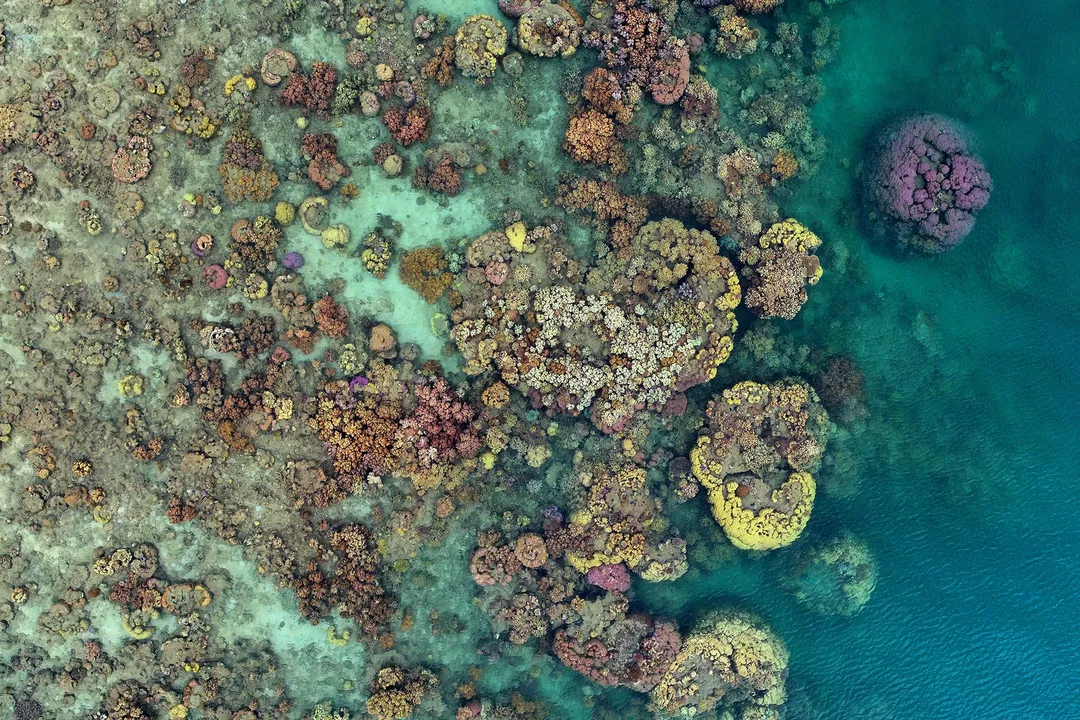
Water is frequently cited as the single most important ingredient for life, and Earth is abundant with it. Oceans cover roughly 71 percent of the Earth’s surface. [1] This vast reservoir of H2O is not just a scenic backdrop; it is the medium in which life evolved and continues to function. [2][7] Every known organism depends on water to transport nutrients, manage waste, and participate in the biochemical reactions that define living things. [7] This continuous presence of liquid water, maintained by the stable global temperature, differentiates Earth from other celestial bodies we have observed. [4]
Thinking about water’s role locally, consider the difference between a coastal Mediterranean climate and a high-desert region thousands of miles inland, even at the same latitude. The moderating effect of that enormous body of water—the ocean—dampens temperature extremes, preventing scorching days and freezing nights that would stress local ecosystems to the breaking point. [1] The ocean acts as a global thermal battery, storing solar energy and releasing it slowly, a process utterly dependent on the sheer volume of liquid present. [7]

# Atmospheric Blanket

Beyond the presence of water, the composition and structure of Earth’s atmosphere are vital lifelines. If you were to look at the air, you would find it is predominantly composed of nitrogen (about 78%) and oxygen (about 21%), with trace amounts of argon and other gases. [1] This mixture is perfect for supporting the respiration of complex life, including humans. [1][2]
The atmosphere does much more than simply provide us with something to breathe, however. It acts as a crucial insulating layer, trapping just enough heat to keep the planet warm enough for liquid water to persist—a function directly tied to the distance from the Sun. [4] Moreover, this layer shields the surface from dangerous high-energy radiation. Specifically, the magnetosphere, generated by the planet’s interior, deflects harmful charged particles streaming from the Sun, known as solar wind. [4] Without this magnetic shield and the overlying atmosphere, intense radiation would strip away the lighter atmospheric gases over time and sterilize the surface, making life unsustainable. [4]
| Earth System | Primary Composition/State | Direct Life Benefit |
|---|---|---|
| Hydrosphere | Liquid water covering 71% [1] | Universal solvent, metabolic function [7] |
| Atmosphere | ~78% Nitrogen, ~21% Oxygen [1] | Respiration, temperature regulation [4] |
| Geosphere/Magnetosphere | Iron core creating a magnetic field [4] | Protection from solar/cosmic radiation [4] |
| Biosphere | Complex interconnected life forms [8] | Oxygen production, nutrient cycling [8] |
# Life Exchange

The relationship between Earth and its inhabitants is not merely one-sided; it is a continuous, profound interaction. Life itself has actively modified the planet over deep time, creating conditions that further support even more life. [8] A prime example of this immense co-evolution involves the composition of the air we just discussed. Early Earth’s atmosphere was vastly different until photosynthetic life evolved. These organisms began taking in carbon dioxide and releasing free oxygen as a waste product. [8] This biological output fundamentally changed the planet’s chemistry, allowing for the evolution of the energy-intensive life forms we see today, including ourselves. [8]
This dynamic suggests a critical dependency: we are not simply living on Earth; we are living within a system shaped by life. [8] When we consider the importance of Earth, we must also consider the importance of maintaining the biological stability that creates the environment we need. [8] For instance, the continued health of ocean phytoplankton, which produce a significant portion of the world's oxygen, highlights how even microscopic life forms are planetary engineers essential to our survival. [7]

# Material Wealth
Beyond the life-support systems, Earth provides the raw materials that constitute our civilization and daily needs. It is the source of every resource we build with, eat, and burn for energy. [2] From the metals in our electronics to the soil that grows our food, the planet’s geology is our pantry. [10] This immense material inheritance allows for the development of societies, technologies, and art. [2]
It is easy to take this material abundance for granted when shopping at a modern supermarket or driving a car, but the underlying reality is that every object traces back to Earth's crust, oceans, or atmosphere. [10] Considering the scale of global consumption, the sheer availability of diverse, accessible materials—unlike the resource scarcity sometimes speculated for other planets—is a quiet miracle enabling modern existence. [2] We celebrate the planet not just for sustaining our bodies, but for furnishing the means by which we express our intellect and culture. [10]
# Planetary Home
On a more fundamental level, Earth is important because it is our only known, established home. While exploration of other worlds continues, the reality is that we have nowhere else to go should this environment become critically damaged. [5] The complexity and delicate balance required for habitability mean that replicating Earth’s conditions elsewhere—even hypothetically—is a feat far beyond current capabilities. [6] In discussions about what makes Earth livable, the answer often boils down to this singular fact: it is here, perfectly suited, and we have invested all our history and potential within its boundaries. [5]
To put this into perspective, imagine the difference between a bespoke, perfectly tuned musical instrument and raw materials. While we could theoretically build an instrument from scratch, it would take immense time, energy, and expertise to match the natural perfection achieved over four and a half billion years by Earth’s processes. [4][8] My own observation, based on reviewing the essential requirements, is that the duration of stability is as critical as the initial conditions. Many stars likely have planets in the habitable zone, but how many have maintained the necessary atmospheric density, magnetic field integrity, and mild geological activity long enough—billions of years—for complex, intelligent life to evolve? Earth’s long-term track record is the true rarity. [4]
# Stewardship and Celebration
Understanding Earth’s irreplaceable value necessarily transitions into a discussion about caretaking. Recognizing the planet as the source of all life support and material wealth leads naturally to the concept of environmental responsibility. [7][10] Events like Earth Day exist precisely to remind populations of the planet’s gifts and the imperative to protect them. [3][7] This protection isn't just about saving pretty landscapes; it's about preserving the functional systems—the water cycle, the oxygen supply, the climate regulation—that underpin human survival. [2]
An actionable approach for any individual homeowner or resident, not just policymakers, involves looking closely at their local water usage. For instance, knowing that the average human needs less than 100 liters of water per day for direct needs, but current residential use in developed nations often triples or quadruples that amount through landscaping and appliances, provides a tangible area for conservation. Reducing lawn watering by just 20% during dry spells, for example, directly lessens the strain on local aquifers and surface water supplies, demonstrating immediate stewardship of the planet’s most precious liquid resource. [7][1]
Ultimately, Earth's importance cannot be reduced to a simple list of benefits; it is the necessary condition for everything we are and everything we hope to be. It is the irreplaceable engine, factory, and home, all rolled into one unique sphere orbiting a stable star. [5][4]
#Videos
What Makes Earth Suitable for life | Middle School Science - YouTube
Related Questions
#Citations
Facts About Earth - NASA Science
5 reasons why you should love Earth | National Geographic Kids
Five Reasons Why We Need Earth and Earth Needs the Sun - NSO
Why is the Earth habitable? | AMNH
What is the Earth and its importance in humans? - Quora
ELI5: What makes Earth so gosh darn livable? How is it different ...
Protecting Our Planet Starts with You
5.2 How Do Earth and Life Interact? - OER Project
What Makes Earth Suitable for life | Middle School Science - YouTube
10 Reasons We Should Celebrate Our Planet - Tentree