What are the four conditions that support life on Earth?

The question of what allows our planet to teem with such staggering biological diversity is one that spans physics, chemistry, and geology. While the universe is vast and filled with celestial bodies, only one—our own world—has demonstrably crossed the threshold into sustained biological activity. This phenomenon rests upon a delicate, yet persistent, confluence of several key requirements, often distilled down to four fundamental conditions that act as the necessary stage for life as we know it to arise and persist. [2][8][9] These aren't just abstract cosmic ideals; they are tangible, measurable characteristics of Earth that distinguish it from its neighbors, providing the stability, materials, and energy required for cellular processes to begin and evolve over billions of years. [5][7]
We can group these essential prerequisites into four main pillars: the presence of liquid water, an available source of energy, the necessary chemical ingredients, and a consistently stable environment capable of protecting and moderating these interactions. [8] Each condition is deeply interconnected with the others; remove one, and the entire precarious scaffolding of habitability begins to crumble.
# Water
The undisputed first requirement for life on Earth is the presence of liquid water. [2][7][9] Water is often called the "universal solvent," and this property is central to its biological importance. [6] In a purely chemical sense, life is fundamentally a series of orchestrated chemical reactions, and these reactions require a medium in which molecules can dissolve, interact, and change state. [6] On Earth, that medium is water.
Water’s unique molecular structure—two hydrogen atoms bonded to a highly electronegative oxygen atom—gives it polarity. This polarity allows it to dissolve a vast array of other substances, including salts, sugars, and gases, effectively creating the internal cellular environment where metabolism can occur. [6] Without this solvent, the necessary chemical building blocks would remain inert, unable to mix or react to form the complex macromolecules that define living things. [2]
Furthermore, water’s remarkable thermal properties are critical to maintaining life. It possesses a high specific heat capacity, meaning it takes a significant amount of energy to change its temperature. [8] This acts as a massive thermal buffer for the planet, preventing Earth’s surface temperatures from fluctuating wildly between night and day or season to season, which would otherwise sterilize the surface. [7] Think of the oceans; they absorb immense solar energy during the day and release it slowly at night, stabilizing global temperatures and providing a relatively constant thermal backdrop for organisms that cannot regulate their own heat. [5] Even as ice, water is unique: it is less dense than its liquid form, allowing ice to float and insulate the water below, preventing entire bodies of water from freezing solid from the bottom up, which would extinguish aquatic life. [8]
The existence of water in its liquid phase is directly linked to Earth's position relative to the Sun—the so-called habitable zone—where temperatures permit water to exist as a liquid rather than solely as vapor or solid ice. [1] This zone is a very narrow band, highlighting the sheer luck of Earth’s orbit.
# Energy
Life is not static; it is an active process requiring a constant input of energy to maintain order against the natural tendency toward entropy. Therefore, a reliable energy source is the second non-negotiable condition. [2][7][9] On our planet, this energy manifests in two primary, yet distinct, forms that support the entire biosphere.
The most dominant source, powering nearly all life directly or indirectly, is solar radiation. [1][3][9] Photosynthesis, the process carried out by plants, algae, and cyanobacteria, converts sunlight into chemical energy (sugars). [6] This captured energy forms the base of almost every food chain on Earth, whether the consumer is directly eating the photosynthesizer or eating an organism that consumed one. [9]
However, relying only on the sun would limit life to the surface layers of the oceans and the terrestrial realm. Earth sustains vibrant, complex ecosystems deep in the abyssal plains of the ocean and kilometers beneath the crust, far from the sun's reach. These "chemosynthetic" communities are fueled by a different energy source: geothermal energy derived from chemical reactions occurring near hydrothermal vents. [3][6] These vents spew superheated, mineral-rich water from Earth's interior, providing the necessary chemical potential energy for specialized microbes to thrive. [1] This discovery fundamentally expanded our understanding of habitability, showing that life doesn't absolutely require sunlight, only a reliable chemical or radiative energy gradient. [6]
The availability and consistency of this energy are key. A star that flickers erratically or a planet that receives energy in unpredictable bursts would likely prevent the slow, careful accumulation of the complexity required for cellular life to establish a foothold. [7]

# Ingredients
If water is the solvent and energy is the engine, then the chemical ingredients are the physical components—the raw building blocks—from which life is constructed. [9][3] These elements are required to form the fundamental molecules of biology: proteins, nucleic acids (DNA and RNA), lipids, and carbohydrates. [6]
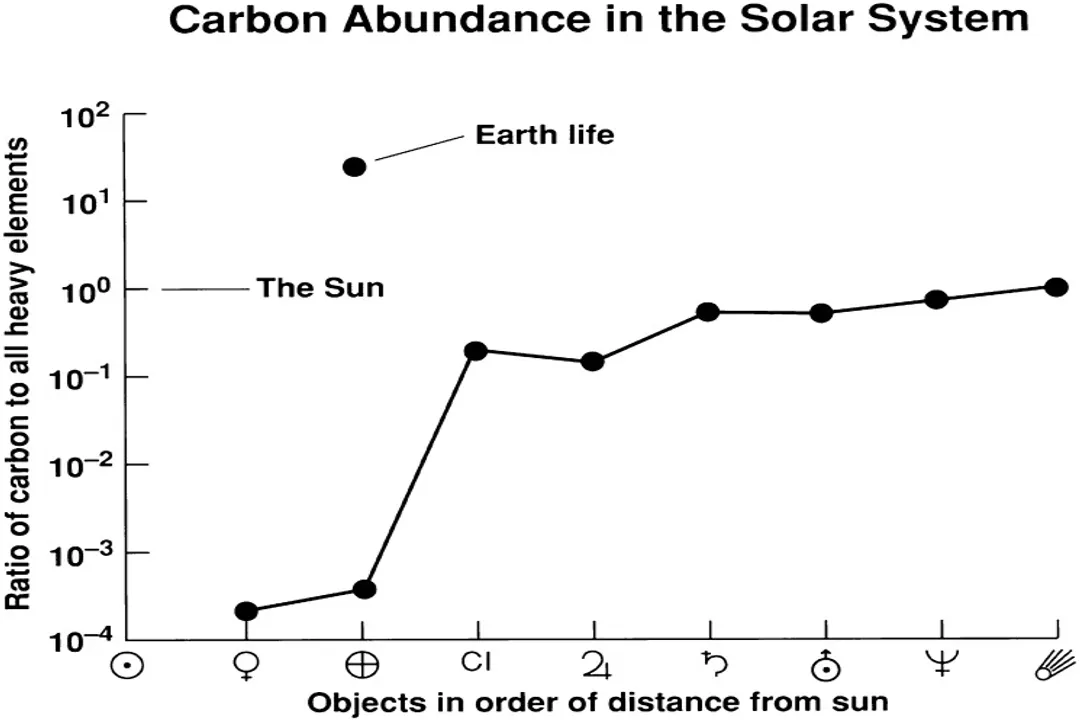
The most essential set of ingredients is often summarized by the acronym CHNOPS: Carbon, Hydrogen, Nitrogen, Oxygen, Phosphorus, and Sulfur. [2][9] Carbon is particularly favored because of its ability to form four stable covalent bonds, allowing it to create the long, complex, branching molecular chains that form the backbone of organic chemistry. [6] Hydrogen and Oxygen are obvious components of water, but they are also essential in organic molecules. Nitrogen is vital for amino acids (the building blocks of proteins) and the nitrogenous bases in DNA and RNA. [2] Phosphorus is crucial for energy transfer molecules like ATP and for the structure of cell membranes and DNA. [9] Finally, Sulfur appears in many critical amino acids and cofactors that help enzymes function correctly.
While these six elements make up the vast majority of living matter, the availability of other trace elements, such as iron, magnesium, and calcium, is also necessary for various biological processes, from oxygen transport (iron in hemoglobin) to muscle function. [6]
The crucial factor here is not just the presence of these elements, but their availability in reactive forms. Earth’s early geological processes—volcanism, weathering, and the action of early microbes—have worked over eons to process raw planetary material into biologically accessible compounds. [1] For instance, while the early atmosphere contained Nitrogen, it was only through processes like nitrogen fixation, often involving microbes, that this vital ingredient could be incorporated into organic molecules. [6]
# Stability
The final, and perhaps most complex, requirement is a stable environment that provides both physical protection and moderation of external threats. [3][7][8] This condition encapsulates several interconnected Earth features that work together to maintain the temperate conditions suitable for liquid water and the persistent chemical reactions of life. [5]
# Atmosphere and Climate
A primary component of stability is the atmosphere. [1] Earth’s atmosphere, composed primarily of Nitrogen and Oxygen (with Argon and trace gases), performs several life-sustaining functions. [6] First, it helps regulate temperature through the greenhouse effect, trapping enough outgoing heat to prevent the planet from becoming a frozen wasteland. [7] Second, it acts as a shield, protecting the surface from the constant bombardment of small meteoroids, which burn up harmlessly in the upper layers. [5] Third, it supplies the necessary gases for respiration (Oxygen) and photosynthesis (Carbon Dioxide). [7]
Crucially, the atmosphere’s pressure is what allows water to remain liquid across a broad temperature range. On a world with very low pressure, like Mars, water boils away rapidly even at relatively cool temperatures, limiting its stability as a solvent. [1]
# Magnetic Shield
Underpinning the atmosphere’s long-term integrity is Earth’s powerful magnetic field, or magnetosphere. [1][5] This field is generated by the churning, liquid iron alloy of the outer core—a phenomenon known as the dynamo effect. [5] The magnetosphere extends far into space, acting as an invisible barrier that deflects high-energy charged particles emanating from the Sun, known as the solar wind. [1]
Consider the fate of Mars. Scientists widely believe that early Mars possessed a thicker atmosphere and surface water. However, when Mars’s interior cooled and its core dynamo shut down, its protective magnetic field vanished. [5] Without this shield, the solar wind stripped away the lighter atmospheric gases over billions of years, leading to the cold, thin-aired desert we observe today. [1] This case illustrates that the energy source and liquid water conditions are insufficient without a mechanism to preserve the necessary atmospheric mass—a mechanism Earth maintains through its dynamic geology. [5]
# Plate Tectonics and Internal Heat
The long-term maintenance of the magnetic field and the cycling of essential elements are dependent on Earth’s internal heat engine, expressed on the surface as plate tectonics. [1][5] Tectonics moves the crustal plates, which facilitates the carbon-silicate cycle. [1] This cycle is vital because it acts as Earth’s slow-motion thermostat. Volcanoes release sequestered carbon dioxide into the atmosphere, while the weathering of silicate rocks pulls CO2 out. [5] This natural feedback loop prevents runaway greenhouse effects (like Venus) or global freezes (like a perpetually frigid Mars).
It’s worth pausing here to reflect on the delicate interplay within this stability pillar. If we map Earth’s conditions against the needs of simple chemistry, we see that the sheer duration of these stable conditions is as important as their initial presence. Life required a massive span of time—billions of years—to evolve from single-celled organisms to complex multicellularity. If the magnetic field had failed halfway through this process, or if the carbon cycle had locked all the into rocks, the evolutionary timeline would have been drastically cut short, rendering complex life impossible. [7] The longevity of the liquid water, energy flow, and chemical availability together is what defines habitability.
When evaluating these four pillars for other worlds, one useful way to frame the analysis is to examine the atmospheric pressure's influence on the boiling point of water. On Earth, at sea level ( kPa), water boils at . A planet with similar gravity and composition but significantly lower pressure might have an effective boiling point closer to , meaning even if the temperature were moderate, the water would rapidly escape as vapor. Conversely, a higher pressure planet compresses the liquid range, potentially keeping water liquid at much higher temperatures, though this also dramatically increases atmospheric density and the necessary energy input for life to function above ground. This pressure dependence is an often-overlooked intermediary between the "liquid water" requirement and the "stable atmosphere" requirement, demonstrating how closely linked the conditions are.
Another point for consideration relates to the type of energy. While solar energy is dominant, the reliance on chemical energy for deep-sea vents highlights a crucial distinction: an energy source must be continuously replenished. A planet that has only a finite stockpile of reducing chemicals near a volcanic fissure, which are then slowly consumed over a few million years, will only support life briefly. True, long-term habitability, measured in geological epochs, demands an energy flow that is constantly renewed by ongoing planetary processes, like stellar fusion for sunlight or core convection for geothermal activity. [3]

# Interconnected Systems
The true sophistication of Earth's life-supporting system lies not in any single element but in the feedback loops between them. [5] The four conditions are not independent switches; they are coupled systems.
For example, the presence of abundant liquid water and an atmosphere dictates the rate of rock weathering, which controls the levels, directly influencing the greenhouse effect that keeps the temperature stable enough for water to remain liquid in the first place. [1] Similarly, life itself modifies the environment: early cyanobacteria fundamentally changed the atmosphere by producing oxygen, a gas that was initially toxic to much of the existing anaerobic life but which paved the way for high-energy aerobic respiration, fueling the evolution of complex animals. [7] This transformation shows that life is not merely a passive inhabitant of conditions but an active, modifying agent that helps maintain the stability of those conditions.
This entire apparatus—the liquid water, the energy, the ingredients, and the stabilizing mechanisms like the magnetic field and plate tectonics—must be present for a sufficient duration. The history of Earth suggests that the window for life's genesis and subsequent flourishing required billions of years of relative environmental calm provided by these four sustaining conditions working in concert. [7] Anything less, and the complex chemical structures we define as life simply would not have had the time or the consistent support necessary to emerge from simple organic chemistry.
#Videos
What Makes Earth Suitable for life | Middle School Science - YouTube
Related Questions
#Citations
Why is the Earth habitable? | AMNH
What Are The Requirements For Life To Arise And Survive?
[PDF] Factors that Contribute to Making a Planet Habitable
What Makes Earth Suitable for life | Middle School Science - YouTube
What conditions are required for life? - Science | HowStuffWorks
Requirements and limits for life in the context of exoplanets - PMC
What makes a planet habitable - SEEC - NASA
4 Conditions For Life On Earth | PPT - Slideshare
Requirements for Life - Understanding Evolution