How does cosmic radiation affect life on Earth?
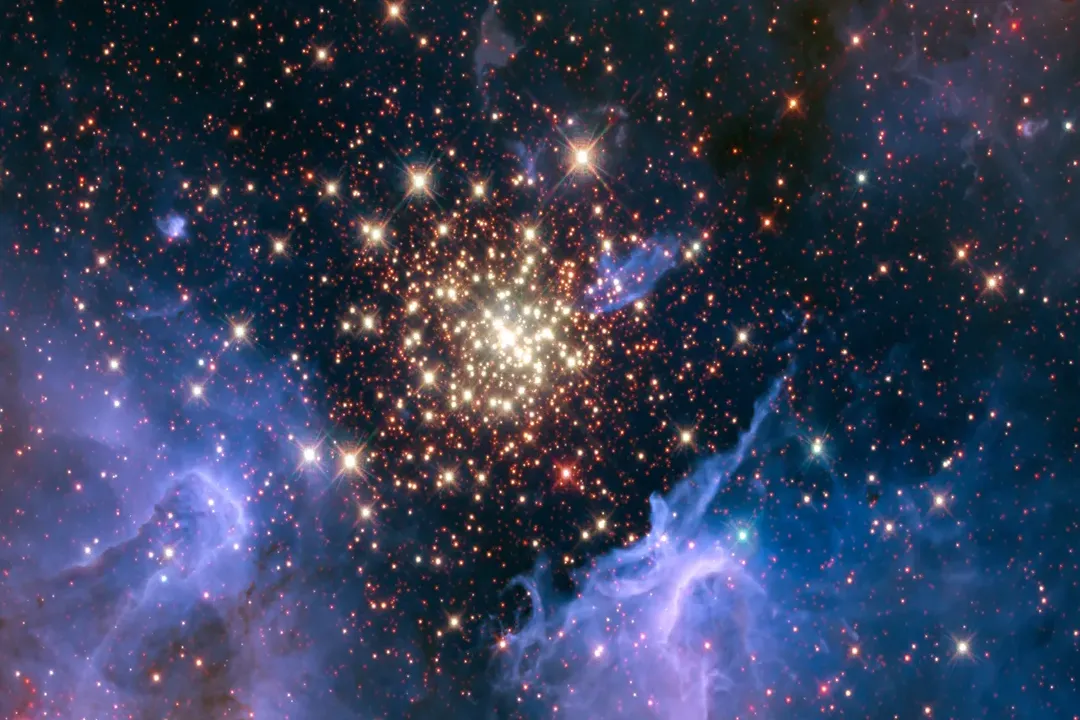
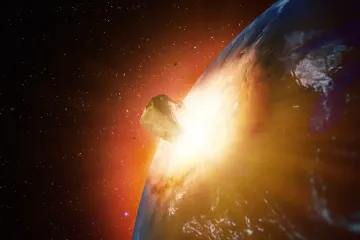
Energetic particles from space constantly rain down upon our planet, a phenomenon we refer to as cosmic radiation. These high-speed projectiles, originating from both within our solar system and from distant galactic explosions, have profound implications for life, though their effect on us here on the ground is vastly different from what astronauts experience in orbit. [1][2] Understanding this bombardment requires looking at the primary defense mechanisms in place and recognizing that life has adapted to this perpetual celestial input over billions of years. [5]
# Ray Sources

Cosmic rays are not rays in the traditional sense, but rather extremely high-energy subatomic particles, predominantly protons, though atomic nuclei stripped of their electrons also constitute a significant portion. [8] These particles travel at relativistic speeds, often close to the speed of light. [8] Their origins are generally split into two categories: those originating from our Sun, known as Solar Energetic Particles (SEPs), and the far more energetic particles originating outside the solar system, called Galactic Cosmic Rays (GCRs). [8] GCRs are thought to be accelerated by powerful events like supernova explosions in distant parts of the Milky Way. [9]
# Planetary Defense
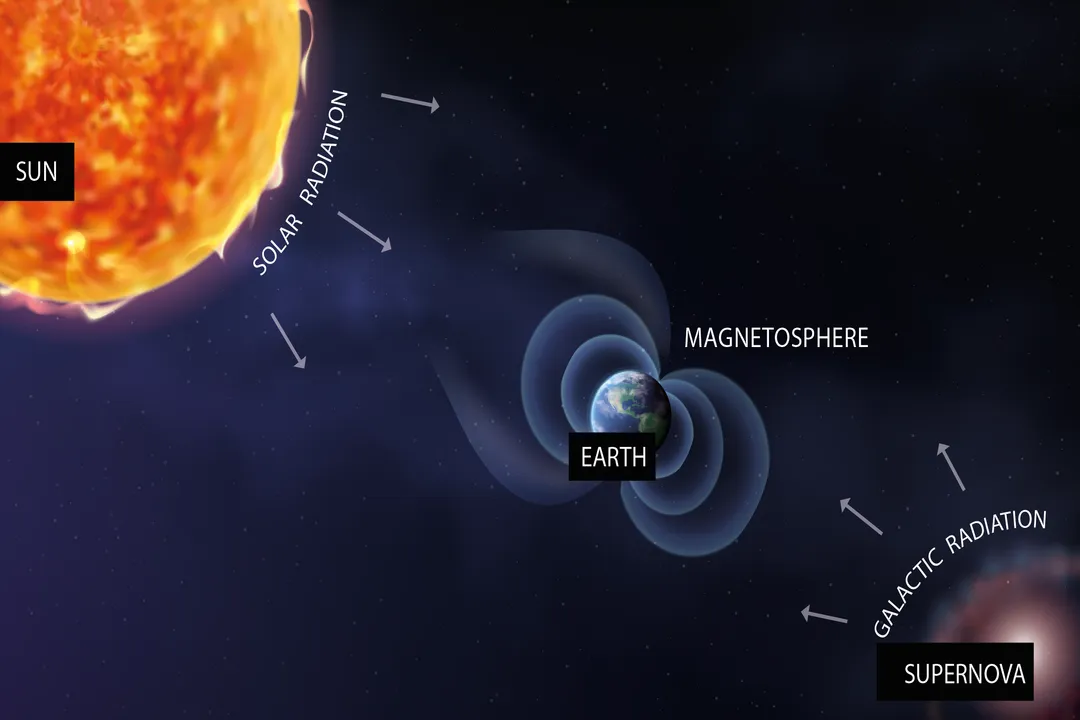
The primary reason we do not notice the constant impact of these high-energy projectiles is Earth's sophisticated, two-layered shield system. [4] First, Earth's magnetic field, the magnetosphere, deflects the majority of charged particles away from the planet. [4] Second, the atmosphere acts as a dense absorber and converter, breaking down the primary radiation into less harmful secondary particles before they reach sea level. [8] When a primary cosmic ray strikes an air molecule high up, it initiates an air shower, producing cascades of neutrons, protons, and muons. [4][8] Therefore, what reaches us on the ground is largely this secondary radiation. [4]
The effectiveness of this defense is staggering; without it, life as we know it could not exist on the surface. [2] In deep space, or on surfaces like the Moon or Mars lacking a strong magnetic field and thick atmosphere, astronauts and equipment are exposed to the full, unmitigated intensity of GCRs. [2] This contrast highlights how much our local environment mitigates the hazard inherent in space physics.
# Surface Doses
For the average person living at sea level, the dose received from cosmic radiation contributes only a small fraction to their total annual radiation exposure. [4] Natural radiation exposure comes from three main sources: cosmic rays, terrestrial radiation (from radioactive elements in the soil and rocks), and internal radiation (from naturally occurring radioactive isotopes we ingest or inhale, such as radon). [3] While the exact numbers fluctuate based on location, a typical dose from cosmic radiation might hover around per year for someone living at sea level. [3]
The shielding provided by the atmosphere is highly dependent on altitude and latitude, meaning exposure isn't uniform across the planet's surface. [3]
| Location Factor | Effect on Cosmic Dose | Underlying Reason |
|---|---|---|
| Altitude | Increases | Less atmosphere to absorb primaries [3] |
| Latitude | Varies (Higher near poles) | Magnetic field provides less deflection near the poles compared to the equator [3] |
While we often discuss the added dose from flying, it is interesting to note how local geography plays a role even for ground dwellers. For example, living in a high-altitude city like Denver, Colorado, means your annual background dose from cosmic rays will be measurably higher than for someone living at the coast, simply because you have less atmosphere overhead for protection. [3] This constant exposure is the baseline that life has calibrated itself against.
# Shaping Biology
It is fascinating to consider the timescale over which cosmic rays have influenced terrestrial biology. For billions of years, life has developed under this energetic bombardment, suggesting that mutation caused by cosmic radiation may have been a subtle but persistent driver in evolution. [5] High-energy particles interacting with the atmosphere could have provided necessary chemical precursors or energetic inputs that jump-started or spurred diversification in early life forms. [9] This continuous, natural mutational pressure acts as a selective force, potentially weeding out susceptible organisms and favoring those resilient enough to repair the resulting DNA damage. [5][6] This inherent level of environmental stress is built into the biological machinery we possess today.
# Beyond Atmosphere
The health risk profile associated with cosmic radiation undergoes a dramatic escalation when the protective layers of Earth are removed. [2] Astronauts operating outside the magnetosphere or even in Low Earth Orbit (LEO) are subject to the full spectrum of GCRs, which carry far more energy than the secondary particles reaching the ground. [7] Exposure to these high-energy ions presents significant biological concerns, including an increased lifetime risk of cancer, potential damage to the central nervous system, and the possibility of acute radiation sickness following major solar particle events. [1] NASA dedicates substantial research to developing shielding and mitigation strategies precisely because this is the single greatest non-mechanical hurdle to long-duration space travel, such as a mission to Mars. [2] The body in space is essentially exposed to highly charged bullets, whereas the body on Earth is mostly exposed to the resulting spray of smaller debris after the bullet has struck a wall. [7]
For frequent flyers, the situation warrants a slightly different consideration than for the general public. Because commercial aircraft fly at altitudes where atmospheric shielding is significantly reduced—often between $30,000$ and $40,000$ feet—the dose rate is noticeably higher. [3] A long-haul international flight can result in an exposure dose comparable to a few chest X-rays taken quickly. While this is an acute, temporary spike, for those who fly thousands of hours annually, the accumulated dose is tracked and managed by employers, reflecting a controlled occupational exposure scenario rather than the random, low-level exposure of the general populace. [3]
# Risk Assessment
Ultimately, when evaluating the effect of cosmic radiation on life on Earth, the key takeaway is shielding. [4] The protection afforded by our planet's magnetic field and thick atmosphere successfully filters out the dangerous primary radiation, reducing the energy flux to manageable background levels. [4][8] While the radiation that has shaped evolution over eons is a profound concept, [5] the immediate, quantifiable risk to the average person standing on the surface is low when compared against other natural sources like radon gas. [4][3] Life on Earth is essentially taking cover behind a very effective, naturally occurring blanket of air and magnetism.
Related Questions
#Citations
Cosmic radiation gave the Fantastic Four superpowers. Here's what ...
Why Space Radiation Matters - NASA
Facts About Radiation from Space (Cosmic Radiation) - CDC
Cosmic Radiation: Why We Should not be Worried
How cosmic rays may have shaped life - Stanford Report
Cosmic radiation and evolution of life on earth - PubMed
What Happens to the Body in Space? - Duke Today
Cosmic ray - Wikipedia
Cosmic Rays, Space Weather and Larger Questions About the ...