What are three factors that sustain life on Earth?

The planet we inhabit appears unremarkable from a distance, a blue marble suspended in the void, yet it hums with the activity of countless life forms, from the microscopic to the majestic. Understanding why life thrives here requires looking not just at what is present, but how those elements interact and persist over vast stretches of time. The conditions that sustain this biosphere boil down to three interconnected requirements: a liquid solvent, a continuous energy supply, and a constantly recycled set of chemical building blocks. If any of these three pillars were removed or halted, the intricate chemistry we call life would cease.[1][2][4]
# Liquid Solvent
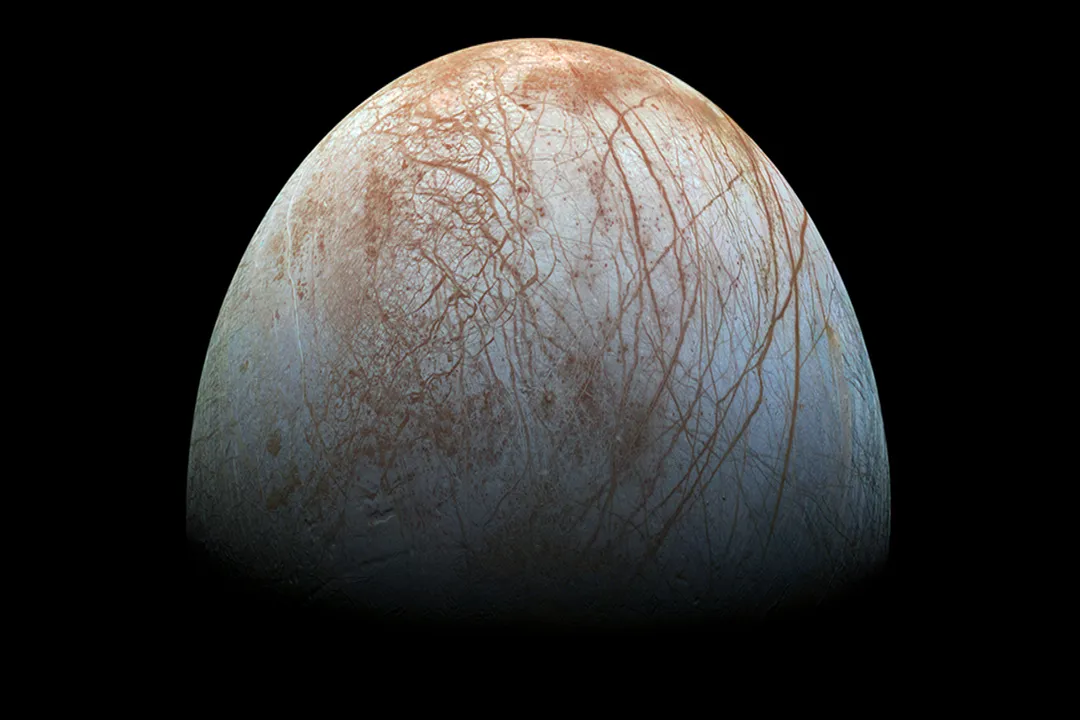
The first, and perhaps most defining, characteristic that sets Earth apart as a sanctuary for life is the ready availability of liquid water. Water is not merely something living things drink; it is the medium in which life's fundamental processes occur. [5] It functions as the universal solvent, dissolving and transporting the necessary chemicals both within a cell and throughout the entire organism. [2][5] Without this liquid matrix, molecules cannot easily move, react, or be delivered where needed, effectively halting metabolism. [1]
The reason Earth possesses this liquid state is intrinsically tied to its orbital mechanics and planetary size. Earth sits squarely within the Habitable Zone, often called the "Goldilocks Zone," meaning it orbits its star at a distance where the temperature is neither too hot nor too cold. [3][5] This orbital sweet spot dictates that surface water can remain liquid rather than boiling into vapor or freezing solid. [2] While life can persist in dormant states between wet periods, a regular availability of liquid water is critical for sustained activity. [2] On Earth, the temperature range where this is most viable is generally cited to be between approximately and , though this can vary based on pressure and other conditions. [1]
Water’s chemical properties further enhance its role. It possesses a high heat capacity, meaning it takes a significant amount of energy to change its temperature. [1] This property is vital for maintaining a relatively moderate climate across the planet, buffering the extreme temperature swings that would otherwise characterize a body without such a large reservoir of liquid. Furthermore, the planet’s atmosphere, held in place by sufficient gravity, acts as an insulating blanket, helping to keep surface temperatures within that life-supporting window. [2] When considering potential life elsewhere, astrobiologists frequently adopt the guiding strategy: follow the water, as its presence in a liquid form is the primary indicator of habitability. [5]
# Energy Input Steady
Life is defined by processes—movement, growth, repair, and replication—all of which require an input of energy to drive chemical reactions forward. [2] On Earth, this energy predominantly arrives from one source: the Sun. [2][4]
For the vast majority of living things, this solar energy is captured through photosynthesis. [1] In this complex chemical process, organisms like plants and phytoplankton use light energy to convert carbon dioxide and water into sugars (food), releasing oxygen as a byproduct. [1] These resulting sugar molecules serve as stored chemical energy, powering the organism’s immediate needs and supporting growth. [1] This process forms the base of almost every food web on the planet. [1] If the light input is too weak (too far from the star) or too intense (bringing harmful radiation), life cannot effectively capture or utilize it. [2][5]
However, life is not exclusively solar-powered. Some organisms, particularly the hardy extremophiles found deep underground or near hydrothermal vents, can harness chemical energy instead. [2][5] At deep-sea vents, for instance, geothermal energy drives chemical reactions that organisms utilize to survive in total darkness. [4] Sulfur and hydrogen can serve as electron sources for these specialized cells when light and oxygen are unavailable. [5] This diversity in energy acquisition means that when scientists search beyond Earth, they look for a steady input of either light or chemical energy, understanding that the requirement is for consistent flow, not just the presence of a power source. [2]
The key to sustainability here is steadiness. Catastrophic shifts in energy supply, such as an impact event blocking the sun for extended periods, lead to mass extinction because the chemical reactions necessary for life cannot be fueled. [5]

# Matter Cycles Continuous
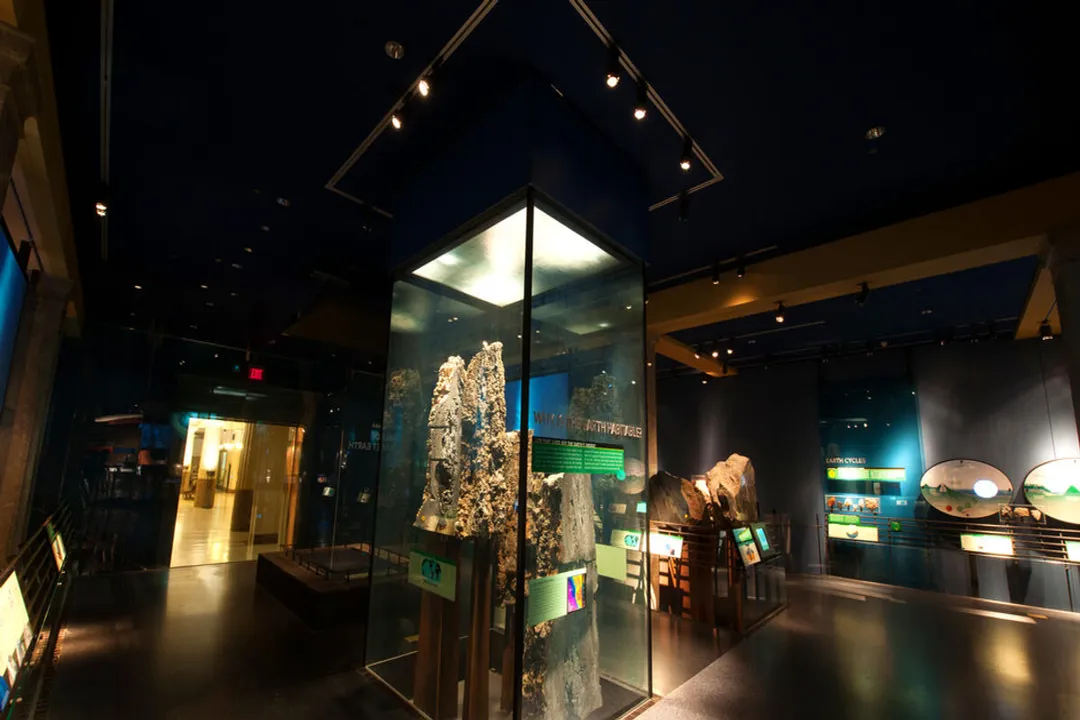
While water is the medium and energy is the engine, matter provides the machinery—the physical components that constitute an organism. [2] Life on Earth is built upon a foundation of six core elements: Carbon (), Hydrogen (), Nitrogen (), Oxygen (), Phosphorus (), and Sulfur (). [1][5]
Carbon stands out as the simple, yet versatile, building block. Its molecular structure allows it to form long, stable chains and complex three-dimensional structures, which are the basis for organic compounds like proteins, carbohydrates, and fats. [5] Nitrogen is non-negotiable, as it forms part of amino acids (the components of proteins) and is essential for the genetic code carried in DNA and RNA. [5] Phosphorus plays the role of the molecular accountant, being a key component in ATP (adenosine triphosphate), which acts as the universal energy currency within cells, powering nearly all activities. [5] Sulfur is incorporated into many essential enzymes and vitamins. [5]
The mere presence of these ingredients is insufficient; they must be recycled. On Earth, mineral and nutrient availability is constantly renewed through geological and biological processes—the water cycle, volcanic activity, and the decomposition of dead matter—which transport and replenish these vital chemicals. [1][2]
A breakdown in this cycling illustrates why continuity is paramount. For example, while atmospheric nitrogen is abundant, plants cannot use it directly; they require bacteria to convert it into usable forms like ammonium or nitrate, which are then passed up the food chain. [5] If soil bacteria populations crash due to pollution or environmental stress, the nitrogen supply for plants halts, even if sunlight and water remain perfectly balanced. This highlights a critical analytic point: the stability of the cycling mechanisms (the flow) is often more fragile than the stability of the initial conditions (the temperature or the existence of water). [1] A failure in one cycle cascades through the entire biological system, leading to resource scarcity that constrains growth and population increases. [1] The persistence of life hinges on the planet's capacity to keep these chemical elements in constant motion, ensuring they are never permanently locked away in an unusable state, such as deep within the Earth’s core where elements like carbon and gold tend to bond preferentially with iron. [4]
This leads to a fascinating point about the specificity of assembly. The UChicago sources note that biological molecules rely on chirality, or molecular "handedness"—molecules must form with a specific orientation (like a right hand versus a left hand) to build functional structures like proteins and DNA. [4] On Earth, life overwhelmingly selected the left-handed amino acids. For life to have emerged initially, some process, perhaps involving interactions with polarized light or minerals in a specific setting like a hydrothermal vent, had to select for one orientation over the other. Any nascent extraterrestrial life that fails to establish this molecular bias will likely never form the complex, self-replicating machinery that defines true biology, regardless of how much water or energy is present. [4] This chemical exclusivity is a subtle, yet absolute, requirement.
# Assembly Time
Beyond the immediate physical and chemical inputs, the sustaining nature of Earth's life-supporting conditions requires time. [5] The development of complexity, moving from simple single-celled organisms to multicellular life, plants, and animals, required billions of years. [5] Earth formed approximately $4.5$ billion years ago, but the oldest fossil evidence for life only dates back about $3.4$ billion years. [4] That $600$-million-year window represents the critical period where the ingredients assembled, catalyzed, and organized themselves into the first self-propagating cells. [4]
The concept of luck is also inseparable from Earth’s history. [5] Having the right materials in the right place at the right time is statistically improbable. Furthermore, the evolutionary road has been paved with catastrophes, such as massive volcanic eruptions and asteroid impacts, that wiped out many species. [5] Paradoxically, these accidents cleared ecological space, offering survivors the opportunity to flourish, adapt, and diversify into new forms. [5] The continuation of life is thus supported not only by the presence of water, energy, and matter, but by the long, chaotic history that allowed these elements to interact, select, and refine complexity.
In summary, the sustaining vitality of Earth rests on the synchronized operation of these three factors: the thermal comfort that keeps liquid water mobile; the constant flux of energy to power cellular work; and the enduring cycles of matter that replenish the structural components, all given the necessary eons of time to allow organization and complexity to arise. [1][2][5]
#Videos
Planet Earth - What Makes It Habitable? - YouTube
Related Questions
#Citations
What factors allow human life on Earth? | CK-12 Foundation
Why is the Earth habitable? | AMNH
[PDF] Factors that Contribute to Making a Planet Habitable
Planet Earth - What Makes It Habitable? - YouTube
Factors That Sustain Life | PDF | Water | Earth - Scribd
3.2. What does life need for survival? - NASA Astrobiology Program
Eight ingredients for life in space | Natural History Museum
The origin of life on Earth, explained | University of Chicago News