How does the Earth's position in the solar system help support life?

The presence of life on Earth is not a matter of cosmic chance alone; it is deeply intertwined with our planet's precise location and orbital characteristics within the solar system. We exist in a surprisingly narrow band where conditions allow for liquid water, a necessity for all known life forms. This delicate arrangement, positioning Earth relative to the Sun and other planetary influences, creates the stable environment required for biological systems to evolve and thrive over billions of years.
# Sun Power
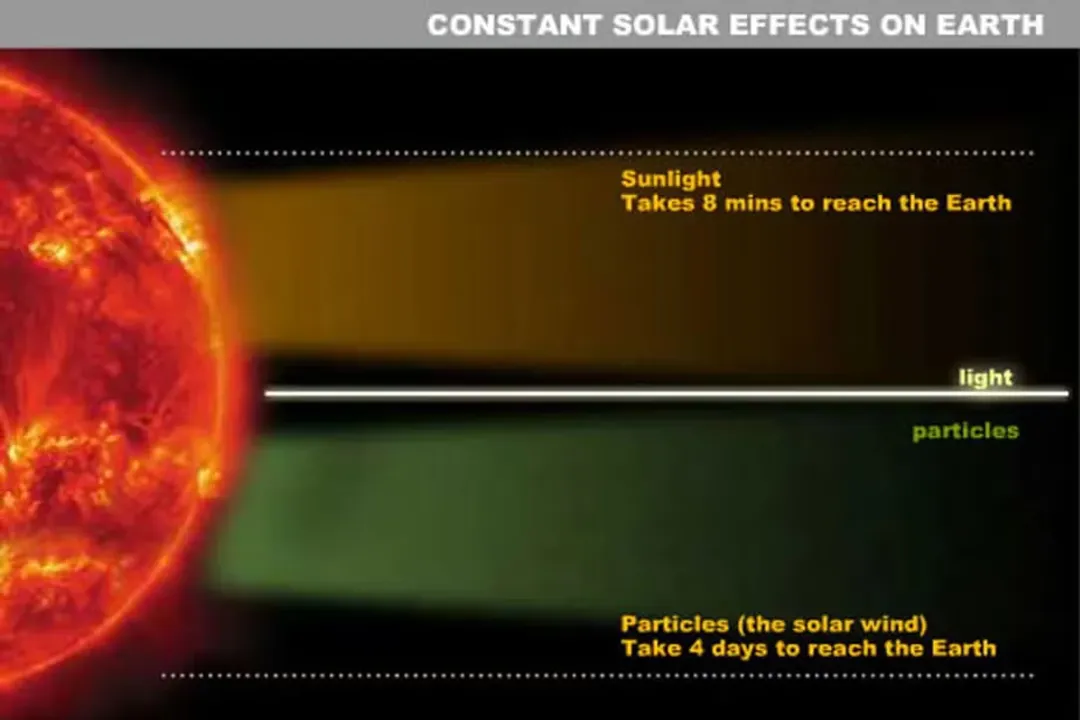
The fundamental driver for nearly all processes on Earth that sustain life is the energy radiating from our star, the Sun. The Sun converts mass into energy through nuclear fusion in its core, constantly radiating this energy outward across the solar system. This incoming energy, often termed solar radiation, is what drives weather patterns, powers photosynthesis, and dictates the temperature ranges experienced across the globe.
The amount of energy Earth receives from the Sun is precisely what allows water to remain in its liquid state in many regions. If the Earth were significantly farther away, this incoming energy would be insufficient, causing the surface water to freeze solid, much like it appears to be on Mars. Conversely, if Earth orbited too close to the Sun, the energy input would be too great, causing water to boil away into the atmosphere, resulting in a steam-filled, sterile environment similar to Venus. The solar energy striking the Earth is absorbed by the land, water, and atmosphere, driving the planet's climate system.
The Earth intercepts only a tiny fraction of the Sun’s total output, but this measured amount is perfectly tailored for biological activity. This steady, reliable energy supply is critical because life depends on chemical reactions occurring at moderate temperatures. While the Sun itself is a star of average size and temperature, its specific characteristics, combined with Earth's distance, strike a perfect balance. The Earth is essentially bathed in just the right amount of power to maintain habitability.
# Energy Distribution
The energy received from the Sun isn't uniform across the planet; it is unevenly distributed, which leads to climate dynamics. The amount of solar energy absorbed by a surface depends on the angle at which the Sun's rays strike it. Areas near the equator receive the most direct sunlight, meaning the rays hit the surface almost perpendicularly, concentrating the heat. Areas near the poles receive sunlight at a shallow angle, spreading the same amount of energy over a much larger surface area, resulting in colder temperatures. This difference in heating drives global wind and ocean currents, which work to redistribute the solar energy around the globe, moderating temperature extremes between day and night or between different latitudes.
This mechanism of energy transfer is vital for maintaining a stable biosphere. Imagine a planet with the same solar input but no mechanism like our atmosphere and oceans to move heat from the equator to the poles; such a world would likely feature perpetually boiling seas at the equator and vast, permanent ice sheets everywhere else. The Earth's position relative to the Sun provides the input, but the planet's other features—its atmosphere and oceans—manage the distribution of that energy, which is a direct consequence of our orbital parameters.
# Orbital Distance

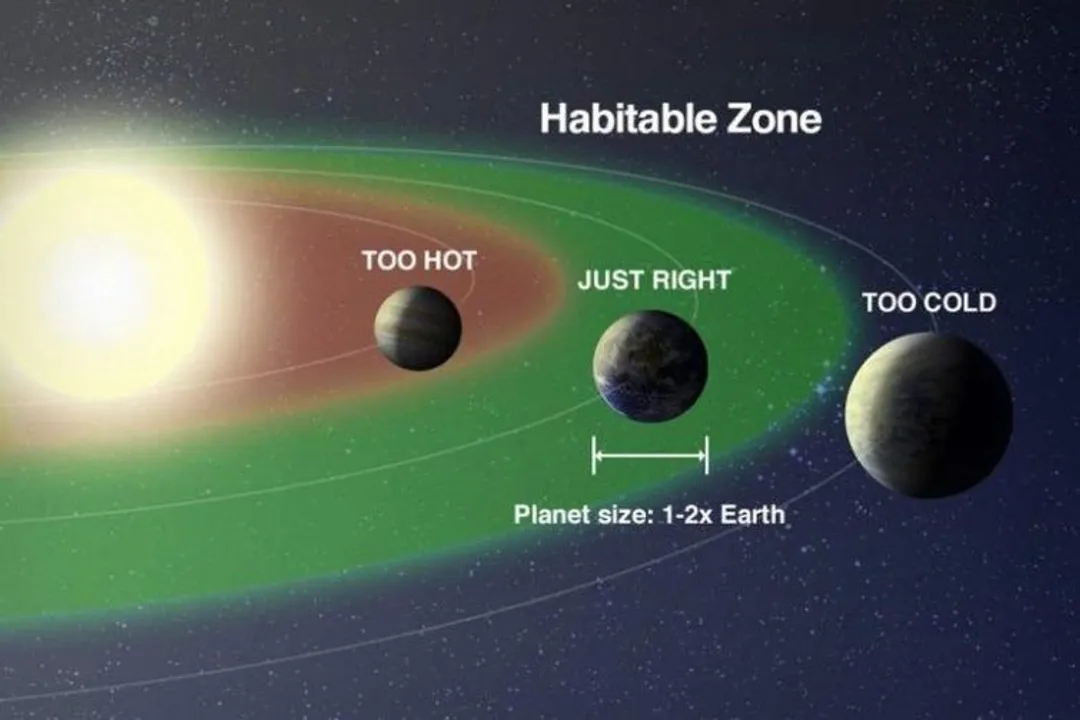
The concept of the "Habitable Zone," often called the "Goldilocks Zone," directly relates to Earth's distance from the Sun—it is neither too hot nor too cold. This orbital placement ensures that temperatures allow for the existence of liquid water on the surface, which is the essential solvent for life as we know it. Scientists define this zone based on where a planet could sustain liquid water given a suitable atmosphere. Earth sits comfortably within this sweet spot.
The distance to the Sun is approximately 150 million kilometers, which is defined as one Astronomical Unit (AU). This measurement establishes the scale for the entire solar system. Being at this distance means we receive enough solar flux to maintain an average global temperature that supports liquid water.
Consider the next planet out, Mars, which orbits farther away. It receives significantly less solar energy, leading to surface temperatures too cold to keep water liquid over much of the planet. Conversely, Venus, orbiting closer, experiences temperatures hot enough to melt lead due to the intense solar energy absorption and its thick atmosphere. Earth’s position, therefore, is the primary gatekeeper for liquid water stability.
It is interesting to consider the orbital mechanics here. If Earth's orbit were highly elliptical, meaning it varied greatly in distance throughout the year, the resultant temperature swings would challenge even resilient life forms. A planet where the temperature fluctuates wildly between scorching summer highs (at perihelion, closest approach) and deep-freeze winter lows (at aphelion, farthest approach) would struggle to support complex, stable ecosystems that require consistent conditions over geological time. Earth's orbit is remarkably near-circular, meaning the variation in solar flux received between perihelion (around January 3rd) and aphelion (around July 4th) is minor, about 6.7%. This small variation provides the stability necessary for long-term biological evolution. This orbital consistency, a quiet background feature of our existence, is arguably as important as the average distance itself.
# Orbital Dynamics

Beyond the average distance, the way Earth travels around the Sun—its orbital path and orientation—plays a distinct role in supporting life through the creation of seasons.
# Orbital Shape
As mentioned, the orbit is nearly circular, minimizing large temperature swings. Earth's average distance of about 150 million kilometers provides the right thermal baseline. This baseline temperature, moderated by the atmosphere, allows for liquid water globally, which is a prerequisite for habitability.
# Axial Tilt
Perhaps the most important dynamic element is the axial tilt. Earth spins on an axis that is tilted relative to the plane of its orbit around the Sun. This tilt is currently about 23.5 degrees. It is this tilt, not the changing distance from the Sun during the year, that causes the seasons.
When the Northern Hemisphere is tilted toward the Sun, it receives more direct sunlight for longer periods each day, resulting in summer. Simultaneously, the Southern Hemisphere is tilted away, receiving less direct light for shorter days, resulting in winter. Six months later, the situation reverses. This cyclical variation in solar intensity drives global climate patterns, distributing heat and facilitating vital processes like the seasonal growth and decay that drive nutrient cycles in terrestrial and aquatic biomes. Without this tilt, sunlight would strike the equator most directly all year round, leading to extremely hot equatorial regions and permanently frozen poles, severely limiting the global area suitable for diverse life.
# Planetary Neighborhood
Earth’s position is also defined by its relationship to other bodies, particularly the Moon and the other planets. The Earth orbits the Sun, but it also has a large natural satellite, the Moon, whose presence is critical.
The Moon exerts a gravitational pull that helps stabilize the Earth's axial tilt. Without the Moon's stabilizing influence, the tilt could wobble significantly over millions of years, leading to extreme and chaotic shifts in climate where ice ages could creep rapidly toward the equator or disappear entirely from the poles. This dampening of massive climatic variation ensures a more predictable environment for life to develop complex strategies over vast timescales.
Furthermore, the gravitational influence of the gas giants, like Jupiter, acts as a sort of celestial shepherd. While not explicitly detailed as a life-support mechanism in all sources, the configuration of the solar system helps shield the inner planets. Jupiter's immense gravity helps deflect or capture many comets and asteroids that might otherwise pose a significant impact threat to Earth. While impacts certainly happen, the general architecture helps maintain a long-term, relatively stable bombardment rate compared to what it might otherwise be.

# Atmosphere Integration
The Earth's position in the solar system sets the initial energy budget, but the planet's atmosphere acts as the critical intermediary that converts that raw energy into a livable surface environment. The energy that arrives from the Sun travels primarily as visible light. A portion of this energy is reflected back into space by clouds and the surface (like ice or light sand), but much of it is absorbed by the Earth’s surface, warming it.
The warmed surface then radiates heat back toward space, but this heat is in the form of longer-wavelength infrared radiation. Gases in the atmosphere, such as water vapor and carbon dioxide, absorb this outgoing infrared radiation, trapping heat near the surface—a phenomenon known as the greenhouse effect. This natural trapping mechanism is essential; without it, the Earth would be too cold for liquid water to exist, despite being in the Habitable Zone. On average, the Earth's temperature is about (), but without the atmosphere acting as a blanket, the average temperature would plummet to about ().
It's worth pausing to consider the synergy here. If Earth orbited at a distance where the solar input was slightly lower, even the natural greenhouse effect might not be enough to raise the temperature above freezing. If the orbit were slightly closer, the natural greenhouse effect might run away, as seen on Venus. The specific distance, combined with the presence and composition of our atmosphere, is what creates the stable, moderate surface environment we rely on. The solar input must be right to allow the atmosphere to perform its life-preserving function without overheating the planet.
# Stability Over Time
The long-term habitability of Earth hinges on the relative unchanging nature of its position and orbit over deep time. Life requires billions of years to evolve from single cells to complex beings, and this demands predictable conditions. The solar system configuration has been relatively stable for eons.
For instance, the Sun has gradually increased in luminosity as it ages, a known physical process. However, geological evidence suggests that while the Sun has been getting brighter, Earth's climate has remained relatively stable enough for liquid water to persist. Scientists hypothesize that this stability has been maintained, in part, by geological processes—like the carbon cycle—that act as a slow-motion thermostat, drawing down carbon dioxide when the planet gets too warm and releasing it when it gets too cold. This planetary feedback loop can only function effectively when the baseline energy input from the Sun, dictated by our orbital distance, remains within a manageable range. If the Sun’s output had increased too rapidly, Earth’s geological thermostat might have been overwhelmed, causing a runaway greenhouse effect long before complex life could emerge.
Thinking about the orbital mechanics again, one can appreciate the fine-tuning. If Earth's orbit possessed just a few percent more eccentricity—meaning a more elliptical path—the difference in solar irradiance between perihelion and aphelion could push the planet past the critical thresholds for water phase changes every single year. At one extreme, massive global ice coverage would form during the yearly "winter," and at the other, massive evaporation would occur during the "summer." Such extreme year-to-year fluctuations would likely prevent the establishment of slow-growing, complex biospheres that require long periods of mild conditions to establish root systems, build up soil, or develop complex food webs. The slight stability we enjoy, being just outside the orbital zone of Venus and just inside that of Mars, is an achievement of cosmic placement.
The Earth’s position dictates the baseline energy, the seasonal variation, and the gravitational stability needed for our essential systems—liquid water, climate regulation, and the atmosphere—to function in concert, making this specific orbital niche the foundation of our existence.

# Key Positional Factors Summary
To summarize the contribution of Earth's specific placement, we can look at the primary determinants established by its solar system coordinates:
| Factor | Characteristic | Implication for Life | Citation |
|---|---|---|---|
| Average Distance | million km (1 AU) | Places Earth in the Habitable Zone, allowing liquid water. | |
| Orbital Shape | Near-circular (low eccentricity) | Minimizes large annual temperature swings, promoting stability. | |
| Axial Tilt | degrees | Causes predictable seasons, driving climate and nutrient cycling. | |
| Solar Input | Moderate and consistent energy flux | Provides necessary energy for photosynthesis and liquid water temperatures. | |
| Lunar Influence | Presence of a large Moon | Stabilizes the axial tilt, preventing chaotic climate shifts. |
This configuration is not merely one factor among many; it is the precondition for all other life-supporting elements, such as plate tectonics or the magnetic field, to have time to develop and operate effectively. The entire system relies on the energy and relative orbital steadiness provided by being exactly where we are.
Related Questions
#Citations
How does Earth's position in the solar system help support life on ...
Earth Science Flashcards - Quizlet
Facts About Earth - NASA Science
Why is the Earth habitable? | AMNH
How the Earth's Unique Planetary Position Shows Us God's Design
Why Earth Supports Life | CK-12 Foundation
The Power of the Sun - National Geographic Education
The Sun's impact on the Earth
The Sun's Energy: An Essential Part of the Earth System