What is the hypothesis of the solar system origin?
The formation of our solar system remains one of astronomy's most compelling puzzles, but the leading scientific explanation centers on a powerful, elegant concept known as the nebular hypothesis. This idea posits that the Sun, the eight planets, and everything else orbiting our star coalesced from a vast, spinning cloud of gas and dust floating in interstellar space billions of years ago. It describes a gradual, physics-driven process where chaos evolves into the organized structure we observe today.
The core principle shared across multiple historical and modern accounts is the transformation of a massive, diffuse cloud—the solar nebula—into a flattened disk from which the central star and its accompanying planets emerge. Understanding this hypothesis requires looking back through the evolution of the idea itself, from early philosophical musings to modern computational models that incorporate magnetic fields and complex chemistry.
# Historical Roots
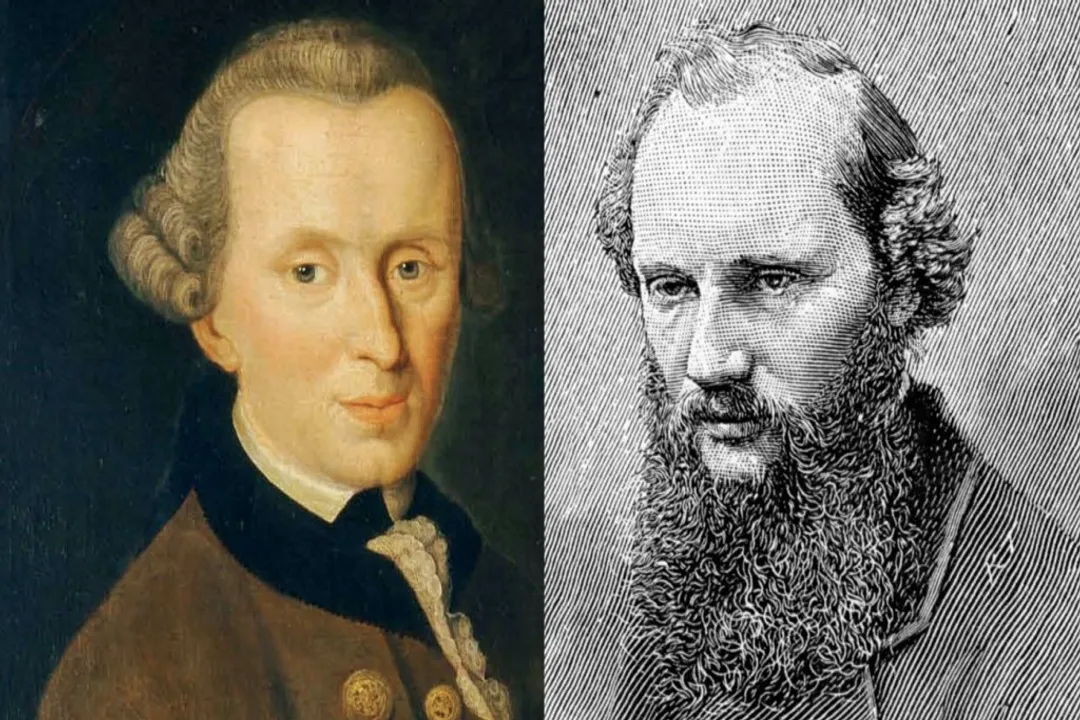
The intellectual groundwork for the current model stretches back centuries. One of the earliest documented proposals came from the philosopher Immanuel Kant in the mid-18th century. Kant suggested that the solar system originated from a rotating nebula of particles that gradually clumped together due to gravitational attraction. This was soon followed by a mathematically rigorous, though distinct, theory proposed by Pierre-Simon Laplace around the same time. Both Kant and Laplace envisioned a contracting, rotating cloud, forming the foundation upon which modern astrophysics would build. While their early formulations had flaws—such as oversimplifying how angular momentum was conserved—they established the crucial concept of a gaseous, rotating precursor.
# Cloud Collapse
The starting material for our solar system was a solar nebula, a huge, cold cloud composed primarily of hydrogen and helium, along with trace amounts of heavier elements left over from previous generations of stars. For this massive, stable cloud to begin the process of forming a star and planets, something had to disrupt its equilibrium. Scientists widely believe that an external event, such as the shockwave from a nearby supernova explosion, compressed a section of this gas and dust cloud.
Once triggered, gravity took over. As the material began to fall inward toward the center of mass, the cloud started to shrink. This gravitational contraction is a defining first step in the nebular model.
# Disk Formation
As the immense cloud contracted, a predictable physical consequence occurred due to the conservation of angular momentum. Think of an ice skater pulling their arms in while spinning: they rotate faster. The same principle applied to the nebula; as its radius decreased, its rate of rotation increased significantly. This rapid spinning prevented all the material from falling directly into the center. Instead, centrifugal forces caused the collapsing cloud to flatten into a vast, rotating disk, often compared to a cosmic pancake. This spinning structure is what scientists call the protoplanetary disk.
At the heart of this developing system, the central concentration of mass grew hotter and denser, eventually becoming the protosun. The conditions here were right for nuclear fusion to eventually ignite, but in the earliest stages, it was simply the gravitational collapse heating the core. The surrounding disk contained all the raw material—gas, dust, and ice—that would eventually become the planets, moons, and smaller bodies.
# Accretion Process
The material within the protoplanetary disk was not uniformly distributed. Closer to the extremely hot protosun, only refractory materials like rock and metal could condense into solid particles. Further out, beyond the frost line (or ice line), temperatures were low enough for volatile compounds, such as water, methane, and ammonia, to freeze into solid ice grains as well.
These microscopic solid particles began to collide and stick together through weak forces, growing from dust grains to pebbles, and then into larger bodies called planetesimals. This process of gradual accumulation is known as accretion. The planetesimals continued to collide and merge, sweeping up more material in their orbital paths until they grew large enough to become protoplanets. The inner, hotter regions yielded the smaller, rocky terrestrial planets (Mercury, Venus, Earth, Mars), while the outer regions, rich in both rock/metal and abundant ices, accumulated far more mass, leading to the formation of the gas giants (Jupiter, Saturn, Uranus, Neptune).
We can look at the asteroid belt as a physical representation of the limits of this process. This region is populated by countless small bodies that never coalesced into a full planet, likely because the immense gravity of the nearby forming Jupiter constantly perturbed their orbits, preventing stable accretion over the long term [Self-Analysis]. This orbital disruption effectively created a planetary building graveyard, illustrating how gravitational dynamics compete with accumulation [Self-Analysis].
# Modern Refinements
While the nebular hypothesis remains the standard model, the initial Kant-Laplace framework has been heavily refined by over a century of new observations and physics. Modern simulations acknowledge the critical role of magnetic fields in helping the central star shed the excess angular momentum it initially inherited from the spinning cloud. Without this mechanism, too much spin would remain in the star, leaving insufficient material or rotation for the planets.
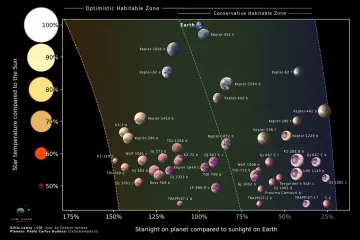
Furthermore, the discovery of thousands of exoplanet systems orbiting other stars has dramatically broadened our understanding of planetary diversity. We now know that systems can feature planets orbiting backward relative to the star's spin, or possess "Hot Jupiters"—gas giants orbiting incredibly close to their host stars—which the classic nebular model struggled to explain without postulating significant orbital migration after formation.
# Tight Timelines
A key area where modern research challenges older views involves the sheer speed required for the outer planets to form. For Jupiter and Saturn to become gas giants, they needed to accrete massive rocky/icy cores quickly enough to gravitationally capture vast envelopes of light gas (hydrogen and helium) from the nebula before the young Sun's intense solar wind blew that gas away [Self-Analysis]. This implies that core formation in the outer solar system must have been extremely efficient, potentially completing within just a few million years [Self-Analysis]. This need for rapid growth provides a crucial constraint for any viable formation model today, distinguishing it from slower, less efficient models of the past.
# Open Questions
Despite its success, the theory is not entirely closed. Several significant questions persist in the scientific community. For example, the precise trigger for the initial gravitational collapse remains somewhat uncertain, although supernova shockwaves are a leading candidate. Another ongoing debate concerns the distribution of angular momentum: exactly how the majority of the nebula's initial rotational energy ended up in the planets' orbits rather than concentrated in the Sun remains a difficult calculation to finalize. Furthermore, precisely modeling the transition from planetesimals to fully fledged protoplanets—especially across the snow line—involves complex physics concerning gas drag and pebble accretion that are still being mapped out.
Nevertheless, the nebular hypothesis provides the most coherent and scientifically supported narrative for how our solar system organized itself from a formless cloud into the highly structured system of orbits and compositions we see today. It is a testament to how fundamental principles of gravity, conservation laws, and thermodynamics can dictate the architecture of stellar systems.
Related Questions
#Citations
Nebular hypothesis - Wikipedia
Origins of the Solar System | Research Starters - EBSCO
The origin and evolution of the solar system. - NASA ADS
The origin of the Solar System | Royal Museums Greenwich
Rediscovering Cosmic Origins - Yale Scientific Magazine
The Solar Nebula Formation of the Earth Origin of the Atmosphere ...
Nebular hypothesis | The Solar System Wiki - Fandom
1.2. How did our Solar System form? - NASA Astrobiology Program
Immanuel Kant, the Formation of the Solar System, and Life on Earth