Do solar storms affect human emotions?

The idea that space weather, specifically events like solar flares and coronal mass ejections (CMEs), might influence our mood and physical well-being has circulated for years, sparking curiosity and, at times, significant personal concern among those sensitive to environmental changes. [1][7] While many people feel more irritable, anxious, or generally "off" during times of high solar activity, separating genuine physiological effects from the power of suggestion or normal daily fluctuation is a considerable scientific challenge. [4] The Earth is constantly bathed in a stream of charged particles and electromagnetic radiation, but when the Sun unleashes a major eruption, the resulting geomagnetic storms can intensify this bombardment, leading to questions about our psychological resilience. [1][7]
# Space Weather Basics
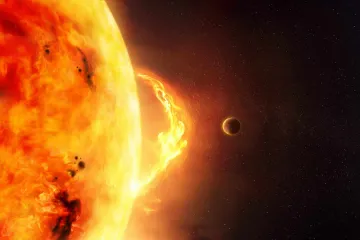
To understand any potential biological link, it helps to know what causes the disturbance. Solar activity isn't a single phenomenon; it includes solar flares, which are intense bursts of radiation, and CMEs, which are massive expulsions of solar plasma that travel through space and can impact Earth’s magnetic field days later. [1] When these solar events hit our planet's magnetosphere, they cause geomagnetic storms. [7][8] These storms can disrupt communications and electrical grids, but the hypothesis suggests they might also affect the delicate balance within the human body. [1]
# Subjective Reports
Anecdotal evidence from online communities and personal accounts frequently points toward a correlation between intense space weather and negative emotional states. [3][6][8] Individuals often report a cluster of non-specific symptoms aligning with periods of heightened solar activity or geomagnetic storms. [7] Common complaints include changes in mood, such as feeling unusually anxious, depressed, or irritable. [1][6] Sleep disturbances are also frequently cited; people may report difficulty falling asleep or generally poor sleep quality coinciding with these space weather events. [8] Some individuals describe feeling a general sense of malaise or pressure, linking these feelings directly to reports of CMEs or strong geomagnetic activity. [6][8] These reports, while compelling to those who experience them, often rely on subjective observation rather than controlled scientific measurement. [4]

# Biological Hypotheses
For solar storms to affect human emotions, there must be a physical mechanism through which the changes in the Earth's electromagnetic environment translate into neurochemical or physiological shifts in the brain and body. [2] Scientists have proposed several lines of inquiry regarding how this might occur. [5]
# Magnetic Fields
One primary area of study revolves around the interaction of the fluctuating magnetic fields with biological systems. [2] The Earth’s magnetic field is a shield, but when it is strongly disturbed by a solar storm, the resulting low-frequency magnetic fields might interact with human biology. [2] Research suggests that magnetic fields may influence ion transport across cell membranes, which is a fundamental process in nerve signal transmission. [2] Furthermore, some studies have explored the effect of geomagnetic activity on the central nervous system, looking at whether these external magnetic fluctuations can interfere with normal brain activity or the production of neurotransmitters critical for mood regulation. [5]
# Environmental Factors
It is also worth considering if the indirect effects of space weather could trigger emotional responses. [1] For instance, large solar events can cause noticeable disruptions in radio communications or navigation systems, which, while not a direct biological effect, could cause stress or concern in certain professions or even among the general populace aware of the event. [1] However, the more focused hypothesis centers on direct biological vulnerability, suggesting that people with pre-existing sensitivities might experience more pronounced internal reactions even without being aware of the external solar event. [7]
# Examining Causality
The scientific community maintains a cautious stance on definitively linking solar storms to widespread, measurable emotional changes in the general population. [4] While there are studies investigating the correlation between geomagnetic activity and biological markers, establishing a clear, direct causal chain remains difficult. [5][9]
Many reports come from self-selection bias; people who notice and report an effect are often those who already believe in the phenomenon, sometimes leading to confirmation bias where they focus on negative days that align with space weather reports. [4] Furthermore, the human experience of mood is influenced by countless factors—stress, diet, sleep quality, barometric pressure changes, and light cycles—making it challenging to isolate the relatively small effect, if one exists, from a massive solar storm. [7]
One interesting comparison involves looking at how different populations react. For instance, a 2003 paper presented findings suggesting that disturbances in the geomagnetic field could affect the transport of ions involved in the central nervous system, potentially linking to behavioral changes, but this area requires more precise, controlled testing to move from correlation to proven effect. [2] It is important to differentiate between the energy of the solar event reaching the Earth—which is generally mitigated by the atmosphere and magnetosphere—and the subtle biological fields within our bodies. [4]
To illustrate the complexity, consider the following table summarizing reported subjective states versus documented geomagnetic severity, which often shows a weak or non-existent statistical relationship when analyzed objectively:
| Reported Subjective State | Frequency During High Solar Activity (Anecdotal) | Scientific Consensus on Direct Link |
|---|---|---|
| Anxiety/Irritability | High [6] | Inconclusive/Low [4] |
| Sleep Disruption | Moderate [8] | Possible, but confounding factors abound [5] |
| General Malaise | Moderate [7] | Needs more controlled study [9] |
A key analytical point often overlooked is the lag time. A solar flare is nearly instantaneous, but the effects of a CME, which causes the major geomagnetic storm, can take one to three days to arrive. [1] If a person reports feeling anxious today, correlating that feeling perfectly with a solar flare that happened 48 hours ago requires precise logging that most people do not keep, leading to fuzzy retrospective correlation. [4]
# Personal Monitoring
For those who genuinely feel affected by space weather, a practical approach moves away from waiting for external validation and toward internal awareness and management. [7] Instead of relying solely on complex space weather forecasts, an actionable step is to start a simple, private log that captures mood, sleep quality, and perceived physical feelings daily, ideally noting the time the observation was made. [7] If you regularly correlate your lowest energy days or highest anxiety spikes with days following a significant solar event (which you can check retroactively), you begin to build personalized data rather than relying on generalized public consensus. This focused self-observation allows you to identify if you are part of the subgroup that shows sensitivity, even if the broader scientific literature remains unconvinced. [1]
Another insight involves considering the role of the Schumann Resonance. While not directly discussed as an emotional driver in all sources, the Schumann Resonance is the Earth's baseline electromagnetic frequency, often cited around 7.83 Hz, which exists within the extremely low frequency (ELF) range. [2] Some theories suggest that when geomagnetic activity severely alters the magnetic field, the natural stability of the Schumann Resonance might also be affected, potentially leading to neurological disturbances in sensitive individuals by disrupting the body's natural electrical background. [2] Tracking when your personal symptoms align not just with a storm's arrival, but with specific fluctuations in ELF magnetic field data (if accessible), might offer a more targeted self-assessment than simply looking at the overall storm rating.
# Managing Environmental Sensitivity
If you suspect you fall into the category of individuals sensitive to geomagnetic fluctuations, managing potential stress becomes important, regardless of whether the cause is cosmic or terrestrial. [7] Focus on known moderators of mood and neurological function. Ensuring consistent sleep hygiene, for example, can buffer against the minor disruptions that accompany environmental shifts. [8] Since space weather events are predictable to a degree—knowing a CME is incoming gives a 1-to-3-day warning before the main geomagnetic storm hits—this advance notice can be used for proactive mental preparation rather than reactive worry. [1]
For example, if you know a high-level storm is forecasted to impact the planet, you might proactively schedule less demanding cognitive tasks for the following two days, ensure you have adequate quiet time, and perhaps limit exposure to other known stressors like caffeine or screen time before bed. [7] This strategy focuses on building internal resilience against known external fluctuations, whether the mechanism is proven or still under investigation. [5] Furthermore, for anyone monitoring this connection, recognizing that the most intense, widespread physical effects of space weather (like power outages) are rare, and most mood shifts are likely subtle, helps maintain perspective. [4]
Ultimately, the scientific investigation into solar storms and human emotion continues, balancing the subjective, often compelling reports from individuals against the need for rigorous, reproducible data. [9] While the direct, proven impact on the average person's daily mood remains scientifically debatable, the ongoing research into the subtle ways our bodies interact with the electromagnetic environment is certainly valid and necessary. [2][5]
Related Questions
#Citations
How Solar Eruptions Can Impact Mental Health - The JEM Foundation
The effect of solar activity on ill and healthy people under conditions ...
Do solar flares affect the human brain? : r/astrophysics - Reddit
Do solar storms affect human behaviour? - Skeptics Stack Exchange
Does solar activity affect human happiness? - ScienceDirect.com
The recent energy has felt heavy and unpredictable. Solar storms ...
Solar Weather and Mental Health: The Cosmic Connection
CME and geomagnetic storms effects on mental health