How does sampling bias affect results?

The result of any data-driven endeavor, whether it is a scientific experiment, a market poll, or a government census, hinges almost entirely on the quality of the initial selection process. If the group you study—your sample—does not accurately mirror the larger group you actually care about—the population—then the findings you derive will be skewed. This systematic flaw is known as sampling bias, an error introduced when every individual within the target population does not have an equal, known chance of being included in the study. [1][3][4]
This is not simply a small mistake due to bad luck; it is a fundamental structural problem in data collection that misrepresents reality. When bias infects the sample, the conclusions drawn from that sample are predictably inaccurate, regardless of how sophisticated the subsequent statistical analysis might be. [5] Understanding how this bias manifests and affects outcomes is critical for researchers, decision-makers, and even critical readers of news reports.
# Systematic Error
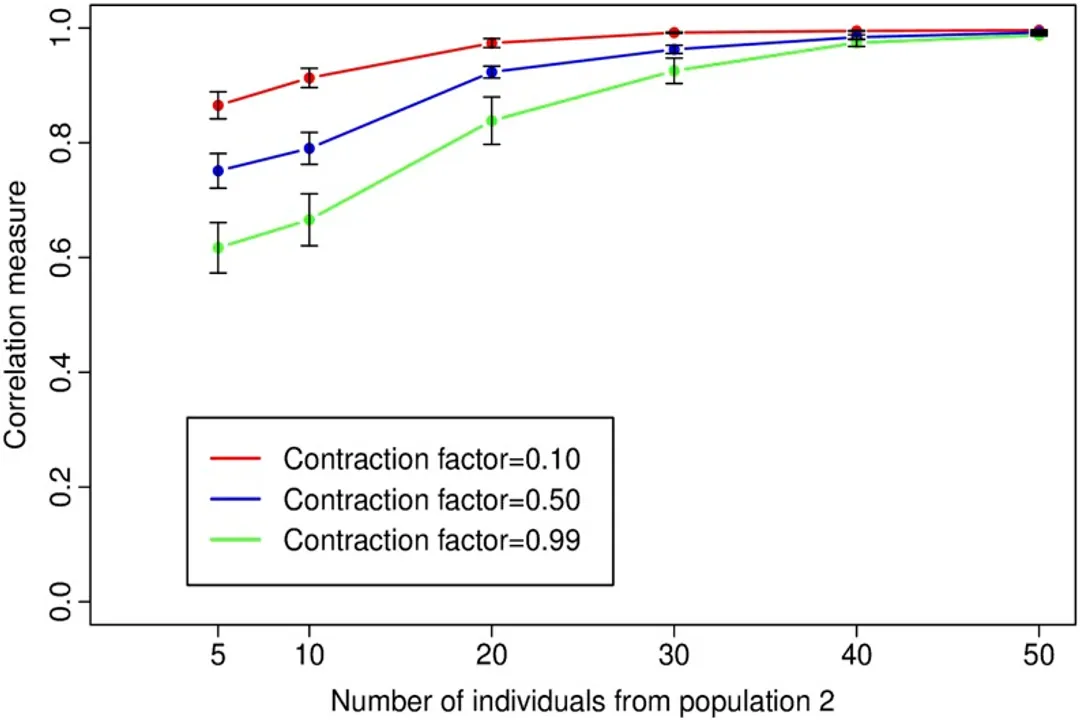
Sampling bias is distinct from random error, which results from pure chance fluctuations in a sample. [4] Bias, conversely, is a consistent, directional error. It systematically pushes the results in one direction—always overestimating a value, always underestimating another, or always favoring a specific subgroup. [3]
The chief problem arises because researchers often seek to generalize their findings from the small, manageable sample to the entire population. [1][5] If the sample is built on faulty selection criteria, that generalization process becomes invalid. Imagine trying to determine the average height of all adults in a country by only measuring professional basketball players; the resulting average would be systematically and predictably too high. [5] The error is not random; it is inherent in the measurement tool—the sampling method itself. The goal of good sampling is to create a miniature, representative version of the whole, and bias is the crack in that mirror. [3]
# Inaccurate Conclusions

The immediate effect of sampling bias is the production of results that do not reflect the true state of the population under investigation. [1][7] This can manifest in several damaging ways:
- Overestimation or Underestimation: A survey asking about customer satisfaction might find a 90% approval rate, but if the survey was only conducted via an email link sent to known frequent buyers, it might grossly overestimate true satisfaction among the broader customer base. [7] Conversely, if only people unhappy enough to call a complaint hotline are sampled, satisfaction will be severely underestimated.
- Misallocation of Resources: In business or policy, decisions are made based on perceived needs identified by the data. If a city council surveys only residents who attend neighborhood association meetings about a new traffic plan, they might approve a measure that pleases a small, vocal segment while alienating the majority of commuters who were never asked. [2][7]
- Flawed Scientific Inferences: In medicine, bias can have severe public health consequences. If a clinical trial for a new drug only recruits young, otherwise healthy participants, the documented success rate might not apply—or could even mask severe side effects—in older patients or those with concurrent illnesses. [6] The drug may be approved based on data that only represents a fraction of the people who will eventually take it. [6]
To illustrate the magnitude, imagine a national political poll where the sampling method inadvertently selects a disproportionate number of highly educated individuals. If education level correlates strongly with voting preference in that election cycle, the poll’s prediction of the final vote share will be systematically incorrect by several percentage points—a difference that could easily swing an election outcome. [4][7]

# Selection Problems
The various ways bias enters the picture are often grouped into types based on the selection mechanism that failed. These selection problems are the most common pitfalls researchers encounter. [3][4]
# Self-Selection and Convenience
One frequent issue is Voluntary Response Bias. This occurs when individuals choose whether or not to participate. [1][4] People who feel strongly about a topic—either extremely positive or extremely negative—are far more likely to volunteer their opinions. Online polls, call-in surveys, and email questionnaires are highly susceptible to this. The resulting data over-represents the extreme ends of the opinion spectrum. [1]
Then there is Convenience Sampling. This is simply selecting participants because they are easy to reach. Surveying students in a single university lecture hall about general education reform might seem efficient, but it ignores the entire population of non-students, working adults, and students in other departments. [1][3] This method guarantees that the sample is not truly random, as access dictated inclusion, not probability.
# The Hidden Group
Perhaps the most insidious type of selection issue involves groups that are entirely missed or ignored, often leading to Survivorship Bias. [1] Survivorship bias is the error of concentrating only on those who "survived" a selection process while overlooking those who did not, leading to an overly positive assessment. [1] For example, studying the traits of currently successful, long-standing companies to derive business lessons is helpful, but failing to analyze the common characteristics of the thousands of companies that went bankrupt during the same period yields an incomplete and perhaps dangerously optimistic picture of business strategy. [1]
# Frame Definitions

Even if you decide to use a truly random method for selection, bias can still creep in if the initial list you draw from—the sampling frame—is flawed. [3] This leads to undercoverage or coverage error. [1]
Consider a census attempt to gauge the average household income of a specific city. If the researcher uses property tax records from five years ago as their frame, they will inevitably miss:
- New residents who moved in since the records were last updated.
- Renters whose names do not appear on property tax rolls.
- Individuals who moved out and were not removed from the list.
If renters or new residents systematically have lower or higher incomes than long-term property owners, the final survey will systematically misrepresent the city’s true income distribution. [3][5] The issue here is not that the people who were selected answered incorrectly, but that the pool of potential participants was incomplete from the start. [1]
A related problem is Non-Response Bias. Even if the sampling frame is perfect and the initial selection is random, people sometimes refuse to participate or cannot be reached. If the people who refuse to answer share a characteristic that is important to the study outcome, the final, smaller sample will become biased. [4][7] It is often difficult to know if those who refuse share the same characteristics as those who agree to participate, which is why response rates are so closely monitored in high-stakes research.

# Reducing Skew
Combating sampling bias requires deliberate design choices intended to maximize the representativeness of the sample. [3]
The theoretical gold standard is Simple Random Sampling (SRS), where every single member of the defined population has an equal probability of being chosen. [3] While conceptually clean, SRS can be inefficient if the population is geographically spread out or has known, important sub-groups.
When heterogeneity is expected, researchers turn to more structured methods. Stratified Random Sampling is highly effective. [4] This involves two steps:
- Partitioning: The population is first divided into distinct, non-overlapping sub-groups, known as strata. These strata are usually based on characteristics relevant to the research question, such as age brackets, income tiers, or geographic zones.
- Sampling within Strata: A random sample is then drawn from within each stratum according to its proportion in the overall population.
If a city’s population is 60% over age 40 and 40% under age 40, a stratified sample would ensure the collected data reflects exactly that 60/40 split, preventing an accidental over-representation of younger or older individuals just due to chance. [4] This technique effectively forces the sample to mirror the known structure of the population on those key variables.
For issues related to non-response, while adjustments can be made after data collection through statistical weighting, these are imperfect corrections rather than preventative measures. The best prevention is investing the time and resources into robust contact methods and follow-up efforts to ensure participation across all selected groups. [7]
Before interpreting any study result, a critical reader should mentally complete a three-step check: 1. Who was the target population defined as? 2. What was the precise method of contact used (phone, web link, door-to-door)? 3. What is the reported response rate? If the answer to step 2 or 3 suggests heavy reliance on convenience or a low response rate, the generalizability of the reported finding should be treated with extreme skepticism, irrespective of any statistical significance figures quoted. [3][7]
# Decisions Risked
The impact of these biases extends far past academic interest; they introduce risk into the real-world deployment of data insights. [2] Whether in science, commerce, or governance, decisions based on biased samples carry a heavy price tag in terms of wasted effort, lost opportunity, or even physical harm. [6]
In commercial settings, a biased view of consumer preference can lead a company to invest millions in developing a product that precisely meets the needs of a small, reachable segment, only to have the mass market ignore it entirely. [7] The experience of the market researcher who designed the flawed survey—perhaps relying on colleagues for quick feedback—becomes embedded as fact in the final business strategy. [2] This is the danger of letting convenience dictate sampling: the perceived efficiency saves time initially but costs significantly more when the flawed strategy fails upon deployment. The analytical conclusion appears authoritative because it is numerically derived, but its authority rests on a foundation of unrepresentative data. [5]
Ultimately, acknowledging how sampling bias affects results is the first step toward scientific and analytical rigor. It demands humility about what we think we know and forces a constant, critical questioning of how we came to know it. [3]
#Videos
How Does Sampling Bias Affect Research? - The Friendly Statistician
Related Questions
#Citations
Sampling bias - Wikipedia
How to Avoid Sampling Bias | Causes, Types & Examples - ATLAS.ti
Sampling Bias and How to Avoid It | Types & Examples - Scribbr
Sampling Bias: Types, Examples & How to Avoid It
Biased Sampling and Extrapolation
Effects of Sample Selection Bias on the Accuracy of Population ...
Sampling Bias And How To Avoid It - SurveyMonkey
How Does Sampling Bias Affect Research? - The Friendly Statistician
Everything You Need to Know When Assessing Sampling Bias Skills