How does electronegativity affect bond polarity?
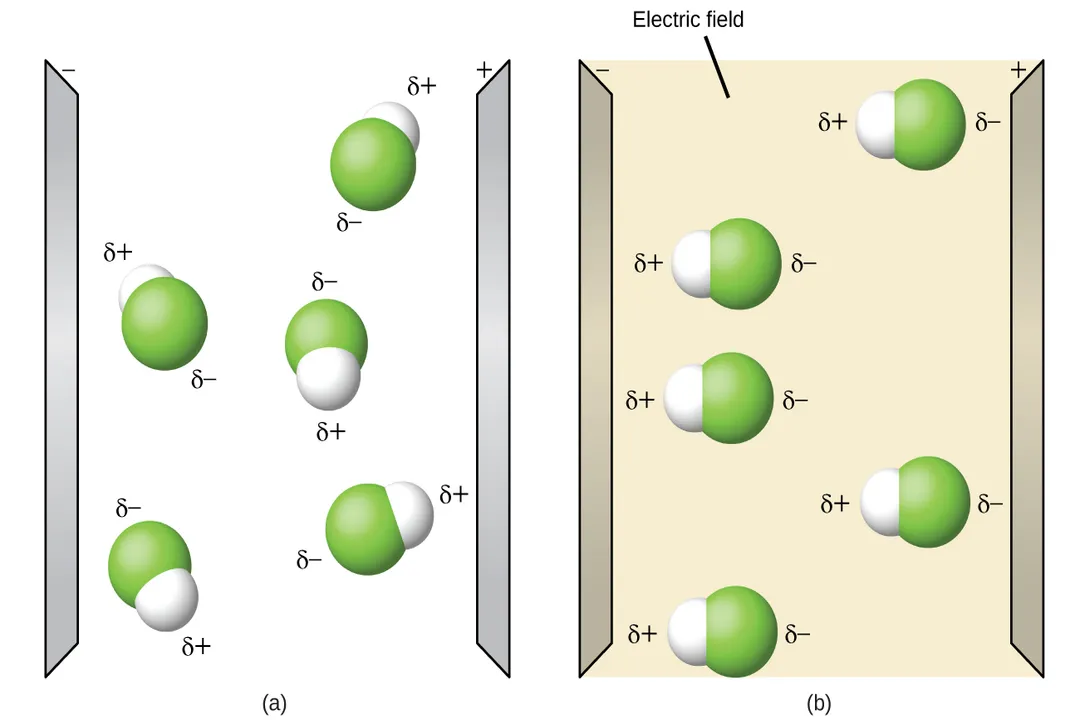
The relationship between an atom's tendency to pull electrons and the resulting character of the chemical bond it forms is a fundamental concept in chemistry. Electronegativity serves as the yardstick that measures this tendency, directly dictating whether the electrons in a bond are shared equally, shared unequally, or transferred almost entirely. [2][6] When the sharing of valence electrons between two bonded atoms is unequal, it creates what we call bond polarity, resulting in a separation of charge across the bond axis. [4][6]
# Defining Electronegativity
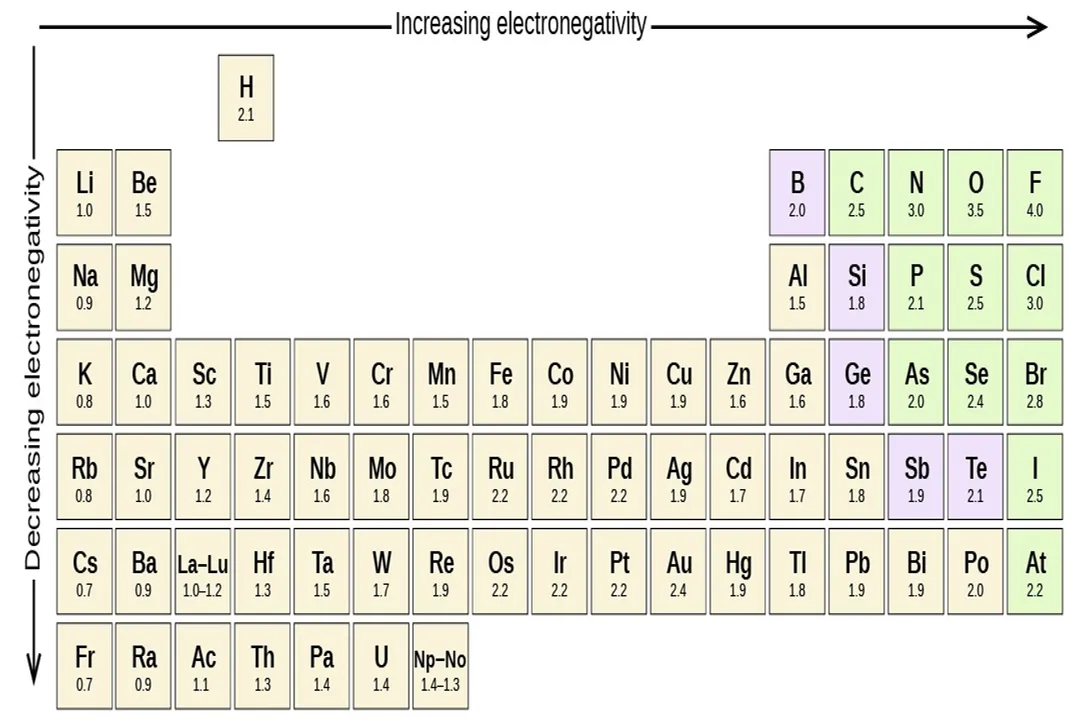
Electronegativity itself is not a measurable physical quantity like mass or charge, but rather a relative property used to describe the electron-attracting power of an atom within a chemical bond. [1][7] Different methods have been developed to assign these relative values, the most common of which is the Pauling scale, established by Linus Pauling. [1][4] On this scale, values are typically assigned ranging from about $0.7$ (for Francium, the least electronegative) up to $4.0$ (for Fluorine, the most electronegative element). [1]
The value assigned to an isolated atom isn't the same as its electron affinity or ionization energy, which measure energy changes when an electron is added to or removed from a neutral atom, respectively. [1] Electronegativity specifically describes the pull exerted on electrons already involved in a bond. [7] For instance, in a bond between Carbon and Hydrogen, we look at how strongly C pulls those shared electrons compared to how strongly H pulls them. [1]
# Periodic Trends
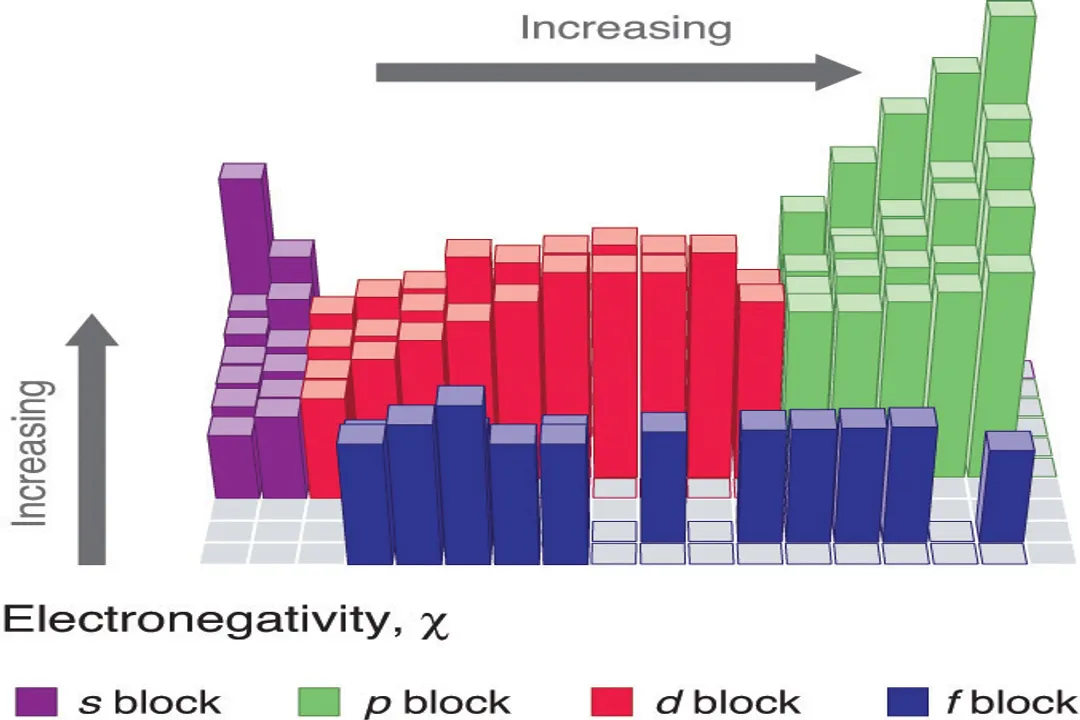
The arrangement of elements on the periodic table provides a clear map of how electronegativity values shift across periods and down groups. [1][7] Generally, electronegativity increases as you move from left to right across a period (a row) because the increasing number of protons in the nucleus exerts a stronger pull on the valence electrons in the same principal energy level. [1][7][8] Conversely, as you move down a group (a column), electronegativity decreases because the valence electrons are held in higher energy shells further from the nucleus, shielding them somewhat from the full effect of the nuclear charge. [1][7]
Fluorine () consistently holds the highest electronegativity value on the Pauling scale, pegged at $4.0$, making it the element with the strongest inherent pull on bonding electrons. [1][7] On the opposite end, the elements in Group 1, such as Cesium () and Francium (), possess the lowest values, making them highly prone to losing electrons to form positive ions rather than attracting shared electrons. [1] Understanding these trends is critical because they allow a chemist to predict the nature of a bond before even calculating the difference in values. [7]
# Bond Character Spectrum
The essence of how electronegativity affects bond polarity lies entirely in the difference between the electronegativity values of the two bonded atoms, often denoted as . [4][5][6] This difference quantifies the unequal sharing of electron density. [5] Chemical bonds exist along a continuum rather than fitting neatly into strict boxes, but we categorize them based on the magnitude of this difference. [1][6]
# Nonpolar Covalent Bonds
When two atoms possess the same or very similar electronegativities, they share the bonding electrons almost perfectly equally. [1][4] The resulting difference () is close to zero. [4]
- Pure Covalent: If the atoms are identical (e.g., , , ), the is exactly zero, and the bond is considered perfectly nonpolar covalent. [1][6]
- Nearly Nonpolar: Bonds between atoms with very small differences, typically a less than about $0.4$, are also effectively nonpolar covalent. [1][6] For example, the carbon-carbon () bond in organic molecules is nonpolar because the two atoms have identical electronegativity values. [1]
A fascinating case arises when a bond forms between two different elements whose electronegativities happen to be nearly the same, such as (Carbon-Hydrogen). While there is a slight difference (Carbon , Hydrogen , ), this difference is often small enough that the bond is frequently treated as nonpolar in introductory organic chemistry contexts due to its minimal impact on overall molecular properties compared to bonds with larger differences. [1]
# Polar Covalent Bonds
This category represents the bulk of chemical bonding between different non-metal elements. [1] A bond becomes polar covalent when there is a noticeable, but not overwhelming, difference in electronegativity between the two atoms. [4][6]
The generally accepted range for a polar covalent bond is a falling between approximately $0.4$ and $1.7$ (though some texts use $2.0$ as the upper limit before classifying it as ionic). [1][6] In these bonds, the electron density is pulled closer to the more electronegative atom. [2][5]
This uneven sharing results in the formation of a dipole moment. [1][4] The more electronegative atom acquires a partial negative charge, symbolized by (delta minus), while the less electronegative atom acquires a partial positive charge, symbolized by (delta plus). [1][4]
Consider the bond in Hydrogen Fluoride (): Fluorine () is far more electronegative than Hydrogen (), resulting in a large of $1.80$. [1] Even though this value often pushes into the ionic range depending on the chosen cutoff, it demonstrates the principle clearly. The electron density shifts strongly towards the Fluorine atom, making the Fluorine end partially negative () and the Hydrogen end partially positive (). [1]
An insightful way to visualize this is to imagine the electron pair as a stretched rubber band. In a nonpolar bond, both atoms pull with equal force, keeping the center of the band perfectly midway. In a polar bond, one atom has a much stronger grip, dragging the center of the electron cloud closer to itself, creating two distinct 'ends' or poles. [2]
# The Ionic Threshold
When the electronegativity difference becomes very large—typically greater than $1.7$ or $2.0$ depending on the source—the sharing of electrons effectively breaks down, and the bond is categorized as ionic. [1][6] At this extreme, the more electronegative atom essentially strips the electron(s) away from the less electronegative atom, leading to the formation of discrete positive and negative ions held together by electrostatic attraction. [1][6] Sodium Chloride () is the classic example, with Sodium () and Chlorine (), giving a of $2.23$. [1]
# Tabulating Bond Character
The categorization based on provides a helpful, albeit generalized, guide:
| Range | Bond Type | Electron Sharing Description |
|---|---|---|
| $0.0 - 0.4$ | Nonpolar Covalent | Equal or nearly equal sharing [1][6] |
| $0.4 - 1.7$ (approx.) | Polar Covalent | Unequal sharing; partial charges form [1][6] |
| $> 1.7$ (approx.) | Ionic | Transfer of electrons; full charges form [1][6] |
It is important to remember that these numbers are conventions used for classification, and bonding reality is continuous. [4]

# Dipole Moments and Molecular Geometry
While the electronegativity difference determines the character of an individual bond, the overall polarity of an entire molecule is determined by the vector sum of all its bond dipoles, which depends crucially on molecular geometry. [4] This is a key area where simply knowing is not enough for a complete picture.
For example, consider Carbon Dioxide (). Oxygen is significantly more electronegative than Carbon ( is large), meaning the two bonds are highly polar. [1] However, the molecule is linear. The two bond dipoles are exactly equal in magnitude and point in opposite directions, causing them to perfectly cancel each other out. [4] Therefore, is a nonpolar molecule, despite having polar bonds. [4]
Contrast this with Water (). Oxygen is again much more electronegative than Hydrogen, so the bonds are polar. [1] However, water has a bent geometry due to the lone pairs on the oxygen atom. Because the bond dipoles do not oppose each other perfectly, they add up to create a significant net molecular dipole moment, making water a highly polar molecule overall. [4]
This geometrical dependency highlights a sophisticated interplay: electronegativity sets the stage for localized bond polarity, but molecular structure decides the macroscopic electrical properties of the compound. [4] A good way to assess the experience of a substance is through its solvent properties; nonpolar molecules like those in oil will not mix well with highly polar solvents like water because the strong dipoles in water create a significant attractive force toward other dipoles, excluding the nonpolar substances entirely. [8]
# Electronegativity in Context: Organic Examples
In organic chemistry, where Carbon forms the backbone, understanding these small differences is essential for predicting reactivity. Consider the functional groups that define alcohols, amines, and ethers. These groups owe their characteristic properties—such as higher boiling points compared to equivalent alkanes—to the polarity introduced by electronegative heteroatoms like Oxygen and Nitrogen. [1]
Take ethanol (). The and bonds are relatively nonpolar, as noted before. [1] The real action happens at the bond. Oxygen () is much more electronegative than Hydrogen (), creating a very strong bond dipole pointing toward the oxygen. [1] This charge on the oxygen and charge on the hydrogen atom allows ethanol molecules to form hydrogen bonds with one another, dramatically influencing its physical state and solubility characteristics. [1]
If we examine a molecule like dichloromethane (), we see four bonds that are polar due to Chlorine’s higher electronegativity than Carbon. [1] The molecule is tetrahedral, but because the two dipoles are oriented in a way that they do not perfectly cancel (unlike in ), the molecule possesses a net dipole moment and is considered polar. [4]
When examining bond energy, which is related to bond strength, we can infer that highly polar bonds generally have higher bond energies than nonpolar bonds between the same types of atoms, as the strong electrostatic attraction contributes significantly to stability. [6] For instance, a polar bond is typically stronger than a nonpolar bond of similar length. [6]

# Practical Analysis: Beyond Simple Cuts
While the $0.4$ and $1.7$ cutoffs are convenient teaching tools, a practical analysis requires acknowledging that these numbers represent averages and generalizations. [4] The true polarity is determined by the magnitude of the dipole moment, measured in Debye (), which combines both the charge separation and the bond distance. [1]
For instance, one might compare the bond () and the bond (). [1] Although both are considered highly polar (or ionic for by some standards), the bond results in a larger separation of charge because Fluorine is significantly smaller than Chlorine, forcing the electron density into a smaller volume around the nucleus, maximizing the electrostatic effect over a shorter distance. [1] In contrast, has a larger bond length, which spreads the partial charge effect over a greater distance, leading to a smaller net dipole moment ( vs. ). [1] This detail shows that while electronegativity difference initiates the polarity, the physical size of the atoms involved dictates the final measured dipole moment, adding a layer of complexity beyond simple subtraction of EN values.
Another useful consideration for someone working with these concepts is how the environment affects measured polarity. In a vacuum, the dipole moment is as calculated. However, when a polar molecule is placed into a solvent, the solvent molecules surround it, potentially dampening or enhancing the observed net dipole moment. Highly polar solvents, like water, have molecules that can orient themselves strongly around the solute, effectively reducing the effective dipole moment felt by external electric fields compared to what one might calculate purely from the atomic electronegativity differences within the isolated molecule. [7] This environmental effect is crucial in understanding everything from chromatography separations to reaction kinetics.
# Conclusion
Electronegativity is the intrinsic property that dictates the unequal attraction for electrons within a bond. [1][7] The difference between the electronegativities of two bonded atoms () is the direct mathematical indicator of bond polarity. [4][5] Small differences yield nonpolar sharing, intermediate differences yield polar covalent bonds characterized by partial charges ( and ), and large differences result in ionic transfer. [6] While these numerical ranges offer a dependable scaffold for understanding chemical bonds, a full picture requires considering the geometry of the resulting molecule to determine the net molecular polarity, and acknowledging physical factors like bond distance that modulate the final measurable dipole moment. [1][4]
#Videos
Bond Polarity, Electronegativity and Dipole Moment - YouTube
Related Questions
#Citations
1.9: Electronegativity and Bond Polarity (Review)
6.2 Electronegativity and Polarity – Chemistry Fundamentals
Electronegativity and bonding (video) - Khan Academy
Why does electronegativity difference determine bond polarity?
How does electronegativity difference between two atoms affect the ...
Bond Polarity, Electronegativity and Dipole Moment - YouTube
Electronegativity and Bond Polarity – Chemistry of Food and Cooking
[High School Chemistry] how does electronegativity affect bond ...
How does electronegativity affect the polarity of the bond ... - Brainly