How does sleep affect cognitive function?

The quality of our waking hours is inextricably linked to the quality of our rest, a relationship rooted deeply in neurological processes that occur while we are supposedly "unconscious." Sleep is not merely a passive downtime but an active state where the brain performs essential maintenance, consolidation, and cleansing functions that directly dictate our capacity for thinking, learning, and decision-making the following day. When this critical process is curtailed or disrupted, the immediate consequences manifest as deficits across the spectrum of cognitive abilities, ranging from simple reaction time lapses to significant impairments in complex problem-solving.
# Cognitive Deficits

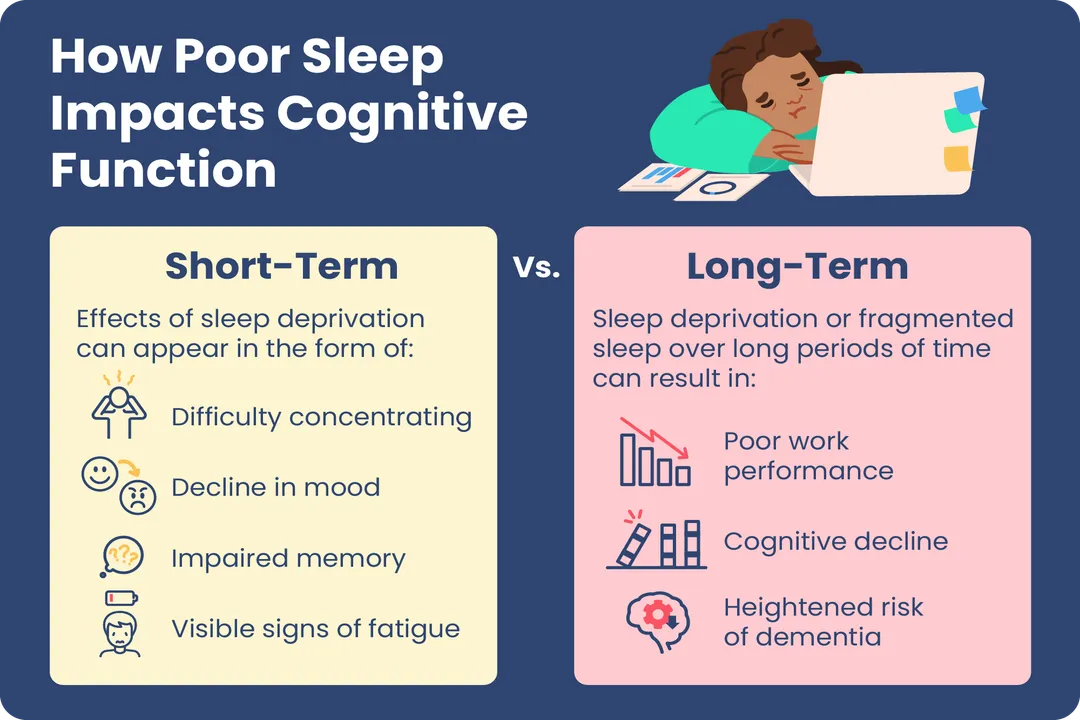
A widespread finding across sleep research is the profound impact of sleep loss on sustained attention and alertness. Even minor sleep restriction can lead to a measurable decrease in the ability to focus on tasks over time. This isn't just about feeling tired; it involves quantifiable lapses in performance that mimic, and sometimes exceed, the impairment caused by alcohol intoxication. For instance, operating on just four to five hours of sleep per night for several days can lead to a cognitive deficit equivalent to being awake for 24 hours straight.
The effects ripple into executive functions—the higher-level skills managed primarily by the prefrontal cortex. These include planning, organization, working memory, and inhibitory control. When sleep debt accumulates, tasks requiring flexibility in thought or the suppression of inappropriate responses become notably more difficult. Furthermore, emotional regulation often suffers; an underslept brain tends to exhibit an exaggerated negative emotional response to neutral or mildly negative stimuli, suggesting that sound sleep is necessary for emotional stability and balanced judgment.
When considering the duration necessary to avoid these declines, the consensus points toward a minimum threshold. While individual needs vary, maintaining cognitive sharpness generally requires adults to get at least seven hours of sleep per night to keep cognitive decline at bay and prevent the steady accumulation of performance deficits. Chronic insufficient sleep, even if short by an hour or two nightly, proves far more damaging to cognition than a single night of total deprivation.
# Memory Processing
One of the most striking roles of sleep involves the stabilization and integration of memories. During sleep, particularly the non-rapid eye movement (NREM) stages like slow-wave sleep (SWS), the brain actively replays and transfers newly acquired information from the hippocampus—the temporary storage area—to the neocortex for long-term storage. This replay mechanism is vital for solidifying learning that occurred while awake.
If a person misses out on this crucial consolidation window, the newly formed memories are more vulnerable to interference and decay. Conversely, good sleep habits, which include adequate time in SWS, directly shape and strengthen cognitive function by ensuring that what was learned is properly archived. Interestingly, the quality of sleep seems as important as the quantity. Deep sleep (SWS) is particularly associated with declarative memory consolidation (facts and events), while REM sleep appears more involved in procedural memory (skills) and integrating new information with existing knowledge networks. To truly maximize the benefit of a learning session, one must protect the subsequent sleep period to allow these nocturnal sorting processes to complete their work.

# Neural Housekeeping
Beyond memory consolidation, sleep serves a critical physiological housekeeping function essential for maintaining clear cognitive pathways. During deep sleep, the brain’s interstitial space, the area between neurons, expands significantly. This expansion facilitates the efficient removal of metabolic waste products that accumulate during wakefulness.
A primary target of this cleanup is beta-amyloid, a protein fragment associated with Alzheimer’s disease. The glymphatic system, which is the brain's waste clearance pathway, is most active during sleep, effectively flushing toxins out via cerebrospinal fluid. A failure to activate this system robustly due to insufficient sleep means these toxic byproducts remain concentrated in the brain tissue, potentially disrupting synaptic communication and contributing to long-term cognitive vulnerability. It is quite remarkable that the brain essentially dedicates one-third of its existence to this specialized, high-volume cleaning operation; it suggests that even minor interruptions to deep sleep could have a compounding effect on baseline neural efficiency over years, much like neglecting household chores until the mess becomes insurmountable.
# Sleep Stages and Specific Effects
Cognitive restoration is not uniform across all sleep stages; different phases tackle different maintenance tasks.
| Sleep Stage | Primary Function (Cognitive Relevance) | Associated Impairment if Reduced |
|---|---|---|
| Slow-Wave Sleep (SWS) | Declarative memory consolidation and synaptic downscaling | Difficulty recalling facts and events |
| Rapid Eye Movement (REM) | Procedural memory refinement and emotional processing | Reduced creative problem-solving and emotional volatility |
| NREM Stages 1 & 2 | Transition and preparing cortex for deeper processing | General fatigue and slowed processing speed |
When considering specific cognitive domains, research shows that sleep loss disproportionately affects vigilance—the ability to maintain attention over long periods—more severely than tasks requiring immediate, short-burst attention. This highlights why sleep deprivation is such a major safety concern in operational settings, where prolonged focus is required, such as driving or monitoring complex systems. Furthermore, disruptions affect response selection and the ability to inhibit irrelevant information, meaning an underslept person might choose the wrong action or be easily distracted by noise.

# Sleep Quantity Versus Quality
While getting the recommended seven to nine hours of sleep is the general guideline for supporting healthy cognition, the architecture of that sleep matters immensely. A night spent in bed for eight hours that is constantly interrupted—even if the person doesn't fully wake up—will not provide the same cognitive benefits as seven continuous hours of high-quality sleep. Fragmented sleep prevents the brain from cycling effectively through the deep SWS and REM stages necessary for the dual processes of waste clearance and memory integration.
An interesting point arises when comparing individuals. Someone who consistently sleeps six hours might functionally adapt to a certain level of reduced performance, but this adaptation is often superficial; their internal cognitive resources are still depleted, meaning their reserve for handling stress or complex unexpected events is drastically lower than someone who consistently sleeps eight hours. For example, an individual operating consistently at six hours might perform simple tasks adequately during a low-stress morning, but their performance on a novel, high-stakes task in the afternoon will likely reveal their underlying deficit compared to a well-slept peer, a failure scenario often masked in daily self-assessment.
When examining older adults, the emphasis shifts slightly toward consistency to prevent decline. Studies suggest that those who consistently get seven or more hours of sleep nightly show less age-related cognitive deterioration compared to those sleeping less. This reinforces the idea that sleep is protective over the long term, not just restorative for the next morning.
# Addressing Specific Population Needs
The cognitive impact of sleep deprivation can differ based on age and pre-existing conditions. In certain populations, such as those with chronic conditions, the relationship between sleep and cognition becomes even more sensitive. For instance, poor sleep can exacerbate symptoms related to neurological disorders, creating a negative feedback loop where the condition itself causes poor sleep, which in turn worsens cognitive function.
For general health, an important consideration is the timing of sleep loss. While the total loss matters, acute deprivation (staying up all night) dramatically impairs areas like reaction time and vigilance immediately. Conversely, chronic partial sleep loss builds up a "sleep debt" that degrades complex decision-making and mood stability over days or weeks. It is a common, yet flawed, human belief that one can simply "catch up" on a weekend after a long week of severe restriction, but research indicates that while some physical restoration occurs, the full spectrum of cognitive benefits, especially memory consolidation, may not be perfectly recovered. The brain seems to prioritize certain functions over others during catch-up sleep.

# Enhancing Cognitive Resilience Through Sleep
To proactively support cognitive function, one must treat sleep duration and continuity as non-negotiable appointments for brain health. An actionable step beyond simply aiming for seven hours is creating a strict pre-sleep routine that signals to the body it is time to prepare for deep restorative cycles. This means minimizing blue light exposure from screens an hour before bed, as this can delay the onset of sleep and compress the crucial early-night SWS window.
Another insight revolves around the relationship between caffeine and sleep opportunity. While a cup of coffee might mask daytime fatigue, its half-life means that consumption late in the afternoon still fragments sleep quality later on, even if the user thinks they slept fine. For peak cognitive output, the period preceding sleep must be treated with the same care as the sleep itself. If an afternoon caffeine dose prevents you from hitting the required deep sleep stages, you are essentially sabotaging the memory consolidation and waste-clearance processes needed for the next day’s sharp thinking. Therefore, understanding that cognitive readiness is a product of both the previous day’s successful rest and the current day’s management of stimulants is key to true cognitive mastery. Protecting the integrity of the sleep cycles, not just the clock time spent in bed, is the direct path to sustained high-level mental performance.
Related Questions
#Citations
The consequences of sleep deprivation on cognitive performance
How Lack of Sleep Impacts Cognitive Performance and Focus
From Zzzs to memories: How sleep habits shape cognitive function
Why At Least 7 Hours of Sleep Is Essential for Brain Health
Sleep for cognitive enhancement - Frontiers
Effects of Sleep: Insufficient vs Adequate on Cognitive Function
[PDF] Neurocognitive Consequences of Sleep Deprivation
Impact of sleep duration on executive function and brain structure
How much sleep keeps cognitive decline at bay? - Harvard Health
The consequences of sleep deprivation on cognitive performance