How does polarity affect solvation?
The act of dissolving, the seemingly simple process where one substance vanishes into another, is entirely governed by the electrical landscape of the molecules involved. Whether that sugar crystal disappears into your coffee or that grease stain refuses to budge from a cloth, the answer lies in polarity. Polarity dictates compatibility, acting as the primary molecular gatekeeper determining what mixes with what. Understanding this concept moves dissolution from a matter of chance to a predictable chemical event.[2][5]
# Molecular Charge
At the atomic level, polarity describes how evenly the electron density is shared between the atoms forming a chemical bond. When two atoms bond, their relative ability to attract shared electrons—a property called electronegativity—comes into play. If the atoms have very different electronegativities, the electrons are pulled closer to the more electronegative atom, creating an imbalance of charge across the bond. [4]
This uneven distribution results in what chemists call a dipole moment. One end of the bond acquires a slight negative charge (represented as ), and the other end acquires a slight positive charge (). [4][5] A molecule composed of multiple polar bonds, or one where the charge centers do not cancel each other out (as in water), is considered a polar molecule. Water (), for example, is highly polar because oxygen hogs the electrons, leaving the hydrogen atoms partially positive. [7] Conversely, molecules like methane () or hexane, where electrons are shared almost equally, are deemed nonpolar because they lack these distinct positive and negative poles. [5]
# Like Dissolves
The foundational rule governing solubility is wonderfully concise: like dissolves like. [2][5] This principle is a direct consequence of the molecular charge discussed previously. For a solute (the substance being dissolved) to break apart and disperse evenly within a solvent (the substance doing the dissolving), the solvent molecules must be more strongly attracted to the solute molecules than the solute molecules are to each other. [1]
When you mix a polar solute, such as table salt (), with a polar solvent like water, the partial negative ends () of the water molecules are powerfully attracted to the positive sodium ions (), and the partial positive ends () of the water molecules surround the negative chloride ions (). [7] This process is called solvation or hydration (when water is the solvent). The water molecules effectively form a protective cage, or solvation shell, around each ion, pulling it away from the crystal lattice and allowing it to move freely in the solution. [7]
If you try to dissolve that same salt in a nonpolar solvent, like vegetable oil, the interaction is weak. The nonpolar oil molecules have no significant charge to effectively pull the charged or ions apart, so the salt remains a solid crystal at the bottom of the container. [2] The nonpolar oil molecules are simply not motivated enough to overcome the strong ionic bonds holding the salt together.

# Solvent Spectrum
Chemists categorize solvents based on their polarity and their ability to donate or accept protons (hydrogen ions, ), which is crucial for chemical reactions that take place in solution. [5] This classification helps predict not only solubility but also reaction rates.
# Polar Protic Solvents
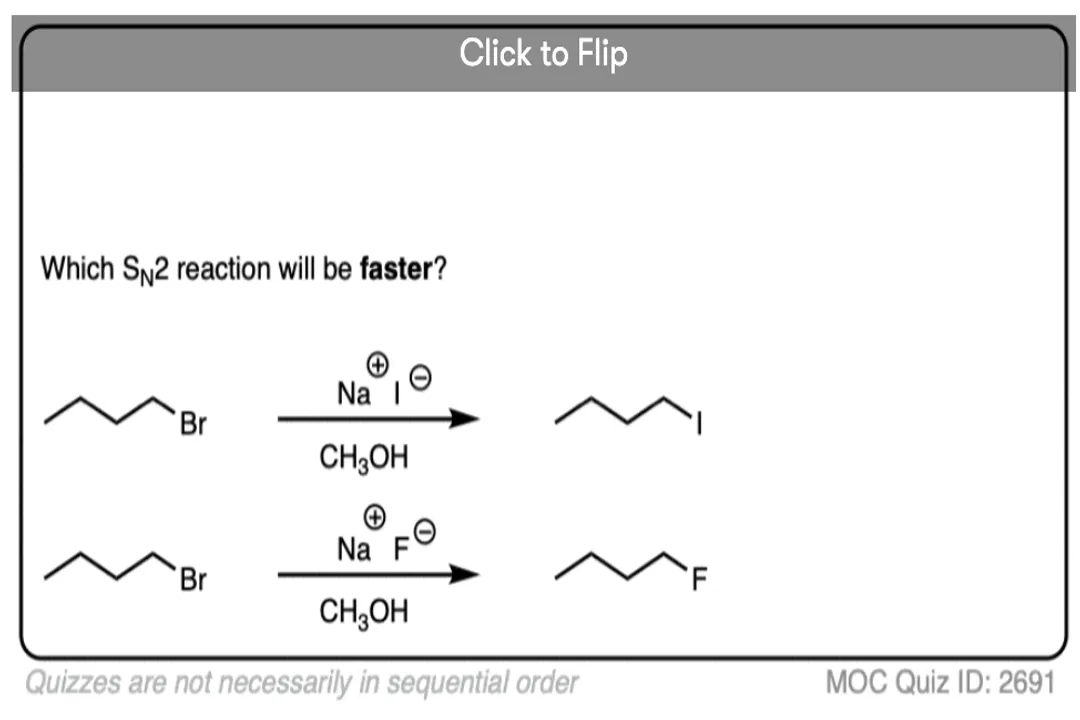
These are highly polar solvents that possess hydrogen atoms directly bonded to highly electronegative atoms like oxygen or nitrogen (i.e., they have O-H or N-H bonds). [5] Water and ethanol are classic examples. Because they have these exposed, partially positive hydrogen atoms, they are capable of forming hydrogen bonds with other molecules, leading to very strong intermolecular attractions. [7] Water's ability to hydrogen bond is what makes it such an effective solvent for many biological molecules and ionic salts. [7]
# Polar Aprotic Solvents
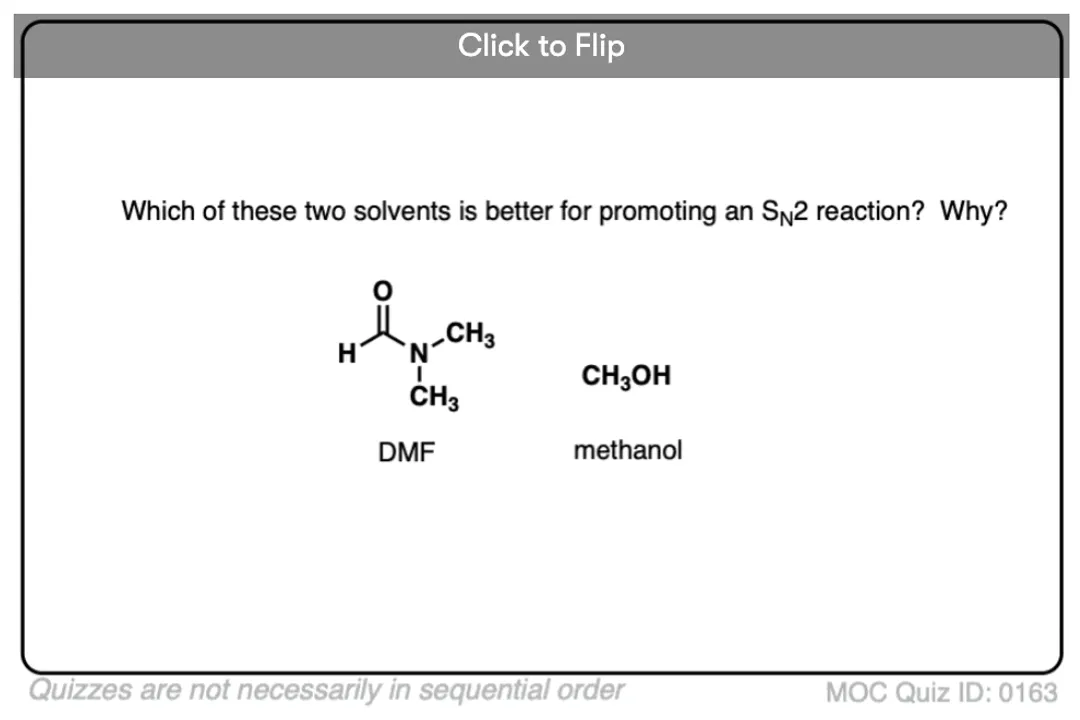
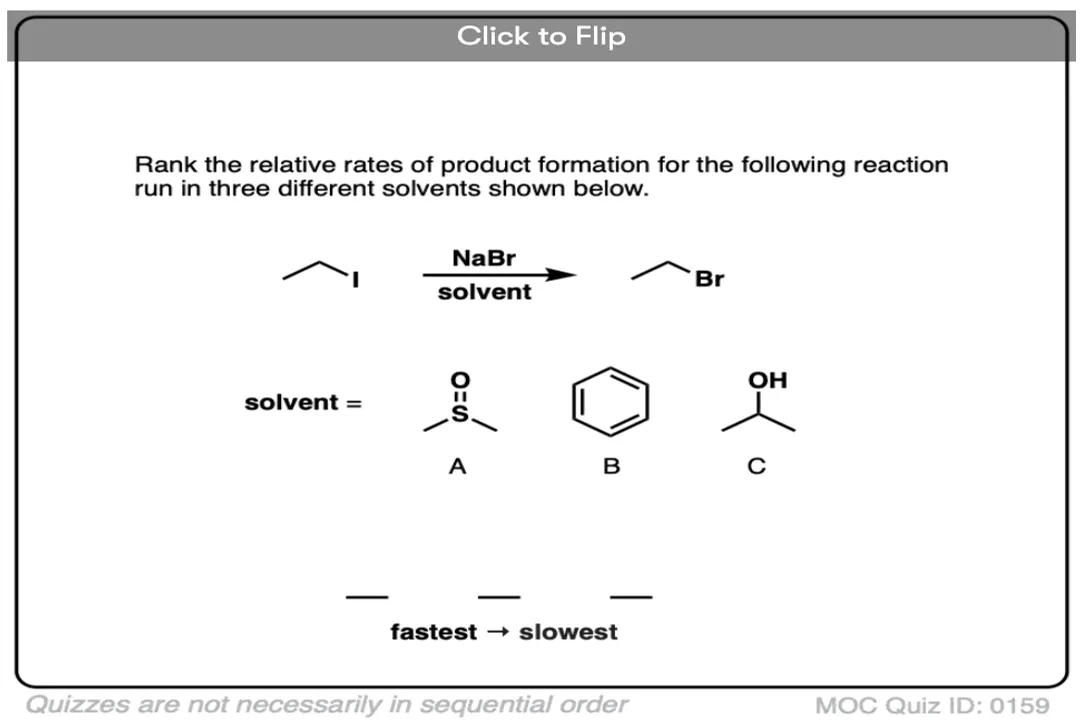
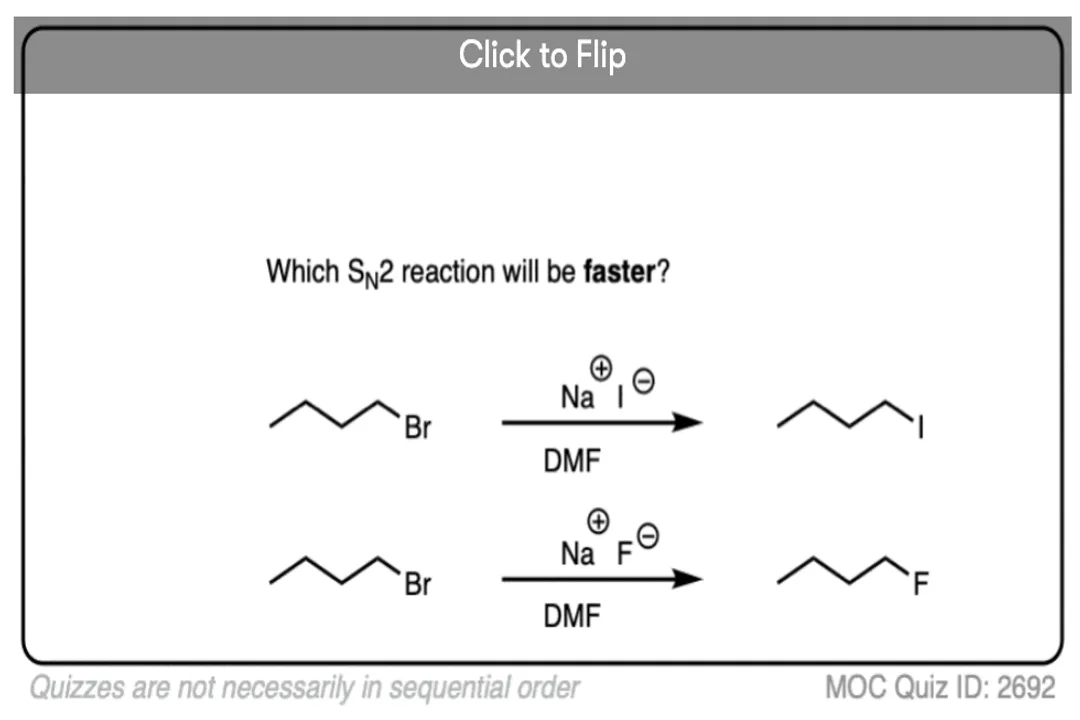
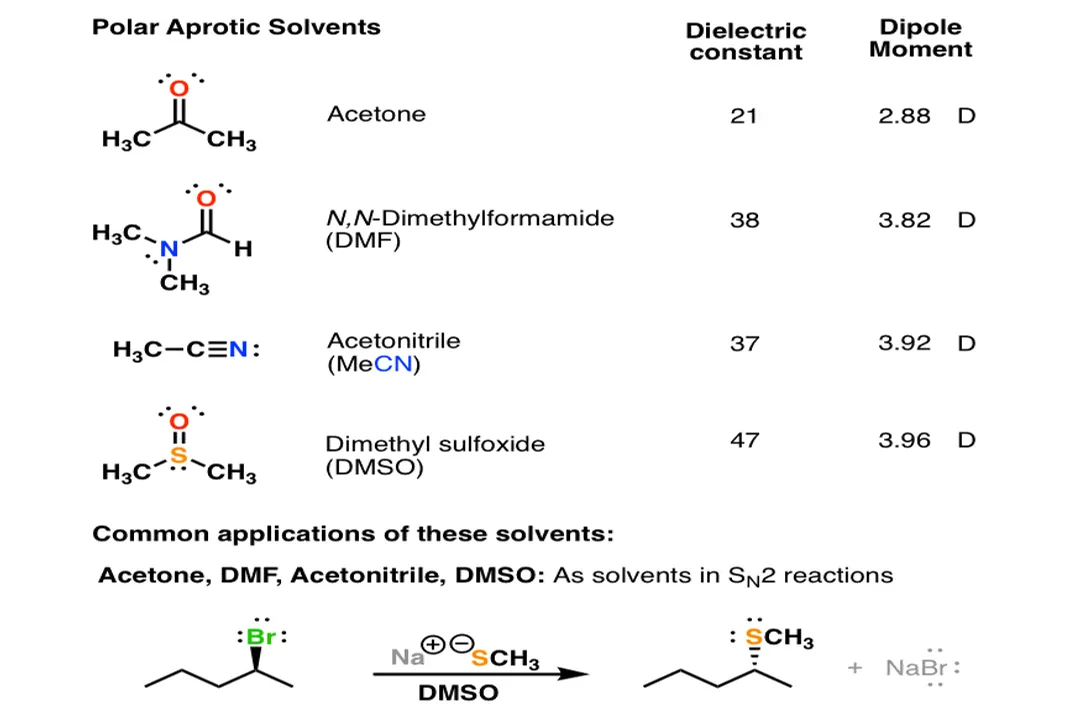
These solvents are also polar, possessing significant dipole moments, but they lack the or bonds needed to donate protons or readily form hydrogen bonds. [5] Common examples include acetone, dimethyl sulfoxide (), and acetonitrile. While they are still polar enough to dissolve many polar substances, their mechanism of interaction is different from protic solvents. They are excellent at solvating positive ions because their negative end (the oxygen or nitrogen atom) can easily approach the cation. However, they interact less strongly with anions because they cannot use a hydrogen atom to stabilize the negative charge. This differential solvation capability can have profound effects on reaction kinetics, often making certain types of chemical reactions much faster in aprotic solvents compared to protic ones. [5]
# Nonpolar Solvents
These solvents have little to no charge separation across their molecules. [5] Examples include hexane, toluene, and carbon tetrachloride. They are best suited for dissolving other nonpolar substances, such as fats, greases, and many organic compounds like iodine. The attraction here relies on weaker forces, like London dispersion forces, which are only effective between molecules that are electrically similar. [2]
| Solvent Class | Key Feature | Example | Typical Solutes Dissolved |
|---|---|---|---|
| Polar Protic | High polarity, can H-bond (donate ) | Water, Methanol | Ionic salts, small polar organics (sugars) [5][7] |
| Polar Aprotic | High polarity, cannot H-bond (no /) | Acetone, DMSO | Salts (often accelerates reactions) [5] |
| Nonpolar | Minimal charge separation | Hexane, Toluene | Oils, greases, nonpolar organic molecules [2] |
# Practical Choices
When selecting a solvent for a task, whether in a kitchen, a lab, or an industrial setting, polarity must be the first consideration. [8] If you are trying to remove motor oil (nonpolar) from a rag, water (highly polar) will be entirely ineffective. You need a nonpolar solvent like mineral spirits or hexane because the principle of "like dissolves like" demands similar electrical characteristics for maximum interaction. [2]
Consider a situation where a chemist needs to separate two organic products, and . Product is slightly more polar than product due to a single hydroxyl () group. The chemist could use liquid-liquid extraction. If they start with a mixture dissolved in a nonpolar solvent like diethyl ether, adding water might pull product into the aqueous (water) layer because of the hydrogen bonding potential with the group, leaving the less polar product behind in the ether layer. The difference in polarity between and allows polarity itself to become the separation tool. [8]
It is interesting to observe that molecules that sit near the boundary of polarity, such as ethanol (), display ambivalent behavior. Ethanol has a polar group, allowing it to mix freely with water (a polar solvent) and dissolve substances like salt. However, it also has a substantial nonpolar hydrocarbon () tail, which gives it just enough affinity to dissolve some less polar compounds that pure water cannot handle. This intermediate nature makes ethanol incredibly versatile in many applications, acting as a bridge between truly polar and truly nonpolar environments. This transitional solubility is a key reason why some cleaning agents incorporate alcohols—they can grab onto both water-loving and oil-loving residues simultaneously.
Ultimately, solvation is a competition for intermolecular attraction. The greater the compatibility in terms of charge distribution—the closer the polarity match between solute and solvent—the more energetically favorable it is for the solute to abandon its original structure and embrace the new environment provided by the solvent. [1]
#Videos
How Does Polarity Affect Solvent Choice In Chemistry? - YouTube
Related Questions
#Citations
ELI5 the polarity of solvents and how it affects solubility - Reddit
5. Polarity and Solubility - nz science class online
How Does Polarity Affect Solvent Choice In Chemistry? - YouTube
4.11: Applications and Solubility of Covalent Compounds
Polar Protic? Polar Aprotic? Nonpolar? All About Solvents
Dependence of Solute Solubility Parameters on Solvent Polarity
Solvent properties of water (article) | Khan Academy
Solubility Factors When Choosing a Solvent - Cayman Chemical
[PDF] Solubility and Polarity - UNI ScholarWorks