How does energy storage affect grid stability?
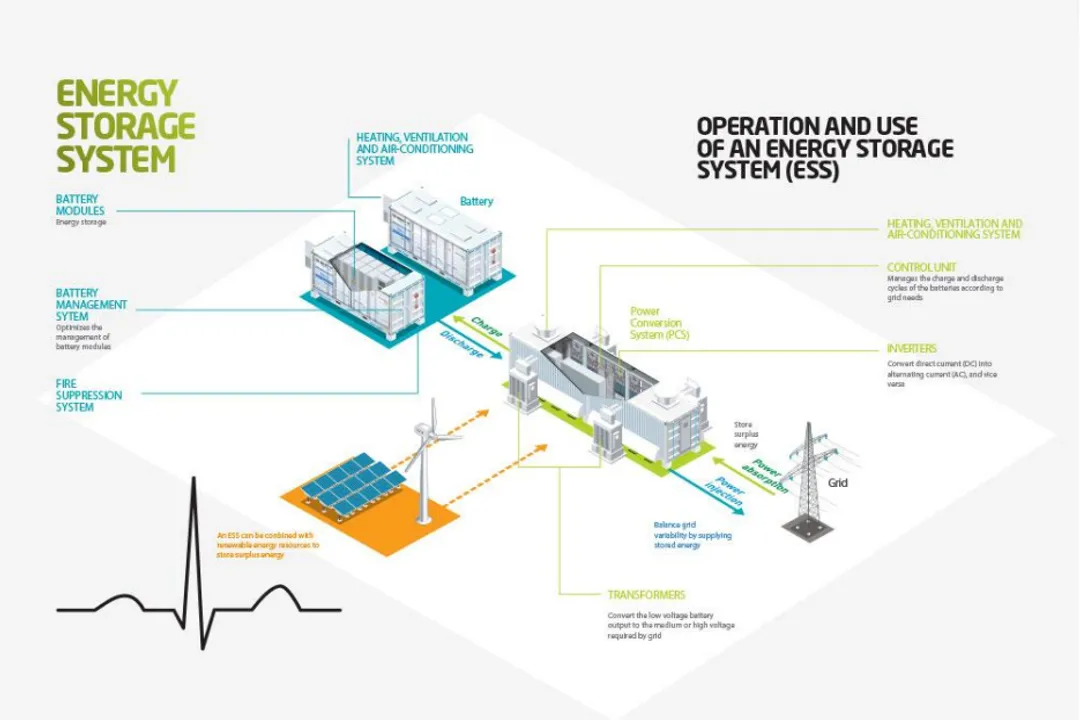
The constant challenge facing any electrical grid is the requirement for instantaneous balance: the amount of electricity being generated must exactly match the amount being consumed at every moment. [1] When supply exceeds demand, frequency rises; when demand outstrips supply, frequency drops. Maintaining the correct frequency, typically around in North America or elsewhere, is the definition of grid stability. [1] Energy storage systems—whether large-scale batteries, pumped hydro, or compressed air—are fundamentally changing the grid's ability to manage this delicate equilibrium by decoupling the time of energy generation from the time of its use. [8][5]
# Balancing Act
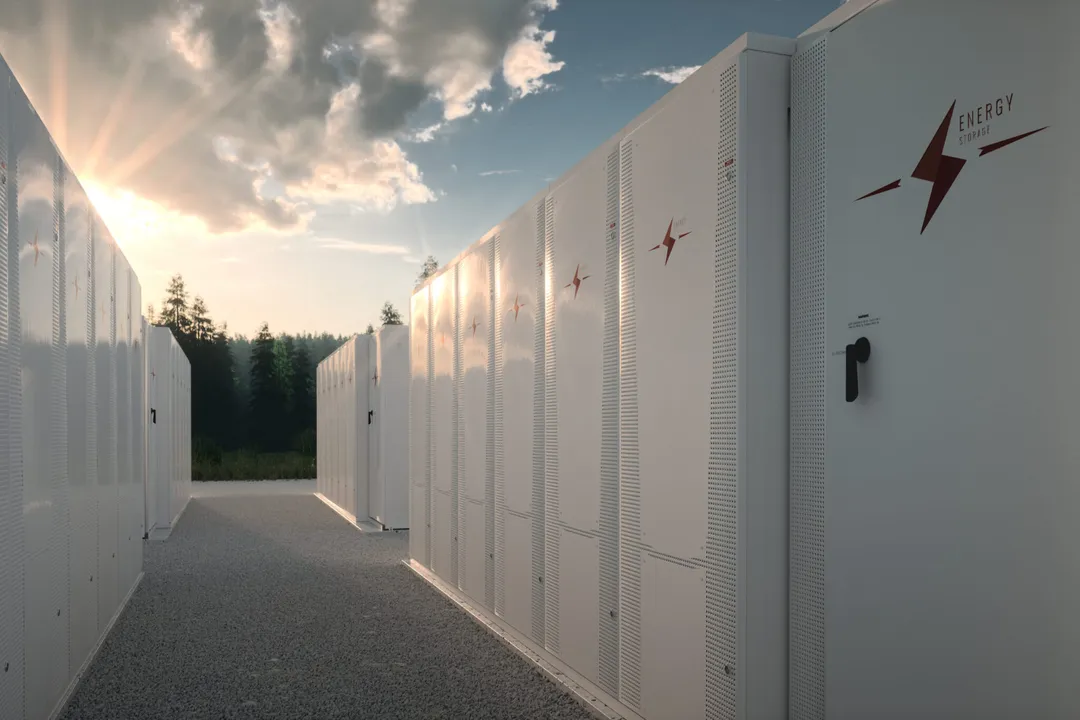
The primary function of grid-scale energy storage is to act as a buffer, smoothing out the inherent mismatch between when power is cheapest or most available and when consumers actually need it. [5] This involves two main actions: absorbing excess energy and injecting stored energy back into the system when needed. [1]
During periods of low demand or high renewable output—like a sunny, windy afternoon—excess electricity can charge storage units. This process prevents system operators from having to curtail (waste) clean energy generation or excessively ramp down conventional power plants. [9] Conversely, when demand peaks, such as during the evening when people return home and turn on appliances, these same storage units rapidly discharge, injecting power into the grid exactly when it is most needed to meet the surge. [5] This shifting of energy across time is a core stability service, reducing stress on transmission lines and minimizing the need to fire up expensive, fast-starting (but polluting) peaker plants. [8]
# System Inertia

Grid stability is not just about the quantity of power; it is critically about the quality and speed of response. Traditional synchronous generators, like coal or gas turbines, inherently provide system inertia because their massive rotating masses resist sudden changes in speed (and thus frequency). [2] As grids incorporate more inverter-based resources like solar and wind farms, which do not spin physically, the overall system inertia naturally decreases, making the grid more susceptible to rapid frequency deviations following a fault or sudden load change. [2]
Battery energy storage systems (BESS), even without physical rotation, can compensate for this. Modern battery controls allow them to simulate inertial response by rapidly injecting or absorbing real and reactive power within milliseconds of a frequency disturbance. [7] If a major line trips, this immediate, electronic response can arrest the frequency decay far faster than thermal plants can react. [4] If a conventional gas turbine takes several minutes to fully ramp its output to correct a frequency deviation, a utility-scale battery can provide the necessary megavars in milliseconds, acting like an electronic flywheel. [7] This capacity to provide synthetic inertia and damping services is essential for maintaining the operational security of modern, decarbonized grids. [2]

# Renewable Smoothing

The transition toward clean energy sources like solar and wind is inherently linked to grid stability challenges because these sources are variable and intermittent—they only produce power when the sun shines or the wind blows. [5][9] Energy storage directly addresses this by mitigating the sudden variability that complicates grid management. [5]
For instance, a large solar farm might experience rapid power drops due to passing clouds. Without storage, the grid must instantly call upon another resource to fill that gap, leading to system wear and tear. With storage, the passing cloud merely causes the battery to discharge a small amount of power to cover the deficit until the solar output recovers. [5] This ability to manage the ramp rates—the speed at which power output changes—is what allows high penetrations of intermittent renewables to be integrated without compromising overall grid reliability. [9]
# Resilience Foundations
Beyond managing daily supply and demand, energy storage plays a critical role in enhancing overall grid resilience against large-scale disturbances or blackouts. [6] Resilience refers to the system’s ability to withstand and rapidly recover from severe events, such as extreme weather, cyberattacks, or equipment failure. [4]
Storage can provide essential emergency services. In the event of a major transmission outage that isolates a section of the grid, battery systems can initiate "black start" procedures or support "islanding" operations. [6] Islanding is when a section of the grid disconnects from the main bulk system but continues to power itself locally. Batteries provide the necessary voltage and frequency control to keep that isolated section running stably until the main grid can be restored or until local generators can take over full responsibility. [4] This ability to provide immediate, localized backup greatly improves the chances of a fast recovery and limits the geographic spread of any initial failure. [6]
# Market Interactions
The provision of ancillary services—the non-energy functions that keep the grid stable—is increasingly provided by storage, which has significant implications for market pricing and efficiency. [7] Historically, services like frequency regulation and spinning reserves were costly and sometimes inefficiently provided by fossil fuel plants kept running just in case.
Energy storage, especially batteries, can provide these precise services with greater accuracy and lower marginal cost. [7] By participating in ancillary services markets, storage owners can stabilize the grid while earning revenue, which in turn drives down overall system costs for consumers. [7] One way this manifests is through peak shaving, where the storage system discharges during the most expensive, highest-demand hours, thereby lowering the overall system peak that dictates infrastructure investment needs. [8] If we observe hourly wholesale energy prices in a deregulated market, the introduction of a few hundred megawatts of fast-responding battery capacity often results in a noticeable damping of the highest price spikes, as the market can rely on the stored energy rather than desperate, last-minute generation commitments. [7]
# Diverse Storage Forms
The effect on grid stability is a function of the storage technology employed. While battery storage (like Lithium-ion) is gaining traction due to its modularity and rapid response time, other forms serve different long-duration needs. [8]
Pumped hydroelectric storage (PHS) remains the world's largest form of bulk energy storage, offering massive capacity for long-duration balancing, though its geographic placement limits where it can be deployed. [8] Technologies like compressed air energy storage (CAES) and flywheels also exist, each offering different characteristics regarding energy density, duration, and responsiveness. [8] For instance, flywheels are excellent for sub-second response to minute frequency fluctuations, whereas large-scale pumped hydro is better suited for shifting multi-hour blocks of energy across a day. [8] The best grid stability strategy often involves a mix of these technologies, each playing to its strength across the spectrum of time scales required for system operation. [2]

# Localized Stability Strategies
While large, centralized storage projects at high-voltage substations are crucial for bulk transmission stability, distribution-level storage is transforming local reliability. For smaller, microgrid-connected communities, integrating a localized battery storage system not only reduces dependency on the main transmission line but also allows for "islanding" capability—keeping local power on even if the broader transmission system fails. [6] This localized resilience strategy shifts the stability focus from the bulk transmission level down to the distribution level, improving the robustness of individual service areas against localized faults or outages. [4] This decentralized approach provides operational redundancy that was previously unavailable, requiring fewer manual interventions when issues arise on the main line.
In essence, energy storage shifts the paradigm from reactive grid operation—constantly playing catch-up with changing conditions—to proactive system management, where resources are dispatched strategically to prevent instability before it manifests as a frequency deviation or voltage sag. [1] The result is a grid that is inherently more flexible, cleaner, and less prone to widespread failure.
Related Questions
#Citations
How does storage help us balance the grid?
Role of energy storage technologies in enhancing grid stability and ...
How Does Battery Storage Affect Grid Stability? → Question
How battery energy storage delivers grid resilience amid blackouts
Clean Energy 101: How Batteries Can Support Grid Reliability - RMI
Six Pillars of Grid Resilience: The Critical Role of Grid-Scale Energy ...
Energy Storage, Price and Grid Stabilisation Techniques - Montel
Grid energy storage - Wikipedia
Energy Storage Facts - The American Clean Power Association (ACP)