How do vibrations transfer energy?
The movement we perceive as vibration is fundamentally about energy in motion, specifically the transfer of mechanical energy from one location to the next without necessarily transporting matter over that distance. When an object vibrates, it starts pushing and pulling on the matter immediately surrounding it—whether that matter is air, water, or a solid material like a metal bar. This pushing and pulling initiates a chain reaction. Imagine a line of dominoes standing close together; tipping the first one transfers the energy of the fall through the line, causing the last domino to fall, even though the first domino remains near its starting position. [6] In the realm of waves, this energy transfer happens through successive displacements of adjacent particles in the medium. [9]
# Particle Motion
A vibration is simply a rapid, repetitive back-and-forth or up-and-down motion around a fixed point, often called an equilibrium position. [7][8] This motion is the source of the transferred energy. For instance, when a guitar string is plucked, its physical structure moves back and forth extremely quickly. [8] This mechanical movement stores kinetic energy momentarily, which is then passed on. In the case of sound, this initial mechanical energy converts into sound energy as the vibration propagates. [5][7]
The crucial concept here is that the particles of the medium do not travel with the wave; they only oscillate around their own locations. [6] If you watch a buoy floating on the ocean surface as a wave passes, the buoy bobs up and down and moves slightly forward and back, but it doesn't travel across the ocean with the wave itself. [6] The energy, however, travels great distances, carrying the information or the push of the initial source. This distinction—matter stays, energy goes—is central to understanding how vibrations transfer energy effectively. [6][9]
# Creating Disturbances
The creation of a transferable disturbance begins with an imbalance of forces. When a vibrating object, like a speaker cone, moves outward, it crowds the nearby air molecules into a smaller space. This compression is an area of higher pressure and density compared to the surrounding atmosphere. [3][8] This region of high pressure then pushes on the next layer of molecules, causing them to compress slightly, effectively passing the disturbance along. [3]
Conversely, when the vibrating object moves back toward its starting point, it leaves a space behind it where the air molecules are momentarily spread out more thinly than normal. This creates an area of lower pressure, or rarefaction. [3][8] This cycle of compression and rarefaction is the fundamental mechanism by which sound energy travels through the air. [5][7] The energy is passed from one molecule to the next as they bump into their neighbors, transferring momentum and kinetic energy in a continuous cascade. [3]
# Wave Propagation
When these localized vibrations begin to repeat in a regular pattern, they form a wave. [9] Waves are the vehicle for this energy transport, and they are classified based on how the particles in the medium move relative to the direction the wave travels. [9]
# Transverse vs. Longitudinal
In a transverse wave, the particle motion is perpendicular to the direction of energy transfer. Think of shaking a rope up and down; the wave moves horizontally along the rope, but the segments of the rope only move vertically. [1][9]
For sound, the transfer mechanism is typically longitudinal. In a longitudinal wave, the particles vibrate parallel to the direction the energy is moving. [9] In the air or a solid, the molecules are being pushed and pulled back and forth exactly along the line the sound is traveling. [8] This parallel motion means that the energy is efficiently transferred by these successive compressions and rarefactions, as described earlier. [3] The speed at which this energy transfer happens is determined by the properties of the medium itself, such as its elasticity and density. [6] A stiffer, denser medium might transmit the vibration energy more quickly than a less dense, more pliable one.
A helpful, albeit slightly simplified, way to visualize this is to consider the molecules as tiny springs connecting masses. [3] When you push one mass, the spring compresses, pushing the next mass, and so on. The spring itself doesn't move much; it just stores and releases potential energy, facilitating the kinetic energy transfer between the masses. [3]

# Energy Quantification
The sheer amount of energy carried by a wave is directly related to the vigor of the initial vibration that created it. This is where the concept of amplitude becomes essential. [2] Amplitude describes the maximum displacement or distance moved by a point on a vibrating body or wave measured from its equilibrium position. [2]
Simply put, if you pluck a guitar string very lightly, it vibrates with a small amplitude, and the resulting sound wave carries little energy—you hear a quiet sound. If you pluck the same string very hard, the amplitude of its swing is much larger, and the resulting sound wave carries significantly more energy, resulting in a loud sound. [2][8]
# Amplitude Relationship
The relationship between wave energy and amplitude is quite direct, though often squared in physics equations for instantaneous power, which means a small increase in the vibration's push results in a much larger increase in the transferred energy. [2] If a wave has an amplitude twice as large as another, it is transporting approximately four times the energy. [2] This principle applies not just to sound but to all mechanical waves. The intensity of a seismic wave, for example, which is also a form of mechanical vibration transferred through the Earth, is directly tied to how far the ground is displaced from its resting state during the tremor. [2]
Consider a scenario where a mechanical shaker is used to test a bridge's stability. If the shaker is set to a low amplitude, the energy transferred into the bridge structure is minimal. If the shaker's power is increased to generate large displacements (high amplitude), the energy surge into the structure rises exponentially, potentially leading to failure if the material cannot handle the stored energy of that large oscillation. [2] This scaling factor is why seemingly small changes in vibration intensity can have drastic effects on structural integrity.
# Media Influence
The medium through which the vibration transfers energy plays an indispensable role, dictating both the speed and efficiency of the transfer. [6] Energy transfer by vibration requires a medium—a substance composed of particles capable of oscillating and interacting. [7] This is why sound cannot travel through a perfect vacuum; there are no particles close enough to bump into each other and pass the energy along. [3][8]
# Transfer Speed
Different materials transfer this vibrational energy at vastly different rates. Generally, for longitudinal waves like sound, the energy travels faster in denser, more rigid media where the particles are held together more tightly and can respond more quickly to the compression wave. [6]
For example, sound travels much faster in steel than it does in water, and much faster in water than in air. [8] This is because the molecules in steel are packed closely and bonded strongly, allowing the momentum transfer to occur almost instantaneously between adjacent atoms. [6] In contrast, air molecules are spread far apart, requiring more time for collisions to occur and energy to be passed on, resulting in a slower transmission speed. [6]
| Medium Type | Particle Spacing/Rigidity | Relative Energy Transfer Speed |
|---|---|---|
| Solid (e.g., Steel) | Close spacing, high rigidity | Fastest |
| Liquid (e.g., Water) | Moderate spacing, moderate rigidity | Moderate |
| Gas (e.g., Air) | Wide spacing, low rigidity | Slowest |
| Vacuum | None | Zero |
| [6][8] |
# Energy Loss
As the vibrational energy moves away from the source, it inevitably lessens. This reduction in transmitted energy over distance is often termed attenuation. [5] Several factors cause this loss:
- Spreading: As the wave moves outward from a point source, the energy spreads over an ever-increasing spherical area. Even if the wave itself is perfectly efficient, the energy density drops because the same amount of energy covers a larger cross-section of space. [5]
- Internal Friction/Damping: As particles collide to pass the energy along, some of the kinetic energy is converted into heat due to internal friction within the medium itself. This dissipated heat is a permanent loss of the organized vibrational energy. [5]
- Reflection and Absorption: If the vibration encounters a boundary, some energy might be reflected back, and some will be absorbed by the material it strikes, often turning into heat or causing a different type of internal motion within that material. [1]
# Energy Conversion at Boundaries
When a vibration traveling through one medium—say, air—reaches a boundary with another medium, like a windowpane, the energy transfer process becomes more complex. [5] The incoming wave causes the surface particles of the window to vibrate at the same frequency as the incoming sound wave. [5]
The energy transfer at this point is governed by the acoustic impedance mismatch between the two materials. [5] Acoustic impedance is essentially the resistance of a material to the flow of sound energy. When the impedances are very different (like air and glass), a significant portion of the sound energy is reflected away from the boundary, rather than being transmitted through it. [5]
If the energy is transmitted, the glass surface itself begins to vibrate—it becomes a secondary source of vibration. This transmitted vibrational energy then travels through the glass as a new wave pattern, eventually reaching the interior surface where it then pushes the interior air molecules, creating sound on the other side. [5][8] This multi-step process explains why a loud clap in front of a thin wall might result in a muffled sound on the other side; the wall absorbs and reflects a substantial fraction of the incoming mechanical energy. [5]
If you are trying to isolate a sensitive instrument from ground vibrations—say, a high-precision scale in a laboratory—understanding this boundary interaction is key. Simply placing the scale on the concrete floor may not be enough if the vibrations are coming through the structure. An effective solution involves decoupling the device using specialized, often pneumatic, vibration isolation tables. These tables act as a low-impedance layer designed to absorb the vertical component of the incoming ground vibration and convert it into negligible heat or small, high-frequency movements that die out quickly, rather than transferring the strong, low-frequency energy directly to the instrument. [2]
# Listening to Vibrations
Sound is perhaps the most relatable example of energy transferred by mechanical vibration. The ear is an exquisite energy transducer designed specifically to capture these pressure variations. When sound waves strike the eardrum, the alternating high and low pressures cause the eardrum to vibrate sympathetically. [7][8] This mechanical motion is then passed through the tiny bones of the middle ear, which act as an amplifier and impedance matcher, before reaching the fluid-filled cochlea. [7]
Inside the cochlea, the energy transferred by the vibration is converted again—this time from mechanical energy into electrical signals (nerve impulses) that the brain interprets as sound. [7] The efficiency of the whole system, from the initial speaker cone moving the air to the final neural spike, rests entirely on the successful, albeit imperfect, transfer of kinetic energy through the sequential medium changes. [5]
If we look at this from a pure energy budget perspective, we can see why amplification is often necessary. A whisper generates very low-amplitude pressure waves in the air, carrying minuscule amounts of energy. To make that energy detectable across a large room, a microphone must capture those subtle oscillations and use electrical power to drive a speaker cone, which then intentionally creates much higher amplitude vibrations in the air, effectively increasing the total energy of the sound wave reaching the distant listener. [2][4]
# Earthquakes and Resonance
Vibrational energy transfer isn't limited to acoustic waves. Geological events, like earthquakes, transfer massive amounts of mechanical energy through the Earth’s crust via seismic waves. [6] These waves travel through solid rock, liquid outer core, and back, demonstrating energy transfer through incredibly varied media. [1] The destructive power of an earthquake is a direct measure of the vibrational energy released at the hypocenter. [2]
This leads to the concept of resonance, a phenomenon where an external vibration matches the natural frequency of an object, causing the object's amplitude of vibration to increase dramatically. [4] Every physical object—a bridge, a skyscraper, a wine glass—has a specific set of natural frequencies at which it prefers to oscillate when disturbed. [2]
If the frequency of the external vibrational energy source perfectly aligns with one of those natural frequencies, the object absorbs energy exceptionally well, leading to massive, sometimes catastrophic, oscillations. [4] The famous Tacoma Narrows Bridge collapse in 1940 is a classic (though often debated) example where wind-induced torsional vibrations caused an amplification cascade that exceeded the structure's ability to dissipate energy, leading to failure. [2]
To proactively manage vibration transfer in engineering, designers must calculate the natural frequencies of their structures and then ensure that sources of vibration (like traffic, machinery, or wind) operate at frequencies far removed from those natural modes, or design mechanisms to actively damp those resonant modes. [2] Preventing resonance is often more critical than simply reducing the overall input vibration power, as resonance is where a small input vibration can release catastrophic amounts of stored energy within the structure itself. This insight highlights that the timing and pattern of the energy input are as important as the amount of energy being input in the first place.
# Mechanical vs. Other Waves
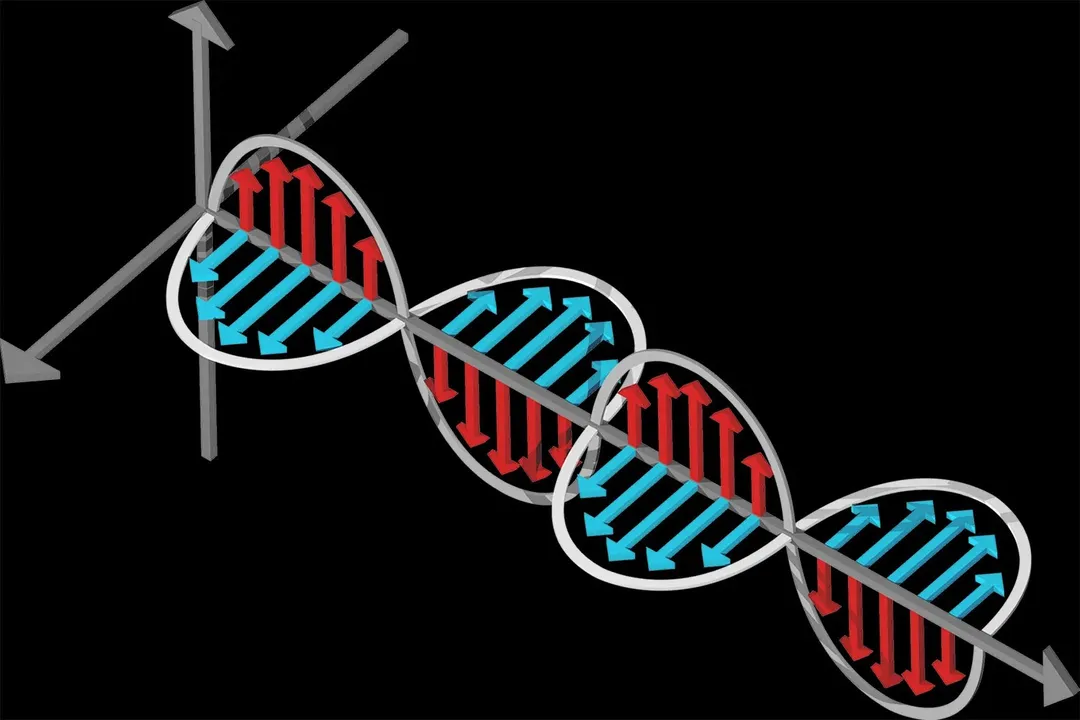
It is worth briefly contrasting vibrational mechanical energy transfer with electromagnetic energy transfer, such as light. [1] While both transport energy across distances, they differ fundamentally in their requirement for a medium. Light waves—including radio waves, microwaves, and visible light—do not require matter to propagate; they consist of oscillating electric and magnetic fields that self-sustain their propagation through a vacuum. [1]
Vibrations that transfer mechanical energy, conversely, are tied directly to the physical matter they travel through, whether it is the elastic bonds in a solid or the molecular collisions in a gas. [7] The physics governing their transfer involves classical mechanics—the conservation of momentum and the elastic properties of matter—rather than the laws governing fields in empty space. [6] This reliance on physical contact is why sound waves stop at the edge of space, whereas sunlight crosses it unimpeded. [3]
# Transfer Efficiency Check
To quickly assess how well energy is being transferred by vibration in a given situation, one can look at two main factors derived from the sources: the amplitude of the resulting wave, and the medium's properties. [2][6]
- High Amplitude: Indicates that the initial disturbance was forceful, and the medium supported the transmission efficiently enough to maintain that large displacement. [2]
- Low Attenuation: If the sound or vibration can be detected clearly over a long distance, it implies the material caused minimal energy conversion to heat or reflection. [5]
For example, a tuning fork struck lightly in the air produces a sound that quickly fades (low amplitude, high attenuation). If that same tuning fork is immediately placed against a solid wooden table, the sound heard from the table is much louder and lasts longer. The wood, being a much more rigid medium, supported a higher sustained amplitude for the initial vibration, transferring more energy to the listener’s ear via the structure than the air did alone. [6][8] The transfer went from being predominantly airborne (inefficient) to being largely structure-borne (more efficient for short distances). [5] This shift in the dominant transmission path is a critical outcome of energy transfer mechanics.
In summary, vibrations transfer energy by creating localized disturbances in a medium, compelling adjacent particles to oscillate sequentially. This chain reaction propagates the mechanical energy outward in the form of a wave. [6][9] The intensity of the energy transferred is directly proportional to the initial vibration's amplitude, [2] and the overall success of the transfer is critically dependent on the physical characteristics of the material itself. [6][7]
#Videos
How Sound Travels Across Different Mediums - YouTube
Related Questions
#Citations
Anatomy of an Electromagnetic Wave - NASA Science
Physics Tutorial: Energy Transport and the Amplitude of a Wave
eli5. What are sound vibrations and how do they travel? through ...
How Sound Travels Across Different Mediums - YouTube
How does energy become sound? - Physics Stack Exchange
How do waves carry energy from one place to another? - Quora
Sound Energy - Knowledge Bank - Solar Schools
Sound - Science World
Video: Waves & Energy Transfer | Overview & Examples - Study.com