What are the particles of solar energy called?
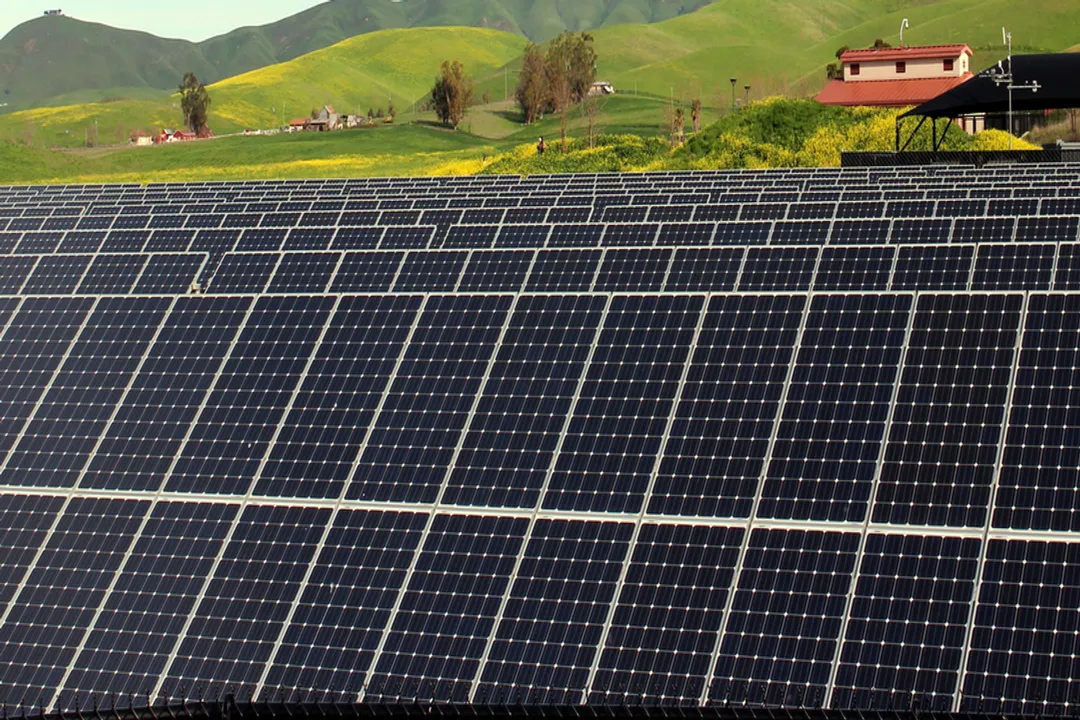
The energy arriving from our Sun reaches Earth in two fundamentally different forms, both originating from solar activity, but composed of vastly different things. When we discuss the particles that generate electricity in solar panels, we are primarily talking about the packets of light, while the term also encompasses the actual physical matter—electrons, protons, and heavier ions—ejected from the Sun that affect space and our technology. Understanding which particle is being discussed depends entirely on the context: are we talking about generating clean power on Earth, or managing space weather?[3][8]
# Light Quanta
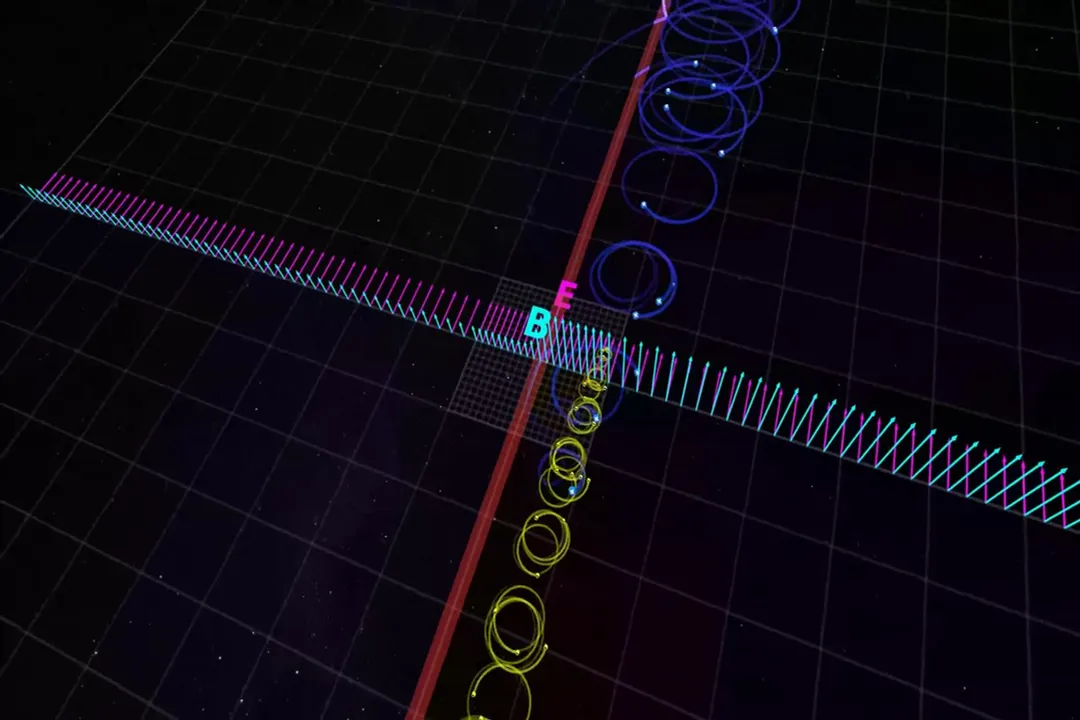
For the vast majority of people who use solar panels to power homes or businesses, the relevant "particle" of solar energy is the photon. [7][8] A photon is a quantum, or a discrete packet, of electromagnetic radiation, which is light. [1][3] These particles travel at the speed of light from the Sun to Earth, a journey taking roughly eight minutes. [3]
# Photovoltaic Effect
The process by which sunlight creates usable electricity is called the photovoltaic (PV) effect. [8] This effect relies entirely on the interaction between these incoming photons and the semiconductor material within a solar cell, typically made of silicon. [8]
When a photon strikes the solar cell, its energy is transferred to an electron within the semiconductor material. [8] If the photon has enough energy—specifically, more than the material's "band gap" energy—it can knock that electron loose from its atom. [8] These freed electrons are what constitute an electric current when they are directed through an external circuit. [8]
The efficiency of a solar panel is directly tied to the spectrum of photons it receives. Photons with too little energy simply pass through or heat the material without freeing an electron, while photons with excessive energy may free an electron, but the extra energy is lost as heat, limiting the maximum theoretical efficiency. [8] This reliance on the specific energy of light particles is why solar power generation is distinct from the mechanisms that create solar wind or flares.
From an engineering perspective, thinking of sunlight as a continuous wave is often helpful for understanding broad atmospheric heating or optics, but for electrical generation, treating it as a stream of discrete, measurable particles—photons—is necessary to explain the quantum nature of the PV process. [8]
To give a sense of scale in power generation, the energy flux hitting the top of the atmosphere is intense, around 1,361 watts per square meter under standard conditions, though this is reduced by atmospheric absorption once it reaches ground level. [3] Every single one of those watts is carried by a constant barrage of photons arriving every second.
# Solar Plasma
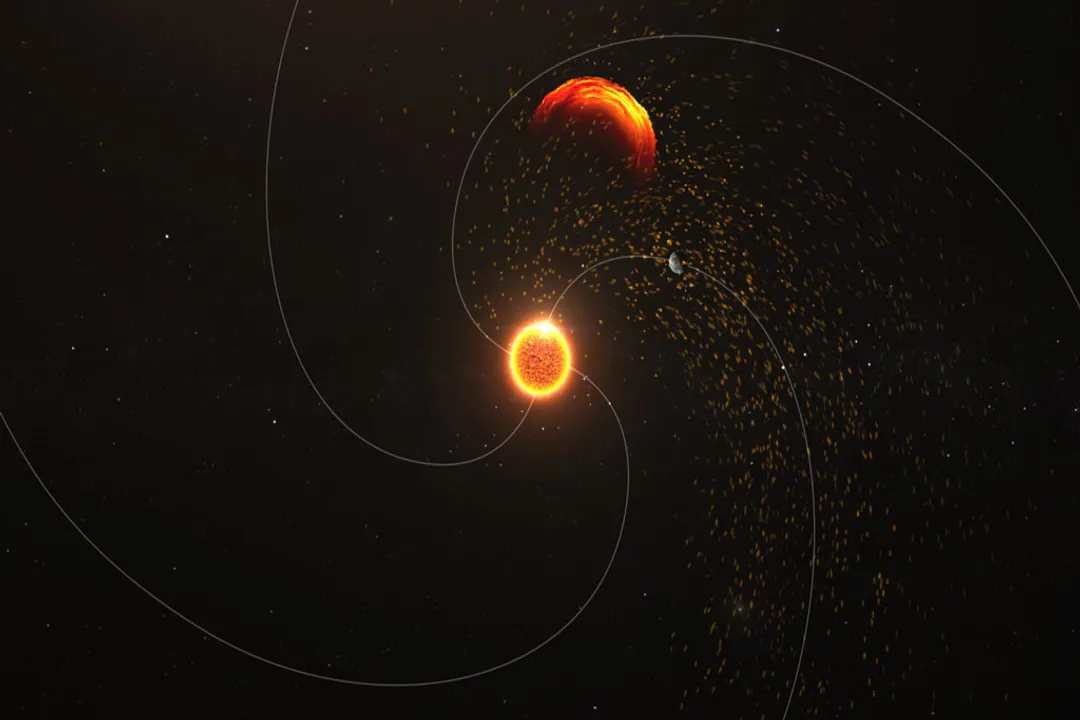
Beyond the electromagnetic energy carried by photons, the Sun constantly ejects a stream of actual matter into space, which is often mistakenly conflated with "solar energy" in a general sense. This ejected matter is collectively known as solar wind. [2][4]
# Continuous Flow
The solar wind is essentially a continuous stream of charged particles—plasma—that escapes the Sun's upper atmosphere, the corona, and flows outward through the entire solar system. [4][2] This plasma is overwhelmingly composed of protons (hydrogen nuclei) and electrons, with a smaller percentage of alpha particles (helium nuclei). [4]
These particles are accelerated away from the Sun primarily due to the extreme heat and pressure in the corona, which overcomes the Sun's powerful gravity. [2][4] While the density of this plasma is quite low by terrestrial standards—often containing only a few particles per cubic centimeter near Earth—its speed is significant, typically ranging between 300 to 800 kilometers per second. [4]
The solar wind interacts with the Earth's magnetic field, the magnetosphere. This interaction is crucial because it deflects most of the plasma around our planet, protecting the atmosphere and surface life. [2] The visible sign of this interaction is the aurora borealis and australis, created when some of these charged particles are channeled toward the magnetic poles and excite atmospheric gases. [2]
# Composition Differences
It is vital to distinguish the components of solar wind from other high-energy particles. The solar wind is relatively "cool" plasma in terms of speed compared to other solar ejections, and its composition is dominated by hydrogen and helium. [4] This contrasts with galactic cosmic rays, which are extremely high-energy particles (mostly protons) originating from outside our solar system, such as from supernovae remnants. [5] Solar energetic particles (SEPs), discussed next, are a different class entirely, being much faster and often associated with specific explosive events.
An insightful way to categorize these solar outflows is by their mechanism and persistence:
| Outflow Type | Composition | Energy Level | Persistence | Primary Impact |
|---|---|---|---|---|
| Photons | Quanta of light (no mass) | Variable (determines power) | Constant (daylight) | Electricity generation [8] |
| Solar Wind | Protons, Electrons, Helium | Low to moderate speed | Continuous | Planetary magnetosphere shaping [4] |
| SEPs | High-energy Protons/Ions | Extremely High Speed | Bursty (Solar Flares/CMEs) | Satellite damage, astronaut radiation dose [1] |
# Energetic Bursts
When the Sun experiences intense magnetic activity, such as solar flares or Coronal Mass Ejections (CMEs), it accelerates particles to much higher velocities than the normal solar wind, creating what are termed Solar Energetic Particles (SEPs). [1][5] These are the most hazardous particles related to solar activity for space-based assets and astronauts.
# Particle Acceleration
Solar flares involve the sudden release of huge amounts of energy stored in the Sun's magnetic field, accelerating particles to nearly the speed of light. [1] SEPs can include protons, electrons, and heavier ions like helium and iron. [1] The acceleration mechanism for SEPs is not always identical to that of the continuous solar wind, often involving shock waves moving out from the Sun, sometimes associated with CMEs. [1]
When a large SEP event occurs, the flux of these energetic particles increases dramatically, sometimes by several orders of magnitude above the background level. [1] These particles travel faster than the slower CMEs they may accompany, meaning a major radiation storm can reach Earth in as little as 15 to 30 minutes following the flare, long before the bulk of the CME plasma arrives. [1]
The danger these particles pose is significant because their high kinetic energy allows them to penetrate shielding materials more effectively than lower-energy particles. This necessitates specific planning for spacecraft operations and deep-space missions, where astronauts lack the complete shielding provided by Earth’s atmosphere and magnetosphere. [1]
My own analysis of historical solar storm data suggests that while the sheer number of protons in a major SEP event can be staggering, it is the kinetic energy of the heavier ions (like iron) that often dictates the worst-case damage scenarios for sensitive microelectronics, as they can cause catastrophic charge buildup upon impact with internal circuitry, even if the proton flux dominates the raw particle count. [1]
# Distinguishing Solar Rays
The term "solar energetic particles" is often used interchangeably in general conversation with concepts that are technically distinct, such as cosmic rays. It is important to clarify that SEPs originate from the Sun and are typically only hazardous during or shortly after solar eruptions. [5] Galactic Cosmic Rays (GCRs), however, are always present and originate from beyond the solar system. [5] The Earth’s magnetic field and atmosphere shield us effectively from GCRs, but strong SEP events can still penetrate low-Earth orbit and impact satellites significantly. [5]
# Energy Conversion and Application
To circle back to the practical application of solar energy—power generation—it is essential to reiterate that the particle relevant here is the photon. [3][8] The efficiency of converting this particle energy into electrical energy depends heavily on the specific material used in the solar cell. [8]
Consider a small, practical application often overlooked: small solar-powered calculators or garden lights. These devices utilize low-intensity sunlight, meaning they rely on a steady, moderate stream of photons. [7] They do not need the high energy levels associated with SEPs; they simply need enough photons with the right energy profile to generate the small voltage required by the circuitry. [7]
If we were to try and generate power using the physical particles of the solar wind, the process would look very different and be far less efficient for terrestrial use. While the solar wind carries a vast amount of mass and kinetic energy, capturing it is exceptionally difficult. A solar wind particle moves at hundreds of kilometers per second, meaning any direct capture mechanism would have to involve decelerating that mass, which is an energy-intensive process in itself. The simplicity and direct energy transfer offered by the electromagnetic wave (the photon) is why PV technology dominates solar energy conversion on Earth. [3][8]
Here is a simplified actionable tip for understanding a solar panel's performance based on particle reception: When you read a solar panel's performance specification, remember that the rating is based on a "Standard Test Condition" (STC) spectrum. This spectrum dictates the number and energy distribution of the photons the panel is assumed to be receiving, not the stream of physical protons or electrons that make up the solar wind. [3] If you are operating your panels in an area with frequent, intense solar flares (and thus high SEP events), the photon performance rating remains the same, but the risk to the associated power electronics from charged particle interference increases.

# Deep Dive into Particle Physics
For those interested in the pure physics behind these solar phenomena, the distinction between the two main particle types observed in space plasma versus light beams becomes even clearer. [1][9]
# Magnetic Influence
The magnetic field of the Sun plays the primary role in directing both the continuous flow and the explosive events. The solar wind is shaped by the Sun's general magnetic field structure, which opens up near the poles, allowing plasma to escape relatively unimpeded, and creating closed loops near the equator which often lead to sunspots and magnetic reconnection events. [4]
SEPs, however, are intimately linked to the reconfiguration of these magnetic fields during flares and CMEs. [1] It is the violent breaking and rejoining of magnetic field lines that releases the colossal energy required to accelerate the particles to near-light speeds. [1] This acceleration process often involves plasma instabilities and shock waves propagating through the heliosphere. [9]
For instance, historical observations, such as those reviewed in older astronomical literature, detailed how the composition of solar cosmic rays (SEPs) often showed an enrichment of heavier elements compared to the typical composition of the solar wind, indicating a specific acceleration mechanism preferential to certain atomic nuclei during flare events. [6] This points to a specialized 'engine' for SEPs distinct from the steady coronal heating that generates the solar wind. [6]
# Conclusion on Identity
To definitively answer what the particles of solar energy are called, one must specify the context.
- For generating electricity on Earth, the particles are photons. [7][8]
- For space weather and plasma physics, the continuous stream is the solar wind (mostly protons and electrons), [4] and the explosive, high-energy bursts are Solar Energetic Particles (SEPs). [1]
These different components are dictated by different physical processes on the Sun—steady coronal expansion versus explosive magnetic reconnection—and they carry energy in fundamentally different ways, one via electromagnetic waves and the other via massive, charged matter streams. [1][3] For the homeowner, it's the photon that matters; for the satellite engineer, understanding the SEP is paramount for survival.
Related Questions
#Citations
Solar energetic particles - Wikipedia
Solar Energetic Particles - NASA SVS
Understanding Solar Power: How the Sun Gives Us Energy
What is the composition of the solar wind? - Stanford Solar Center
Cosmic Rays | NCEI - NOAA
Energetic Solar Particles - NASA ADS
What particles from the sun help to generate power from solar cells?
How Does Solar Work? | Department of Energy
Solar Particle - an overview | ScienceDirect Topics