What is the most violent star death called?
The most cataclysmic event in the cosmos, the death rattle of a massive star, is known by a name that perfectly captures its terrifying power: the supernova. [5] This stellar explosion is a phenomenon of unimaginable violence, briefly outshining entire galaxies and broadcasting the final moments of a celestial body across unimaginable distances. [1][5] While stars spend billions of years fusing elements and shining steadily, their end is anything but quiet. It represents the universe’s most dramatic recycling program, forging the heavy materials necessary for planets and life itself. [2][8]
# Stellar Lifecycles
Understanding the violence of a supernova requires first understanding the life story of the star involved, as there isn't just one path to this spectacular end. [8] The fate of a star is fundamentally dictated by its initial mass. [4]
# Massive Endings
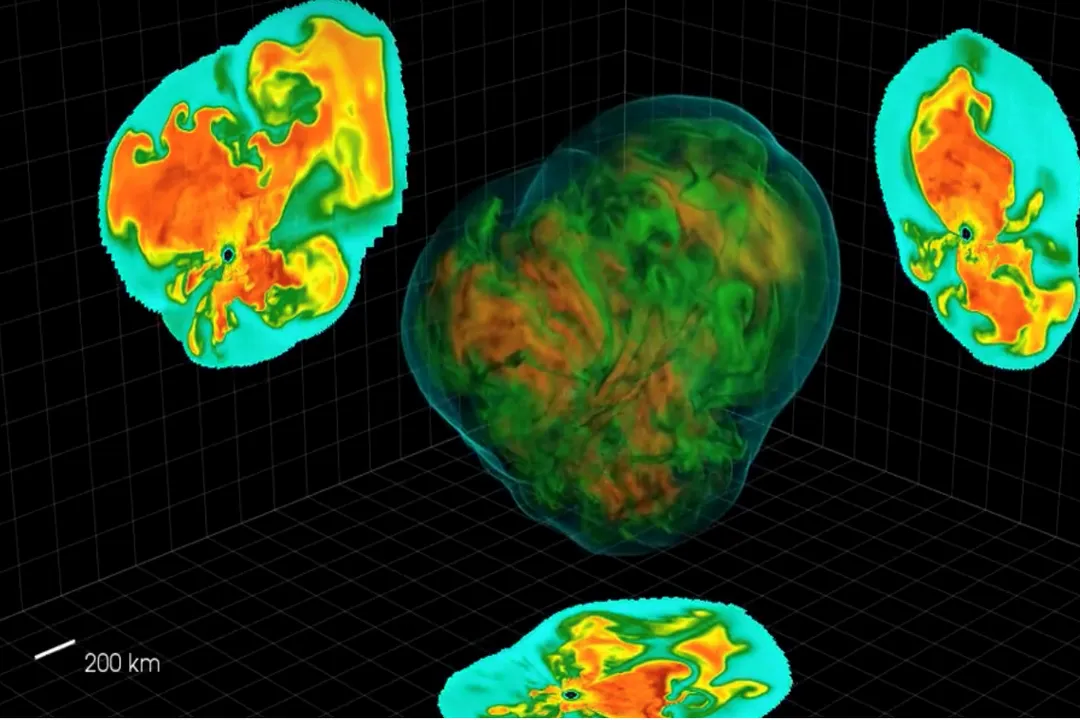
For stars significantly more massive than our Sun—perhaps eight times the mass or more—the ending is a swift, spectacular collapse. [4][8] These stars burn through their fuel quickly, fusing heavier and heavier elements in their cores. The process continues until the core is composed of iron. [4] Iron is the stellar ash; unlike lighter elements, fusing iron consumes energy rather than releasing it. [4] When the iron core builds up past a critical point, the outward pressure that supported the star vanishes instantly. [4] Gravity wins the ultimate battle, and the stellar material falls inward at tremendous speeds, crushing the core in mere seconds. [4][8] This implosion causes the outer layers of the star to rebound off the now incredibly dense core—often a neutron star—in a colossal shockwave, resulting in the supernova explosion. [4][8]
# White Dwarf Ignition
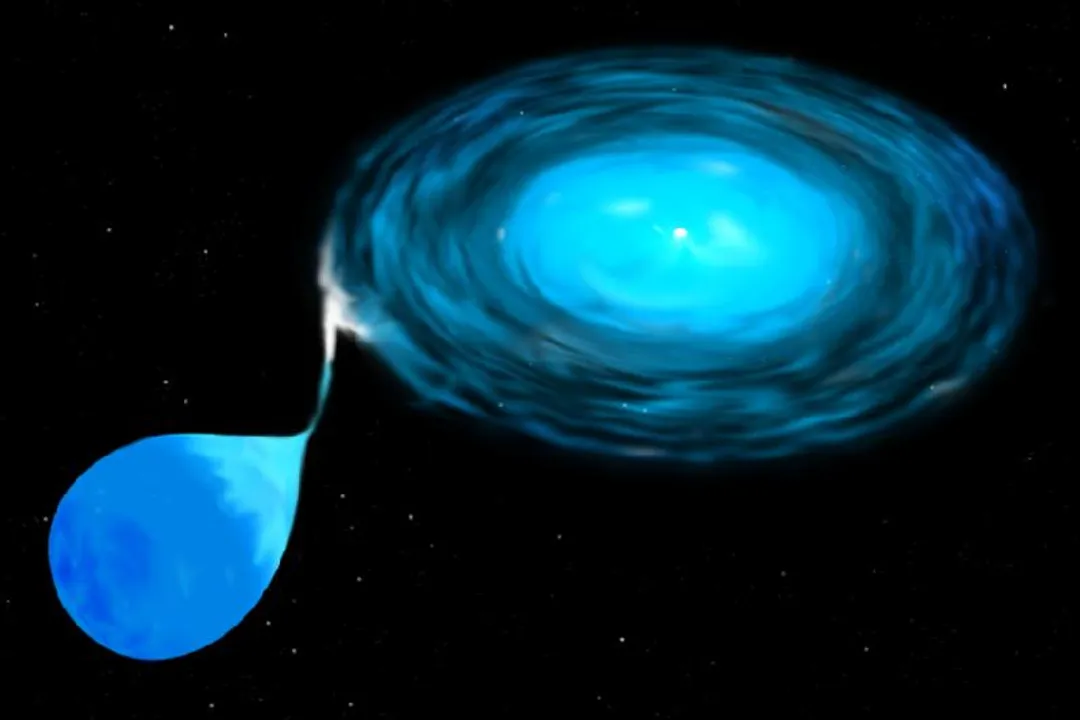
A second, equally violent mechanism involves the stellar remnants of smaller, Sun-like stars: the white dwarf. [8] A white dwarf is the dense, leftover core of a star that has exhausted its nuclear fuel and shed its outer layers. [1] In a binary star system, where two stars orbit a common center, a white dwarf can steal material from its companion. [8] As it accrues mass, it gets hotter and denser. If the white dwarf pulls enough matter to exceed a specific threshold, known as the Chandrasekhar limit (about 1.4 times the Sun's mass), the internal pressure holding it up is overcome. [8] This triggers runaway nuclear fusion across the entire star almost simultaneously, leading to a thermonuclear explosion that completely obliterates the white dwarf. [8] This specific event is termed a Type Ia supernova. [8]
# Cosmic Intensity
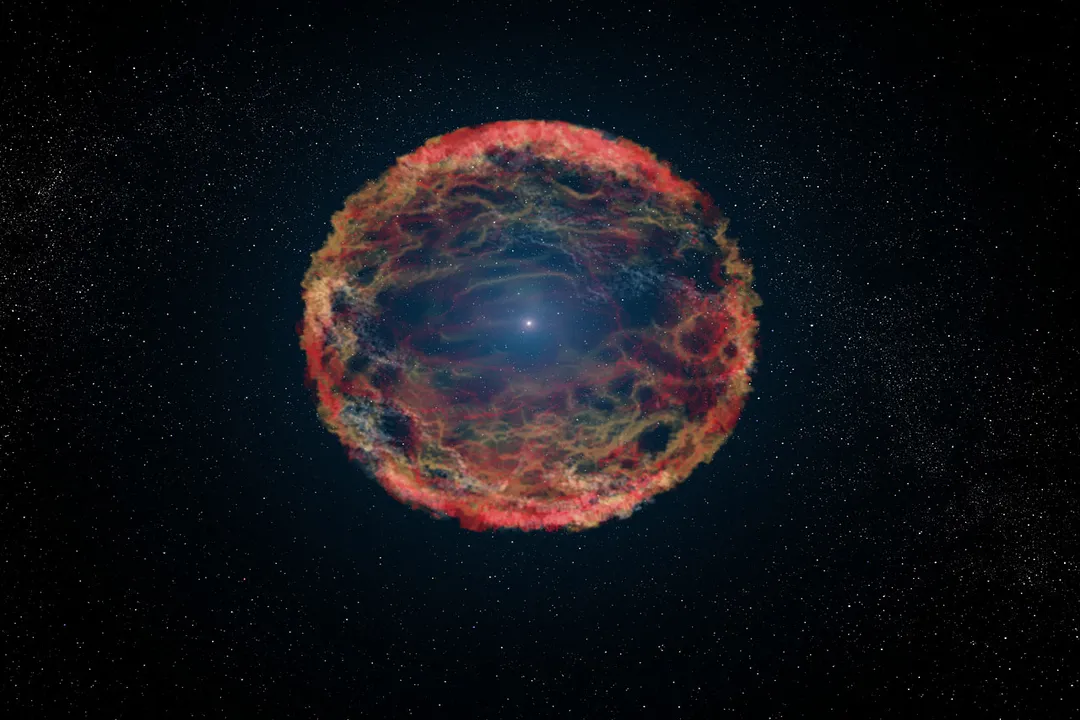
The term "violent" hardly does justice to the sheer energy released during these detonations. The luminosity of a supernova event is staggering; it can shine as brightly as a billion suns, sometimes even surpassing the total light output of the entire galaxy in which it resides. [1][2][5] To put this into perspective, consider the energy. A single supernova releases more energy in a few weeks than our Sun will produce over its entire 10-billion-year lifetime. [2] If you could somehow capture the energy output of a modern city for a year and compress it into a single second, it would still pale in comparison to the energy burst from one of these stellar deaths. [2] This immense output means that supernovae are visible across vast cosmic distances, allowing astronomers to detect them in galaxies millions of light-years away. [5][9]
The explosion itself involves a rapid expansion of superheated plasma, accelerating debris to enormous velocities. The speed at which this material rushes outward is a key measure of its violence. When we observe the remnants years later, we are seeing clouds of gas moving at thousands of kilometers per second, remnants of a momentary cosmic furnace. [4]
# Forging Elements
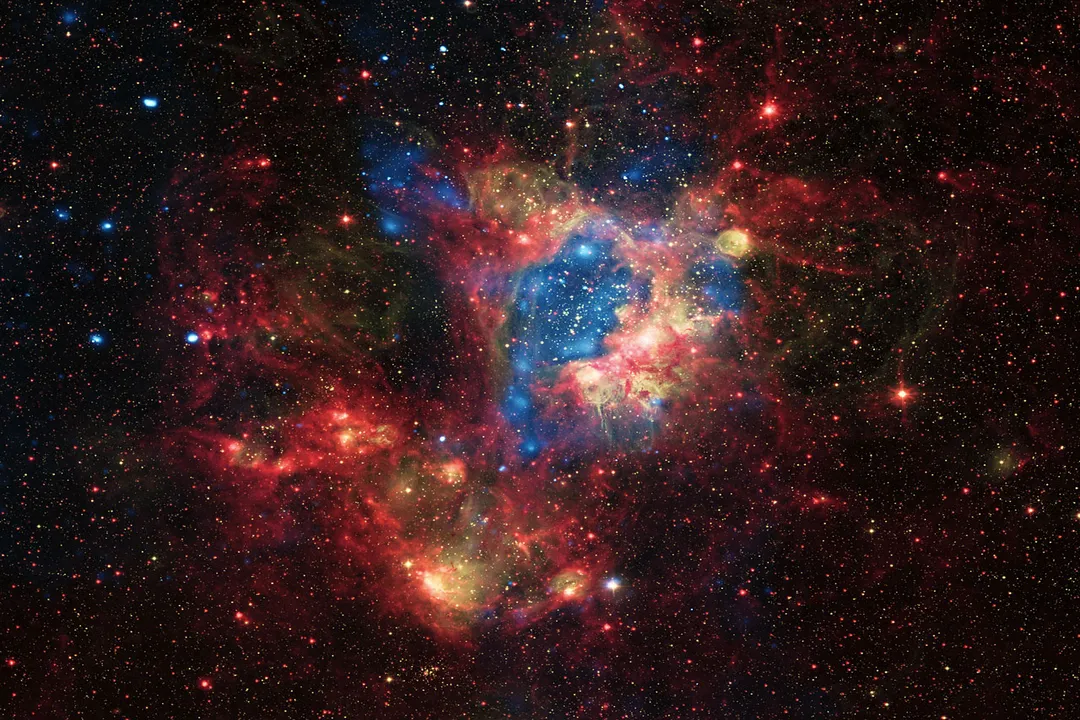
Beyond the raw energy and light, supernovae perform an indispensable service for the cosmos: nucleosynthesis. [2][8] While a star spends its life creating elements up to iron through fusion, the extreme temperatures and pressures available only during the core collapse or thermonuclear runaway of a supernova are necessary to forge elements heavier than iron. [8]
Elements like gold, silver, uranium, and others that we find essential on Earth—and indeed, that make up our own bodies—were not present in the primordial gas clouds from which stars formed. [2] They were synthesized in the heart of these dying stars and scattered outward when the explosion occurred. [2][8] This ejected material enriches the interstellar medium, providing the raw ingredients for the next generation of stars, planets, and, eventually, life. [8] Essentially, every atom of iron in your blood, or every speck of gold in jewelry, owes its existence to an ancient stellar death, a violent transformation that served as the universe’s primary material factory. [2]
# Final States
What is left behind after such a cataclysmic event varies based on the initial mechanism, offering two very different kinds of stellar corpses. [4][8]
# Stellar Corpses
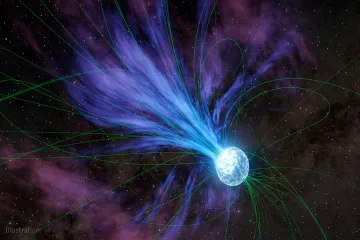
When a massive star undergoes a core-collapse supernova, the pressure is often high enough to compress the remnant core down into a neutron star. [4] This object is composed almost entirely of neutrons, packing more mass than the Sun into a sphere only about 10 to 20 kilometers across. [4] If the original star was exceptionally massive—perhaps over 20 solar masses—even the neutron degeneracy pressure cannot halt the collapse, and the core compresses further, forming a singularity shrouded by an event horizon: a black hole. [4][8]
In stark contrast to these remnants, the Type Ia supernova—the white dwarf explosion—results in complete destruction. [8] Because the white dwarf is entirely obliterated by the runaway fusion, there is no compact remnant left behind; the star is simply gone, leaving only a rapidly expanding cloud of stellar debris. [8] This distinction between leaving a dense core (neutron star/black hole) and total annihilation (Type Ia) highlights a major difference in how these violent deaths play out on a physical level.

# Cataloging Explosions
Astronomers dedicate significant effort to monitoring the sky for these events, which are categorized based on their spectral signatures. [1] The presence or absence of hydrogen lines in the resulting spectrum often distinguishes the core-collapse events (which retain some hydrogen envelopes) from the thermonuclear explosions (which often lack hydrogen). [1]
Modern astronomy has also uncovered cases that defy easy categorization or present unusual signatures, sometimes labeled as "suspicious". [7] These outlier events push the boundaries of our current models of stellar evolution and explosion physics, suggesting that the universe still holds surprises about how stars can reach their explosive conclusions. [7] Observing these events, sometimes years after the initial flash when the expanding gas cloud becomes visible in X-rays or radio waves, allows scientists to study the physics of shockwaves and heavy element creation in real-time. [9] For instance, studying the light curve—the way the brightness changes over time—of a distant supernova gives clues about the radioactive elements created inside during the explosion that power its lingering glow. [9]
It is fascinating to note that while the explosion itself lasts for mere weeks or months in terms of peak visibility, the expanding nebula created by the ejected matter can remain observable, slowly fading over thousands of years, a luminous monument to a star that existed for billions of years before its final, violent outburst. [2] This long afterlife of the remnant material contrasts sharply with the star's final second of life, emphasizing the long-term impact of a brief, energetic event. In fact, the sheer quantity of heavy elements released by supernovae is so significant that if you were to calculate the total mass of heavy elements (everything heavier than helium) in the Milky Way, a significant fraction of that mass was delivered by these explosions over cosmic history. [2][8] This chemical enrichment is the ultimate legacy of a star's violent death, providing the building blocks for everything we observe today.
Related Questions
#Citations
Supernova - Wikipedia
[PDF] Death of a star - University of Western Australia
What Is a Supernova? | NASA Space Place – NASA Science for Kids
Collapsing stars, supernovae, and gamma-ray bursts - MPA Garching
How a Star Dies in a Colossal Explosion Called a Supernova
DOE Explains...Supernovae - Department of Energy
There's Something Really Suspicious About the Way This Star Died
Supernovae: The Deaths of Massive Stars - ThoughtCo
How dangerous are supernova explosions?