What is the fate of the core of a massive star that undergoes core-collapse supernova, provided it is not massive enough to form a black hole?
Answer
It compresses into a neutron star, packing immense mass into a small volume.
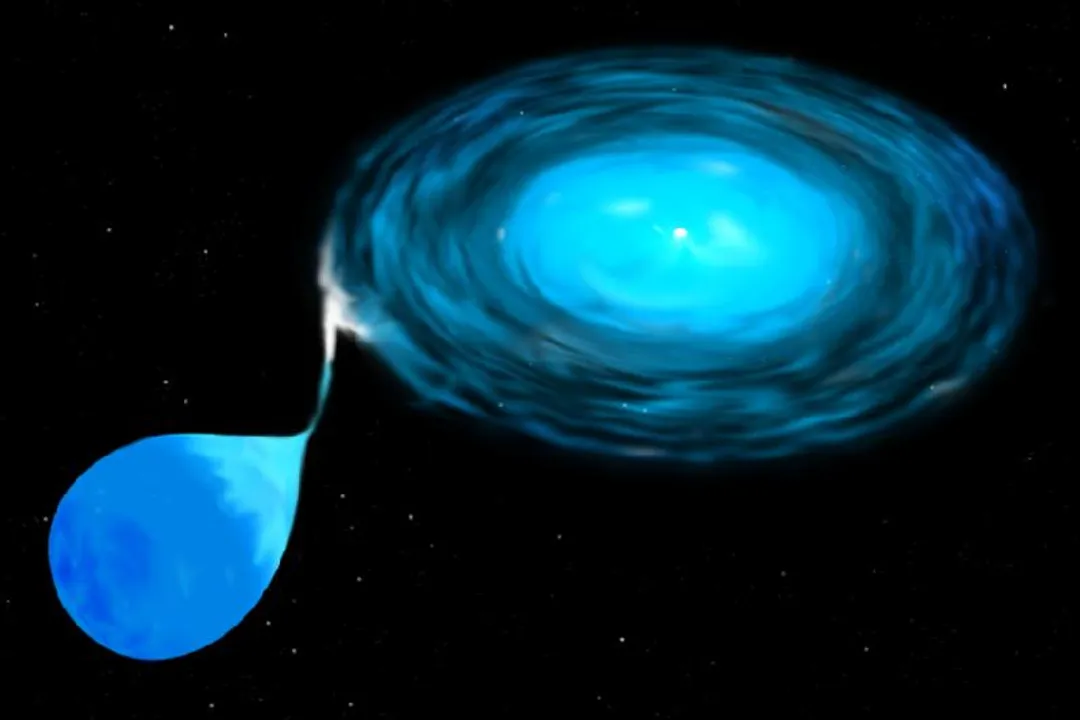
When a massive star's core collapses but the progenitor mass is insufficient to overcome neutron degeneracy pressure, the core compresses into an extremely dense object composed almost entirely of neutrons, known as a neutron star.
Related Questions
What is the primary reason the core collapse of a massive star occurs?What is the specific explosive mechanism that triggers a Type Ia supernova?What essential role do supernovae play in cosmic element creation?How does the energy released by a single supernova compare to the Sun's total lifetime output?What is the remnant left behind after a Type Ia supernova explosion?What is the fate of the core of a massive star that undergoes core-collapse supernova, provided it is not massive enough to form a black hole?What is the primary factor determining the pathway a star takes toward a supernova ending?How luminous can a supernova explosion become compared to other celestial objects?What characteristic observed in a supernova spectrum helps distinguish it from a core-collapse event?What causes a star significantly more massive than the Sun to undergo core collapse?