What fundamental reaction powers a star's long, stable life?
Answer
Nuclear fusion
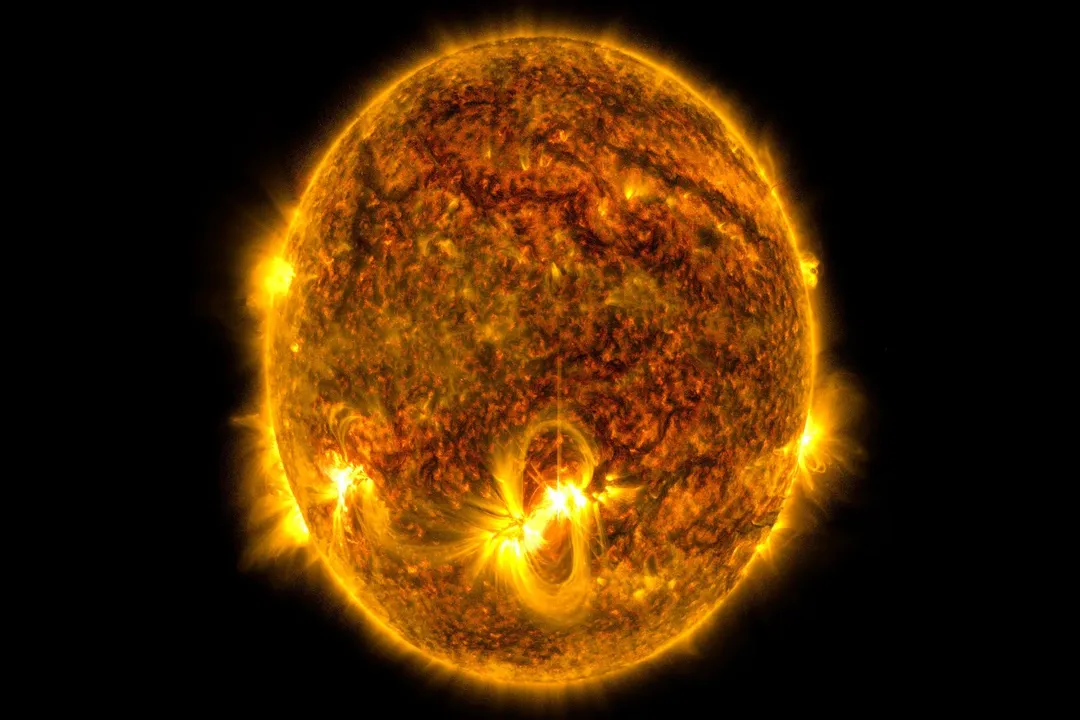
Modern astrophysics confirms that stars shine due to a powerful reaction locked within the atomic structure of matter, specifically nuclear fusion, which is far more potent than terrestrial combustion.
#Videos
Nuclear Fusion - How Stars Generate Energy - YouTube
Related Questions
What is the very first, entirely mechanical source of heat during a star's birth?What is the name given to a baby star that shines due to gravitational heating but not yet through fusion?What fundamental reaction powers a star's long, stable life?What critical threshold must the stellar core reach to overcome electrostatic repulsion and initiate nuclear fusion?According to Einstein's relation, what happens to the mass when four protons fuse into one helium-4 nucleus?Which hydrogen fusion process is the dominant energy producer in stars up to about the Sun's mass?What key feature distinguishes the reaction rate of the CNO cycle compared to the PP chain in massive stars?What is the continuous balancing act defining a star's entire existence while on the main sequence?If a star's fusion suddenly slowed, what would happen according to the inherent feedback mechanism?For Sun-like stars, what is the next fuel source ignited after the core hydrogen is exhausted?Where are elements heavier than iron primarily manufactured in the universe?