Which instrument is used by astrologers to study the stars?
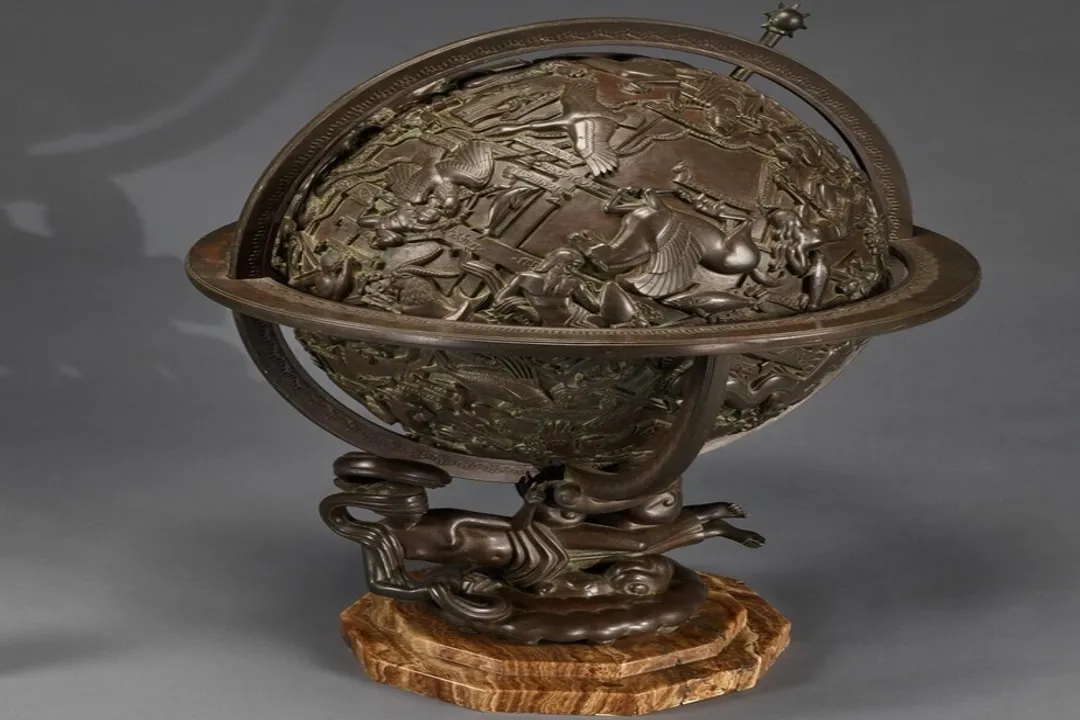
The study of the heavens, whether for predicting the seasons, navigating the oceans, or charting personal destinies, has long relied on specialized tools designed to capture the complexity of the cosmos in a handheld device. For centuries, this primary instrument—the calculator and map of the sky used by astrologers and astronomers alike—was the astrolabe. [1][2][8] Far from being a simple sighting mechanism, the astrolabe functioned as an ancient analog computer, capable of solving numerous problems relating to the time and the positions of celestial bodies. [5] Its enduring significance lies in its dual utility: providing the precise mathematical backbone required for scientific observation while simultaneously offering the graphical framework needed for casting horoscopes, blurring the line between early astronomy and astrology. [1][8]
# Ancient Calculator
The core concept behind the astrolabe is the projection of the three-dimensional celestial sphere onto a two-dimensional surface. [2] This remarkable feat allows the user to model the entire visible sky, mapping the movement of the Sun and the fixed stars relative to the observer's horizon. [5] By manipulating the instrument, one could determine the time of day or night, calculate the local latitude, and ascertain the rising and setting times of specific stars. [1][2] In the context of medieval and early modern practice, this mapping was directly translatable into astrological computation, allowing practitioners to find the exact alignment of the zodiac for a particular moment, which is the foundation of any natal chart. [8] The instrument essentially acted as a portable, personalized orrery demonstrating the celestial mechanics relevant to the user’s specific location on Earth. [4]
# Instrument Parts
A fully functional planispheric astrolabe, the most common type, is comprised of several precisely engineered components that work in concert to perform calculations. [2] The main body is the mater, which is a thick, shallow metal disk, often made of brass, that serves as the frame and holder for the other pieces. [2][4] The mater has a hollowed-out interior where interchangeable plates, known as tympans or plates, are fitted. [2][4] A tympan is engraved with lines representing the horizon and altitude circles for a specific latitude. [2][4] Because the sky appears differently depending on how far north or south one is, different tympans were required for different regions; an astrolabe intended for use in London would not accurately function for calculations made in Cairo without swapping the plate. [4]
Resting over the tympan is the rete, which is perhaps the most visually striking part of the instrument. [2][5] The rete is an openwork metal plate that acts as a map of the heavens, featuring pointers—often shaped like ornate fleur-de-lis—that indicate the positions of prominent fixed stars. [2][4][5] The rete rotates above the tympan. Finally, the user sights the sun or a star using the alidade, a sighting rule mounted on the back of the instrument that rotates on the central pin. [2][4] Being able to physically align the alidade with a celestial body, and then read the resulting position against the engraved lines on the tympan and rete, is a tactile, real-time application of spherical geometry that modern software performs instantaneously. [2][4]

# Historical Lineage
The conceptual origins of the astrolabe trace back to the Hellenistic period, where Greek mathematicians laid the geometric groundwork for modeling the sky. [8] However, it was within the Islamic Golden Age that the instrument was refined, standardized, and evolved into the highly complex, portable device known today. [8][9] Islamic craftsmen added intricate engravings, improved mathematical accuracy, and vastly expanded its capabilities, often incorporating astronomical tables directly onto the device itself. [8][9] From this rich tradition, the instrument spread across the Mediterranean, becoming essential in Europe for both scholarly pursuits and practical applications like determining prayer times and calendar dates. [9]
The transition of this complex scholarly tool into the hands of sea captains highlights an interesting divergence in its purpose. While the general planispheric astrolabe was designed for use on land, providing precise coordinates based on local latitude and time calculations, the Mariner's Astrolabe was a stripped-down, specialized descendant. [3][7] The mariner’s version sacrifices the ability to calculate time or chart stars for simplicity and stability at sea. [7] It is typically a heavy, solid brass ring, often open in the center, designed primarily for measuring the altitude of the Sun or Polaris above the horizon, which allows a navigator to find their latitude. [3][7] This functional simplification shows how the experience of practical navigation demanded a tool that could withstand the elements, prioritizing durability and immediate altitude readings over the intricate calculations of the terrestrial version. [3]
# Intersecting Disciplines
The historical association between astrology and astronomy is inseparable when discussing the astrolabe's use. [1][8] Before the scientific revolution formalized the distinction, both pursuits relied on the same empirical data regarding planetary and stellar positions. [1] An astrologer needed to know exactly where Mars was relative to the horizon at the moment of a person's birth to draw an accurate chart. [5] The astrolabe provided that necessary positional data. [1][5] Consider a practitioner working in 16th-century Persia; their beautifully engraved instrument, perhaps featuring Arabic or Persian inscriptions, would be used one moment to calculate the time remaining until sunset for daily prayers, and the next to determine the critical degrees of the ecliptic required for a prince’s horoscope. [8] The instrument’s universal capability made it the indispensable physical object connecting mathematics, timekeeping, navigation, and divination for a thousand years. [2][9]
# Practical Application Contrast
To better appreciate the instrument's versatility, one can view the two main forms as representing different professional needs. The planispheric astrolabe, with its detailed tympans and rotating rete, is fundamentally a scholarly or fixed-location device. [2][4] It requires careful leveling and the correct latitude plate to function correctly, making it an object of the library or the observatory. [4] Conversely, the mariner’s astrolabe is the ultimate field tool. [7] It is essentially a specialized pendulum and angle-measuring device that ignores the complexities of the sky projection. [3][7] A sailor could hang it from a ring, watch the sun through the sighting vanes, and get an altitude reading, often correcting for the ship's pitch and roll—a task impossible with the more delicate planispheric type. [3] This distinction shows that the "study of the stars" was a spectrum, ranging from the abstract mathematical modeling of the scholar to the life-or-death positional fixes required by the seafarer. [7]
The construction itself tells a story of technological trust. When looking at an early planispheric astrolabe, one sees the dedication to inscription, the precision needed to cut the pointers on the rete to align perfectly with specific stars, and the careful fitting of the plates. [4][9] This level of detail implies a high degree of trust in the permanence and reliability of the engraved mathematics. The user was not merely using a tool; they were holding a small, physical model of the known universe, calibrated by master craftsmen. [9] While modern GPS provides location data, the astrolabe provided understanding of that location relative to the heavens, making the connection between the terrestrial observer and the celestial realm tangible. [5]
Related Questions
#Citations
Astrolabe - Wikipedia
Astrolabe | Definition, History, & Facts | Britannica
Mariner's Astrolabe - Ages of Exploration
A Medieval Astrolabe | Whipple Museum of the History of Science
How Astrolabes Work - Electronics | HowStuffWorks
Italian astrolabe of the 14th century. The Astrolabe or star finder was ...
What is a mariner's astrolabe? | Royal Museums Greenwich
Astrolabe, Persian, 16th Century | The Future of Truth - UConn
Seeing stars: astrolabes and the Islamic world | British Museum