How did ancient civilizations study the stars?
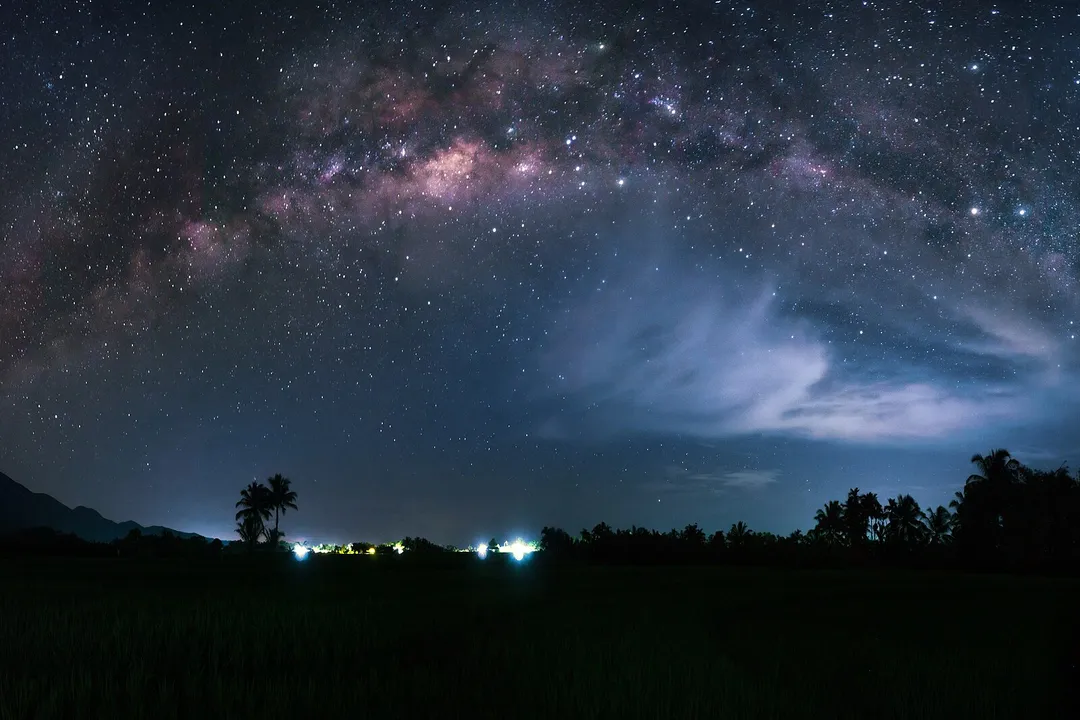
The first great challenge for any civilization was simply keeping track of time, and the sky provided the only dependable clock available. Before specialized instruments or complex mathematics, humanity relied on patient, careful watching. The night sky, peppered with fixed stars and the wandering "stars" we now call planets, was not just a source of wonder; it was a fundamental operating manual for agriculture, navigation, and religious ceremony. [9] Understanding celestial movements allowed ancient peoples to structure their lives around predictable cosmic rhythms, making the study of the stars an inherent part of survival and social organization. [8]
# Naked Sight
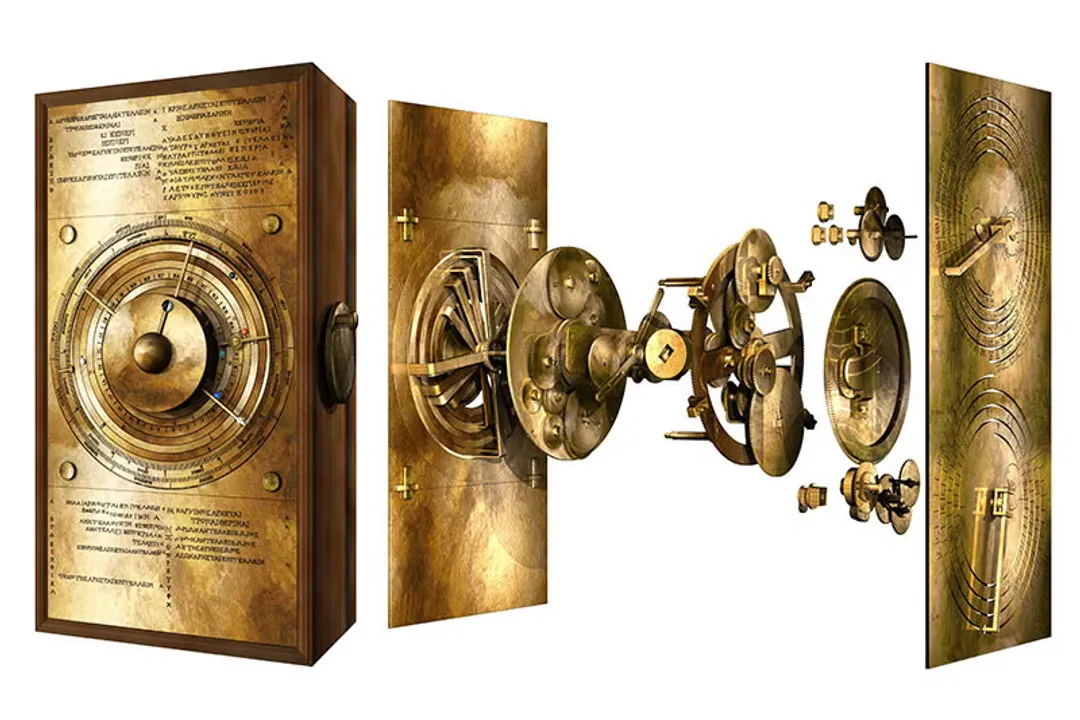
Observing the heavens required only one tool: the human eye, though simple aids certainly enhanced precision. Without the telescope, tracking celestial objects meant noting their positions relative to fixed points on the horizon or against foreground markers. [5] The stars themselves, being seemingly fixed, were vital for establishing orientation, particularly for travelers or sailors, offering reliable navigation when the sun was absent. [9]
Planets posed a greater challenge because they did not stay in one place relative to the background stars. Observers had to map these erratic movements over many nights to identify recurring patterns, such as the phenomenon of retrograde motion, where a planet appears to momentarily reverse its course. [5] The sheer dedication required for this mapping is often overlooked; it necessitated consistent, long-term recording, frequently passed down orally or through simple tally marks rather than extensive written treatises. [5]
Simple constructions augmented this basic observation. Sighting sticks, for instance, allowed an observer to align two distant points—perhaps a mountain peak and a specific star on the horizon—to mark an important rising or setting point. [5] In other cases, the sun's shadow provided the measurement. Structures like obelisks or simple vertical gnomons cast shadows whose length and direction changed predictably throughout the day and year, helping to mark solstices and equinoxes. [5] Furthermore, some early astronomers noted how moonlight interacted with water surfaces or how certain stars seemed to "swim" when viewed through a shallow pool, though these methods were likely more tied to ritual than precise calculation. [5]
# Cosmic Calendars
The immediate, practical application of tracking the stars was the creation of a reliable calendar. Farming societies needed to know precisely when to plant and when to harvest, an essential timing dictated by the celestial cycle. [8] The heliacal rising—the first appearance of a star just before sunrise after a period of being obscured—was a critical marker for many cultures. [1] For example, the annual flooding of the Nile in Egypt was predicted by the rising of the star Sirius, which signaled the start of their agricultural year. [1]
The Maya, among the civilizations of Mesoamerica, developed sophisticated timekeeping systems driven by astronomical observation. [2] Their understanding of celestial cycles was deeply embedded in their worldview, viewing the cosmos as an intricate machine whose workings dictated human affairs. [7] They meticulously charted the cycles of the Sun, Moon, and particularly Venus, which they tracked with incredible accuracy. [2][7] Their calendars, such as the Tzolkin (sacred almanac) and the Haab' (vague year), were interwoven, demanding constant re-synchronization based on observational data. [2]
It is fascinating to compare the primary focus points of different cultures regarding calendar keeping. While the Maya were deeply invested in the complex interplay of Venus and solar cycles, other groups prioritized the seasonal markers tied to the Sun's extremes.
| Civilization | Primary Observational Focus | Calendar Application |
|---|---|---|
| Ancient Egypt | Heliacal rising of Sirius | Predicting the Nile flood and New Year |
| Maya | Cycles of Venus and the Sun | Religious rituals and tracking time spans |
| Mesopotamia | Lunar phases and visible planets | Agricultural planning and omen interpretation |
| Mesoamerica (General) | Solstices and equinoxes | Building orientation and ceremonial timing [1][3][8] |
The precision achieved by these systems, often without telescopes, speaks not just to sharp eyes but to an institutionalized knowledge base where specialized scribes or priests held the keys to the calendar, linking the state's welfare directly to their astronomical acumen. [1][9]

# Monumental Traces
Archaeoastronomy reveals how these observations were translated from ephemeral data into permanent cultural landmarks. Ancient peoples constructed large-scale instruments out of earth and stone to precisely capture celestial events. These alignments served as giant, immovable almanacs. [8]
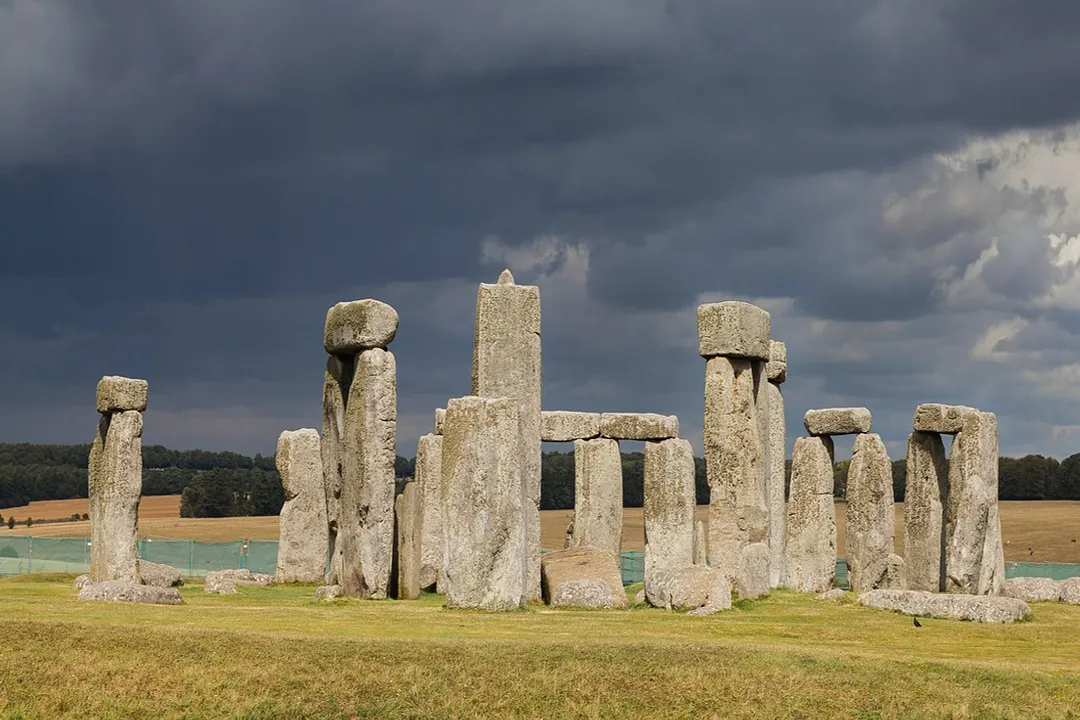
Stonehenge in England is perhaps the most famous example, where the main axis aligns with the midsummer sunrise and the midwinter sunset. [3] Such alignments were not accidental; they required the coordination of significant labor and a shared understanding of the necessary geometry to fix the monument to those specific points on the horizon. [9] In the American Southwest, structures built by ancestral Pueblo peoples often featured windows or small openings perfectly framing the rising or setting points of the sun or important stars during solstices, integrating the architecture with the solar path. [1]
These sites served dual functions. Publicly, they marked the calendar for communal events and planting cycles. [8] Privately, they often held deep religious significance, demonstrating humanity’s connection to the powerful celestial forces. [9] The deliberate act of constructing something massive to mirror the heavens suggests that these alignments were key elements in validating cosmological beliefs and asserting the ruler's or priest's connection to divine order. [8]
# Cultural Views
The study of the stars was highly varied across the globe, reflecting local environments and theological needs. In Mesopotamia, the Sumerians, Babylonians, and Assyrians were exceptional record keepers, laying much of the groundwork for later Western astronomy. [1] Their interests leaned heavily toward astrology—the belief that planetary movements dictated terrestrial events. They meticulously documented planetary positions to produce omens for their kings, linking the sky’s configuration directly to military outcomes or harvests. [1]
The ancient Egyptians integrated their observations into funerary practices and their understanding of the afterlife. Their religious texts often mapped the stars onto the celestial river the deceased navigated, with specific constellations having direct ties to deities and the journey to the underworld. [1]
In contrast, while the Greeks initially embraced the mythological interpretations common elsewhere, their approach began a significant transition. [1][4] Early Greek thinkers, such as those associated with phenomena like Stonehenge, focused on aligning earthly structures with cosmic events. [3] However, a distinct philosophical shift occurred that moved away from simple description toward mathematical explanation. [4]
It is important to recognize that the dedication to observation was a near-universal human trait, but the interpretation differed wildly. While a Babylonian scribe might record Jupiter’s position to predict a battle, a Pueblo elder watched the same star to ensure the community’s irrigation channels were opened at the correct seasonal marker. One view saw the stars as controllers of human fate, the other as cues for human action within a natural cycle. [1][8]
# Mathematical Models
The intellectual leap made by the ancient Greeks marks a divergence in astronomical study. While many cultures knew what happened—that Mars moved erratically—the Greeks began asking why and how it could be precisely modeled. [4] They sought universal, geometric explanations for celestial mechanics, pushing observation toward theoretical science. [6]
For instance, philosophers like Aristotle proposed the Earth was the stationary center of the universe, surrounded by nested, perfect, crystalline spheres upon which the planets and stars were fixed. [6] This geocentric model was aesthetically and philosophically appealing because it placed humanity at the center of creation. [6] However, the observed wandering motion of the planets complicated this simple picture.
To reconcile their observational data—recorded over centuries, perhaps drawing from Babylonian records—with their belief in perfect circular motion, Greek astronomers developed complex mathematical fixes. The most notable of these was the introduction of epicycles, smaller circles upon which planets moved, whose centers moved along larger circles (deferents) around the Earth. [4][6] Ptolemy, building upon the work of earlier figures like Hipparchus, formalized this system in the second century CE. His model, detailed in the Almagest, became the authoritative astronomical text for over a millennium because it was remarkably effective at predicting planetary positions, even if its underlying physics was later proven incorrect. [4] This represented a high watermark for ancient observational astronomy, moving from simple description to predictive computation. [6]
If we consider the sheer effort involved in creating the Ptolemaic system, it’s worth noting that the fidelity required for its predictions was astonishingly high for naked-eye observation. A deviation of even a degree or two in plotting Mars's position over months meant the entire epicycle structure had to be re-calculated. This suggests that the initial raw data, gathered painstakingly by generations of watchers using simple markers and sightlines, must have been exceptionally accurate—a testament to the expertise embedded in those earliest cultural practices. [5]
# Practical Synthesis
The study of stars in antiquity was never purely academic; it was intrinsically linked to power, religion, and productivity. The knowledge held by astronomical practitioners often constituted a form of specialized, esoteric power that governed the rhythm of the community. [9] The skills ranged from the brute-force alignment of massive stones in Neolithic Britain to the abstract, mathematical geometry of Hellenistic Alexandria. [3][4]
Whether tracking Sirius to time a flood, aligning a pyramid's corner to the cardinal directions, or calculating the precise moment to initiate a religious festival based on Venus’s position, the star-watchers were the original scientists. They established the concept that the universe operated under knowable, if complex, rules. [8] Their tools were simple—their eyes, shadows, and carefully placed markers—but their commitment to recording, pattern recognition, and prediction built the foundation upon which all subsequent celestial study would rest. [5] The legacy is not just the structures they left behind, but the enduring human need to find order in the seemingly infinite night sky. [2][9]
Related Questions
#Citations
7 Ancient Cultures and How They Shaped Astronomy
Children of the Cosmos: What the Ancients Knew - USC Dornsife
Ancient Astronomy - | The Schools' Observatory
How did ancient civilisations view the sky? - ESO Supernova
How did ancient civilizations study and observe planets and stars ...
Ancient Greek Astronomy and Cosmology | Modeling the Cosmos
Early Astronomy - Northern Arizona University
The Importance of Stars in Ancient Cultures - Name a Star
Archaeoastronomy: How Ancient Civilizations Aligned Their Lives ...