How did ancient people study astronomy?
The study of the heavens began not as an abstract scientific pursuit, but as a pressing, practical necessity interwoven with survival, religion, and the very organization of society. Long before telescopes or sophisticated mathematics, ancient peoples developed profound astronomical knowledge purely through diligent, naked-eye observation. [3] They were masters of recognizing patterns, counting cycles, and documenting the movements of the Sun, Moon, and visible planets against the backdrop of the fixed stars. [2][3] This dedicated watching formed the bedrock upon which all subsequent celestial science would eventually rest. [6]
# Early Markings

The initial evidence we possess for this ancient interest comes from physical artifacts suggesting deliberate celestial recording. Some of the oldest known depictions of the sky are found in Paleolithic cave paintings, such as those discovered in the Lascaux cave in France, which may date back tens of thousands of years. [7] These markings, often depicting constellations or arrangements of stars, suggest that recognizing patterns in the night sky was crucial even to early Homo sapiens. [8] This was not just art; it was the very first attempt to map an unknown, powerful domain above them. [6] These markings provide a tangible link to a time when understanding the sky was inseparable from understanding the cosmos itself. [2]
# Naked Eye Tracking
For millennia, the only instruments available for tracking the cosmos were the human eye and the memory of generations passing down observations. [3] The primary focus of these early astronomers was tracking the highly predictable motions of the brightest objects: the Sun, the Moon, and the five planets visible without aid—Mercury, Venus, Mars, Jupiter, and Saturn. [2]
The most fundamental task was establishing the solar year. This involved noting the exact point on the horizon where the Sun rose or set on the solstices and equinoxes. [3] By marking these annual extremes, ancient observers created a baseline calendar essential for agricultural planning. [1] Similarly, the 29.5-day lunar cycle was tracked meticulously, forming the basis for shorter, monthly religious or civic calendars. [3] The ability to reliably predict lunar and solar eclipses, which the Babylonians, for instance, mastered centuries before the Greeks, shows an extremely high level of observational accuracy achieved through persistent recording. [1] They were, in essence, building the universe’s operating manual one sunset at a time.

# Cultural Necessity
The drive to study the sky was rarely purely academic; it was deeply embedded in the functional needs of the culture. Astronomy provided the framework for timekeeping, which governed virtually every aspect of settled life. [1]
For agricultural societies, knowing when to plant and when to harvest meant the difference between feast and famine. The rising of specific stars, known as heliacal rising, often signaled the start of the rainy season or the time to sow seeds. [1] In cultures like the Maya and the Inca, precise calendrical systems were developed that sometimes exceeded the accuracy of contemporary European systems for sheer predictive power over vast timescales. [1] Beyond the land, celestial navigation allowed travelers and sailors to maintain direction when out of sight of landmarks, linking terrestrial movement directly to the fixed canopy above. [3] Furthermore, the perceived motions of the planets—wandering stars—were often interpreted as messages or omens from deities, solidifying the astronomer's role as a religious authority or royal advisor. [1][2]
# Structures of Alignment
The commitment ancient peoples had to celestial mechanics is physically immortalized in their architecture. Rather than just charting the sky on clay tablets or papyrus, many civilizations incorporated their knowledge directly into stone monuments. [6]
Structures like Stonehenge in Britain are famous for their alignment with the summer and winter solstices. [1] The precision required to place massive stones to mark an annual turning point, often with alignments visible only from a specific spot, speaks to an advanced understanding of angular measurement and persistent surveying. [3] Similarly, the orientation of pyramids in Egypt and temples across Mesoamerica often reflects solar or stellar events. [1] This act of building a sky chart into the Earth itself represents a fascinating intersection of engineering, theology, and astronomy. When considering the sheer physical effort involved in moving and positioning these megaliths, one realizes that maintaining accurate time and understanding celestial cycles was prioritized above almost all other public works. The commitment to building monuments that mirrored the heavens suggests a belief that earthly order was sustained by correctly observing celestial order. [6]

# Contrasting Ancient Systems
While many cultures observed the sky, their methods for modeling the universe—the philosophical superstructure they built on top of the observations—varied widely, illustrating different intellectual priorities. [2]
The Babylonians excelled at predictive mathematics. They meticulously recorded planetary positions for centuries, developing sophisticated arithmetic and algebraic methods to predict future movements for astrological purposes. [1] Their system was pragmatic and focused on the "what" and "when" of celestial events.
In contrast, the Ancient Greeks emphasized geometry and cosmology, seeking the underlying "why". [5] Philosophers like Plato and Aristotle developed intricate, often abstract, geometric models to explain the motions they observed. [2][5] The Greek system evolved toward the concept of perfect circles and crystalline spheres carrying the Sun, Moon, and planets around a stationary Earth—the geocentric model. [5] While this model eventually became an intellectual cage, it represented the first systematic theoretical attempt to explain the cosmos using abstract reason, a significant departure from pure observation. [2] Later, Ptolemy synthesized this Greek geometric approach into a complex mathematical framework that could accurately predict planetary positions within the geocentric structure. [5]
The Maya, meanwhile, created calendars of astonishing complexity based on intricate interlocking cycles derived from their observations of Venus and the Moon. [1] Their focus remained heavily tied to prophecy and ritual timing, contrasting with the Greek desire to define the fundamental shape of the universe itself. [5]
If we view the development chronologically, it appears there were two primary avenues of astronomical study: The Positional School (Babylonians, Maya), focused on tracking cycles for practical timekeeping and prediction, and The Theoretical School (Greeks), focused on imposing geometric perfection and universal structure onto those observations. [2] The former prized empirical accuracy in prediction; the latter prized mathematical elegance in explanation.
# The Transition to Modernity
The history of astronomy is, in many ways, a record of the slow, difficult process of detaching observation from dogma. [2] For thousands of years, the sky was viewed as a divine clockwork mechanism, often tied to prophecy or myth. [6] The shift toward the modern understanding began when observation started contradicting the established theoretical models. For instance, the increasingly precise tracking of planetary positions, often spurred by the rigorous calendar-making traditions of earlier cultures, eventually revealed anomalies that the perfect circles of the Greek model could not easily explain. [2]
It is insightful to consider that the very reliability of the stars made them the first true constants for early peoples. While the seasons shifted and societies rose and fell, the North Star (or whatever prominent pole star was visible) remained essentially fixed relative to the Earth’s rotation. [3] This fixed reference point allowed ancient mathematicians to begin quantifying angles and distances on a celestial sphere long before they could measure a meter on the ground with precision. [5] The stars provided the immovable grid upon which early surveyors and timekeepers could build their world maps.
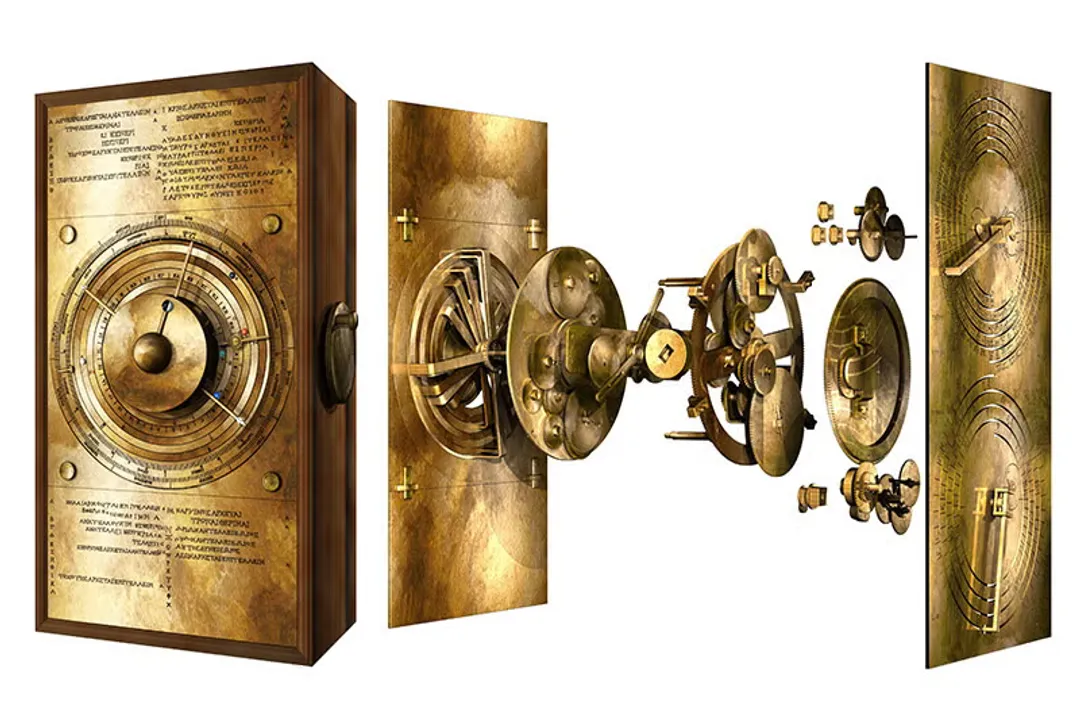
Furthermore, while we often focus on the monumental achievements like the Antikythera mechanism (which is much later than the ancient period broadly defined but represents the zenith of Greek mechanical calculation), the true experience of ancient astronomy involved communities gathering nightly, year after year, to watch the same events. This collective, generational observation meant that mistakes were corrected over centuries, and knowledge was inherently communal, passed down not just through texts but through shared ritual and building projects. [4][6] The knowledge wasn't held by a single "expert" in isolation but was woven into the social fabric, making it exceptionally resistant to being lost, even when empires fell.
This profound, early connection to the sky—where the movement of Jupiter dictated the timing of a major religious festival and the rising of Sirius signaled the Nile's inundation—shows that ancient people studied astronomy because the sky was their primary source of truth, structure, and prediction. [1][3] They didn't just observe the stars; they lived within their movements.
#Videos
The History of Astronomy in the Ancient World - YouTube
Related Questions
#Citations
7 Ancient Cultures and How They Shaped Astronomy
History of astronomy - Wikipedia
Ancient Astronomy - | The Schools' Observatory
How did ancient civilizations know so much about the solar system ...
Ancient Greek Astronomy and Cosmology | Modeling the Cosmos
Children of the Cosmos: What the Ancients Knew - USC Dornsife
A History of Astrometry – Part I Mapping the Sky From Ancient to Pre ...
Ancient humans and their early depictions of the universe
The History of Astronomy in the Ancient World - YouTube