Is astronomy physics or chemistry?
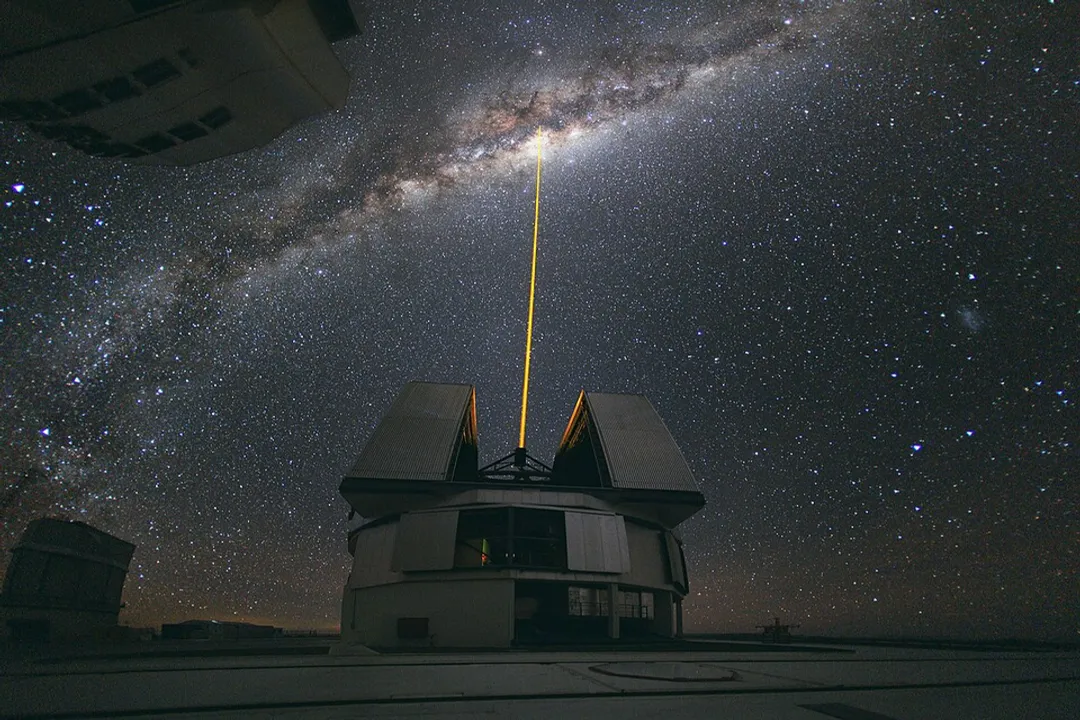
The field dedicated to mapping the skies, understanding celestial objects, and charting the universe’s physical properties is one of humanity’s oldest scientific pursuits. When we look up, it is natural to ask where this giant subject sits within the broader scientific map. Is astronomy a pure branch of physics, or does it possess enough unique content to stand as its own discipline, perhaps borrowing from chemistry as well? The answer is complex because modern astronomy is less a single, isolated subject and more an immense application ground where the most fundamental laws of physics and chemistry are tested against cosmic realities.
# Physics Foundation
At its heart, astronomy operates under the assumption that the physical laws governing matter, energy, motion, and force here on Earth apply equally across the vastness of space. This immediate reliance on physical principles is why many argue that astronomy is fundamentally a subfield of physics. When an astronomer studies a star, they are primarily concerned with its gravitational dynamics, how it generates energy through nuclear processes, how that energy interacts with surrounding fields, and its overall trajectory through spacetime—all classic domains of physics.
The application of physics to astronomical problems is so pervasive that it has its own specialized name: astrophysics. Astrophysics specifically takes the established theories and mathematical models developed in terrestrial physics—like thermodynamics, mechanics, and electromagnetism—and applies them to celestial bodies such as stars, galaxies, and nebulae. Astronomers who focus on the mechanics of orbiting bodies, for instance, are essentially practicing Newtonian or general relativistic mechanics on the scale of solar systems or clusters. The profession itself often reflects this deep connection; governmental bodies, such as the Bureau of Labor Statistics, frequently group physicists and astronomers together in occupational classifications, suggesting a shared core skillset based on mathematics and physical theory.
It can be helpful to distinguish the discovery of laws from the application of laws. Physics often seeks to discover the fundamental, universal rules themselves—the nature of the strong nuclear force or the geometry of spacetime. Astronomy, conversely, often takes those confirmed laws and uses them as instruments to measure, predict, and explain observed phenomena in the distant reaches of the cosmos. Consider the concept of stellar structure. The equations that describe how pressure, temperature, and nuclear fusion rates balance within a star—allowing it to remain stable for billions of years—are derived directly from physics; the astronomer’s expertise lies in correctly setting the boundary conditions for a specific star type using observational data.
If we look at the academic structuring, the overlap is evident. Many university departments house astronomy alongside or within physics programs, acknowledging that expertise in one rapidly translates to the other. Astronomy is certainly categorized broadly as a physical science, sharing the stage with physics and chemistry, due to its reliance on quantifiable, measurable laws regarding matter and energy.
# Chemical Elements
While physics dictates how stars burn and how gravity shapes galaxies, chemistry provides the essential answer to what these objects are made of. This component leads to the direct involvement of chemistry in astronomical study. One of the most powerful tools in an astronomer’s kit is spectroscopy, the analysis of light broken down into its constituent wavelengths. This technique reveals the chemical fingerprint of a distant object, telling us what elements are present in a gas cloud or a star’s atmosphere.
The study of the composition, structure, and behavior of molecules in the interstellar medium, in comets, and on planetary surfaces falls under the domain of astrochemistry. This subfield is decidedly chemical, focusing on molecular formation pathways, the physical state of interstellar dust grains, and the prevalence of complex organic molecules in space—a clear extension of traditional chemistry into the vacuum and extreme conditions of space. For example, identifying the presence of water ice or specific carbon compounds in a molecular cloud requires a deep understanding of chemical kinetics and bonding that goes beyond general physical laws concerning energy distribution.
A helpful way to visualize this distinction is to think about what changes when we move from studying a nearby planet to studying a distant galaxy. Understanding the orbit of Mars requires mechanics (physics). Understanding the atmospheric absorption lines that tell us Mars has carbon dioxide requires chemistry (specifically, the energy levels associated with CO2 molecules). Both are essential for a complete picture. If the primary question were about the long-term geological evolution of Mars’s interior, the emphasis would swing back heavily toward physics (mantle convection, core dynamics).

# Classification Systems
The way different institutions categorize these disciplines often reveals their perceived relationship. As noted, astronomy is broadly accepted as a physical science. This places it distinctly apart from the biological sciences (like biology) or the earth sciences (like geology, though geology shares significant overlap with physics and chemistry).
When looking at career paths, the explicit inclusion of astronomers alongside physicists suggests that, for employment and credentialing purposes, the foundational training required is practically identical. Both must master classical mechanics, quantum mechanics, statistical mechanics, and advanced mathematics. It is in the final specialization that astronomy diverges, often focusing that physics toolbox onto extreme scales or environments.
To illustrate the relative weightings, consider the following comparison based on common research focuses:
| Focus Area | Primary Discipline | Key Questions Addressed |
|---|---|---|
| Planetary Orbits | Physics (Mechanics) | How fast will the comet be at perihelion? |
| Star Formation | Astrophysics (Plasma Physics) | What is the critical mass for gravitational collapse? |
| Molecular Clouds | Astrochemistry | What is the ratio of water to methane in this nebula? |
| Galaxy Clusters | Astrophysics (General Relativity) | How much dark matter is needed to explain observed lensing? |
This table highlights that while chemistry addresses what is present, physics—often in its specialized guise as astrophysics—addresses how everything moves, interacts, and changes over time.
# Degrees of Separation
The historical separation is also informative. Astronomy began as an observational, descriptive science—cataloging positions and movements, which relied heavily on geometry and early mechanics. Chemistry, as a modern experimental science, developed later, emphasizing controlled laboratory experiments to determine elemental properties and reactions. When spectroscopy became a reliable tool in the 19th and early 20th centuries, it effectively married the two disciplines, allowing astronomers to finally confirm the chemical makeup of the stars they could only previously track by position.
If one were to pursue a degree, the initial years would look virtually identical for a physics major and an astrophysics major. Calculus, differential equations, classical mechanics, and electromagnetism are the bedrock. The divergence happens when the physics major might move into solid-state physics or particle theory, while the astronomy track begins courses in radiative transfer, observational techniques, and cosmology—all utilizing the physics background, but aimed outward.
It is important to recognize that while chemistry contributes vital data regarding composition, it rarely dictates the large-scale structure or evolution of the universe—that is the territory of gravity, relativity, and nuclear physics. You cannot explain the expansion of the universe, the dynamics of black holes, or the generation of cosmic microwave background radiation using only chemical principles; these phenomena require the full scope of modern physics.
# The Observer’s Expertise
For someone entering the field today, the functional difference between a pure theoretical physicist and an observational astronomer often relates to data acquisition. A theoretical physicist may be developing new models for dark energy based on purely mathematical grounds. An observational astronomer, however, spends significant time designing experiments to capture photons from billions of light-years away, calibrating instruments to account for atmospheric distortion, and processing that light data to extract physical parameters like velocity, temperature, and density. This instrumentation and data reduction aspect requires a high degree of practical physical and engineering expertise, even if the theoretical core remains physics.
The fact that astronomers are classified with physicists by federal labor statistics points to an essential truth regarding expertise: mastering one demands mastery of the other. It is exceedingly rare to find a successful modern astronomer who is not, by training and daily practice, an astrophysicist, meaning they are fundamentally applying physics to the cosmos. While chemistry is an indispensable tool for determining content, the architecture of the universe—its forces, its motion, and its history—is written in the language of physics. The universe presents massive laboratories for physics experiments; therefore, astronomy is best understood not as an alternative to physics, but as physics operating on its grandest possible stage, occasionally requiring a vocabulary check from chemistry when dealing with molecular composition.
#Videos
Is Astronomy A Science? - Physics Frontier - YouTube
Related Questions
#Citations
Astronomy - Wikipedia
Is astronomy a branch of physics? - Quora
Is Astronomy and Physics two different fields? : r/AskPhysics - Reddit
From atoms to galaxies: Exploring astronomy and astrophysics
What They Do and How to Become One - Physics and Astronomy
Atmospheric Physics - Career Cornerstone Center
Is astronomy considered a physical science? | CK-12 Foundation
Is Astronomy A Science? - Physics Frontier - YouTube
Physicists and Astronomers : Occupational Outlook Handbook