What is considered the birthplace of astronomy?
The concept of a single "birthplace" for astronomy is as vast and complex as the subject itself, largely because the answer depends entirely on what era or definition we apply. Astronomy, often cited as the oldest science, didn't spring into existence in one location; rather, it emerged gradually from humanity’s deep-seated need to map the sky for timekeeping, agriculture, and spiritual guidance. [2] To pinpoint a birthplace, one must distinguish between the first systematic observations, the development of theoretical models, the establishment of global standards, or the foundation of a national astronomical tradition.
# Ancient Beginnings
Long before telescopes or complex mathematics, early civilizations were keen observers of the cosmos. If the birthplace is defined as the earliest location where celestial events were recorded with some level of systematic attention, the region of Mesopotamia stands out prominently. [4][9] Babylonian astronomy, in particular, laid much of the groundwork for later Western traditions. [9] These ancient observers, often working in temple complexes that doubled as early observatories, meticulously tracked the movements of planets, the Moon, and stars. [4]
The purpose in this early phase was heavily tied to prognostication and administration. The Babylonians developed sophisticated systems for predicting eclipses and tracking planetary positions, often associating these events with omens and royal decrees. [9] Their detailed records, inscribed on cuneiform tablets, sometimes spanned centuries, representing one of the earliest sustained efforts to catalog celestial behavior. [4] This body of work provided essential data that was later admired and built upon by other cultures.
Across the globe, several other ancient cultures independently developed significant astronomical practices. For instance, Mayan, Egyptian, Chinese, and Indian traditions all contributed unique calendrical systems and observational techniques that addressed their specific geographic and cultural needs. [6] Each tradition served as a localized birthplace of astronomical practice tailored to its own calendar and religious structure. [6] This decentralized emergence confirms that the human impulse to look up and organize the heavens is a near-universal characteristic, not an invention confined to a single valley or city.
# Greek Models
The next major inflection point moves westward, finding its footing in the intellectual climate of Ancient Greece. [8] While the Greeks inherited observational data from cultures like the Babylonians, their contribution was fundamentally different: they sought to explain why the heavens behaved as they did, moving astronomy from mere record-keeping to mathematical cosmology. [8] This shift involved creating abstract models of the universe.
The Greeks were preoccupied with the perceived perfection of the heavens, leading to cosmological models based on perfect circles and spheres. [8] Thinkers such as Ptolemy later codified these ideas into comprehensive systems that dominated Western thought for over a millennium. It is here that the concept of a fixed Earth at the center of the universe, the geocentric model, was fully developed and mathematically supported. [8] A crucial, often overlooked, element in this transition is the introduction of geometry as the primary tool for celestial description. While Mesopotamian astronomy focused on what was happening and when, Greek astronomy, spurred by philosophical inquiry, focused on how it must be structured. [8] Considering that the shift from pure observation to theoretical, predictive modeling is a hallmark of true scientific development, one could argue that the Athenian or Alexandrian school represents the birthplace of theoretical astronomy.

# The Birth of Modern Measurement

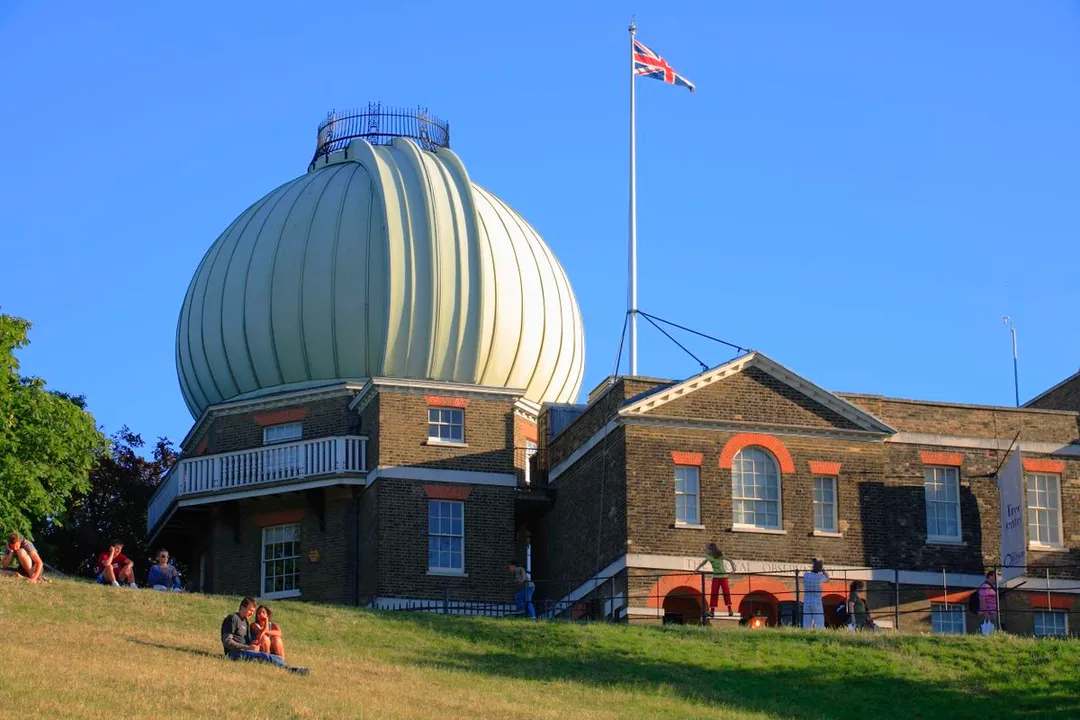
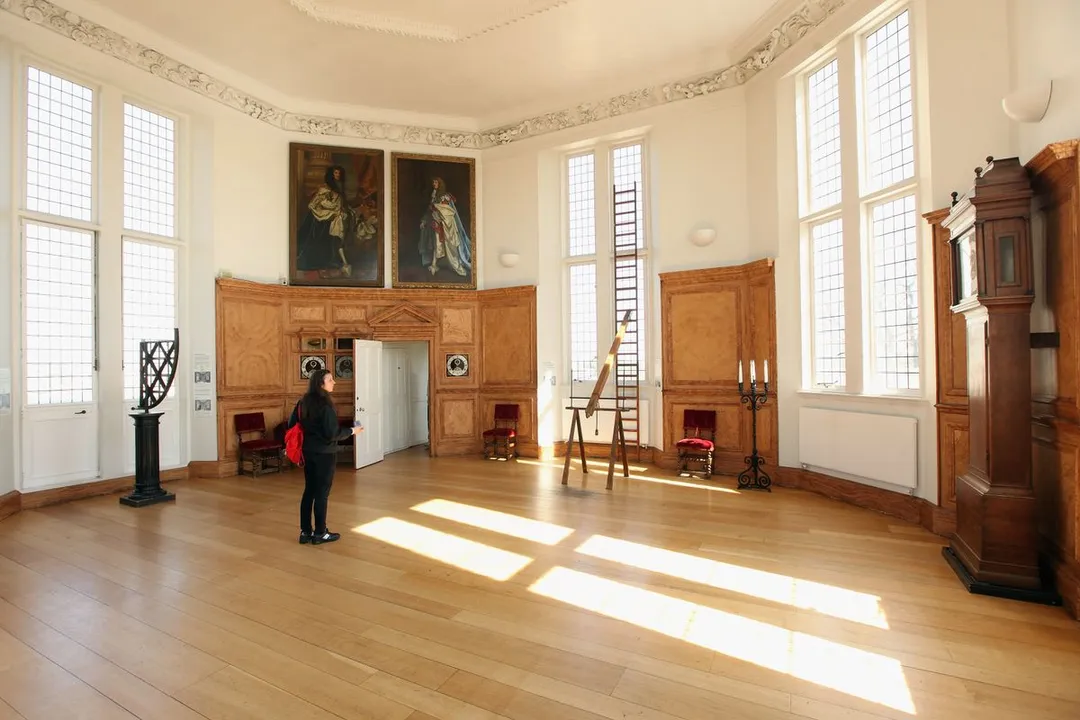
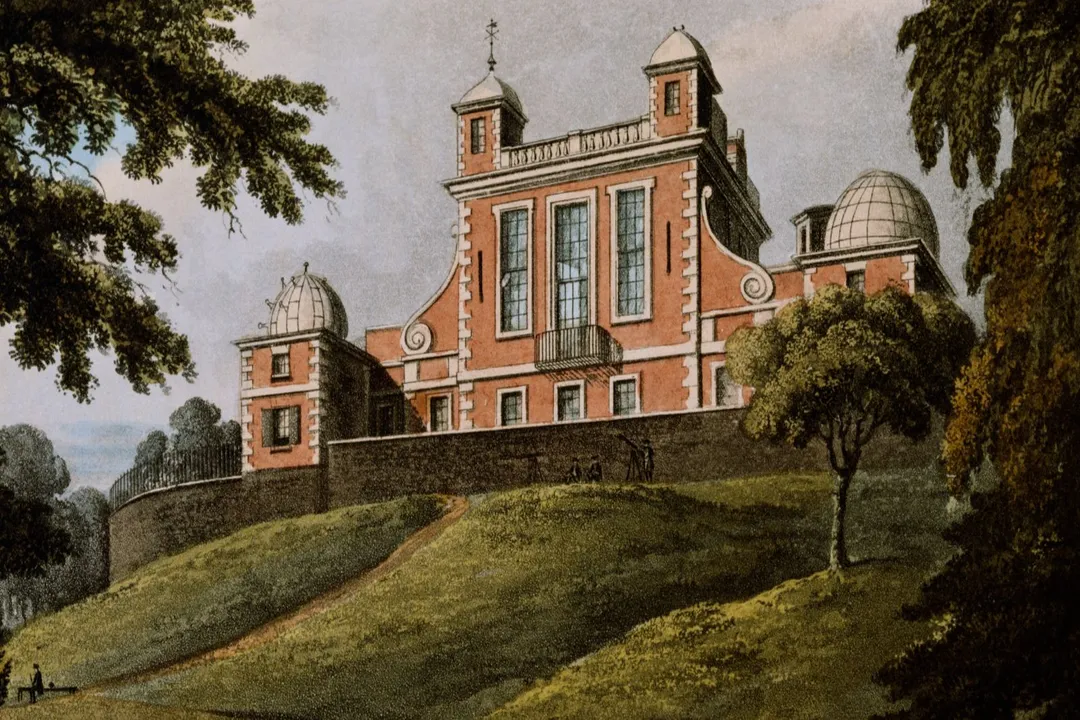
If we narrow the focus to modern astronomy—the kind tethered to precise global navigation, timekeeping, and the study of the solar system using specialized instruments—a different location emerges: Greenwich, London. [1][5] The Royal Observatory, established in 1675 by King Charles II, is often celebrated as the birthplace of modern astronomy for a very practical reason. [1][5]
The primary mandate for its first Astronomer Royal, John Flamsteed, was not simply charting distant stars, but solving the pressing navigational problem of the era: accurately determining longitude at sea. [5] This required establishing a fixed, universally agreed-upon reference point from which all other celestial positions could be measured. The Observatory became the official home for this reference point: the Prime Meridian (or 0° Longitude). [1][5]
The official adoption of the Greenwich Meridian in 1884 at the International Meridian Conference cemented the Observatory’s status in global science. [1] This act standardized time and geographical location across the world, which is indispensable for modern astronomy and space science. [1] To illustrate the impact of this standardization, consider that before Greenwich, two astronomers observing the transit of Jupiter's moons from different continents had to constantly account for unknown local time offsets; after Greenwich, their observations could be instantly compared against a shared zero point. This shift from local, culturally relevant celestial mapping to a globally referenced system is the defining characteristic of the modern astronomical age, making Greenwich its functional cradle. [5]
# A National Context
The history of astronomy is also marked by national achievements, where specific institutions served as the necessary catalyst for a country's entry into the field. For the United States, the Cincinnati Observatory is frequently recognized as the birthplace of American astronomy. [7] Its founding in 1845 marked a significant moment because it was the first city-supported, permanent, and continuously operating public observatory in the nation. [7]
Before Cincinnati, astronomical work in the US was often conducted by individuals or military surveyors. The Cincinnati Observatory signaled a communal and civic commitment to the science. [7] It was established with public enthusiasm and funded by local citizens, a testament to the growing belief that scientific advancement was vital for civic pride and progress. This institution, housing one of the largest telescopes in the world at the time, represented the maturation of American scientific infrastructure, transitioning astronomy from an amateur pursuit to a professional, publicly supported endeavor. [7]

# Comparing the "Birthplaces"
We have three strong candidates depending on the qualifier:
| Definition | Location/Culture | Key Contribution | Era |
|---|---|---|---|
| Oldest Systematic Record | Mesopotamia (Babylon) | Eclipse prediction, long-term data collection [4][9] | Antiquity |
| Theoretical Cosmology | Ancient Greece (Alexandria) | Geocentric mathematical models [8] | Classical |
| Modern Global Standard | Royal Observatory, Greenwich | Establishment of the Prime Meridian (0° Longitude) [1][5] | Post-17th Century |
The progression shows a clear evolution. Mesopotamia provided the data, Greece provided the theory, and Greenwich provided the coordinate system necessary for global science. [1][5][8][9]
One insight emerges when comparing the initial motivations: the oldest astronomy was intrinsically linked to immediate earthly concerns—calendars for planting and religious prophecy—while the establishment of Greenwich astronomy was driven by the practical demands of maritime commerce and military need (longitude at sea). [5] The ancient observation was a matter of survival and ritual; the modern observation was a matter of international standardization and trade efficiency. This contrast underscores how societal structure dictates scientific focus, illustrating that astronomy’s birthplace shifts wherever the most pressing unanswered celestial question resides.
# The Ongoing Evolution of Astronomical Centers
The legacy of these foundational sites continues to shape our relationship with the sky, even as new centers of research rise. While Greenwich established the baseline for measuring where things are, the work in other locations, like the early efforts at the Cincinnati Observatory, focused on what those things were made of, pushing instrumental development forward. [7]
If we were to chart the progress of observational astronomy, we could see a subtle but critical evolution in the role of the observer. In Mesopotamia, the primary operator was often a priest or scribe recording data for the state or temple. [4] In Greece, the astronomer was often a philosopher exploring abstract perfection. [8] By the time of Greenwich, the Astronomer Royal was a government employee tasked with maintaining a national asset—the global time standard—a role blending high science with civil service. [5] This move toward professionalization and standardization is perhaps the most enduring inheritance from the era that named Greenwich the zero point. The location itself became less important than the method it enshrined.
Furthermore, the concept of a "birthplace" can be problematic because it implies a single beginning, which diminishes the simultaneous and independent contributions of various cultures. [6] While Babylon provided exceptionally long records, it is vital to recognize that the conceptual tools—the very way we map the sky—were refined through independent scientific inquiries across the globe. [6] Astronomy, in its purest form, is the story of humanity correcting its perception of its place in the universe, a story told in dozens of foundational chapters, not just one.
The legacy of the early sky-watchers, whether they were tracking omens in Babylon or calibrating clocks near the Thames, is the development of measurement. Astronomy requires an uncompromising dedication to precision. [2] The early need for accurate planting seasons or accurate sea charts both hinged on reducing observational error over time. This dedication to improving the accuracy of celestial measurement, from clay tablets to atomic clocks synchronized to the meridian, is the true, continuous thread that links every proclaimed "birthplace" of the science.
#Videos
The History of Astronomy in the Ancient World - YouTube
Related Questions
#Citations
Royal Observatory Greenwich: The birthplace of modern astronomy ...
Why astronomy is considered the oldest science
The History of Astronomy in the Ancient World - YouTube
Mesopotamian Astronomy - Babylonian and Persian History
History of Royal Observatory Greenwich | Home of GMT
7 Ancient Cultures and How They Shaped Astronomy
Cincinnati Observatory: The birthplace of American astronomy
Ancient Greek Astronomy and Cosmology | Modeling the Cosmos
The Earliest Astronomers: A Brief Overview of Babylonian Astronomy