Who is the king of astronomy?
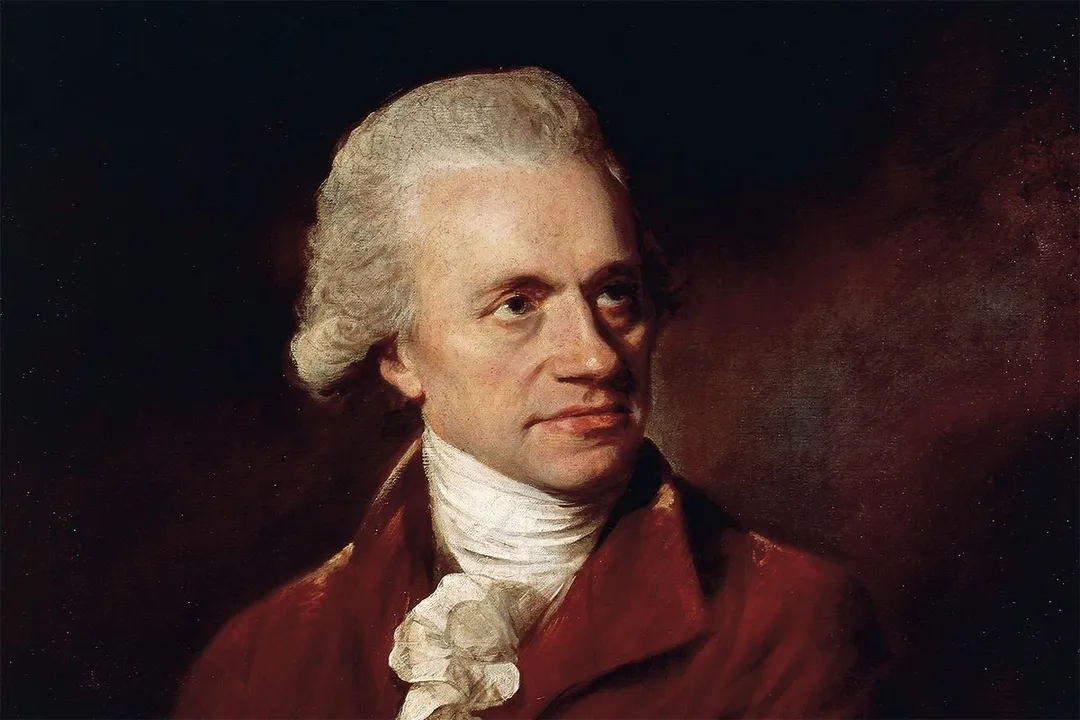
Designating a singular "king" of astronomy is inherently difficult, as the cosmos has been explored by minds whose contributions define entire epochs of discovery. If one were to crown a monarch for the sheer scope of their observational additions to the known universe, particularly in the transition from studying our immediate solar neighborhood to mapping the vast structure of the Milky Way, the name Sir William Herschel stands as a towering contender. [1][5] His life story is as remarkable as his discoveries, pivoting from a career in music to becoming one of history's most prolific and impactful celestial surveyors. [4]
# Musical Beginnings
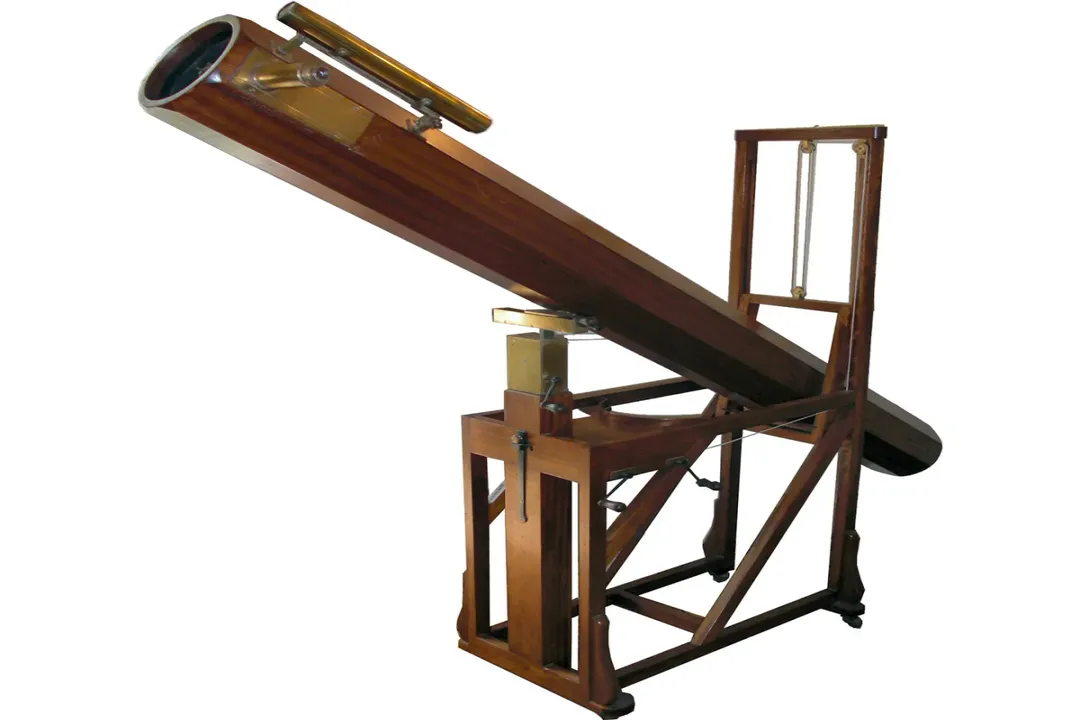
William Herschel’s path to astronomical eminence was anything but conventional for the era. Born in Hanover, Germany, he initially established himself professionally as a musician, proficient on the violin and oboe. [4][1] His family moved to England when he was 19, and he spent a significant portion of his early career performing in military bands and composing music, eventually becoming an organist in Bath. [1] This musical background, however, was not a detour but perhaps a preparatory course in mathematics, precision, and auditory sensitivity that would translate surprisingly well to the demands of telescopic observation. [4] He wasn't content just to play music; he began building his own reflecting telescopes, driven by a dissatisfaction with the quality of commercially available instruments. [1]
# Mirror Craft
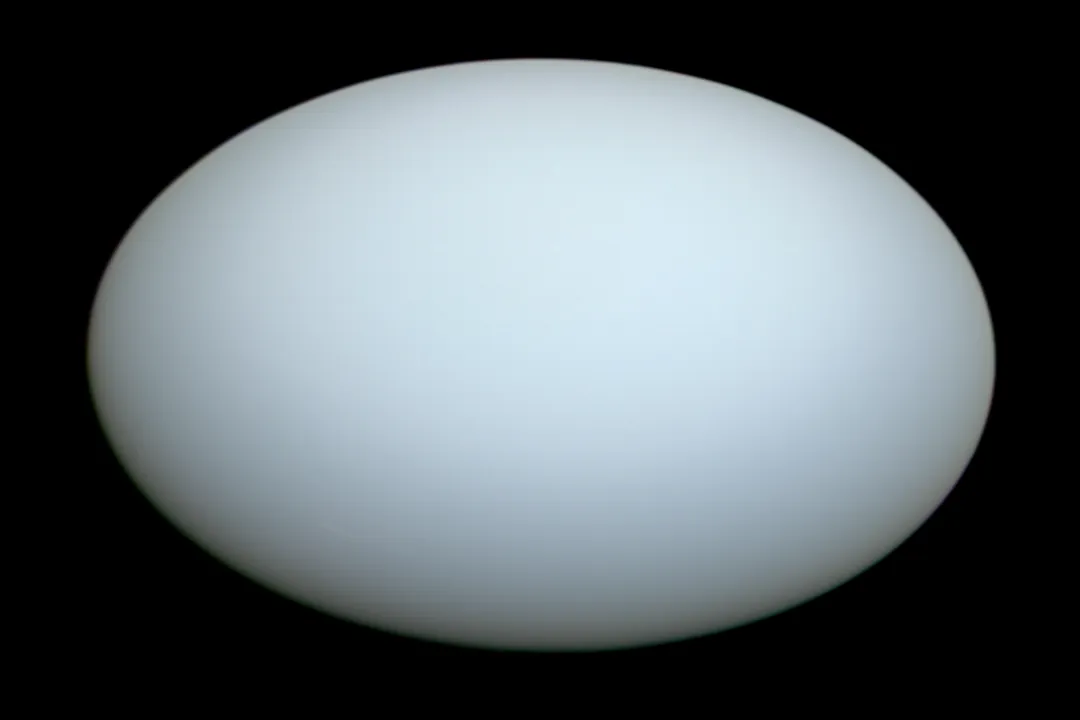
Herschel’s true ascension began with his mastery of telescope construction. In an age where lenses often suffered from chromatic aberration—the blurring of colors—Herschel championed the reflecting telescope, which used mirrors to gather and focus light. [1] He didn't just purchase large mirrors; he ground and polished them himself, often with the assistance of his sister Caroline, achieving unprecedented aperture sizes for the time. [1][5] This dedication to building better tools ensured that what he saw was clearer and farther away than what any of his contemporaries could witness. [4]
Imagine the dedication: grinding massive, flawless mirrors in a workshop, potentially in the dark evenings after his day job as a musician had concluded. This period highlights a fascinating aspect of scientific history where the very means of making a breakthrough depended entirely on the individual’s hands-on engineering skill, a quality perhaps less prevalent today where custom equipment is the norm. [1]
# Planetary Sighting
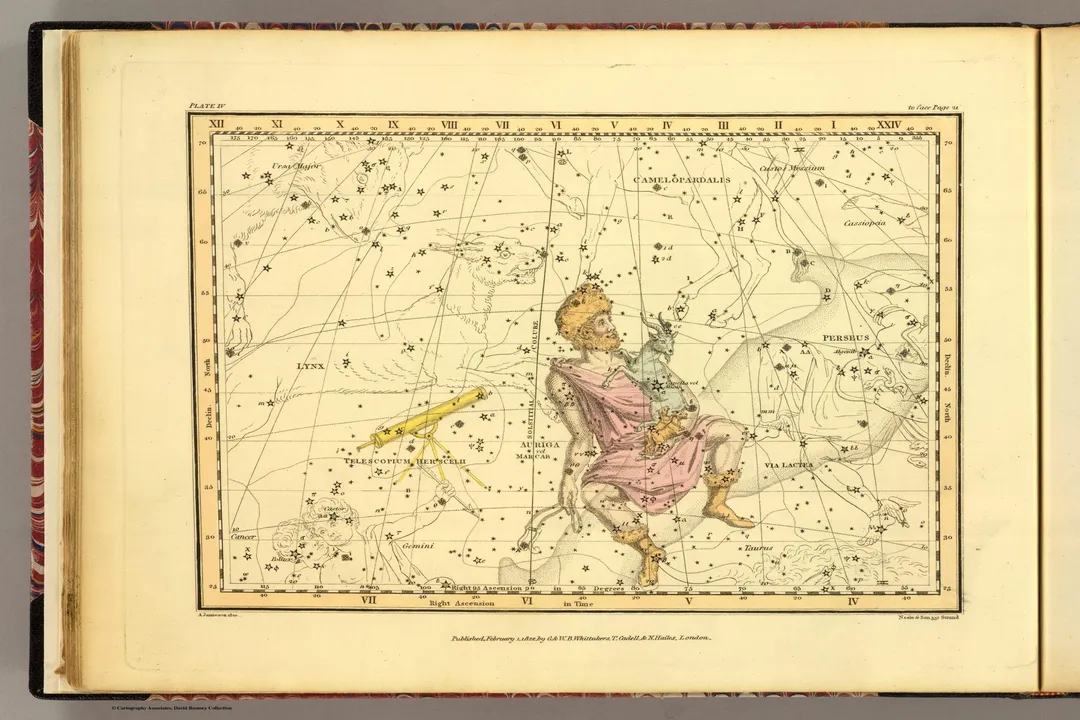
The monumental breakthrough that rocketed Herschel from an enthusiastic amateur to an international celebrity occurred on the night of March 13, 1781. [5] Using one of his powerful reflecting telescopes, while systematically surveying the sky near the star H Geminorum, he spotted an object that refused to behave like a star. [5][1] It exhibited a discernible disk and, crucially, appeared to shift position against the background stars over successive nights, indicating it was a body orbiting the Sun. [1] Initially, many thought it was a comet, but meticulous observation by Herschel and others confirmed it moved in a nearly circular orbit far beyond Saturn. [5]
This discovery was nothing short of revolutionary: it was the first planet identified since antiquity, as the others—Mercury, Venus, Mars, Jupiter, and Saturn—had been known to humans since prehistory. [1] This finding instantly rewrote the known boundaries of the solar system. King George III, recognizing the importance of this achievement, appointed Herschel as the King's Astronomer, providing him with a stipend to continue his research, thus cementing his professional status. [5][4]
# Mapping the Galaxy
While the discovery of Uranus secured his fame, Herschel’s subsequent work laid the groundwork for modern galactic astronomy. [1] He adopted a methodical, comprehensive approach, systematically scanning the entire sky to gauge the distribution and density of stars. [1] He wasn't just cataloging; he was attempting to create a three-dimensional map of the universe as he saw it.
His technique, known as star gauging, involved counting the number of stars visible in various directions through his telescope. [1] From these counts, he drew a radical conclusion: the Sun was not located at the center of the great star system—the Milky Way—but rather somewhere within it. [1][5] He deduced that the Milky Way was shaped like a flattened disk, with the density of stars highest toward the central plane. [1] This model, although later refined by subsequent astronomers using different methods, was the first serious attempt to map the structure of our galaxy on a cosmic scale. [5]
Furthermore, Herschel turned his powerful gaze toward fuzzy patches in the night sky known as nebulae. [1] While others simply recorded them as anomalies, Herschel suggested that many of these objects were, in fact, distant "island universes"—galaxies outside our own. [5][1] He cataloged thousands of double stars, nebulae, and star clusters, making his survey work an enduring resource for future generations. [1]
# Invisible Spectrum
Perhaps one of Herschel’s most profound, yet accidental, discoveries occurred while he was experimenting with measuring the temperatures produced by different colors of sunlight passed through a prism. He placed a thermometer just outside the red band of the visible spectrum, expecting the temperature to decrease as he moved away from red, but instead, he observed the temperature rising. [2]
This observation led him to infer the existence of infrared radiation—light beyond the visible red end of the spectrum—that carried heat energy. [2] This single experiment expanded humanity’s sensory perception of the cosmos. Suddenly, the electromagnetic spectrum was larger than what the eye could perceive, opening an entirely new field of physics and astronomy that would later be exploited to study cooler, dust-shrouded objects in space. [2]
Comparing this to other foundational moments, Galileo’s major impact came from turning an existing invention—the telescope—to the sky and seeing things no one had before (moons orbiting Jupiter, sunspots). [7] Herschel’s dual achievement is arguably greater: he built the superior instruments and then used them to discover a new class of radiation and chart the structure of the visible universe far beyond our solar system. [1][2]
# Institutional Roles Compared
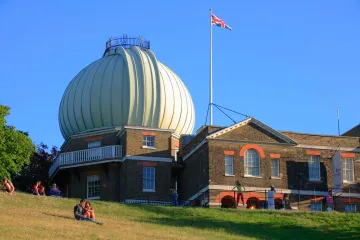
The path to becoming an official astronomer varied significantly. Galileo, working much earlier, navigated political and religious conflicts due to his support for Copernicus. [7] John Flamsteed, in the late 17th century, was appointed as the First Astronomer Royal in England, a role heavily tied to navigation and the Royal Observatory at Greenwich. [8] This position was institutional, focused on precise positional measurements of stars for charting the seas. [8]
Herschel, while also receiving royal patronage, secured his position after a massive scientific achievement—discovering a planet—rather than being appointed primarily for cartography or timekeeping, as was often the case for earlier Astronomers Royal. [5] His appointment was a recognition of pure scientific merit and discovery. This trajectory illustrates an important evolution in scientific patronage: moving from institutional roles necessary for state functions (like mapping and time) toward rewarding groundbreaking observational breakthroughs. [4] It suggests that by the late 18th century, the pure pursuit of cosmological knowledge was gaining enough prestige to warrant dedicated, state-supported positions centered on that goal.

# The Herschel Dynasty
William Herschel’s scientific career was remarkably collaborative with his sister, Caroline Herschel, who also went on to receive recognition for her own astronomical work, including discovering several comets. [1] This partnership, one of the most famous in scientific history, underscores the intense, focused effort required for such sweeping observational programs. [1] When William passed away, his legacy was immediately carried forward by his son, John Herschel, who pursued astronomy with similar vigor, continuing to survey the Southern skies and building upon his father’s foundational work. [1] This continuation across three generations speaks to the depth of the foundation William laid and the sheer volume of sky that remained to be systematically observed.
If we consider the sheer volume of meticulous, manual work required, an interesting perspective emerges: the Herschel era represented the peak of individual scientific output enabled by self-engineered technology. Today, large-scale discoveries—like those from the James Webb Space Telescope—rely on multinational teams and billions of dollars in infrastructure. [2] A modern parallel for Herschel's output might require an entire generation of scientists working exclusively on one facility, emphasizing the singular nature of his productivity.
# Cataloging Contributions
To appreciate the breadth of Herschel’s impact, one can summarize his major contributions outside of Uranus:
| Achievement Area | Key Contribution | Impact |
|---|---|---|
| Solar System | Discovery of Uranus | Expanded the known solar system beyond antiquity’s limits. [5] |
| Stellar Structure | Star gauging methodology | First model of the Milky Way as a flattened disk with the Sun off-center. [1] |
| Extragalactic | Nebulae classification | Proposed that nebulae were distant star systems (galaxies). [1][5] |
| Radiation Physics | Discovery of Infrared | Established the existence of light energy beyond the visible spectrum. [2] |
This combination—a planetary find, a galactic map, and the discovery of a new physical phenomenon—is extremely rare in any scientific discipline.
# Timeless Wisdom
The drive behind such monumental efforts is often distilled into memorable statements. Herschel himself seemed to possess an awareness of the vastness he was trying to quantify. Though he focused on the mechanical and observational, the sentiment behind his pursuits aligns with the broader philosophical quest for knowledge. One might reflect on the idea that observing the universe is a process of constant refinement, an unending pursuit where every answer reveals a larger, more complex question. [3] For those seeking to follow in the footsteps of these giants, whether through a backyard telescope or professional research, the dedication to systematic observation, even when the goal is unclear, is the thread connecting Flamsteed’s precise charting, Galileo’s revolutionary gazes, and Herschel’s sweep across the deep sky. [1][7][8]
The "king" title, therefore, shifts depending on the metric used. If the crown is for the person who first used a telescope to fundamentally change our understanding of the solar system, Galileo Galilei is the rightful heir. [7] If it is for establishing the foundational royal institution for precise measurement in England, John Flamsteed holds the seal. [8] But if the measure is the sheer volume of new cosmic territory—a new planet, the structure of the galaxy, and a new form of light—then Sir William Herschel, the musician turned monarch of the heavens, earns the most convincing claim to the throne of observational astronomy. [1][2][5]
#Videos
Sir William Herschel -- "The King's Astronomer" | David Rives
Related Questions
#Citations
William Herschel - Wikipedia
William Herschel - ESA Science & Technology
William Herschel - Wikiquote
William Herschel - Biography, Facts and Pictures - Famous Scientists
Sir William Herschel -- "The King's Astronomer" | David Rives
Sir William Herschel: the astronomer who discovered Uranus
A Giant of Astronomy | Science History Institute
Who was John Flamsteed, the first Astronomer Royal?