Is Orion's belt also called the three kings?
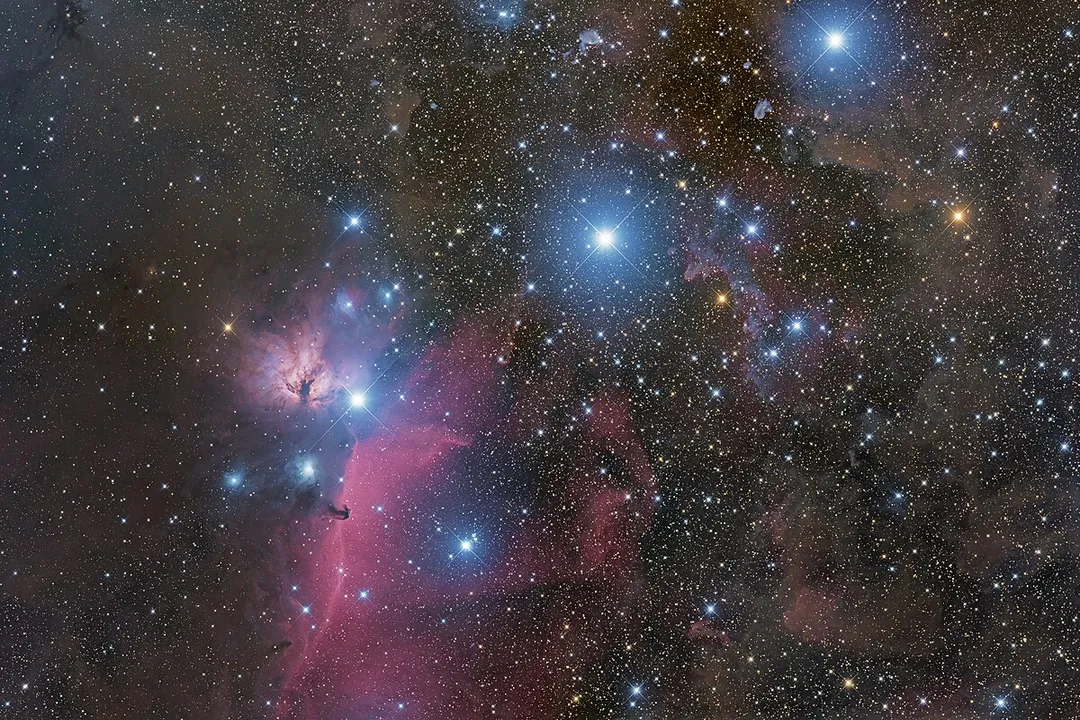
The alignment of three brilliant stars standing shoulder-to-shoulder in the winter sky is indeed known by several names across different cultures, and one of its most enduring aliases is The Three Kings. This celestial grouping, which forms the belt of the mighty hunter constellation Orion, captures the attention of skywatchers year after year. While astronomers refer to the stars by their formal Bayer designations—Alnitak, Alnilam, and Mintaka—the common names often carry deeper cultural or religious meaning, linking the heavens to earthly stories.
# Alternate Names

It is not uncommon for prominent asterisms to accumulate nicknames over centuries of observation, and Orion's Belt is a prime example of this phenomenon. In addition to being called The Three Kings, this trio of stars is also sometimes known as The Three Marys. The prevalence of these alternative names suggests that the pattern was significant enough to become interwoven with major cultural narratives, particularly those prevalent in the Western world during the historical periods when these traditions solidified. The fact that multiple, distinct figures (Kings or Marys) are associated with the three stars highlights how readily humans assign familiar roles to clear, repeating celestial patterns.
# Celestial Alignment
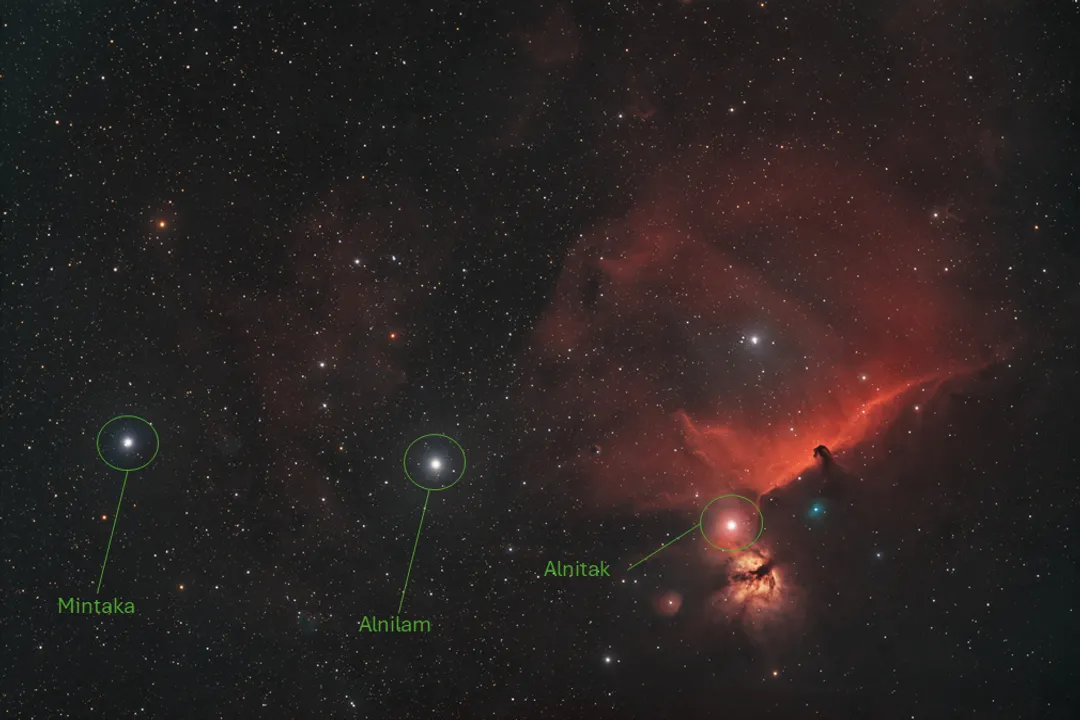
The physical reality behind the name is a trio of hot, massive blue supergiant stars lying nearly in a straight line as viewed from Earth. The stars are Alnitak, Alnilam, and Mintaka, moving generally from left to right (east to west) in the familiar orientation when viewed in the Northern Hemisphere winter sky. What is often overlooked by the casual observer is that while they appear close together, their actual physical distance from each other and from Earth varies significantly, creating a perspective trick we rely upon for the recognizable shape. Their alignment only looks perfectly straight from our vantage point; in three-dimensional space, they form a staggered line. This visual simplicity—three bright points separated by roughly equal distances—is likely the core reason for its ubiquity in mythology, as such distinct, easily counted groupings are natural anchors for storytelling across vast stretches of time and geography.

# Magi Connection
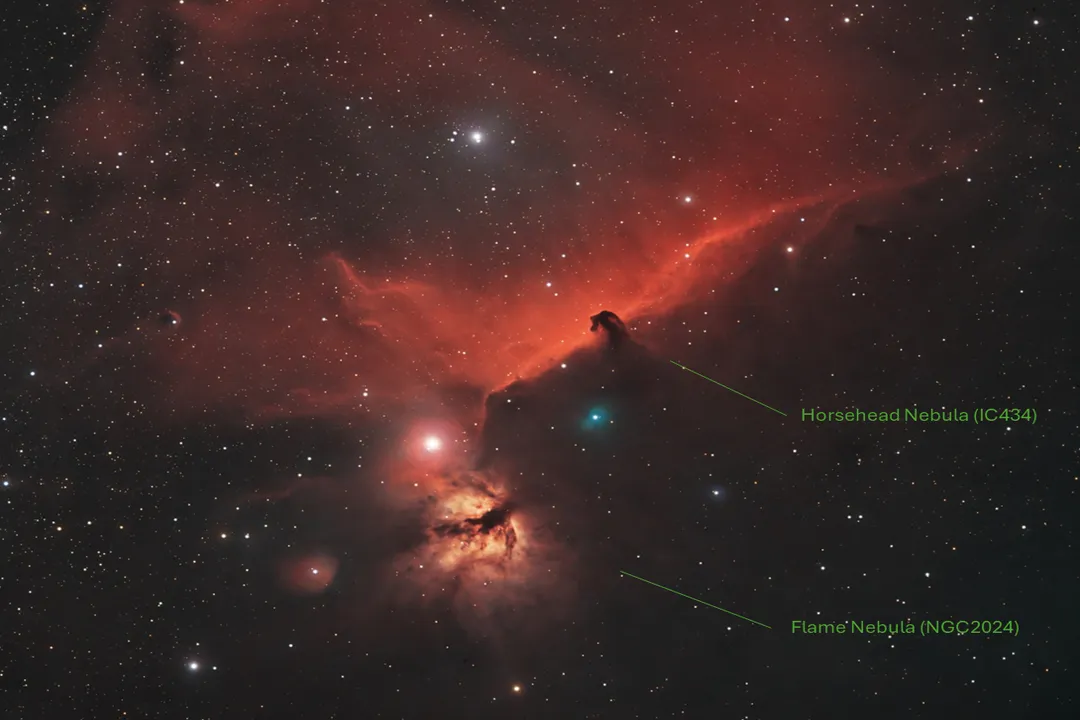
The specific designation of "The Three Kings" stems almost entirely from Christian tradition and its connection to the Biblical Magi, often referred to as the Wise Men or the Three Kings. These figures, according to the Gospel of Matthew, traveled to honor the newborn Jesus, guided by a special star. The association between the celestial trio and the Magi often centers around the timing of the Epiphany, which commemorates the visit of these kings. Epiphany falls on January 6th, a period when Orion, and thus its belt, is prominently visible in the night sky following sunset in the Northern Hemisphere during the winter months. This timing allowed the constellation to serve as an informal, yet powerful, celestial marker corresponding with the observance of the story of the Kings' journey. It is an excellent example of how calendrical religious observance can borrow the prominence of a visible astronomical feature to reinforce a narrative tradition.
# Seasonal Visibility
The prominence of Orion in the winter sky is crucial to understanding why its belt earned the "Three Kings" moniker in cultures that observe a mid-winter holiday cycle. While Orion is visible at various times of the year depending on location and time of night, its rise in the early evening hours during December and January makes it one of the most recognized seasonal guides for stargazers in the mid-latitudes. For people in places like Ireland, for instance, the visibility of the belt around this time strongly ties the asterism to the festive season. This recurring appearance offers a consistent celestial feature right when many cultures celebrate significant mid-winter festivals, naturally drawing narratives toward these visible objects. This is mirrored in other cultures where the belt is known by names relating to farming implements or mythological hunters, all based on the season of its greatest prominence, showing that when something is seen is as important as what it is.
Considering how different cultures name celestial features, the naming convention applied to Orion's Belt reveals a common human tendency: when a pattern is visually simple—three bright objects in a row—it is often assigned names based on the most important groupings of three known within that specific society. In an agrarian or monarchical society, the most significant trio might be kings, heroes, or gods; in a later, more Christianized European context, the Magi provided the perfect narrative fit for those three stars appearing brightly during the season of their commemoration.
Related Questions
#Citations
Orion's Belt
Orion's Belt - The Three Kings - Expand your horizons ...
Why is Orion's belt called the Three Kings?
A Celestial Trio ✨ Orion's Belt, also called the Three Kings ...
A Christmas story: the three kings and the star of Bethlehem
The Three Kings or The Three Sisters - Orion's Belt Mosaic
Rising of Orion : r/Astronomy