What follows a path called an orbit is it rotation or revolution?
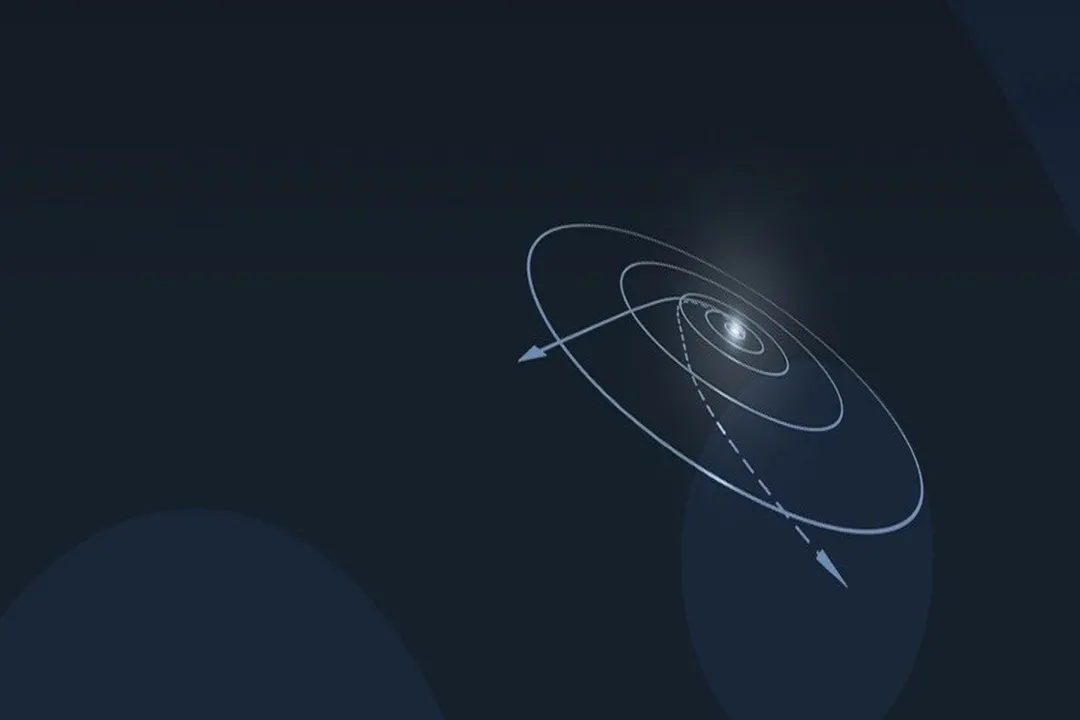
The path an object traces around a larger body under the influence of gravity is defined by its revolution, which is the motion that follows what we call an orbit. This is distinct from rotation, which is the act of spinning around one's own center or axis. To put it simply, a celestial body like Earth is constantly engaged in both at once: it spins in place—rotation—while simultaneously tracing a grand, curved path around the Sun—revolution. [2][4] When one considers the term orbit, it is the trajectory of revolution that is being described, not the daily spin.
This constant dual motion dictates everything from the division of our hours to the changing of our seasons, yet the two movements operate on vastly different timescales and possess unique characteristics that are essential to understand for anything from basic timekeeping to sophisticated interplanetary navigation. [1]
# Orbital Path

The concept of an orbit is central to understanding the Earth's place in the solar system. An orbit is precisely the path an object follows as it moves around another object, driven by gravitational attraction. [2] For Earth, this path traces around the Sun. [4] This orbital motion is what defines our year. [2]
The path itself is not a perfect circle, as is sometimes depicted in simplified diagrams. Instead, the Earth follows a slightly elliptical path around the Sun. [4] An ellipse is essentially an elongated, closed curve. [4] The Sun does not sit at the exact center of this ellipse; this eccentricity means the distance between the Earth and the Sun changes throughout the year. [4]
When the Earth reaches its closest point to the Sun in its revolution, it is at perihelion, which typically occurs around January 4th. [1] Conversely, the farthest point, known as aphelion, happens about six months later. [1] The measurements show this difference is relatively small: the perihelion distance is approximately $147,090,000$ km, while the aphelion distance is about $152,100,000$ km. [1] Some sources note that the ratio between these two distances is less than $1.034$, suggesting the orbit is almost circular, making the distance variation difficult to detect without precise measurement. [2]
This slight elongation has a measurable effect on our perception of time. When Earth is at perihelion, its orbital speed speeds up slightly, causing the apparent movement of the Sun along the ecliptic to cover a greater angle than usual. This lengthens the true solar day by about $10$ mean solar seconds. [1] Near aphelion, the opposite occurs, shortening the true solar day by a similar amount. [1]
A key point for appreciating the elliptical nature is perspective. If one were viewing the Earth-Sun system from within the plane of the orbit, the elliptical path would appear as a straight line. If viewed exactly from above the North Pole, it would look like a perfect circle. The common diagrams showing a clear ellipse are often drawn from an oblique or angled viewpoint. [2]
The time it takes to complete one full revolution defines the length of our year. This period is $365$ days, $6$ hours, and approximately $9$ minutes, when measured with reference to the distant stars. [1] This fractional part—the extra $6$ hours—is the reason we must periodically add an extra day to our calendar, creating a leap year every four years to account for the accumulation of those extra hours. [1][2] This adjustment ensures our calendar remains synchronized with the celestial cycle. [2] The speed at which Earth travels along this orbital path varies, ranging between $29.29$ to $30.29$ kilometers per second (). [1]
# Rotational Spin
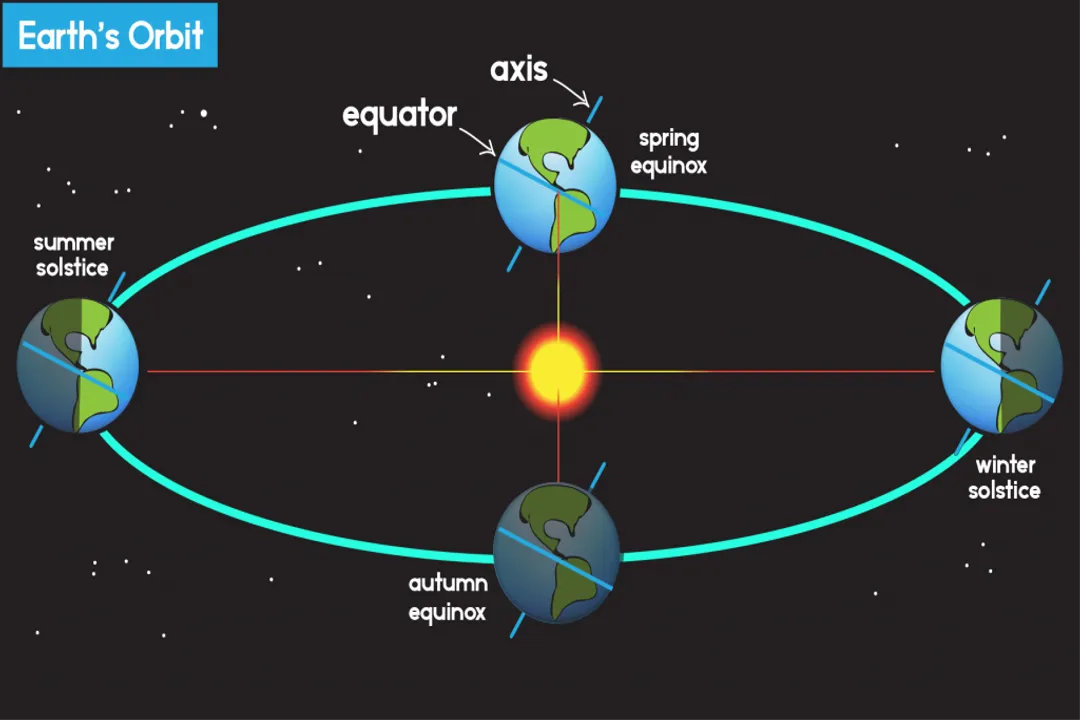
While the grand arc around the Sun is revolution, the Earth's rotation is its intrinsic spin on its axis—an imaginary line running through the North and South Poles. [1][2] This spinning motion is the fundamental driver of our most immediate earthly experience: the cycle of day and night. [2]
Because the Earth rotates eastward, in a prograde motion, the Sun appears to rise in the east and set in the west. [3] At any given moment, sunlight illuminates exactly half of the planet; as the Earth spins, any location passes through this illuminated half (day) and then into the half facing away from the Sun (night). [2]
The duration of this spin is not as straightforward as the common $24$ hours. There are two primary ways to measure the time for one full rotation, depending on the reference point. [1][3]
# Measuring the Day
The true solar day is the time it takes for the Sun to return to the same apparent position in the sky, like from noon to noon. [1][3] This period averages out to the mean solar day of $86,400$ mean solar seconds, which forms the basis of our $24$-hour clock. [1]
However, because the Earth is also moving along its orbit while it spins, it has to rotate slightly more than $360$ degrees relative to the distant, "fixed" stars for the Sun to appear overhead again. [1] This extra rotation is accounted for in the sidereal day, which is the time it takes to rotate $360$ degrees relative to the celestial reference frame. [1][3] The sidereal day is consistently shorter than the mean solar day, lasting approximately $23$ hours, $56$ minutes, and $4.09$ seconds of mean solar time. [1][3] That difference of roughly $3$ minutes and $56$ seconds, accumulated over an entire year, is precisely why the mean solar day is longer—the Earth has to "catch up" to the Sun in its orbit. [1]
The rate of rotation is not perfectly constant. Earth's rotation is actually slowing down over long timescales due to tidal interactions with the Moon, meaning days were significantly shorter in the distant past—perhaps only about $21$ hours $600$ million years ago. [3] This slowing trend requires the addition of leap seconds to keep official time (UTC) synchronized with astronomical time (UT1). [1] Intriguingly, in recent years, the rotation has sped up, with a record-breaking short day recorded in $2022$. [3] Scientists suggest this acceleration could be linked to the complex motion of the Earth's molten core, changes in ocean/atmosphere dynamics, or even post-glacial rebound impacting the distribution of mass. [3]
The speed of this rotation is dependent on latitude. Since the equatorial circumference must be covered in the same time period as the narrower latitudes, the rotational speed is fastest at the equator, approximately $1,670$ kilometers per hour (). [3] As one moves toward the poles, the distance covered in one rotation decreases, and consequently, the tangential speed drops; at the exact poles, the speed is effectively zero. [3]
# Interplay of Motion and Perception
The combination of revolution (the annual path) and rotation (the daily spin) produces measurable effects that ancient and modern observers have used to verify Earth’s motion.
For instance, the appearance of the night sky changes over the year because as Earth revolves around the Sun, the "night side" of the planet faces a different direction in space, revealing different constellations at different times of the year. [2] This evidence helped overturn the ancient geocentric model, which held that everything orbited the Earth. [2] The apparent shift in the positions of nearby stars over months, known as stellar parallax, could only be explained once scientists accepted the heliocentric model, where Earth is in orbit around the Sun. [2]
The rotational effect on a moving object on Earth is also profound, described by the Coriolis effect. This effect causes objects in the Northern Hemisphere to veer slightly to the right, and objects in the Southern Hemisphere to veer left, when shot or moving over long distances. [3] This phenomenon is crucial in meteorology, influencing the direction of cyclone rotation in different hemispheres. [3]
A fascinating consequence of rotation, which also speaks to Earth’s structure, is its shape. The centrifugal forces generated by the spin cause the Earth to bulge slightly at the equator, making it an oblate spheroid rather than a perfect sphere. [1][3] This means the peak of Mount Chimborazo, for example, is farther from the Earth's center than Mount Everest, even though Everest is higher above sea level, because Chimborazo sits on the equatorial bulge. [3]
# The Axis Wobble
Beyond the daily spin and the annual orbit, the Earth’s axis itself is subject to subtle, long-term movements caused by gravitational forces acting on that equatorial bulge. [1] These movements are vital considerations when precise locations or celestial coordinates are required, such as for spacecraft navigation. [1]
One major, slow movement is precession. Due to the gravity of the Moon and Sun acting on the Earth’s oblateness, the axis slowly wobbles, describing a circle with a radius of about $23.4$ degrees over a cycle spanning roughly $26,000$ years. [1] This wobble means that the star that serves as the North Star today (Polaris) was not the North Star in ancient times and will not be so in the distant future. [1] This shift necessitates using a standard reference point in time, or epoch, like , to make celestial observations consistent across different dates. [1]
Superimposed on this massive, slow precession is a smaller, nodding motion called nutation, which has a period of about $18.6$ years. [1] This nodding is directly linked to the $5$-degree difference between the plane of the Moon's orbit and the plane of Earth’s orbit, causing a slight tug that creates a nodding effect on top of the primary wobble. [1]
Further complicating the frame of reference are shorter-term polar motions, including the Chandler wobble (a free nutation with a period around $435$ days) and a steady drift caused by mass shifts within the Earth’s mantle and on the surface. [1] Modern space geodesy techniques, like GPS and satellite laser ranging, are required to track these minute variations in Earth's orientation, proving that even the seemingly solid ground beneath our feet is in constant, subtle motion. [1]
# Analyzing the Dynamics
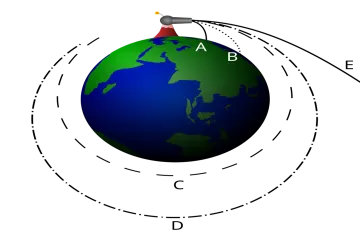
When studying celestial mechanics, the ability to clearly separate revolution from rotation is not just a matter of vocabulary; it is a requirement for correct physical modeling. Consider, for a moment, a person attempting to track the precise position of an outgoing probe heading to Mars. That observer on Earth must know their own exact latitude and longitude, and then subtract the Earth’s combined motions—rotation, precession, nutation, and revolution—from the raw measurements to calculate the spacecraft’s true speed and path relative to a fixed point in space. [1] If the rotational component were ignored, the resulting navigation solution would be wildly inaccurate.
It is also interesting to compare the resulting time scales directly, as shown below. Notice how the period of the revolution cycle is almost exactly $365.25$ times the sidereal rotation period, confirming the relationship between the two motions:
| Motion | Path Description | Primary Reference Object | Approximate Period | Resulting Earth Cycle |
|---|---|---|---|---|
| Rotation | Spinning on an internal axis | Distant Stars (Sidereal Day) | $23$ hours, $56$ minutes, $4$ seconds [1] | True Day Length/Sidereal Time |
| Rotation | Spinning on an internal axis | The Sun (Solar Day) | hours [1][3] | Mean Day Length/Standard Time |
| Revolution | Orbiting around the Sun | The Sun (Synodic Year) | $365$ days, $6$ hours, $9$ minutes [1] | The Year/Leap Year Calculation |
The fact that the Earth’s rotation causes an equatorial bulge that, in turn, dictates the -year precession cycle reveals a beautiful, nested dependency within physics. The speed of the daily spin dictates the shape of the planet, and the shape of the planet dictates the wobble over millennia. [1] This demonstrates that the two seemingly separate motions—daily rotation and long-term orbital mechanics—are intimately linked through the consistent force of gravity and the conservation of angular momentum. [3]
The distinction also highlights a fundamental success in human scientific understanding. For centuries, the geocentric model—where the heavens rotated around a stationary Earth—seemed logical because our immediate perception is of a spinning world. [2] The realization that the orbit is the key path for the solar system, not the rotation of the whole celestial sphere around us, required centuries of observation and calculation, culminating in theories that accounted for these precise movements and refutations like stellar parallax. [2][3]
Ultimately, the path called an orbit is the domain of revolution. Rotation is the spin on the spot. While both are happening constantly, one traces the annual cosmic journey, and the other marks the passage of our days. [2] Understanding which term applies to which motion is the first step in comprehending our place in the solar system. [1][4]
Related Questions
#Citations
Earth's rotation - Wikipedia
Earth's Orbit and Rotation | Science Lesson For Kids in Grades 3-5
Section 1: Earth's Motion - NGS Magnified
Chapter 2: Reference Systems - NASA Science
4.1 Activity 1: Revolution of the Earth Around the Sun (Role Play)