What is the movement of the Earth called?
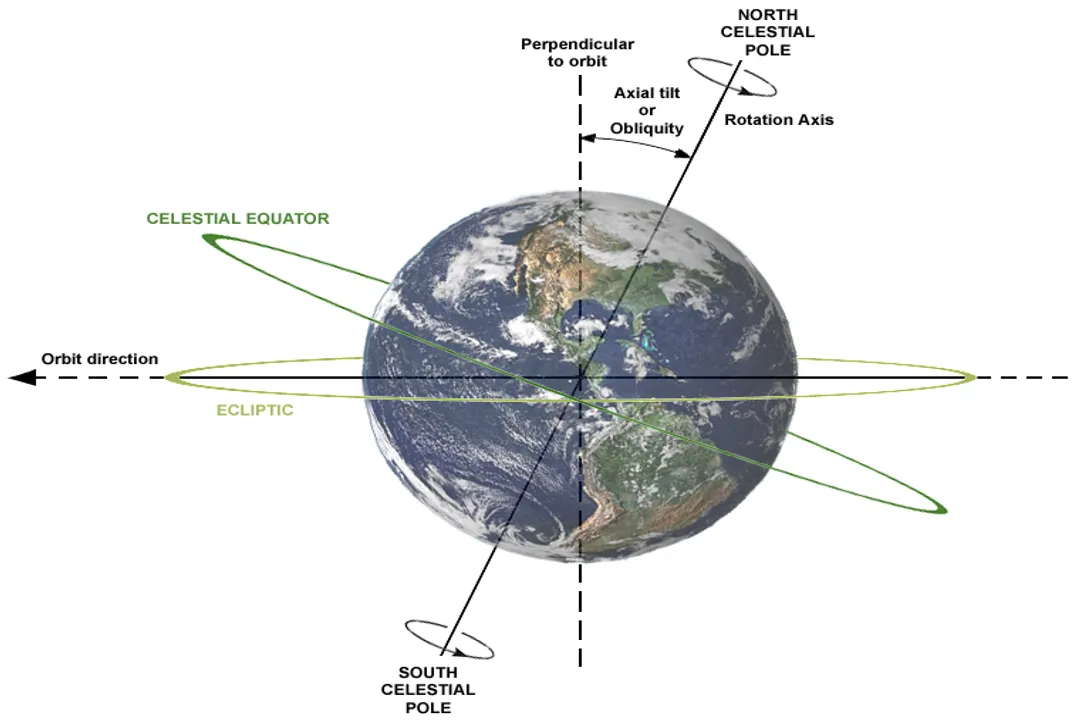
The movement of the Earth is not a single action but a combination of several continuous motions happening simultaneously as our planet navigates space. When we talk about the Earth's motion, we are generally referring to two major, fundamental processes: its spin on its axis and its path around the Sun. [3][9] These movements are the reason we experience days, years, and the shifting patterns of the seasons that govern life across the globe. [4][5] Understanding these concepts requires looking closely at how the planet rotates in place and how it travels through space. [3]
# Spinning Motion

The first primary movement is called rotation, which is simply the Earth spinning around an imaginary line passing through the North and South Poles, known as its axis. [1][3][9] This rotation is what we most immediately perceive in our daily lives. [9] The Earth rotates in a specific direction: from west to east. [1][5] Because of this west-to-east turning, observers on the surface see the Sun, Moon, and stars appear to rise in the east and set in the west. [9]
A complete spin, or one full rotation, is what defines our day. [3][5] While we commonly use 24 hours as the length of a day, the precise time it takes for the Earth to complete one rotation relative to the distant stars—known as a sidereal day—is slightly shorter, measuring approximately 23 hours, 56 minutes, and 4 seconds. [1] The difference between this sidereal time and our standard 24-hour clock accounts for the time it takes the Earth to also move along its orbital path around the Sun during that rotation. [1]
This constant spinning has several profound physical consequences beyond just marking time. For instance, rotation is directly responsible for generating the Coriolis effect. [1] This effect describes how objects moving freely across the planet's surface, like winds or ocean currents, appear to be deflected from a straight path due to the rotation of the surface beneath them. [1]
# Speed Differences
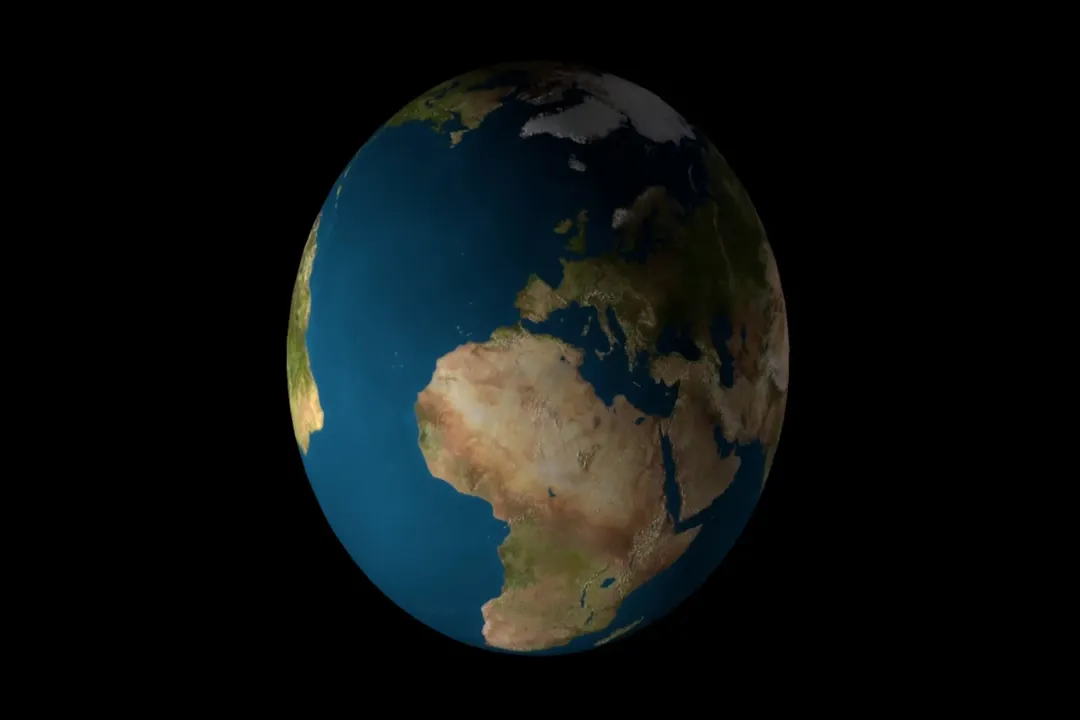
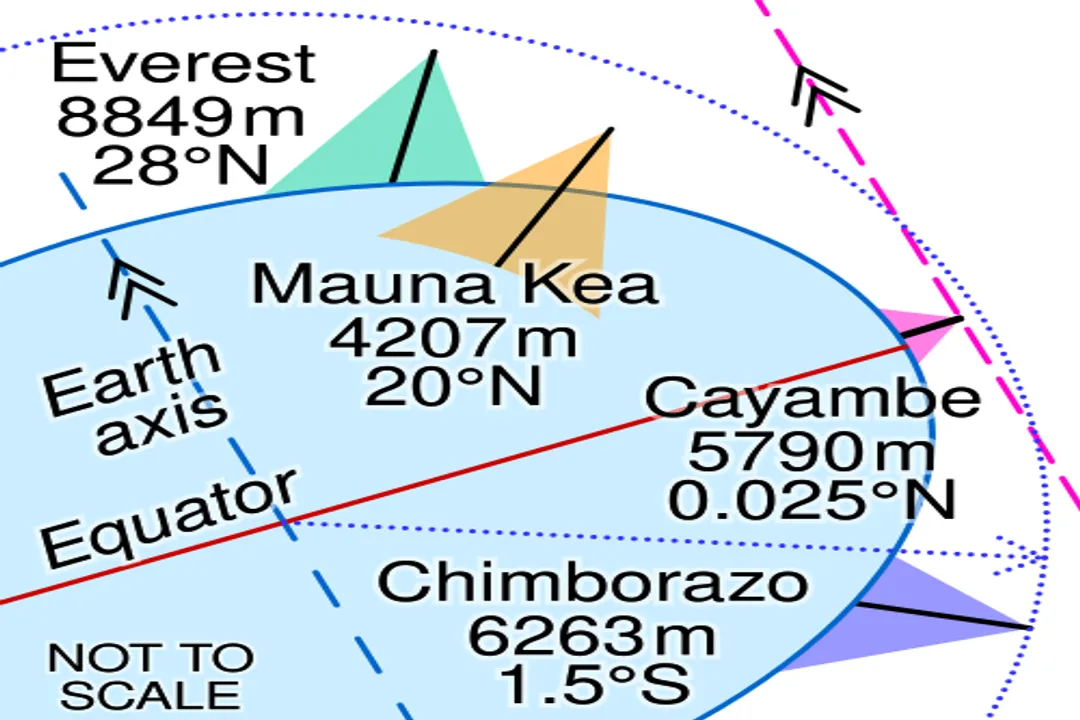
The speed at which any point on the Earth’s surface travels due to this rotation is not uniform across the globe. The planet is essentially a sphere (or more accurately, an oblate spheroid), and points closer to the axis of rotation travel a shorter distance in the same amount of time as points further away from the axis. Consequently, the rotational speed is greatest at the equator, where the circumference is largest, and decreases to zero at the poles. [1]
To put this into perspective, if you consider a location situated at the equator, the rotational speed is about 1,000 miles per hour (). [1] Now, consider a city at roughly north latitude, such as Philadelphia or Madrid. The circumference of the circle traced by this latitude is significantly smaller than the Earth's circumference at the equator. A quick calculation based on the cosine of the latitude () shows that the rotational velocity at this latitude is about 766 miles per hour. This difference in speed is why launching rockets or projectiles is often more efficient when launched eastward from locations closer to the equator; they are already benefiting from that faster initial ground speed. [1]

# Orbital Motion
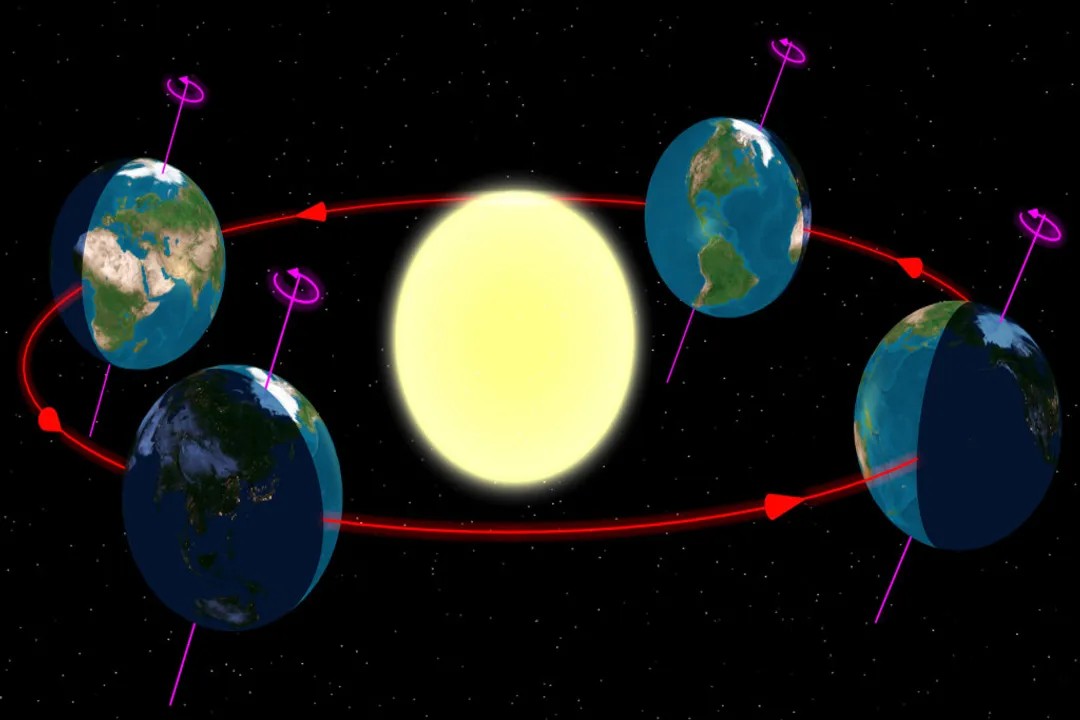
The second major movement is called revolution, which describes the Earth's continuous movement in its path, or orbit, around the Sun. [3][9] This motion defines the length of our year. [3][5]
The Earth follows an elliptical path as it revolves around the Sun, though this ellipse is very close to being a perfect circle. [5] It takes the Earth approximately 365 and 1/4 days to complete one full orbit. [5] This slight excess of a quarter day is why we need to periodically add an extra day to our calendar—a leap day—every four years to keep our calendar aligned with the astronomical reality. [5] The path the Earth takes is designated as the plane of the ecliptic. [5]
While the Earth moves around the Sun, it is also rotating, meaning that during one revolution, the Earth completes roughly 365 full rotations on its axis. [5] This constant, predictable journey around our star is what dictates the cycle of the year.
# Axial Tilt
While the revolution itself dictates the year, it is not the only factor determining our climate patterns. A crucial, intertwined factor is the orientation of the Earth's axis. The axis of rotation is tilted relative to the plane of the Earth's orbit around the Sun by an angle of approximately . [4][5]
This tilt is key because it remains pointed in the same direction in space—toward the North Star, Polaris—throughout the entire year as the Earth revolves. [4][5] As the planet circles the Sun, different hemispheres are tilted toward the Sun for part of the year and away from the Sun for another part. [4] This variation in the angle at which the Sun’s rays strike the surface is the primary driver of the seasons. [4][5] When the Northern Hemisphere is tilted toward the Sun, it receives more direct sunlight and experiences summer, while the Southern Hemisphere experiences winter. [4] Six months later, the situation is reversed. [4]
It is a common misconception that seasons are caused by the Earth being closer to the Sun during summer. While the orbit is indeed elliptical, the distance variation is not the main cause of seasons. The tilt effect is far more significant. [4]

# Orbital Speed Variation
Because the Earth’s orbit is not a perfect circle but a slightly elliptical path, the distance between the Earth and the Sun changes throughout the year. [5] This change in distance directly affects the speed of the planet along its orbital path, governed by Kepler's Second Law of Planetary Motion, which states that a line segment joining a planet and the Sun sweeps out equal areas during equal intervals of time. In simpler terms, the Earth speeds up when it is closer to the Sun and slows down when it is farther away. [5]
The point in the orbit where the Earth is closest to the Sun is called perihelion. Conversely, the farthest point is called aphelion. [5] The change in speed between these two extremes is noticeable but relatively minor compared to the dramatic seasonal changes driven by the axial tilt. For instance, the Earth travels fastest during perihelion in early January and slowest during aphelion in early July. [5]
Imagine the Earth’s orbit as a race track where you must maintain a constant area swept out by your motion relative to the center (the Sun). If you are on the inside lane (perihelion), you must cover more ground quickly to keep pace with the area sweeping out on the wider, outer lane (aphelion) over the same time period. This means that the Northern Hemisphere experiences summer when the Earth is actually farther away from the Sun, reinforcing that the tilt dominates the experience of seasonal temperature variation over the slight change in solar energy due to distance. [4][5]
# Measurement and Perception
The concepts of rotation and revolution are deeply embedded in how humanity measures time. Rotation established the fundamental unit of the day, which is further subdivided into hours, minutes, and seconds. [3] Revolution establishes the year. [3] The very structure of our calendars is an ongoing attempt to reconcile these two distinct motions into a practical system. [5]
The apparent movement of the Sun is perhaps the most direct visual evidence we have for the Earth's rotation. [9] When we watch the Sun traverse the sky from horizon to horizon, we are interpreting the Earth's motion relative to a fixed, distant star. [9] Because the Earth rotates west to east, the Sun appears to move east to west. [5] This apparent movement of celestial bodies is a consistent result of our planet spinning on its axis. [9]
The two movements are inseparable in daily experience:
| Movement | Defined By | Approximate Period | Primary Effect |
|---|---|---|---|
| Rotation | Spinning on axis | (Solar Day) | Day and Night Cycle |
| Revolution | Orbiting the Sun | (Year) | Annual Cycle and Seasons (with tilt) |
This dual motion means that we are constantly moving at tremendous speeds without feeling it. We are spinning at hundreds of miles per hour while simultaneously racing around the Sun at roughly 67,000 miles per hour (). [1] Our brains filter out this constant, uniform velocity because everything around us—the atmosphere, the buildings, the ground—is moving with us, providing a constant frame of reference. The only motion we readily perceive is acceleration or deceleration, which is why turbulence in an airplane or a sudden stop in a car is noticeable, but the steady speed of Earth’s rotation or revolution is not. [1]
# Synthesis of Motion
The Earth's position in space is a dynamic state, always defined by the combination of its spin and its orbit. Without rotation, a single side of the Earth would perpetually face the Sun, resulting in one side experiencing unending daylight and extreme heat, while the other side faced eternal night and frigid cold. [4][9] Rotation effectively distributes the Sun's energy around the globe over a 24-hour cycle. [9]
Similarly, without revolution, our planet would remain in one fixed position relative to the Sun. If the axis tilt were zero, we would have no seasons, and every location would experience the same solar intensity year-round, dictated only by latitude. [4][5] Because the Earth does revolve while maintaining its tilt, we cycle through the varying intensities of sunlight that create our distinct annual seasons. [4] The constant interplay between the speed of rotation (creating the day) and the speed of revolution (creating the year) is the astronomical foundation for all terrestrial timekeeping and climate systems. [3] The understanding of these movements provides the essential context for fields ranging from physics to agriculture, linking the smallest human schedule to the vast scale of the solar system. [1]
#Videos
Movements of the Earth - Earth's Revolution & Rotation - YouTube
Related Questions
#Citations
Earth's rotation - Wikipedia
What is the Earth movement on its own axis called? - Quora
Earth Rotation and Revolution - BYJU'S
The Earth Moves Two Ways - Tree House Weather Kids
Earth's Motions | Physical Geography - Lumen Learning
Chapter 2: Reference Systems - NASA Science
Earth's Rotation & Revolution Around the Sun Explained | Britannica
Movements of the Earth - Earth's Revolution & Rotation - YouTube
Rotation - National Geographic Education
Earth's Motion in Space | CK-12 Foundation