What is the debris fallen on Earth from a meteor called?
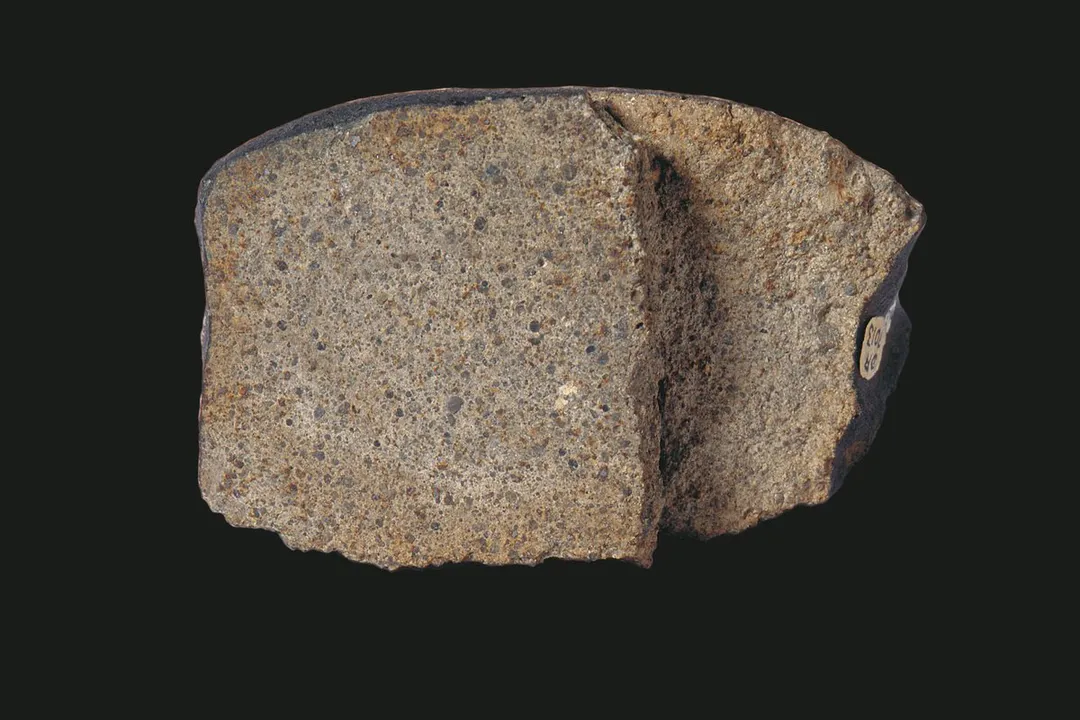
The material that successfully navigates the fiery ordeal of atmospheric entry and comes to rest on the Earth’s surface is given a very specific name: a meteorite. [4][6][8][9] This name represents the final stage of a cosmic traveler's journey, which begins long before it ever interacts with our planet’s air. Understanding what this debris is called requires tracing its lineage backward through the distinct phases it passes through in space and through the atmosphere. [5]
# Space Rock Stages
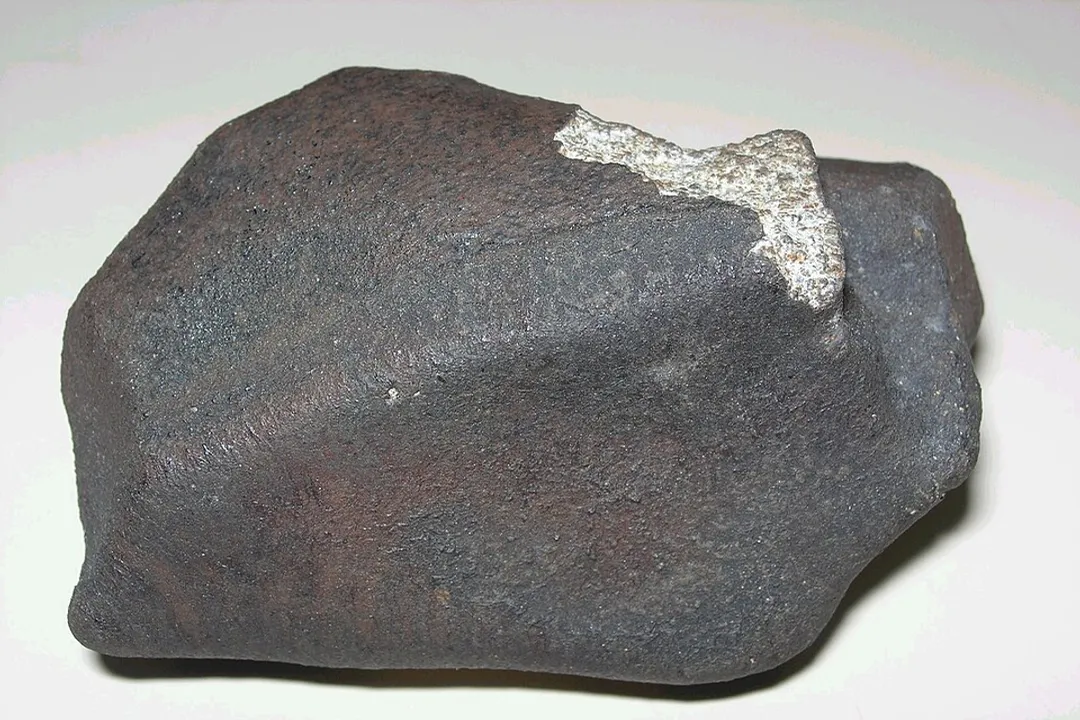
The terminology used to describe these objects is entirely dependent on their location. [5] A small piece of rock or metal that is orbiting the Sun, still safely in the vacuum of space, is known as a meteoroid. [1][2] These bodies are fragments typically much smaller than asteroids. [1] They range in size from tiny dust grains to objects up to about one meter wide, although the definition can sometimes blur depending on the classification system used. [1][2]
When one of these meteoroids intersects with Earth's path and plunges into our atmosphere, it begins to burn due to intense friction and compression of the air in front of it. [4] At this moment, the object itself—the meteoroid—is no longer the correct term. The visible streak of light, the glowing trail we see across the night sky, is what we call a meteor. [2][4][5] Often, people commonly refer to this event as a "shooting star". [4] This atmospheric phenomenon is the middle phase of the object’s interaction with Earth. [5] If the object is large enough to survive this destructive passage, what ultimately impacts the ground becomes the object of scientific interest. [6]
| Stage | Location | Description | Common Name |
|---|---|---|---|
| Meteoroid | Space | Rocky or metallic body orbiting the Sun. [1] | Space Rock |
| Meteor | Atmosphere | The streak of light created when the object burns up due to friction. [4][5] | Shooting Star |
| Meteorite | Earth's Surface | The surviving portion that lands on the ground. [6][8] | Fallen Space Rock |
# Atmospheric Flash
The spectacular light show accompanying a meteor is not strictly the object disintegrating, but rather the superheated air compressed around it. [4] As the meteoroid slams into the upper atmosphere at tens of thousands of miles per hour, the air in front of it cannot move out of the way quickly enough, causing it to heat up dramatically and glow intensely. [4] The intensity of this glow determines the visibility of the meteor.
While we primarily focus on the debris that survives, it is worth noting that the vast majority of meteoroids that create meteors completely disintegrate before reaching the ground. [2] Larger, brighter meteors are sometimes called fireballs or bolides, with a bolide often being specifically defined as a fireball that explodes in the atmosphere. [2] These events can sometimes be tracked by multiple observers or even specialized monitoring equipment, allowing scientists to trace the trajectory of the original meteoroid. [7] The visual effect is beautiful, but it is fundamentally a record of atmospheric ablation, where material is literally stripped away layer by layer by the superheated air stream. [4]

# Earthfall Debris
The piece of cosmic material designated as a meteorite is the successful survivor—the material that retains enough mass to resist complete incineration or vaporization during its flight through the atmosphere. [6][8] These landed objects are immensely valuable because they offer scientists tangible, physical samples from other parts of the solar system, such as asteroids or even the Moon and Mars, without the need for complex and costly space missions to retrieve them. [7]
Meteorites offer a direct window into the composition and formation history of the solar system materials that existed long before Earth itself fully coalesced. [7] They are, in essence, pristine geological samples from bodies that have remained largely unchanged for billions of years. [3] Recovering a confirmed meteorite allows planetary scientists to analyze chemical compositions, crystal structures, and isotopic ratios that are otherwise inaccessible. [3]
If someone finds a specimen in a typical backyard setting, the sheer odds against it being a true meteorite versus just terrestrial rock are incredibly high. For instance, in an area like Texas, where many finds are cataloged due to wide open spaces, meteorites still account for a minuscule fraction of all "rock sightings" reported to geological surveys, often less than 1 in 50 confirmed finds relative to the total number of alleged finds. [5] This rarity underscores why every confirmed, documented find carries significant scientific weight.
# Material Makeup
Meteorites are not uniform; they are categorized based on their primary constituents, which directly relates to their origin point in the solar system. [6][8] The three main groups are stony, iron, and stony-iron. [6][8]
Stony meteorites represent the most frequently recovered type found on Earth’s surface. [6] These rocks are primarily composed of silicate minerals, much like terrestrial rocks, but they possess unique mineral assemblages not found naturally on our planet. [6]
Iron meteorites, as the name suggests, are dominated by iron and nickel alloys. [6] These are usually much denser than stony meteorites and are often easily identified due to their metallic nature. [6] The structural patterns found inside large, cut, and acid-etched iron meteorites—known as the Widmanstätten pattern—are a signature of slow cooling deep within their parent asteroid bodies. [3]
Stony-iron meteorites are a blend, containing significant portions of both silicates and metal. [6] These are the rarest type encountered on the surface, often representing a transition zone between the cores (iron) and crusts (stony) of their parent bodies. [7]

# Collection Science
The process of confirming a found object as a genuine meteorite is rigorous, often managed by professional bodies to maintain scientific authority and trust in the data collected. [3] Many common Earth rocks can mimic the appearance of meteorites, possessing characteristics like dark exteriors or slightly unusual density. [3]
When a potential specimen is discovered, experts look for specific characteristics that confirm its extraterrestrial origin, moving beyond mere appearance. One critical step that an amateur collector should document immediately is magnetism—due to the iron/nickel content, most true meteorites exhibit a distinct attraction to a strong magnet, a simple initial test that rules out many common Earth rocks which are often non-magnetic or only weakly magnetic. [3] Another key feature sought is regmaglypts, which are thumbprint-like depressions formed by ablation during atmospheric flight, akin to how clay is shaped when handled by a potter. [4] Furthermore, if a specimen has been cut open, the presence of chondrules (small, glassy, spherical inclusions) in a stony meteorite is definitive proof of its space origin, as these structures are remnants of the earliest solar nebula condensation. [3]
Organizations, such as the Meteoritical Society, maintain official records and classifications for verified specimens. [3] A piece of debris fallen on Earth is called a meteorite, and that classification is granted only after rigorous scientific vetting confirms it originated outside our planet. [8]
Related Questions
#Citations
Meteoroid - Wikipedia
Meteoroid - National Geographic Education
Meteoritical Society
The debris fallen on Earth from a meteor is called a ____.
TPWD: Meteors -- Young Naturalist
Meteors and Meteorites - The Australian Museum
Overview of meteorites and their impact on the earth - Britannica
Meteor, Meteoroids & Meteorites | Definition, Differences & Facts