How will you relate the story of Goldilocks and the Three Bears to our planet Earth?
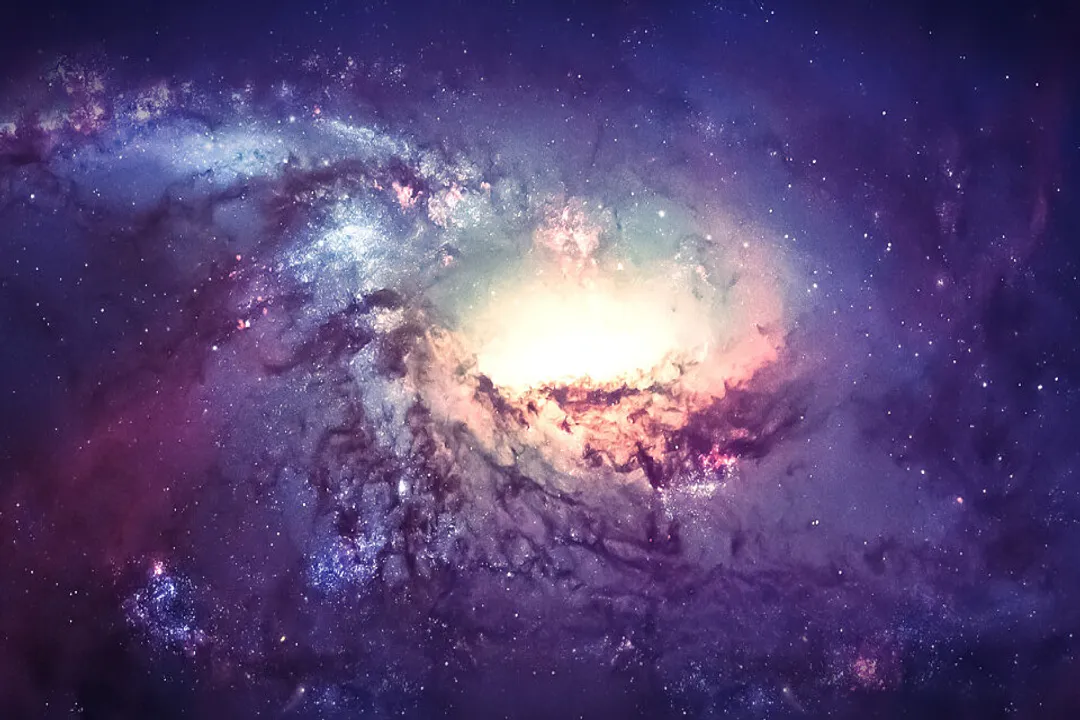
The story of Goldilocks and the Three Bears, a simple narrative about a girl finding things "just right," offers a surprisingly potent analogy for understanding our own planet, Earth. The inherent tension in the tale—where extremes of too hot or too cold, too hard or too soft, are unsuitable—mirrors the precise, narrow band of conditions required for complex life to flourish in the universe. [5][9] When we translate the quaint cottage setting into the vastness of space, the tale transforms from a children’s story into a fundamental lesson in astrophysics and ecology, framing Earth as the ultimate "just right" scenario against a backdrop of cosmic extremes. [3]
# Bears' Possessions
In the classic story, Goldilocks assesses three bowls of porridge, three chairs, and three beds, each belonging to a different bear: Papa Bear (too hot/hard/big), Mama Bear (too cold/soft/medium), and Baby Bear (just right). [9] This sequence of unsatisfactory trials and the final success provides a direct template for discussing planetary habitability. [5]
Consider the porridge: Papa Bear’s is too hot, representing worlds too close to their star, baking under intense energy, resulting in surface temperatures that vaporize volatile compounds like water. [2] Mama Bear’s is too cold, analogous to distant worlds where energy is insufficient, causing atmospheres to freeze out and liquids to solidify. [2] Earth, like Baby Bear's perfectly cooled porridge, orbits at a distance where liquid water can persist on its surface, a crucial prerequisite for life as we know it. [7] This orbital sweet spot is the foundation of the concept scientists call the Circumstellar Habitable Zone (CHZ). [3][6]
The chairs map onto the physical environment, particularly atmospheric conditions. If the chair is too hard, perhaps it represents a planet with little to no atmosphere, lacking the insulation and pressure necessary to maintain liquid water. [2] If the chair is too soft, it could be a world shrouded in a runaway greenhouse effect, like Venus, where excessive atmospheric density traps heat and cooks the surface. [2] Earth’s atmosphere, in contrast, is described by climatologists using similar "just right" terminology—the Goldilocks effect—referring to the equilibrium that allows for moderate temperatures and a stable hydrological cycle. [2]
Finally, the beds correspond to long-term habitability and climate stability. Papa Bear’s bed might be too hard—a planet with chaotic geology or extreme axial tilt leading to wild, life-prohibiting seasonal swings. Mama Bear’s bed might be too soft—a planet that has cooled too quickly, locking away necessary geological activity that helps regulate the climate over eons. [2] Earth’s moderate magnetic field, active mantle, and stable axial tilt maintain a climate that supports biology over billions of years. [2]
# Habitable Zone
The scientific formalization of this fairy tale concept is known as the Goldilocks Principle or the Habitable Zone. [6] This principle is essential in astrobiology when assessing whether a planet orbiting another star could support life. [7] The zone is not defined by a single parameter but is a region around a star where an orbiting planet could maintain liquid water on its surface. [6][7]
Dr. Neil deGrasse Tyson observed that the Goldilocks concept is often applied to the entire solar system, noting that early models sometimes placed Earth as an outlier, suggesting that life might be more common around smaller, dimmer stars where the habitable zone is closer in, thus easier to achieve. [3] The exact boundaries of this zone are dynamic, depending heavily on the type and luminosity of the central star. [3] For instance, a cooler, dimmer M-dwarf star will have a habitable zone much closer than our Sun, which is a G-type star. [3] The implication is that a planet in the "just right" zone of a different star system might still be too hot or too cold if it orbits too close or too far from its specific sun. [3]
When evaluating planets like Mars, we see the "too cold" scenario realized. [2] Mars likely once possessed more surface water, but due to its lower mass and weaker gravity, it lost much of its atmosphere and, subsequently, its ability to hold onto that warmth, leading to an environment inhospitable to surface life today. [2] Conversely, Venus serves as the "too hot" example, suffering from a thick, carbon-dioxide-rich atmosphere that created an intense greenhouse effect. [2] Earth occupies the sliver between these two fates.
My own assessment of this planetary arrangement suggests that the "Goldilocks Effect" is less about finding the exact center of the zone and more about having the necessary atmospheric density to create a buffer. Imagine the porridge temperature; it's not just the distance from the stove (the Sun), but the insulating quality of the bowl. For Earth, our atmosphere and oceans act as that perfect insulating medium, redistributing heat globally and preventing immediate thermal extremes, a capability the thinner Martian atmosphere lacks. [2]
# Earth Balance
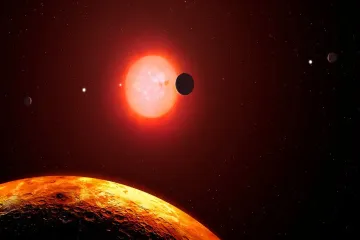
Earth’s habitability rests on several factors aligning perfectly, much like Goldilocks testing the three beds. The first is the presence of liquid water, as this is where life processes occur. [7] The second, tied to the "porridge" analogy, is the temperature maintained by the Greenhouse Effect. [2] This effect is vital; without it, the Earth’s average temperature would plummet to about -18 degrees Celsius (0 degrees Fahrenheit). [2] However, if the concentration of greenhouse gases increases past a certain point, the warming becomes excessive, leading to the Venusian state. [2]
Another critical, often overlooked, planetary feature mirroring the "chair" analogy is the Earth’s magnetic field. [2] This field, generated by the movement of molten iron in the outer core, acts as an invisible shield, deflecting harmful charged particles from the solar wind. [2] Without this magnetosphere, the solar wind would strip away our atmosphere over vast timescales, similar to what is believed to have happened on Mars. [2] The existence and strength of this protective layer, sustained by a relatively active core, is another "just right" feature of our planet's internal dynamics.
To highlight the narrow margin of error, consider the following comparison based on the relative orbital positions and conditions within our solar system:
| Planetary Analogy | Celestial Body | Condition | Goldilocks Parallel |
|---|---|---|---|
| Too Hot | Venus | Surface temperature near 460°C, thick CO2 atmosphere | Papa Bear's too-hot porridge |
| Just Right | Earth | Liquid water stable, moderate temperatures, active magnetosphere | Baby Bear's perfect meal/bed |
| Too Cold | Mars | Surface water mostly frozen, thin atmosphere, low pressure | Mama Bear's too-cold porridge |
| [2][7] |
This table illustrates that our environment is not merely on the edge of habitability; it is within a statistically small margin of planetary equilibrium that allows for the sustained complexity of biology. [6] If Earth’s orbit were shifted inward by just a few percent, or if its mass were significantly lower, the narrative might change from a successful Goldilocks scenario to one of the hot or cold failures seen elsewhere.
# Stewardship Duty
The moral of the original tale often centers on the intruder, Goldilocks, who samples things without permission and leaves chaos behind—the broken chair, the eaten porridge. [5] When we apply this ethical lesson to our relationship with the Earth, the story shifts from being merely descriptive of cosmic conditions to being prescriptive about human behavior. [5] Our planet is the "Baby Bear" object—the one that is just right—and our current industrial activities risk "breaking the chair" or "spoiling the porridge" on a global scale.
The evidence suggests that human activity is altering the delicate atmospheric balance that maintained our temperate climate for millennia. [2] By introducing excessive greenhouse gases, we are effectively turning up the heat on Papa Bear's porridge, pushing the climate system toward the hotter extreme that was previously only theoretical for Earth. [2] The moral imperative then becomes recognizing that we are guests in a finely tuned system, not masters of it.
One actionable step derived from this understanding is to re-evaluate our local consumption against the global buffering capacity. For instance, many communities rely on localized resources—water tables or local air quality—which seem infinitely renewable on a day-to-day basis, much like a single chair or bowl of porridge seems small compared to the whole house. However, when every community acts on the assumption of infinite local supply, the cumulative effect mimics Goldilocks smashing the one perfectly usable chair. [5] A tangible shift involves rigorously mapping the lifecycle emissions of everyday goods, not just the operational costs. If the energy required to manufacture and transport a product (the 'making' of the porridge) exceeds the benefit derived from its use, that consumption pattern contributes disproportionately to the global 'too hot' scenario. Recognizing that our resources are finite and that the system has very little tolerance for massive, rapid change is key to responsible habitation.
The story cautions against imbalance. It's not about living as ascetically as possible (Mama Bear's cold porridge), nor is it about exploiting resources recklessly (Papa Bear's mess). It is about maintaining the equilibrium that allows everyone—in the context of the fable, the bears; in our reality, all living things—to thrive. The planet has been demonstrating the "just right" conditions for life to evolve and diversify over eons. [7] Our experience on Earth is that balance is not a static achievement but a continuous process requiring mindful interaction. We must act as careful conservators, ensuring that the delicate atmospheric and geological systems that provide our unique habitable niche remain intact for future generations who will inherit this single, irreplaceable "just right" planetary home. [6]
Related Questions
#Citations
How is the story of Goldilocks related to the characteristics of Planet ...
[PDF] INTERPRETING THE GOLDILOCKS EFFECT (1)
Goldilocks and the Three Planets - Neil deGrasse Tyson
God's Perfect Design: The Goldilocks Earth and Universe Explained
What moral does the story 'Goldilocks and the Three Bears' have?
Goldilocks principle - Wikipedia
3.3. What determines if a planet can have life? | Education
The Universe, Origin Stories, and The Big Bang - Big History Project
Goldilocks & the Three Bears | Outdoor Learning