What creates the magnetic field that surrounds the planet?

The magnetic field that envelops our planet is not a static shield generated by a giant, permanent magnet deep inside the Earth; rather, it is a dynamic product of fluid motion within the planet's interior. This invisible force originates in the outer core, a layer composed primarily of molten iron and nickel. [1][3] The sheer volume and movement of this electrically conductive fluid are the fundamental ingredients for generating what scientists call the geodynamo. [3]
# Iron Engine
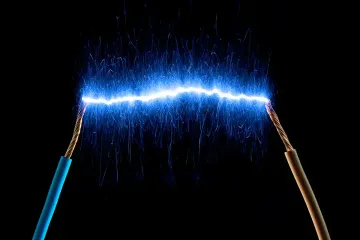
The process begins with the state of the Earth's core. We know the inner core is a solid ball of iron and nickel, extremely hot but held rigid by immense pressure. [3] Surrounding this is the outer core, which remains liquid due to the slightly lower pressures, allowing it to flow freely. [3] Because this liquid metal is an electrical conductor, any movement within it can generate electric currents. [1][3] This generation of electrical currents through motion is the heart of the dynamo mechanism. [3]
For a self-sustaining dynamo to operate, three conditions must be met: the fluid must be electrically conductive, there must be a source of energy to drive the motion, and the system must be subject to rotation. [1][3] Earth meets all these requirements. The energy source is primarily thermal convection—heat escaping from the inner core and radiating outward through the liquid outer core. [3]
# Spin Influence
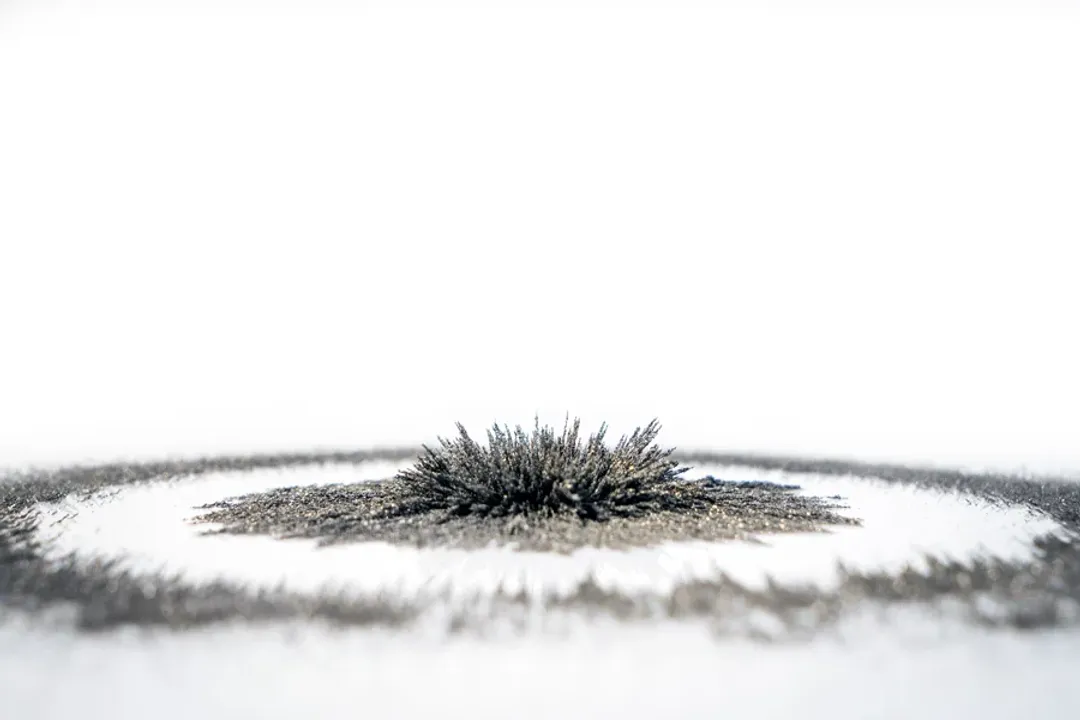
The Earth’s spin plays an indispensable role in organizing this chaotic fluid motion into a large-scale, coherent magnetic field. As the liquid iron swirls due to convection, the planet's rotation imposes the Coriolis effect upon these flows. [1][3] This effect deflects the moving currents, forcing them into spiral or columnar structures that align roughly along the axis of rotation. [1] These organized, rotating columns of conductive material act like countless small electric currents, each contributing to a massive, planet-scale magnetic field extending far into space. [1][3] If Earth did not spin, the movement in the core would likely create a much weaker, disorganized magnetic field, or perhaps none at all detectable on the surface. [1]
It is fascinating to consider the timescale differences at play. While the solid mantle and crust above operate on geological time, the churning liquid outer core is highly dynamic, causing the magnetic field itself to fluctuate noticeably even within a human lifetime. [9] This means that if we could somehow map the core's fluid speeds precisely, we would see patterns shifting rapidly, affecting the surface magnetic readings we take today compared to those taken a century ago. [9]
# Space Defense
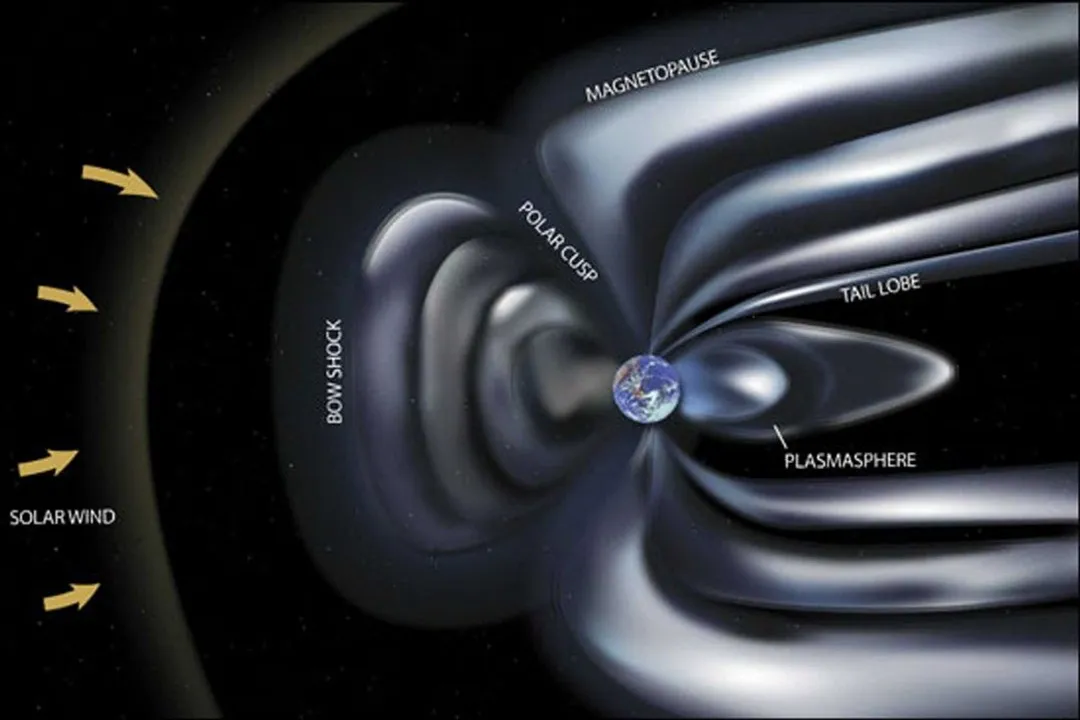
The magnetic field emanating from this interior engine extends outward, creating a protective bubble around the planet called the magnetosphere. [2][4] This structure is essential for life as we know it because it shields the Earth's surface and atmosphere from the constant barrage of high-energy particles shot out by the Sun, known as the solar wind. [2][7]
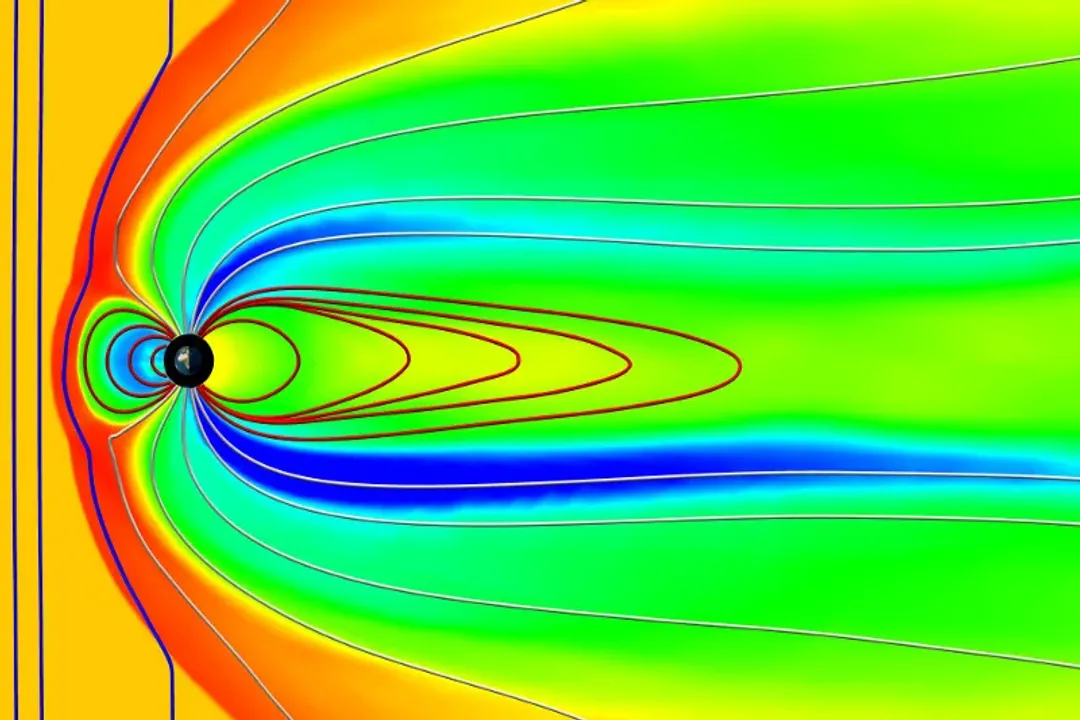
When the solar wind—a stream of charged particles flowing outward from the Sun—encounters the Earth's magnetic field, the field generally deflects these particles around the planet. [2][4] The boundary where the solar wind first interacts with the magnetic field is called the magnetopause. [2] On the sun-facing side, the magnetic field is compressed by the force of the solar wind, while on the night side, the field is stretched out into a long tail structure, similar to a comet's tail. [2][4]
The most visible evidence of this magnetic protection occurs near the poles. While most solar particles are diverted, some get trapped and funnelled down the magnetic field lines toward the polar regions. [7] When these charged particles collide with atmospheric gases high above the Earth, they excite the gas atoms, causing them to glow, which we observe as the aurora borealis (Northern Lights) and aurora australis (Southern Lights). [6][7] Without the magnetosphere, these energetic particles would strip away our atmosphere over time, much like what is thought to have happened on Mars. [2][7]
# Pole Drift
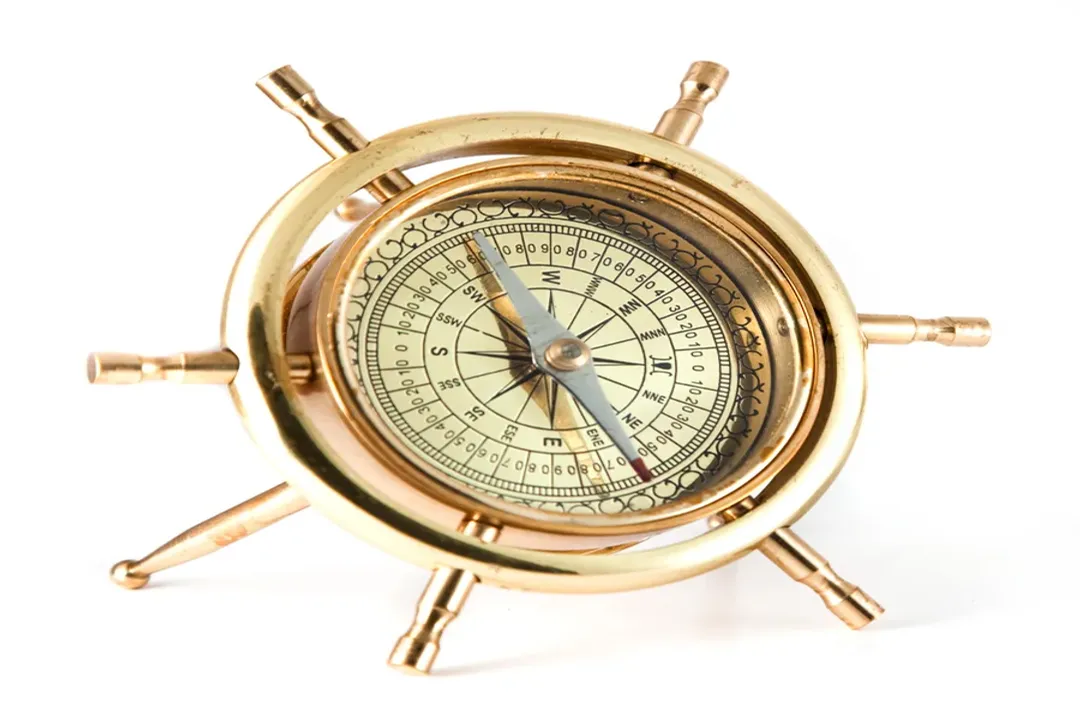
The magnetic field is generally described as a dipole—having a North Pole and a South Pole, similar to a bar magnet. [1] However, the reality is far more complex than a simple bar magnet centered perfectly beneath the geographic poles. The magnetic field structure includes non-dipole components, which represent more localized magnetic variations caused by currents closer to the core-mantle boundary. [1] This complexity is why a compass needle, which aligns itself with the local magnetic field direction, rarely points exactly toward the geographic North Pole. [1]
The magnetic poles are not fixed in place; they wander slowly over time. [8] The North Magnetic Pole, for instance, has been drifting faster in recent decades, moving from the Canadian Arctic towards Siberia. [8] This pole wandering is a continuous process linked to the movement within the outer core. [8]
Perhaps the most dramatic event associated with the geodynamo is the magnetic reversal. [8] Throughout Earth's history, the magnetic poles have flipped entirely, with the North Magnetic Pole becoming the South Magnetic Pole, and vice versa. [8] This is not a sudden event; it is a slow process lasting thousands of years, during which the field strength weakens considerably and the poles might temporarily become numerous or wander near the equator before re-establishing a reversed polarity. [8] Studying ancient rocks that locked in the magnetic orientation when they cooled allows scientists to piece together this history of reversals. [8]
To illustrate the difference between the main field and the localized effects that confuse a precise map reading, consider this comparison:
| Field Component | Origin Location | Characteristics |
|---|---|---|
| Main Dipole Field | Deepest part of the outer core | Strongest component, dictates general North/South orientation [1] |
| Non-Dipole Field | Shallower core region/Core-Mantle Boundary | Weaker, causes magnetic anomalies and secular variation (drift) [1] |
# Other Worlds
Understanding Earth's magnetic engine also benefits from looking outward. Many celestial bodies possess magnetic fields, but the mechanisms and strengths vary widely. [5] Gas giants like Jupiter and Saturn, for example, possess fields far more intense than Earth's, generated by different compositions—liquid metallic hydrogen in Jupiter's case, and water-ammonia oceans in Saturn's. [5] Conversely, planets like Mars have lost their global magnetic field entirely, leaving only localized patches of magnetism locked in ancient crustal rock, a fate Earth has so far avoided thanks to its continuously active liquid outer core. [2][5] The persistent activity deep within our own planet, driven by that hot, swirling iron, remains the architect of our vital, invisible shield. [1][3]
#Videos
How Earth Creates Its Magnetic Field - YouTube
Related Questions
#Citations
Earth's magnetic field - Wikipedia
Earth's Magnetosphere: Protecting Our Planet from Harmful Space ...
How does the Earth's core generate a magnetic field? - USGS.gov
Earth's magnetosphere - Space Weather Prediction Center - NOAA
The Outer Planets: Giant Planets: Magnetospheres
How Earth Creates Its Magnetic Field - YouTube
Earth's Magnetosphere - UCAR Center for Science Education
Earth's magnetic field and its changes through time
The Earth's Magnetic Field - Applied Physics Systems