Why does Venus not have a global magnetic field like Earth?
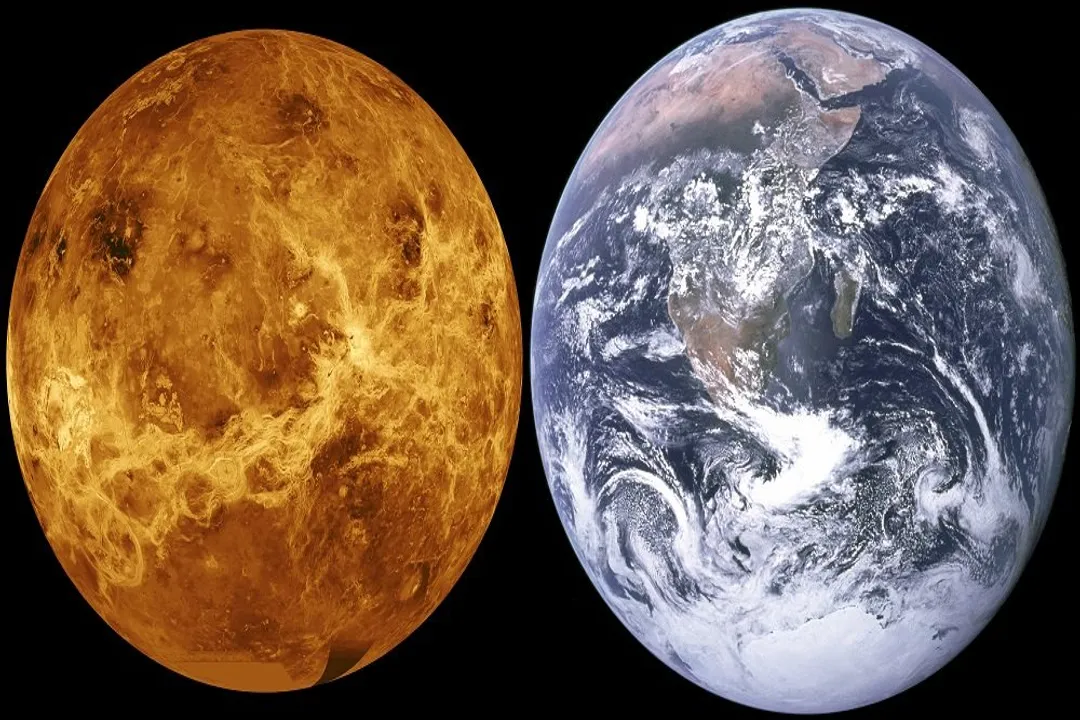
The mystery of Venus’s atmosphere begins with its magnetic field—or rather, the lack of one. While Earth possesses a powerful, planet-spanning magnetic field that deflects harmful solar radiation, Venus appears to be running without this essential shield. This absence is particularly striking when considering that both planets are similar in size and bulk composition, yet their magnetic environments are radically different. [5]
# Field Generator
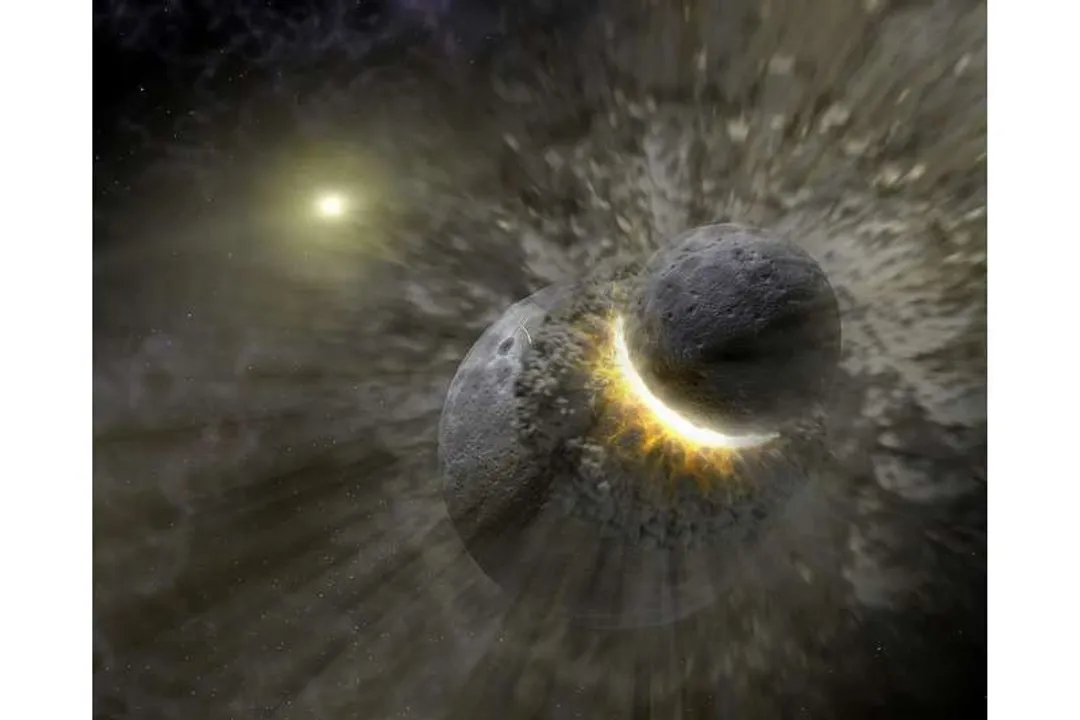
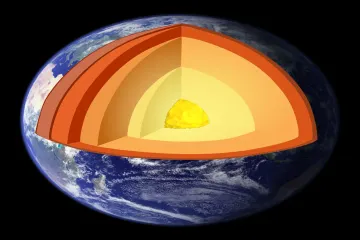
Earth maintains its protective magnetic bubble through a process known as the planetary dynamo. This mechanism requires three primary conditions to operate effectively: a region of electrically conductive fluid, the means to generate flow within that fluid (convection), and rapid planetary rotation to organize these fluid motions. [2] On Earth, the interior consists of a solid inner core surrounded by a vast ocean of liquid, mostly molten iron, which serves as the conductive fluid. As this molten material cools and solidifies near the inner core, lighter elements mix in, driving convection currents. The planet’s relatively quick spin subjects these currents to the Coriolis force, twisting them into helical patterns that act like a colossal, self-sustaining electric generator, creating the global magnetic field.
# Slow Spin
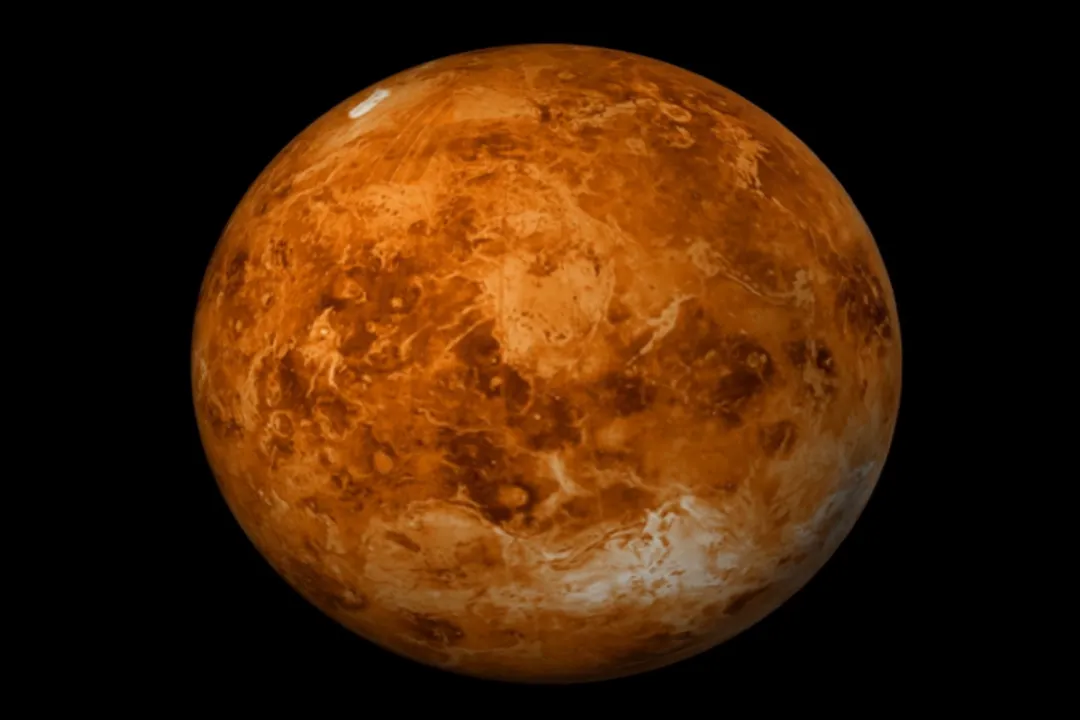
When we look at Venus, the key difference seems to lie in the rotational component necessary for the dynamo. Venus rotates incredibly slowly. While Earth completes a rotation in about 24 hours, Venus takes nearly 243 Earth days to complete a single turn on its axis. [5] This sluggish rotation is widely believed to be the primary reason why the dynamo mechanism cannot properly establish itself throughout the planet’s interior. [2] Even if Venus has a liquid, iron-rich core undergoing convection—which many planetary scientists suspect it does, based on its similarity to Earth—the lack of a sufficiently fast spin means the Coriolis forces are too weak to impose the necessary global structure on the fluid motion. [5] The motions that might exist in its core are likely turbulent and chaotic rather than organized into the coherent flow required to generate a planet-wide dipole field.
# Rotation Rate
The contrast in rotation rates is stark. Earth spins roughly 240 times faster than Venus. [5] If we imagine the dynamo as a complex machine requiring a minimum rotation speed to engage its gears, Venus appears to be moving far too slowly to ever reach that threshold for a global field. For a planet of Venus’s assumed size and thermal state, an orbital period measured in days, not months, seems necessary to sustain the required spin-up effects on the core fluid. [2]
# Ancient Fields
The question then shifts from why it doesn't have a field now to whether it ever did. Evidence for an ancient, remnant field on Venus remains a topic of active research. [6] If Venus once had a more rapid spin rate, or if its core was hotter and more vigorously convecting in the distant past, it might have supported a dynamo for a period. [6][8] Studying the magnetic properties of Venusian rocks or looking for crustal magnetic anomalies, similar to those found on Mars, could provide the definitive answer. However, the intense resurfacing events caused by volcanism on Venus might have erased much of the geological record that would preserve signatures of such an ancient magnetosphere. [6]
# Atmosphere Puzzle
Perhaps the most fascinating contradiction is how Venus managed to keep its incredibly thick atmosphere, which is far denser than Earth’s, without the protection of a global magnetic field. [1] On Earth, the solar wind—a stream of energetic particles emanating from the Sun—is deflected by the magnetosphere. [1] Without this shield, one might expect the solar wind to efficiently strip away the upper layers of the atmosphere over billions of years. [1] Venus shows this stripping occurring at the upper atmosphere level, but the bulk of its dense atmosphere remains intact. [1] Instead of a global magnetic shield, Venus possesses what is called an induced magnetosphere. [2] When the solar wind slams into the planet's ionosphere—the electrically charged upper layer of the atmosphere—it creates localized electric currents that generate a temporary, induced magnetic barrier sufficient to slow the erosion of the bulk atmosphere. [2] This suggests that while the planet lost the internal generator, the atmosphere itself has developed a secondary, albeit much weaker and more localized, defense mechanism. [1] It presents an interesting trade-off: Venus sacrificed the comprehensive protection of a global shield, instead relying on a thick, insulating atmospheric blanket that interacts directly with the solar plasma to slow down atmospheric loss. [2]
# Small World Field
The situation becomes even more perplexing when comparing Venus to Mercury. Mercury is significantly smaller than Venus, meaning it likely cooled faster and possesses a smaller, less active core. [5] Despite these factors, Mercury does possess a global magnetic field, albeit a weak one—about one percent the strength of Earth’s. [5] This observation strongly suggests that the critical factor for Venus is not just the size or the presence of a liquid core, but specifically the dynamo's kinematic requirements, particularly the rotational speed. [5] Mercury’s field generation mechanism is still debated, but the fact that the much smaller, less massive Mercury sustains a field while the Earth-sized Venus does not, strongly points to Venus's extreme slow rotation as the disqualifying factor for its dynamo. [5] If we were to accelerate Venus's spin significantly, even with its current interior structure, a magnetic field might spontaneously emerge, provided the core remains molten.
Related Questions
#Citations
How does Venus retain such a thick atmosphere despite having no ...
Why doesn't Venus have a magnetosphere? - Phys.org
Why did Venus not lose its atmosphere without a magnetic field?
Why does Venus lack a magnetic field? - NASA ADS
Why does Venus have no magnetic field despite being volcanically ...
In Search of an Ancient Global Magnetic Field on Venus | News
Which of the following most likely explains why Venus does not have ...
[PDF] Why does Venus lack a magnetic field? - UCLA
Why is Earth Magnetized and Venus Not? - Sky & Telescope