How does the rock cycle recycle Earth’s crust?
The ground beneath our feet is not static; it is engaged in a constant, slow-motion process of renewal, a geological recycling program that has been running for billions of years. This continuous reshaping of the Earth's crust is often described as the rock cycle, a concept demonstrating that rocks are not permanent fixtures but rather temporary states of materials that transition from one form to another through immense natural forces. [2][5] Understanding this cycle explains everything from the formation of massive mountain ranges to the presence of ancient minerals in modern riverbeds. [1] It is the planet's self-correcting mechanism, ensuring that the materials forming the crust are constantly being broken down, transformed, and reassembled. [4]
# Rock Origins
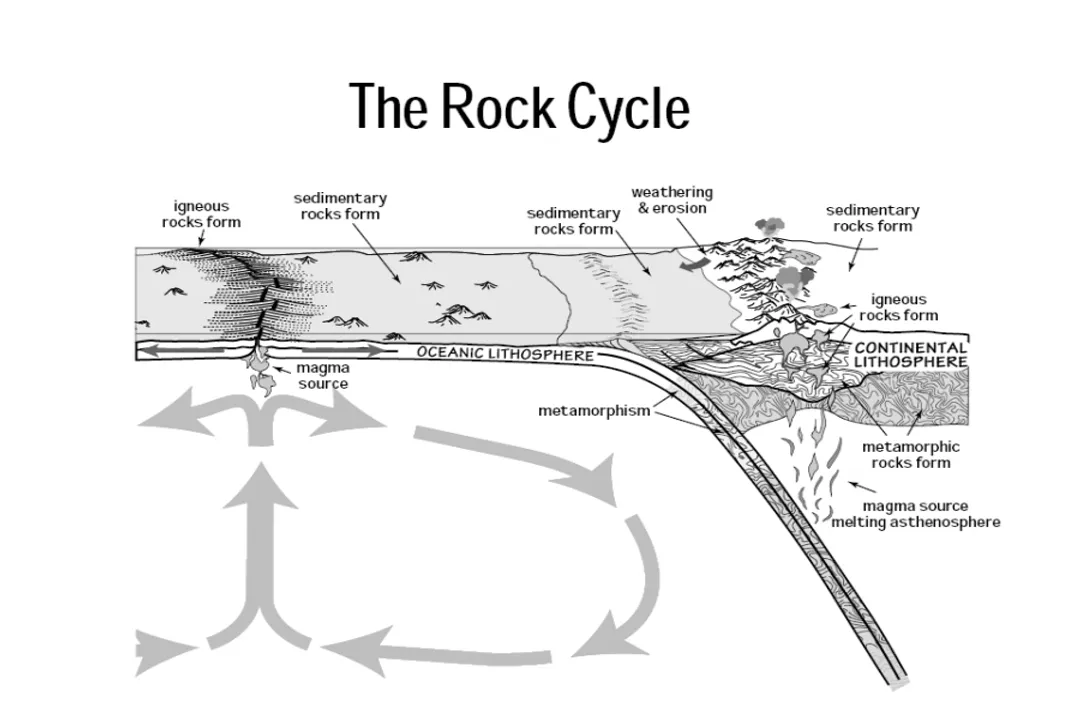
To appreciate the recycling, one must first understand the starting materials. There are three fundamental rock types recognized by geologists: igneous, sedimentary, and metamorphic. [2][3] Each type represents a different history of formation involving heat, pressure, or surface processes. [6]
# Igneous Formation
Igneous rocks are essentially the "new" rock of the Earth's crust, originating directly from the cooling and solidification of molten material, which is known as magma when underground or lava when erupted onto the surface. [2][3] The cooling rate dictates the final texture of the rock. [5] When magma cools deep beneath the surface, it does so very slowly, allowing large mineral crystals to form, resulting in intrusive igneous rocks like granite. [5] Conversely, lava that erupts during a volcanic event cools rapidly. This quick cooling prevents large crystals from developing, leading to extrusive igneous rocks, which often have a very fine-grained texture or even a glassy appearance, such as basalt or obsidian. [5] This material forms the foundation of new crust, particularly at spreading centers and volcanic hotspots. [8]
# Sediments Defined
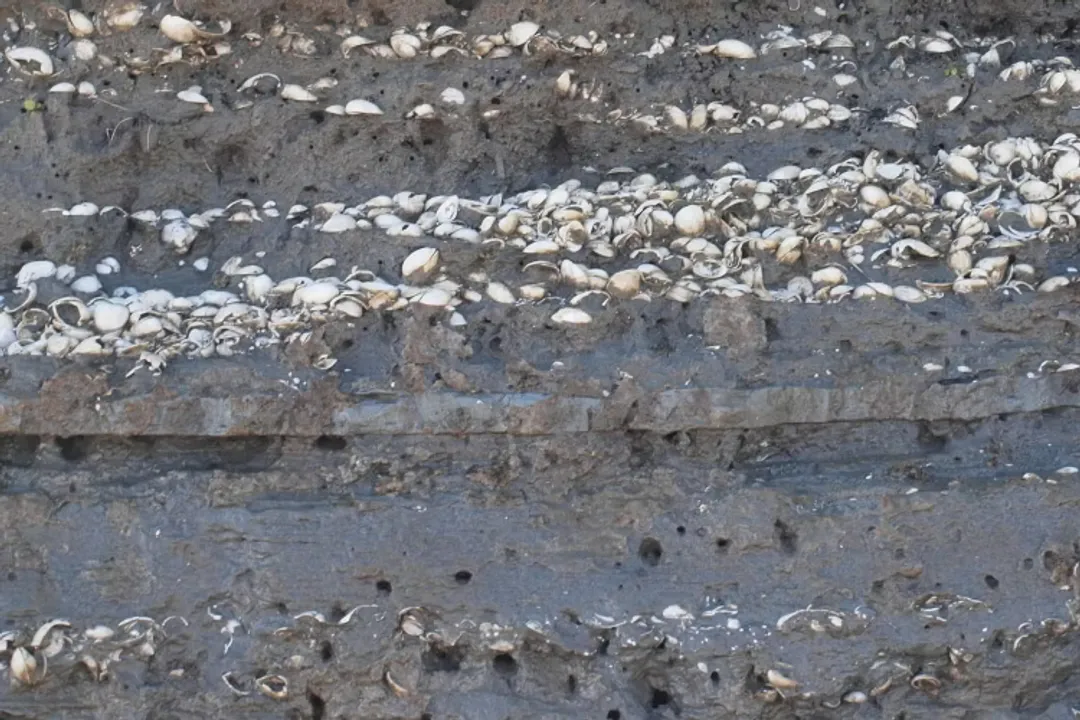
The journey of other rocks often begins with destruction. Exposure to the atmosphere and water causes existing rocks—igneous, metamorphic, or even older sedimentary types—to break down physically and chemically. [2][3] This process, known as weathering, produces fragments called sediment. [5] Once broken down, these sediments are transported by wind, water, or ice away from their source area, a process called erosion. [2][3] When the energy of the transporting agent (like a river or current) decreases, the sediments settle out in layers, a process termed deposition. [5][6] Over vast spans of time, the weight of overlying material compacts these loose sediments, and minerals dissolved in water precipitate in the spaces between grains, cementing them together to form sedimentary rocks. [3][5] Sandstone and shale are classic examples of sedimentary rocks formed this way. [2]
# Metamorphic Change
The third category, metamorphic rocks, represents a middle ground where existing rocks are fundamentally altered without completely melting. [3][5] When any rock—igneous, sedimentary, or even another metamorphic rock—is subjected to intense heat and pressure deep within the Earth, its mineral structure rearranges and recrystallizes into a new form. [2][5] This transformation can occur during tectonic collisions that create mountain belts or when rocks are buried deep under thick layers of accumulating material. [6] For instance, limestone subjected to heat and pressure can become marble, while shale transforms into slate. [5] These rocks bear the signature of the intense physical and chemical conditions they endured. [3]
# Surface Degradation
The primary mechanism for recycling crustal material on the visible surface of the planet is the creation and reworking of sedimentary rocks. [4] This loop is driven entirely by external forces—the atmosphere and the hydrosphere—and is observable on human timescales, even if the full cycle takes millions of years. [1][6]
Consider a towering granite mountain formed from cooled intrusive igneous rock. [5] Once uplifted, perhaps by tectonic collision, it immediately becomes vulnerable to ice wedging, thermal expansion/contraction, and chemical dissolution from rain. [3] Over time, the granular structure of the granite breaks apart. These tiny fragments, the sediments, are then carried downhill by streams and rivers, eventually reaching depositional basins like deltas or shallow seas. [2][5] The key takeaway here is that the very existence of the mountain is temporary; its material is destined to become sand, then sandstone, before it can potentially be re-melted or transformed into something new. [6] This surface process is fundamentally about reducing the size and sorting the components of existing rocks. [3]
# Deep Crust Transformation
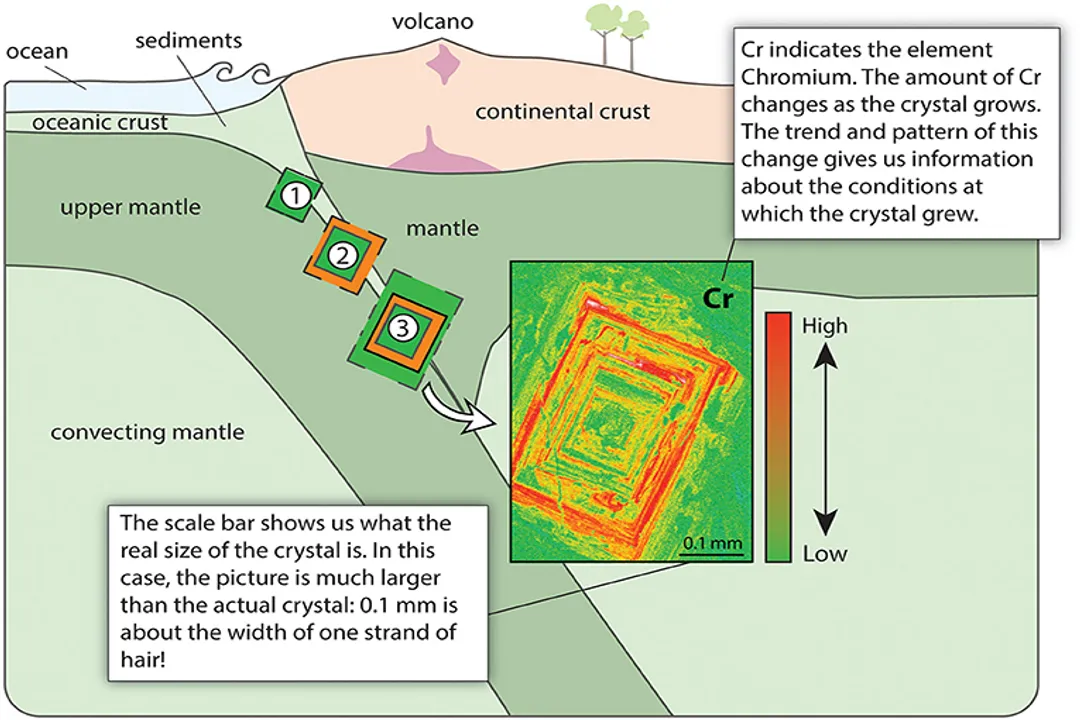
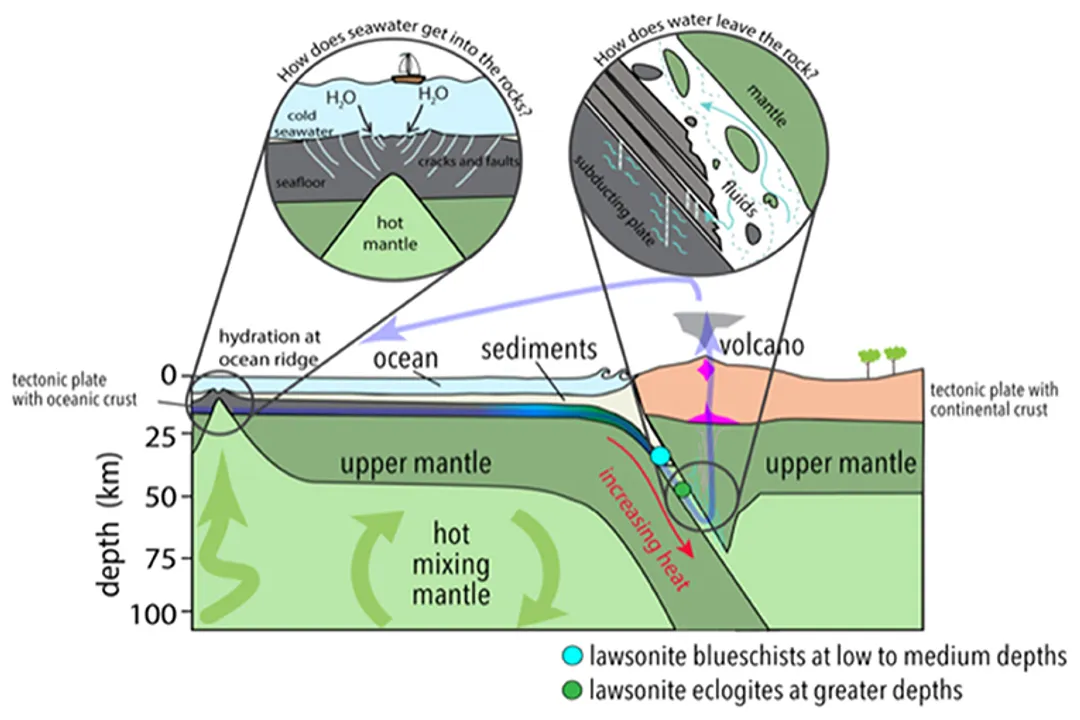
While weathering works on the surface, the massive recycling of rock into new igneous material occurs deep below, driven by plate tectonics. [1][5] This is where the recycling truly closes the loop, transforming materials that have been sedimentary or metamorphic back into molten magma. [6]
When tectonic plates converge, one plate, often the denser oceanic crust, sinks beneath another plate in a process called subduction. [5][8] As this slab descends, it carries water-bearing minerals deep into the mantle. The heat and pressure intensify, but critically, the introduced water helps to lower the melting point of the rock, triggering the formation of magma. [5] This buoyant magma then rises, leading to the formation of new continental crust through volcanic eruptions or subsurface cooling. [1][8]
Alternatively, if two continental plates collide, the immense pressure can cause deep burial and metamorphism without widespread melting. [5] However, if the collision is energetic enough, or if the crust thickens significantly, portions of the rock mass can reach depths where temperatures are high enough for them to melt, forming new magma that will eventually cool as granite. [6]
It is fascinating to consider the state change: sedimentary rocks, forged by water and air at the surface, can be carried miles down to be annihilated by heat and pressure, only to return as igneous rock—the very material that started the entire process. [2][5]
# Plate Motion Driver
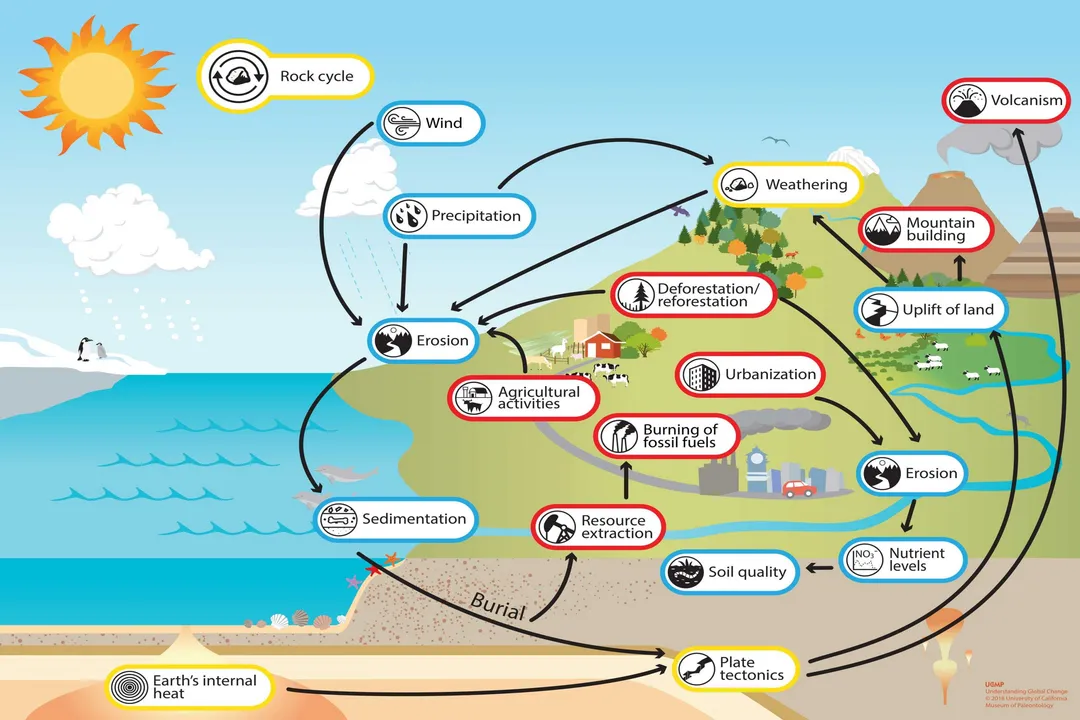
The entire rock cycle is fundamentally powered by plate tectonics, the large-scale movement of the Earth's lithospheric plates. [1][6] This engine dictates where rocks are created and where they are recycled. [5]
Consider the ocean floor, which is primarily composed of basaltic oceanic crust. [8] At mid-ocean ridges, mantle material rises, cools, and forms new crust through volcanism, representing the continuous addition of igneous rock. [1][8] This new crust is then forced away from the ridge. When this oceanic crust meets a continental plate or another oceanic plate, it is forced downward into the mantle at a subduction zone. [8] This process effectively removes old oceanic crust from circulation and drives the generation of arc volcanoes on the overriding plate, supplying fresh igneous material for the cycle. [1][5] On the continents, plate collisions cause uplift, exposing rocks to weathering, or cause burial, leading to metamorphism. [6] Without the continuous motion driven by mantle convection, the recycling process would stall, and the crust would become stagnant. [5]
| Rock Type | Formation Process | Key Driver | Example |
|---|---|---|---|
| Igneous | Cooling and solidification of magma/lava | Heat/Magma generation | Granite, Basalt [5] |
| Sedimentary | Weathering, erosion, deposition, cementation | Surface agents (water, wind) | Sandstone, Shale [2] |
| Metamorphic | Change via intense heat and pressure | Tectonic forces/Burial | Marble, Slate [5] |

# Cycle Dynamics and Time Scales
The rock cycle is not a simple, linear progression; it is a web of interconnected pathways where any rock type can change into any other type. [4][6] For example, an igneous rock can be weathered into sediment, forming a sedimentary rock, which can then be buried and metamorphosed. [5] Or, an igneous rock could be directly subjected to high pressure to become metamorphic, or it could melt again to form new igneous rock. [6]
One interesting observation arises when comparing the surface and subsurface processes. The creation of sediments through weathering is relatively swift on a geological timescale, capable of creating recognizable layers within thousands of years in an active basin. [3] However, the recycling of that sediment into a new igneous body requires it to be buried deep enough to melt, a journey that often spans tens to hundreds of millions of years, depending on tectonic activity. [1] If you were to examine a piece of granite from the Appalachian Mountains, the constituent minerals you see might have formed during the original assembly of the supercontinent Pangea, only to be exposed at the surface after the mountains began eroding again more recently. This contrast highlights the dual nature of the cycle: rapid breakdown versus slow deep transformation. [4]
Another way to look at this variability is to track the fate of rock material once it hits the deep ocean floor. Oceanic crust, made of basalt, is relatively young and dense. [8] It subducts quickly, often being recycled within about 100 to 200 million years of its creation. [8] In contrast, continental crust is lighter and tends to "float," being much more resistant to subduction. While continental rocks do undergo metamorphism and partial melting, large volumes of continental material can remain near the surface, becoming part of ancient cratons, for billions of years, making the recycling of continental crust a much slower affair than the recycling of oceanic crust. [1][8]
When we look at landscapes today, we are essentially looking at a snapshot of the cycle in action. A desert landscape dominated by sand dunes shows the active erosion/deposition phase. A region with sharply folded hills and obvious banding in the rock faces shows the metamorphic phase at work, likely near an ancient or current plate boundary. If you live near an active volcano, you are witnessing the igneous phase of crust creation firsthand. [5] This geological persistence means that the atoms that make up your shoes or the desk you are working on were once part of molten lava, then perhaps mud on an ancient sea floor, and then part of a mountain range. [6] The rock cycle is the grand, unending chemical and physical accounting system of Earth's outer shell, ensuring that resources are perpetually moved and reformed. [4]
#Videos
Earth Science 101 - Part 4 Rock Cycle - YouTube
Related Questions
#Citations
Rock cycle - Understanding Global Change
The Rock Cycle - National Geographic Education
How the Rock Cycle Recycles Earth's Crust
The rock cycle - Science Learning Hub
The Rock Cycle and Plate Tectonics - BioEd Online
Rock Cycle
How the Earth Recycles - Frontiers for Young Minds
The Oceanic Crust and Seafloor - University of Hawaii
Earth Science 101 - Part 4 Rock Cycle - YouTube