What rocks have mercury in them?
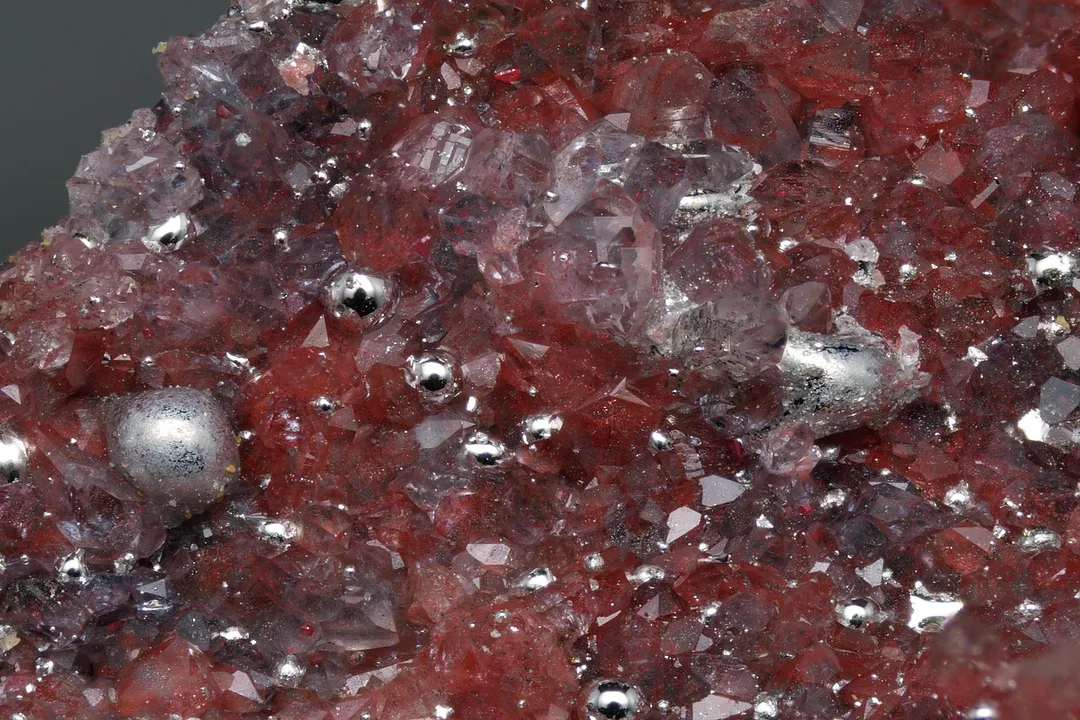
The element mercury (), known for its unique liquid state at standard conditions, rarely occurs in a pure, native metallic form within the Earth’s crust. [2] While finding a nugget of elemental mercury is fascinating, it is an exceptional event. For practical and historical purposes, the rocks that "have mercury in them" are those containing minerals where mercury is chemically bound or integrated into the crystal structure. [1][2] Understanding what rocks hold mercury means looking at specific mineral compounds, which are the true hosts for this dense element. [1]
# Cinnabar Form
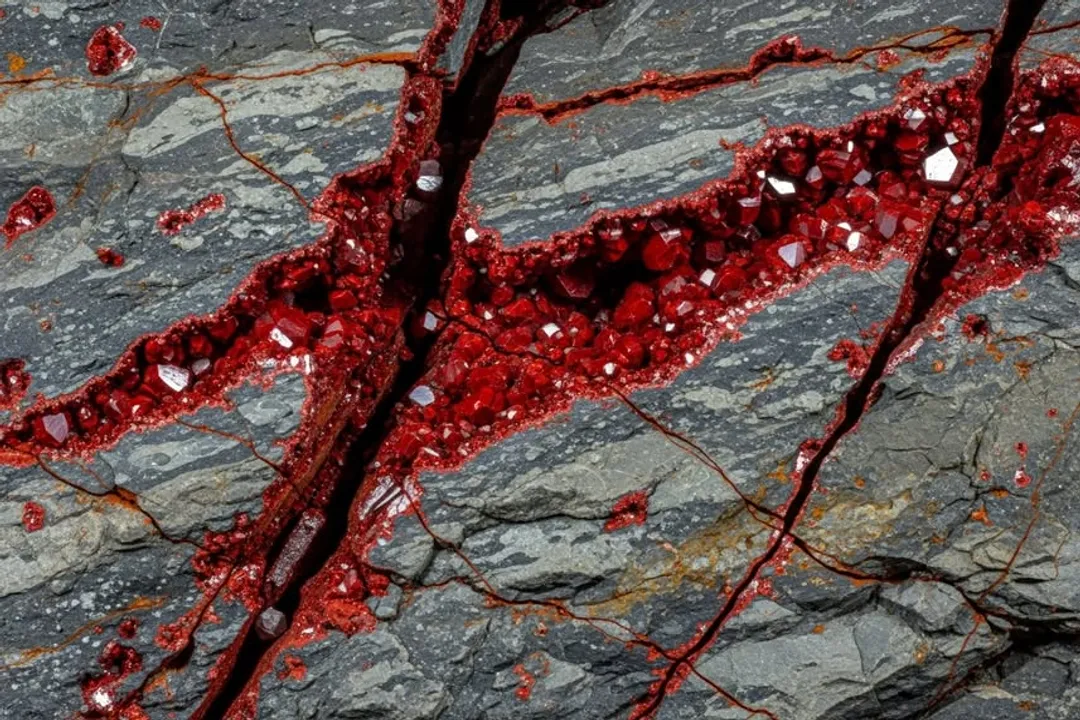
The undisputed king of mercury-bearing rocks is the mineral cinnabar (), which serves as the principal ore for mercury extraction globally. [5][6] Cinnabar is a mercuric sulfide, and its striking appearance is often a dead giveaway to its presence; it typically displays a brilliant, bright red or scarlet color, sometimes appearing vermilion. [5] This intense coloration is what made it historically valuable as a pigment long before its metallic value was fully exploited. [5]
What makes cinnabar such a potent source is its high mercury content. Chemically, cinnabar is composed of one part mercury and one part sulfur, meaning that if you look at its atomic weight breakdown, cinnabar is about 86% mercury by mass. [5] This high concentration is crucial because mercury ore grades often need to be rich to be economically viable to process. [4] To put this into perspective, while many common igneous or sedimentary rocks might contain mercury measured in parts per million (ppm), a rock classified as cinnabar ore is defined by containing a significant fraction of this 86% compound. [7]
Cinnabar deposits frequently appear in veins, breccias, or as disseminations within fractured rock formations. [1] These formations are strongly associated with areas of past or present geothermal activity, often linked to volcanism. [5] When surveyors or geologists identify a vein stained intensely red in a geothermally active region, cinnabar is the immediate suspect for the mercury source. [1][5]
# Associated Minerals
While cinnabar dominates the conversation, the presence of mercury in the lithosphere is not exclusive to a single mineral. Mercury can substitute for other metals in various sulfide, selenide, or telluride mineral structures. [1] For instance, metacinnabar () is another sulfide, though it typically crystallizes in the isometric system, unlike cinnabar's hexagonal system, and often appears black or grayish. [1]
Other minerals that specifically incorporate mercury include:
- Tiemannite (), where mercury is bound with selenium instead of sulfur. [1]
- Coloradoite (), featuring mercury and tellurium. [1]
- Schuetteite (), a rare mercuric chloride mineral. [1]
- Corderoite (), which combines mercury, sulfur, and chlorine in its structure. [1]
These minerals demonstrate that mercury’s presence is a function of the local geochemistry—what other elements are available to bond with it during mineral formation. [1] For example, if selenium is abundant alongside mercury in a hydrothermal system, you are more likely to find tiemannite rather than just cinnabar. [1] While cinnabar is the primary target for mining, these secondary minerals can sometimes be significant constituents of a mercury deposit. [1]
# Deposit Settings
The setting where these minerals precipitate dictates the type of rock they inhabit. Mercury ores are generally found in deposits related to hydrothermal activity. [5] This means hot, mineral-rich water circulated through fractures and porous zones in the host rock, depositing the dissolved minerals as the fluid cooled or chemically changed. [1]
The resulting rock matrix can vary widely. Mercury deposits are commonly found in veins cutting through older igneous or metamorphic rocks, but they can also occur in sedimentary rocks that were subsequently altered by these hot fluids. [3] In some regions, mercury mineralization is found associated with epithermal gold and silver deposits, meaning that the geological conditions favoring the deposition of those precious metals also created an environment suitable for cinnabar or other mercury minerals to form. [1][4] This association is important for exploration geologists; finding trace gold in a rock might lead to the discovery of economically relevant mercury concentrations, or vice versa. [4]
A key geological observation is the linkage to volcanic activity. The heat source driving the circulation of fluids often originates from shallow magma chambers, making mercury mineralization common near ancient volcanic conduits or areas that experienced significant tectonic fracturing. [5]
# Trace Inclusion
Beyond concentrated ore bodies, mercury exists naturally in trace amounts within many common rock types, though usually not in quantities that warrant the term "mercury rock". [3] Mercury is a trace element in most of the Earth's crust. [2] It can be incorporated into sulfide minerals that are accessory phases in broader igneous or metamorphic rocks. [1] For instance, trace mercury can be found in pyrite (), the common "fool's gold," where mercury atoms substitute for iron atoms within the crystal lattice. [1]
When examining environmental geology or soil science, understanding this ubiquitous trace presence is vital. For example, sedimentary rocks that formed in environments rich in organic matter can sometimes absorb mercury over geological time, acting as a sink for the element. [3] If you are analyzing the mercury content of crushed aggregate or construction materials, you are measuring this background level, which is vastly different from the concentrations found in a defined cinnabar vein. [7] If a region has historical mercury mining, even rocks far outside the primary vein structure may show elevated mercury levels due to secondary processes like weathering or the dumping of tailings, which introduces low-grade, dispersed mercury back into the surrounding geology. [7]
# Processing Ores
The fact that mercury is predominantly locked up in sulfide minerals like cinnabar determines how it is recovered from the rock. You cannot simply crush the rock and expect liquid mercury to flow out. The process relies on chemistry and temperature.
The standard historical method for extracting mercury from cinnabar ore involves roasting. [4] The rock is heated to a high temperature, usually above (). [4] At this temperature, the mercuric sulfide () breaks down, releasing gaseous elemental mercury () and sulfur dioxide (). [4]
This liberation of mercury as a vapor is why the element is sometimes casually referred to as "quicksilver"—it is quickly turned into a gas during the smelting process. [2] The resulting gas stream is then channeled through a condenser system, where cooling causes the gaseous mercury to revert back into its liquid metallic form, which can then be collected. [4] This step highlights an important distinction: the rock contains mercury in a solid, stable mineral form, but it must be chemically transformed via heat to yield the free, mobile element we recognize. [4]
Considering how energy-intensive this high-temperature process is, it provides insight into why mercury mining has shifted away from low-grade ores in many parts of the world; the energy cost must be offset by the market value of the recovered liquid metal. [4] When looking at a rock specimen containing cinnabar, the bright red specks represent potential energy expenditure and chemical transformation before the mercury is released, contrasting sharply with the few known occurrences of native mercury found as a readily available liquid metal. [2]
# Environmental Note
It is worth noting the environmental implications tied to these mercury-bearing rocks. While the element is naturally occurring, human activity, particularly historical mining, has redistributed it significantly. [7] Tailings from cinnabar mines or sites where mercury-containing ores were processed can leach mercury into the surrounding soil and water systems, even centuries later. [7] This means that rocks near a historic mercury mine, even if they don't contain high concentrations of primary ore minerals like cinnabar, can still present elevated mercury risks due to historical contamination that has since settled into the local geology. [7] This secondary contamination, derived from the primary mercury-bearing rocks, remains a long-term concern for site remediation efforts. [7]
Related Questions
#Citations
Native Mercury: Mineral information, data and localities. - Mindat
Mercury (element) - Wikipedia
Mercury - Arkansas Geological Survey
Mineral resource of the month: mercury
How does mercury (Hg) occur in nature? What does mercury-mining ...
Cinnabar is a toxic mercury ore - Facebook
Where is mercury mined? - Quora
Cinnabar: A toxic ore of mercury, once used as a pigment
5. Where do the world's supplies of mercury come from? - GreenFacts