What are fragments of rocks called?
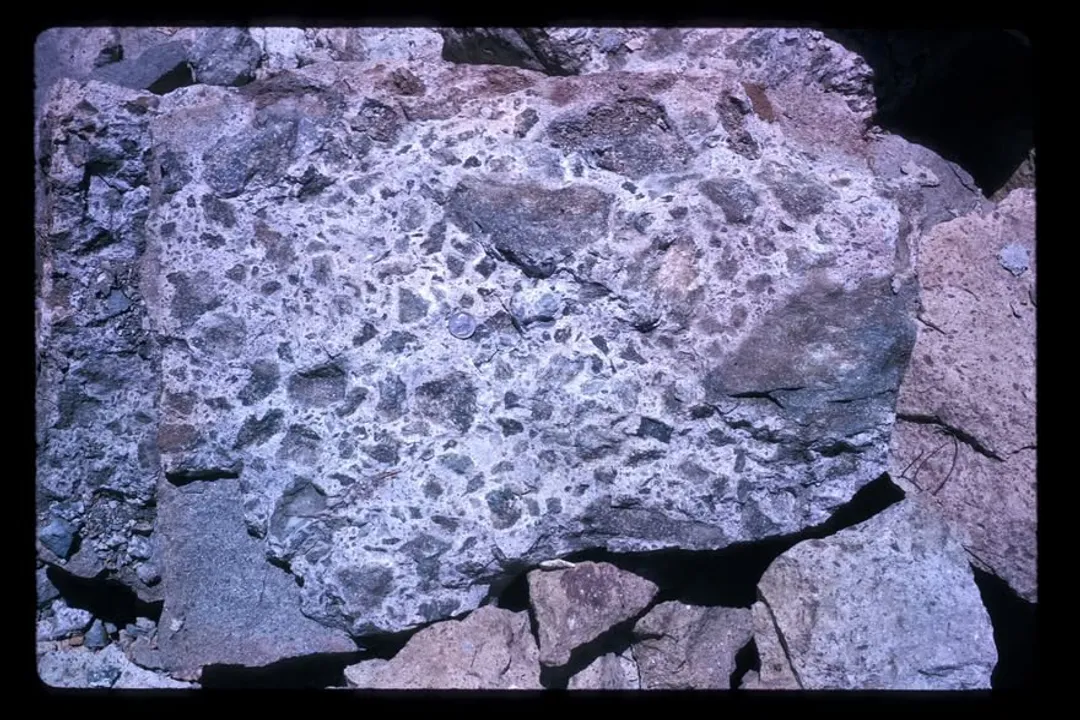
The pieces that make up many types of rock, particularly sedimentary ones, have specific names that often tell geologists a great deal about their origin and history. When we talk about fragments of rock, we are usually referring to detrital material—bits broken off from older rocks that have been transported and then deposited somewhere else. [10] These components are the building blocks for a vast category of Earth materials, and the precise terminology used depends heavily on the size, shape, and mineralogy of the piece in question. [3]
# Basic Terminology
In the broadest sense, any broken piece of rock or mineral that ends up in a sedimentary setting is often called a clast. [1] This term is very general, much like calling something a "piece" or "chunk" in everyday language, but in geology, it carries the weight of being an identifiable, transported component of a sedimentary rock. [1][2]
Contrasting this broad term, you will frequently encounter the word grain. [1] While often used interchangeably with clast, grain generally implies a smaller particle size, commonly associated with sand-sized fragments, such as those found in sandstone. [1][5] The distinction isn't always perfectly rigid, but context helps. If a geologist is describing the texture of a sandstone, they are almost certainly focusing on the grains of quartz, feldspar, and rock fragments present. [3]
# Clastic Rocks
The existence of these fragments gives rise to an entire class of rocks: clastic sedimentary rocks. [2][5] These rocks form through the accumulation, compaction, and cementation of material derived from pre-existing rocks or minerals that have been weathered and eroded. [6][7] Unlike igneous rocks, which crystallize from magma, or metamorphic rocks, which are changed by heat and pressure, clastic rocks are fundamentally defined by the fragments, or clasts, they contain. [5][10]
Clastic sedimentary rocks are classified based on the average size of their constituent fragments. [2] Imagine a massive landscape where streams and rivers are carrying debris from the mountains down to a basin. The fastest moving water carries the largest material, while the slowest water only manages to deposit the finest mud. [2] The resulting rock records that process.
# Size Classification
The size of the clast is perhaps the single most important factor in naming the resulting rock. Geologists use specific size ranges to categorize these fragments, which informs our understanding of the energy of the depositional environment. [2]
Here is a general guide to how fragments are sized when discussing clastic rocks:
| Fragment Name | Size Range (Approximate) | Associated Rock Type (If cemented) |
|---|---|---|
| Clay/Mud | < 1/256 mm | Shale or Mudstone |
| Silt | 1/256 mm to 1/16 mm | Siltstone |
| Sand | 1/16 mm to 2 mm | Sandstone |
| Pebble | 4 mm to 64 mm | Conglomerate or Breccia |
| Cobble/Boulder | > 64 mm | Rudite (a general term for coarse rocks) |
This size sorting is critical. For instance, a mudstone is made of extremely fine fragments, indicating deposition in very low-energy water, like the bottom of a deep lake or lagoon. [2] Conversely, a rock composed of cemented cobbles and boulders implies a very high-energy environment, perhaps a fast-moving river channel or a debris flow. [2]
# Lithic Distinction
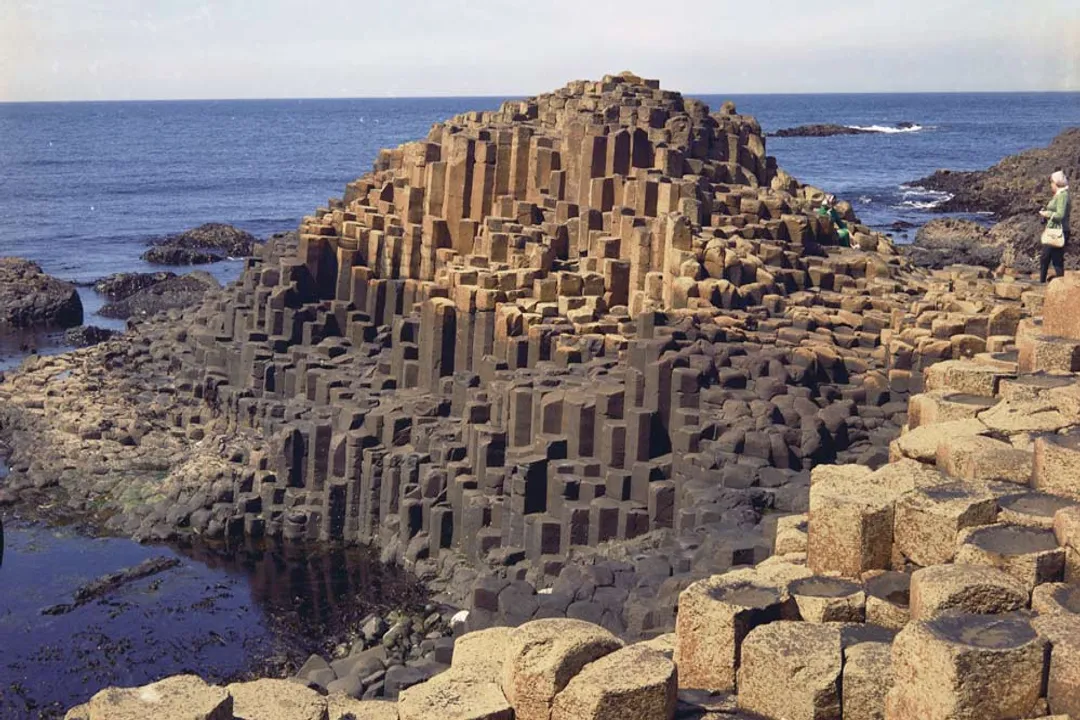
Beyond size, geologists carefully examine what the fragment is made of. This leads to a crucial distinction: the difference between a mineral grain and a lithic fragment. [3]
# Mineral Grains
A mineral grain is simply a fragment of a single, identifiable mineral. Quartz is the classic example; because it is exceptionally hard and chemically resistant to weathering, large, well-rounded quartz grains are common components of ancient rocks. [3] Feldspar is another common mineral grain, though it weathers more easily than quartz. [3]
# Rock Fragments
A lithic fragment, as the name suggests, is a piece of rock. [3] This means the fragment itself is composed of multiple interlocking mineral grains that were cemented together in the original parent rock before it was broken down again. [3] Think of it like taking a piece of concrete (the parent rock) and breaking off a chunk; the chunk of concrete is the lithic fragment, whereas a piece of pure gravel or sand within that concrete might act as a mineral grain proxy.
When analyzing sedimentary thin sections under a microscope, identifying lithic fragments versus single mineral grains helps geologists reconstruct the source area's geology. [3] If a sandstone is rich in lithic fragments, it suggests the source rock was relatively close and perhaps experienced less physical weathering, as the rock didn't have enough time or energy to be completely broken down into its individual minerals. [3] If a rock is almost entirely composed of resistant quartz grains, the source area may have been much farther away, or the material underwent extensive transport and abrasion. [3] The presence of specific lithic types can act as a direct fingerprint of the upstream geology. [3]
# Shape and Cementation

Once the size and composition are established, the shape of the fragment tells a story about its journey. This leads to the naming convention for the coarsest clastic rocks: breccia and conglomerate. [2][5]
# Angular vs. Rounded
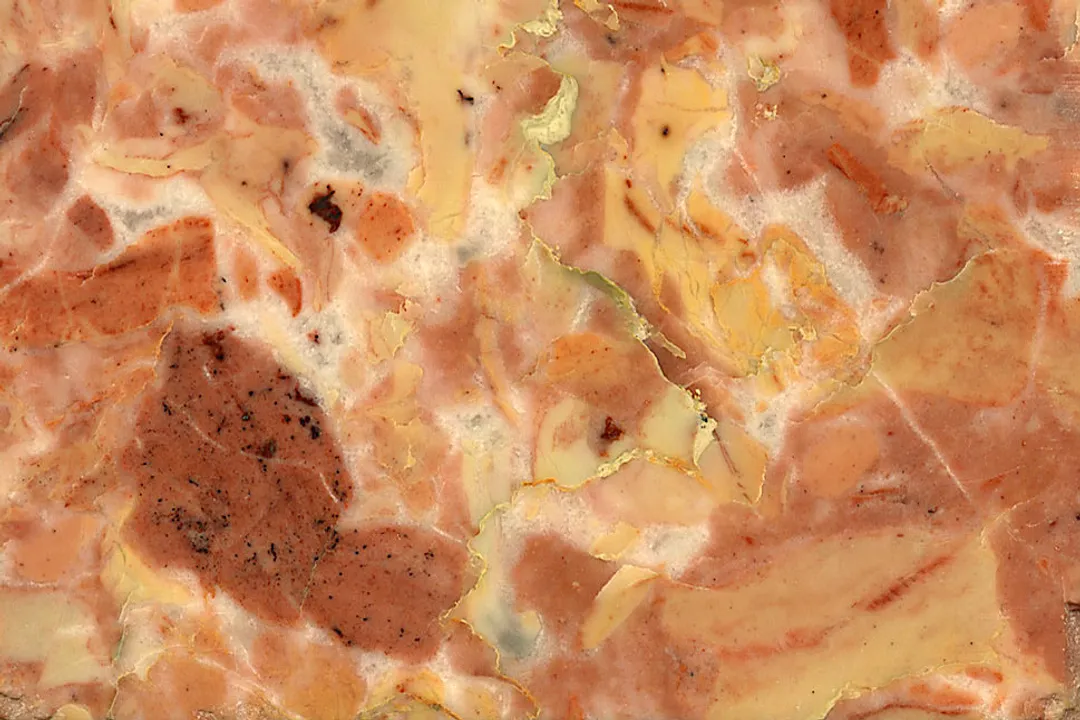
If the fragments within the rock are angular, meaning they have sharp, jagged edges, the rock is called a breccia. [2][5] Angular fragments imply they have not traveled far from their point of origin. They broke off a nearby cliff or outcrop and were deposited rapidly, perhaps through a landslide or fault movement. [8] A rock with large, angular fragments is sometimes referred to as a sedimentary breccia. [8]
If the fragments have been tumbled and smoothed by water or wind transport, resulting in a rounded shape, the rock is a conglomerate. [2][5] Rounding requires significant abrasion during transport, indicating the clasts traveled a considerable distance, often within a river system. [2]
It is interesting to note that while breccia is generally defined by angularity, a term like rudite is sometimes used as a general category for any coarse-grained clastic rock, encompassing both conglomerates and breccias. [2]
# Integrating Provenance Data
To really appreciate the value of these fragments, one can consider how their identification feeds into provenance analysis. Provenance refers to the source area of the sedimentary grains. [3] When you combine the data—size, angularity, and lithic type—a picture of the past emerges.
For example, consider a hypothetical scenario where a sequence of rocks in a coastal region contains an upward-fining trend: the lowest layer is a poorly sorted boulder/cobble breccia, grading upward into a pebble conglomerate, and finally into a coarse sandstone. This strongly suggests a transition from a high-energy, close-proximity depositional environment (like a debris fan or alluvial fan, indicated by the angular breccia) to a lower-energy, more mature river system (indicated by the rounded conglomerate and finally the sand). [2] The type of lithic fragments present in the breccia versus the sandstone would confirm if the source area remained geologically consistent during this transition. This is an essential practice in sedimentary geology, allowing us to model ancient mountain belts and drainage systems.
# Terminology Across Disciplines
While the focus above has been heavily on detrital sedimentary rocks, the term "fragment" applies elsewhere, though the context changes. For instance, in volcanology, volcanic rocks like tuff are composed of volcanic fragments, often called pyroclasts, which are pieces of rock ejected during an eruption. [9] These pyroclasts, which can be glass shards, pumice, or rock fragments, are sorted by the explosive power of the volcano, similar to how river energy sorts clastic sediments. [9] Although the process is different (explosive vs. fluvial erosion), the resulting material is a collection of fragmented pieces cemented together.
Furthermore, the term rock fragment is sometimes used in engineering or archaeological contexts to describe aggregate components. In concrete mixing, for example, the crushed rock used as aggregate is functionally a collection of rock fragments, and specifications must dictate their size and soundness, much like geological standards. [4] Although not a geological term in that context, the principle of using fragments as bulk material remains the same.
In summary, while the simplest answer to "What are fragments of rocks called?" is often clast or grain, the geological reality is much richer. [1][2] The correct term—be it a mineral grain, a lithic fragment, or a component categorized by size like a pebble or cobble—is a descriptor that unlocks the story of that piece's original home and subsequent travels across the Earth's surface. [3][10]
Related Questions
#Citations
Rock fragment
Grains: Rock Fragments (Lithic Fragments)
6.1 Clastic Sedimentary Rocks – Physical Geology
Clastic Sedimentary Rocks | Definition, Classification & ...
Sedimentary rocks - Geology - rocks and minerals
What are sedimentary rocks? | U.S. Geological Survey
a type of sedimentary rock with large angular fragments in ...
Sedimentary Rocks Lesson #13 - Volcano World
Rocks and minerals