What are the tiny particles of rocks called?

The material that makes up the Earth’s crust comes in many forms, but when we look closely at the tiny bits and pieces that constitute many common rocks, we find a distinct set of names for these fragments. These fundamental building blocks, which can be as small as invisible specks or as large as house-sized objects, are broadly categorized as sediment or, when discussing rocks made from their fragments, as clasts. [1][2][3] These particles are the foundation of what geologists call sedimentary rocks, which cover the majority of the Earth's surface, even if they only make up a small fraction of the crust by volume. [1][4]
The specific name given to these tiny particles—the "tiny particles of rocks" you're asking about—is determined primarily by their size, especially when they have been physically broken off from older rock formations through weathering. [2][3] Geologists use a standardized system to classify these grains, which allows them to read the history of how far the material traveled and what environment it settled in. [6]
# Grain Terminology
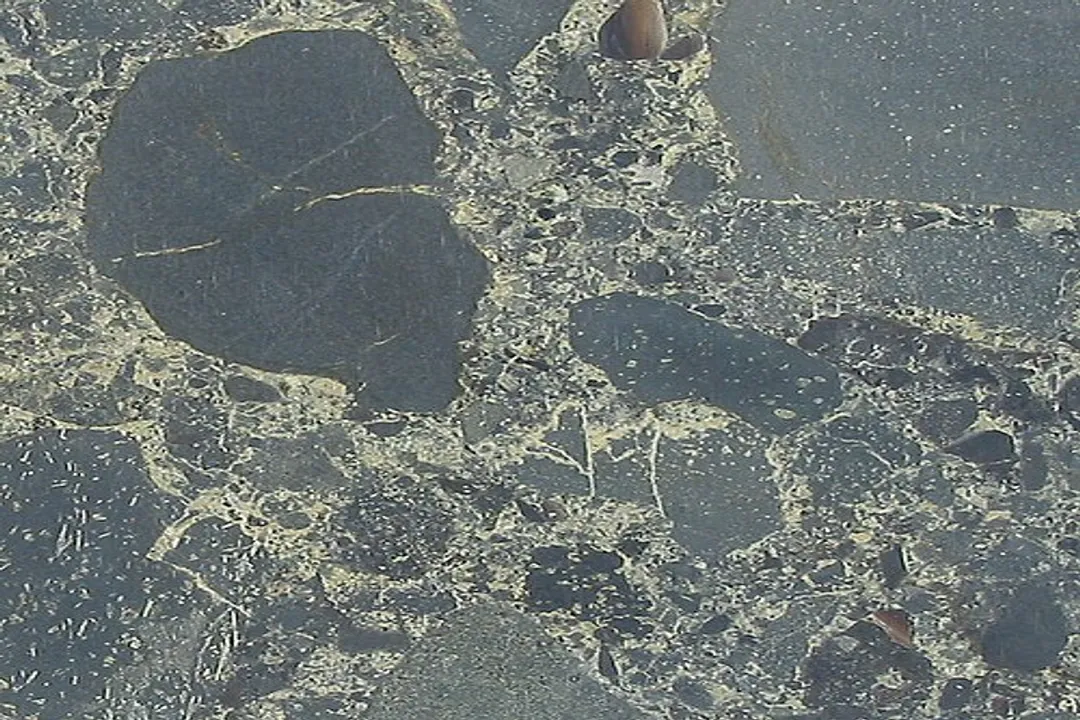
The spectrum of particle sizes, from the finest dust to the largest stones, is organized systematically. While the exact measurements can vary slightly, the general framework remains consistent, often utilizing the Wentworth scale or the related phi () scale for precise measurement. [5]
The four gross divisions for loose sediment are clay, silt, sand, and gravel. [5]
# Clay
At the microscopic end of the scale are clay particles. These are exceptionally small, often defined as having a diameter less than (). [5] Clay particles are so fine that they feel smooth to the touch, and their individual components are usually only visible under a microscope. [1][5] They often consist of small, platy mineral flakes and are easily carried by slow-moving water or even wind, allowing them to settle far from their source, sometimes thousands of kilometers away. [1][6] When this clay-sized sediment becomes compacted and hardened, it forms rocks like claystone or, more commonly, shale. [2][3] In Kansas geology, for example, clay is a very common earth substance formed by the breakdown of solid rocks. [1]
# Silt
Just slightly larger than clay is silt. Particles in this category measure between the clay limit and about (). [5] Silt particles are still too small to see clearly without magnification, but they impart a distinctly gritty texture when rubbed between the fingers or teeth, unlike the smoother feel of pure clay. [1][5] When silt particles are consolidated into rock, the resulting material is called siltstone. [2][3]
# Sand
The next recognized size bracket is sand. Sand grains are larger than silt, typically ranging in diameter from up to . [5] This is a familiar size range, often composed largely of the durable mineral quartz (), though feldspar and traces of other minerals can be present. [1][6] Sand deposits may be carried by rivers or wind before they settle. [1] Once these sand-sized particles are cemented together, the resulting rock is sandstone. [2][3]
# Gravel
Anything larger than sand falls into the gravel category, which includes particles greater than in diameter. [5] This category is further subdivided into pebbles (which are larger than but smaller than cobbles), cobbles, and boulders. [1][2][5] When gravel-sized fragments become lithified (turned into rock), they form conglomerate (if the fragments are rounded) or breccia (if the fragments are angular). [2][3]
It is important to note that while these terms strictly define particle size, the terms sediment or clast are used more generally to describe the fragments themselves, regardless of their final consolidated form. [1][3] A geologist examining a rock containing these particles considers not just their size but also their shape and how well the different sizes are mixed together. [6]
# Rock Formation Mechanics
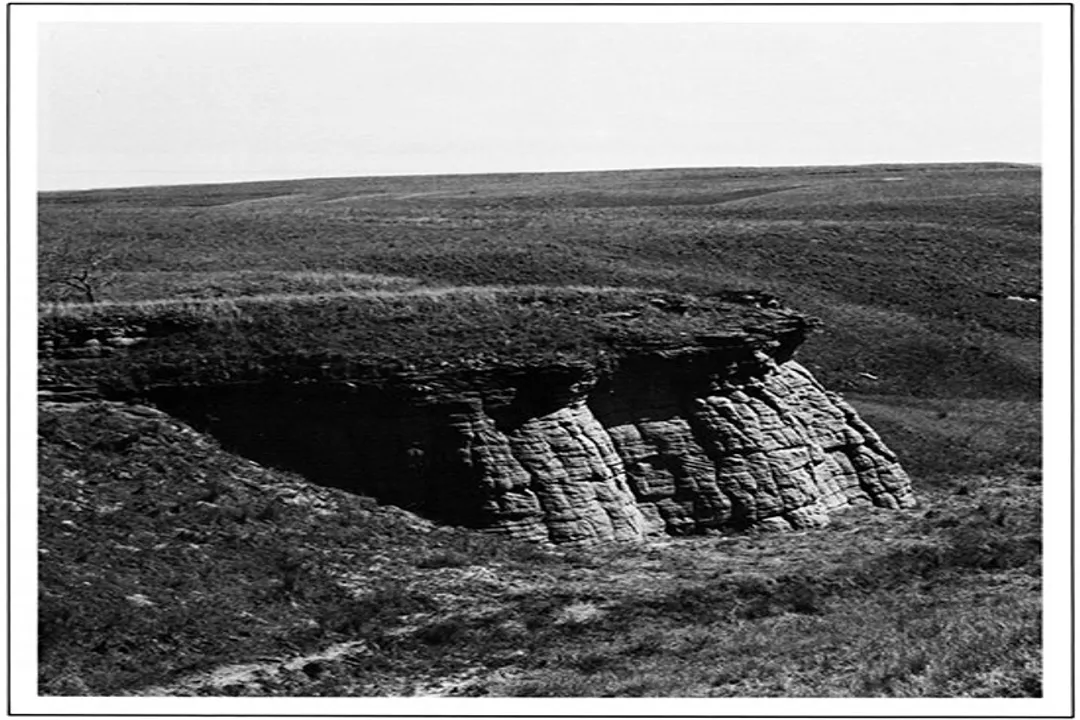
The transformation from loose particles to solid rock, a process called lithification, involves a sequence of events that fundamentally changes the nature of the original sediment. This journey begins with weathering, where existing rocks are broken down, either physically (like freezing and thawing, or simply smashing against other rocks) or chemically (like dissolution). [1]
# Transport and Sorting
Once weathered, these fragments are subject to erosion—transportation away from the source area by natural agents like water, wind, or ice. [1] Water, such as a fast-flowing river, is the most effective agent, capable of carrying large particles and causing significant abrasion.
As the carrying agent slows down—perhaps where a river enters a lake or the ocean—the particles are deposited. This deposition is rarely uniform. Larger, heavier particles, like boulders and pebbles, drop out first, while finer materials like silt and clay remain suspended longer. [1] This variation in particle settling leads to sorting; well-sorted deposits have grains that are very similar in size, indicating consistent transport energy. [6] Conversely, poorly sorted material suggests rapid deposition, perhaps from an avalanche or debris flow. [6]
# Compaction and Cementation
After deposition, the sediment must undergo lithification to become rock. This happens in two main stages under the increasing weight of overlying material as burial continues. [3][4]
- Compaction: The sheer weight of the overlying sediment squeezes the grains together, pushing out water and reducing the spaces, or porosity, between the particles. [3] This process thins the layer of sediment. [3]
- Cementation: As the sediment compacts, mineral-rich water percolates through the remaining pore spaces. Minerals precipitate out of this water, essentially gluing the grains together. [3][4] Common cements include silica () or calcium carbonate (calcite). [1]
If sediments are buried deeply, temperature and pressure increase, which can cause some original grains to dissolve slightly (pressure solution), releasing more material that can then precipitate as cement, further solidifying the rock. [3]
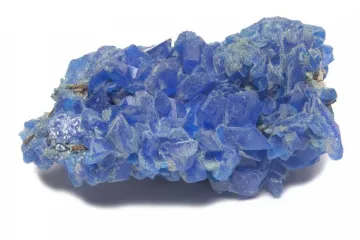
# Naming Clastic Rocks by Size
The final name for a rock composed predominantly of these broken mineral or rock fragments (a clastic sedimentary rock) is determined by the most abundant particle size present after lithification. [1][2][4]
| Predominant Particle Size | Particle Name Range (Approx.) | Resulting Rock Name | Key Characteristic |
|---|---|---|---|
| Less than | Clay | Shale or Claystone | Laminated, breaks into thin sheets (fissile) [3] |
| to | Silt | Siltstone | Gritty texture, generally not laminated [2][3] |
| to | Sand | Sandstone | Cemented sand grains; quartz is common [1][3] |
| Greater than | Gravel (Pebbles, Cobbles, Boulders) | Conglomerate or Breccia | Contains rounded (conglomerate) or angular (breccia) gravel [2][3] |
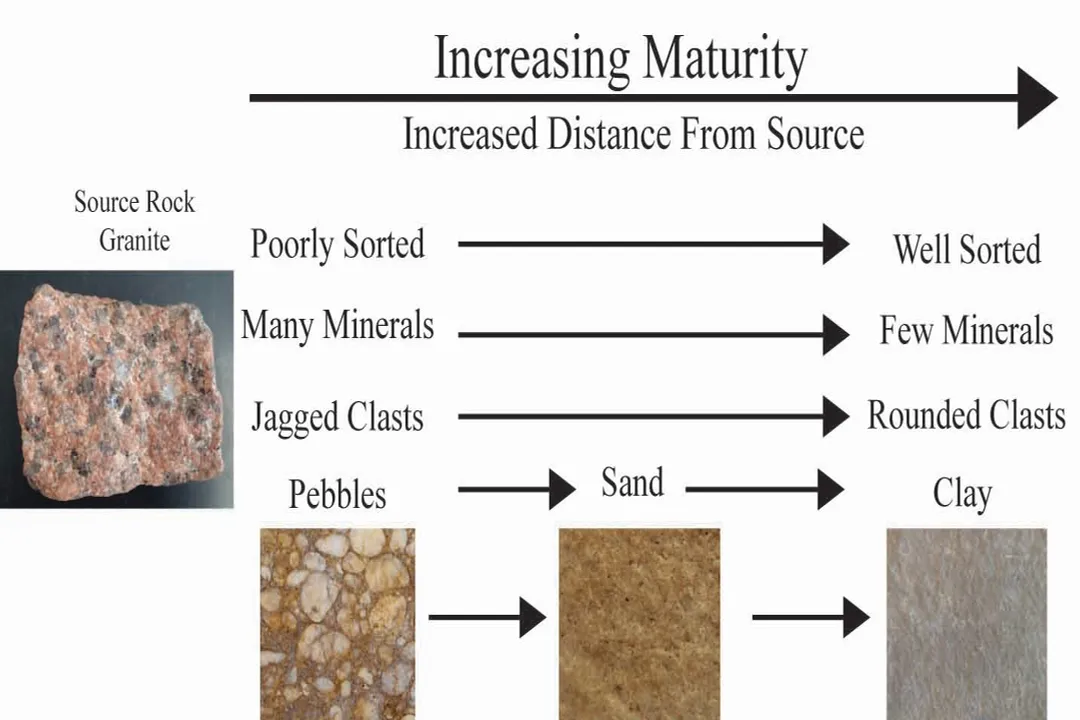
It's worth noting that the degree of rounding in gravel fragments offers a profound clue about the sediment’s history. If the fragments are rounded, it suggests a long period of transport and constant collision, resulting in a mature sediment, which forms a conglomerate. [6] If the fragments are angular, they have not traveled far or been subjected to much abrasion, indicating an immature sediment, which forms a breccia. [6] Imagine granite breaking down near a mountain peak; those sharp pieces might form a breccia nearby, but after that material travels down a long river system, the resulting sand grains will be much smoother and more uniform, leading to mature sandstone at the coast. [6]
# Particles from Life and Solution
While the clastic classification covers particles broken from older rocks, not all tiny rock constituents result from mechanical weathering. Sedimentary rocks are also categorized as biologic or chemical based on their origins, which involve different types of microscopic particles. [2][4]
# Biologic Particles
Biologic sedimentary rocks form from the accumulation of remains from once-living things. [2][4]
- Shell Fragments: Many marine organisms, like mollusks and foraminifera, secrete shells made of calcium carbonate (). [1][4] When they die, these shell bits pile up. If the rock is made mostly of these fragments, it might be called a fossiliferous limestone or coquina. [4] Some limestones are even composed of tiny, spherical calcite grains called oolites, formed by rolling back and forth in quiet, shallow waters. [1]
- Plant Matter: Deposits of plant debris, accumulating in oxygen-poor environments like swamps, become buried and compressed into coal. [1] Peat is the first stage, which can transform into lignite or bituminous coal under pressure. [1] This organic origin sometimes leads geologists to classify coal separately from purely clastic rocks. [4]
# Chemical Particles
Chemical sedimentary rocks precipitate directly out of water when the mineral concentration becomes too high, often due to evaporation. [4]
- Evaporites: When seawater evaporates, minerals that are less soluble precipitate first. Gypsum and anhydrite (calcium sulfate) settle out before halite (common salt). [1] These minerals are the tiny chemical "particles" forming these rock types. [1]
- Volcanic Ash: While not strictly a sedimentary particle in the classic sense, volcanic eruptions can deposit microscopic, glassy fragments into sedimentary environments. [1] This volcanic ash consists of tiny congealed lava fragments that cooled too quickly for crystals to form, often appearing white or bluish-gray. [1]
It's fascinating to consider how one mineral, silica (, which forms quartz), can appear as two very different components in rocks: it forms the majority of the framework grains in mature sandstone when transported physically, but it also forms chert when it precipitates chemically or biologically (like sponge skeletons) in the ocean. [6] This illustrates that whether a particle is "tiny" depends less on its absolute size and more on the process that delivered it to the depositional site.
# Reading the Landscape
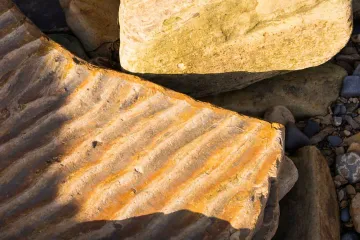
When a geologist studies a rock, they look at the size and shape of these particles to understand the history recorded in the stone. [6] This process of analysis is a form of geological detective work. For instance, finding angular, poorly sorted gravel suggests a powerful, short-lived event like a landslide or debris flow, whereas finding well-rounded, highly sorted sand implies a long, patient journey via a river or persistent wave action. [6]
The presence of very fine clay particles in shale, which can be carried by wind over vast distances, suggests a quiet depositional environment, far removed from the energetic sources that churn out pebbles and sand. [1][6] If you look at a cliff face composed of sedimentary layers, the transition from coarse layers (like conglomerate) to very fine layers (like shale) tells a story of changing river energy or shifting shorelines over geologic time. The small, gritty feel of silt in siltstone sits right between the soft, moldable quality of clay and the distinct grittiness of true sand, marking a specific threshold in how easily the original material could be carried by water or air. [1][5] These fundamental particles—clay, silt, sand, and gravel—are the alphabet used to write the epic history contained within sedimentary rocks.
Related Questions
#Citations
Clastic rock - Wikipedia
What are sedimentary rocks? | U.S. Geological Survey - USGS.gov
Sedimentary Rocks - Geology (U.S. National Park Service)
sedimentary rock - Kids | Britannica Kids | Homework Help
Particle size - ALEX STREKEISEN
KGS--Kansas Rocks and Minerals
Sedimentary Rocks Lesson #13 - Volcano World
Overview of Sedimentary Rocks – Laboratory Manual for Earth ...