What is a meteor commonly called?
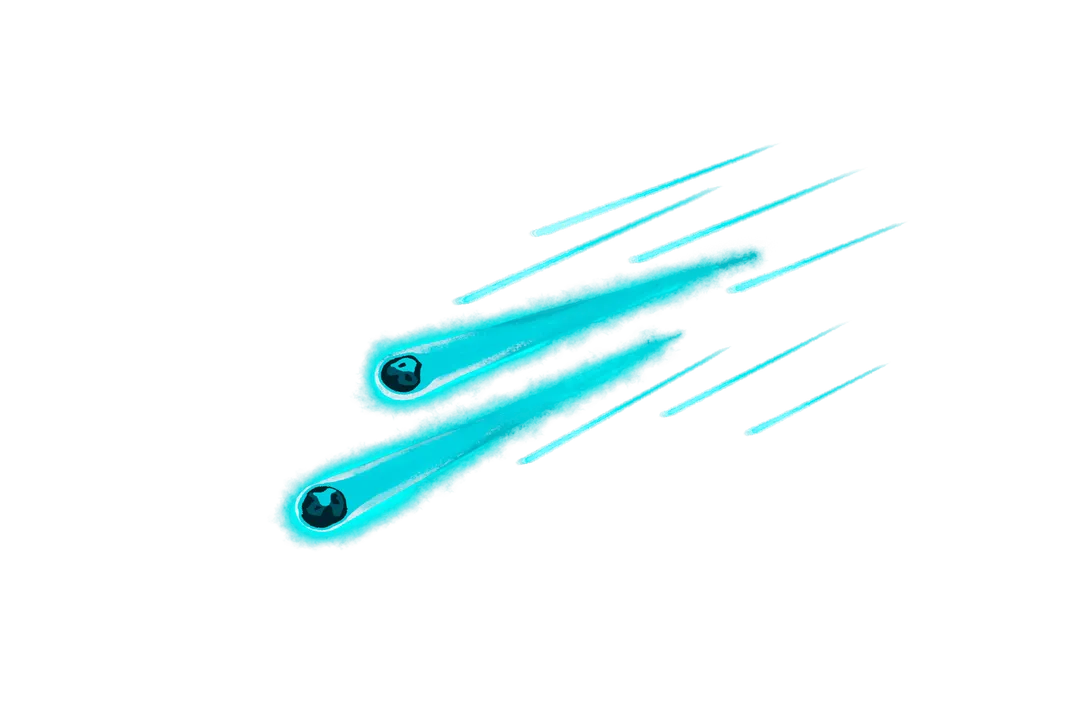
The celestial streak of light that briefly illuminates the night sky, often prompting a quick wish, is most commonly called a shooting star or a falling star. This folksy nomenclature is deeply ingrained in human culture, harkening back to times when such transient flashes were interpreted as actual celestial bodies descending to Earth. However, scientifically speaking, the term meteor describes neither a star nor a physical object, but rather the visible phenomenon created when a tiny piece of space debris, known as a meteoroid, enters the Earth's atmosphere at tremendous velocity.
# Light Streak

The meteor itself is the luminous event, not the rock causing it. When a meteoroid—a chunk of rock or metal traveling through space—intersects Earth's orbital path, it begins a fiery, rapid descent. The spectacle occurs typically between about 80 and 120 kilometers above the surface. It is not the friction of air rubbing against the object that causes the intense heat, but rather the sudden, massive compression of the air in front of the rapidly moving particle. This compression raises the surface temperature of the meteoroid to well over 2,000 Kelvin. At this point, the outer layers of the object begin to vaporize in a process called ablation. It is the resulting cloud of superheated, vaporized atoms colliding with the surrounding atmospheric molecules—creating an ionized trail that then de-excites—that produces the bright streak we call the meteor. The resulting trail of light can be many kilometers long, sometimes spanning 20 to 30 kilometers, yet is often only about a meter wide. The different colors sometimes visible in these trails are the result of different atmospheric molecules de-exciting after being energized by the ablation process. The entire visible event is usually very brief, lasting between 0.1 and 10 seconds before the object decelerates enough for ablation to stop.
# Object in Space
To fully grasp what a meteor is, one must first identify its source object: the meteoroid. A meteoroid is defined as a solid body navigating interplanetary space, distinctly smaller than an asteroid but larger than an atom. While historical definitions have shifted, modern astronomical conventions often place the size range for a meteoroid between about 30 micrometers (a very fine grain of dust) and one meter in diameter. Objects smaller than this minimum threshold are generally categorized as micrometeoroids or simply space dust.
Meteoroids are the true space rocks that become meteors upon atmospheric entry, and they originate from a few primary sources. The vast majority are fragments broken off from larger asteroids or comets due to impacts or gravitational perturbations. Asteroids are primarily rocky or metallic bodies orbiting the Sun, mostly residing in the main asteroid belt between Mars and Jupiter. Comets, conversely, are often described as "icy dirtballs," composed of ice and dust that vaporizes near the Sun to create a visible tail. A less common source of meteoroids is debris ejected from larger bodies like the Moon or Mars after a significant impact event elsewhere.
The speed at which these particles travel is staggering, ranging from approximately 11 km/s up to about 72 km/s as they approach Earth. This speed difference is critical to the resulting phenomenon. For instance, when Earth encounters a meteoroid moving in a retrograde orbit—meaning it's traveling opposite to Earth's direction—the combined speed can reach about 71 km/s. The average speed of entry, however, is closer to 20 km/s relative to Earth’s orbit.
It is worth noting that the distinction between the smallest asteroids and the largest meteoroids can become scientifically ambiguous. Since the ability to discover an object depends on Earth-bound telescopes, the minimum size for an officially designated asteroid can blur with the upper limit of a meteoroid, which is why an object only one meter across might sometimes be classified as an asteroid, complicating a perfectly neat separation based solely on size.
# Survivor on Ground
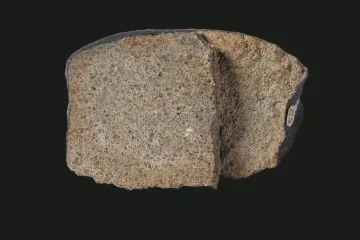
If the object causing the light show is large enough to resist complete ablation during its fiery transit, it survives the trip through the atmosphere and lands on the planet’s surface. Once it has successfully impacted the ground, this surviving remnant is officially termed a meteorite. Meteorites are therefore the physical pieces of extraterrestrial matter that we can hold and study, making them considerably rarer than the momentary flashes seen overhead.
The structure and chemistry of a meteoroid are altered significantly by the intense heat and the force of the impact upon arrival. Scientists classify meteorites primarily into three groups: iron, stone, and stony-iron. Stone meteorites are further divided; those containing grain-like inclusions called chondrules are called chondrites, while those lacking these features, typically formed from extraterrestrial igneous activity, are achondrites. Studying meteorites provides a direct window into the material science of the early solar system, as many formed around 4.6 billion years ago.
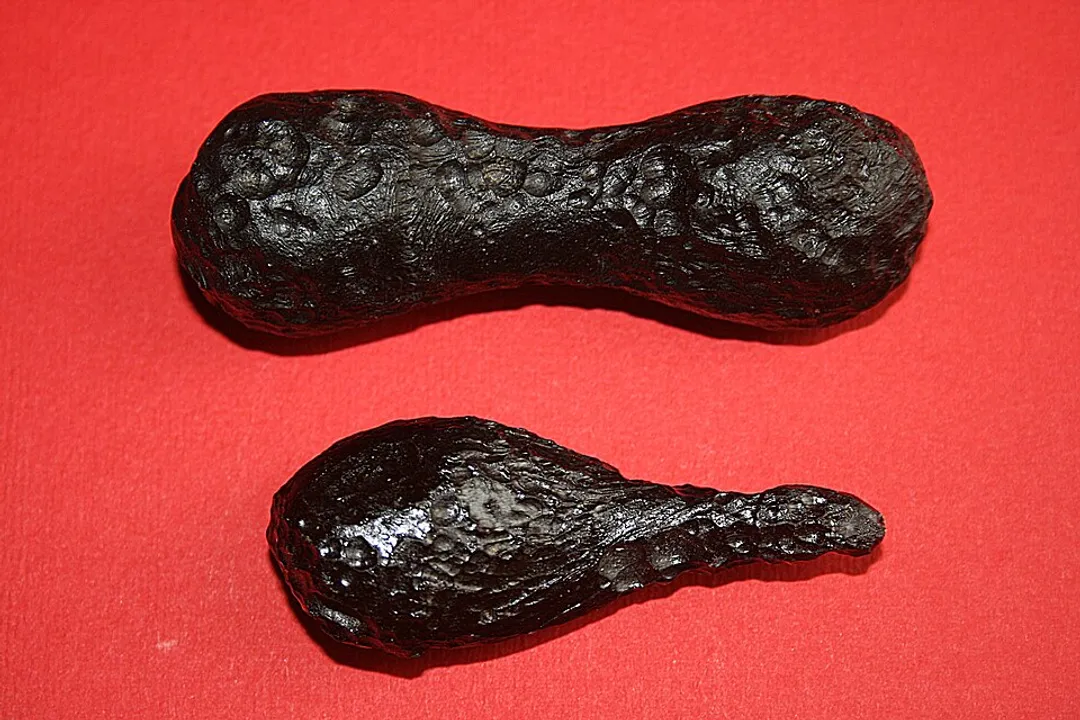
While millions of meteoroids enter the atmosphere daily—totaling perhaps 15,000 tonnes of material annually—only a small fraction results in a tangible meteorite find, estimated at around a thousand falls per year, many of which land harmlessly in the ocean. Some very energetic impacts may vaporize the entire object, leaving no recoverable meteorite behind. Furthermore, terrestrial material ejected during a high-velocity impact event can cool rapidly into glass-like objects called tektites, which are often mistaken for actual meteorites.
# Brilliant Display
While the term meteor covers all streaks of light, certain types garner specific common names based on their intensity or frequency. As mentioned, the most common synonym is "shooting star".
When a meteoroid is particularly large—say, the size of a baseball or bigger—it can burn with the brilliance of the full moon, potentially remaining visible even in daylight. These exceptionally bright meteors are known as fireballs. If a fireball is powerful enough to detonate while still in flight, creating an audible boom and perhaps showering sparks, it is called a bolide. Astronomically, "bolide" describes the explosion, though geologists sometimes use it more generically to imply a very large, crater-forming projectile whose exact nature (asteroid or comet) is unknown. One notable historical example of a significant airburst, though its origin remains debated between a meteoroid and a small comet, was the event over Siberia in 1908, which felled trees over a wide area.
When these events occur not as random, sporadic sightings but as a coordinated celestial event, we witness a meteor shower. A meteor shower happens when Earth passes through a localized stream of debris—a track of particles left behind by a passing comet or, less frequently, an asteroid. Because these debris trails follow predictable orbits around the Sun, meteor showers are annual occurrences. The intensity can vary greatly; when the debris is spread thinly, the Earth encounters a steady rate of meteors each year, but if the debris is bunched up along the orbit, a particularly spectacular display can occur in certain years.
The illusion of these parallel-traveling objects appearing to stream from a single point in the sky is known as the radiant, an effect similar to how railroad tracks appear to converge in the distance. Meteor showers are named for the constellation closest to this radiant point; for instance, the Perseids appear near the constellation Perseus.
If one were to consider the sheer volume of material, it’s interesting to realize that even the most minute particles contribute significantly. While most people focus on the bright flashes, an estimated fifty to a hundred tons of microscopic meteorites—too small to form a visible streak—accumulate on Earth's surface daily. These micrometeoroids pass through the atmosphere unnoticed, a constant, gentle rain compared to the dramatic, rare event of a house-sized asteroid impact.
Thinking about observing these events is where the scientific data translates into practical advice. For example, knowing that the brightest ablation occurs around 100 km altitude suggests that light pollution, which is usually worst near the ground, has less impact on creating the streak than it does on seeing it fade out. However, since the trail itself is only visible for seconds, getting away from artificial light sources is essential to catch the event before it vanishes. Furthermore, observing showers just before dawn is often recommended because, as the Earth rotates toward the radiant point, the relative speed of the incoming particles increases, potentially leading to a higher hourly count of visible meteors. The radiant being higher in the sky also means a longer viewing window before sunrise washes out the display.
# Defining Stages
To solidify the understanding, it helps to view the meteor as the middle stage of a three-part classification based on location. A helpful mental model is to track the object’s location relative to the observer:
| Term | Location | Description | Common Naming Reference |
|---|---|---|---|
| Meteoroid | Interplanetary Space | The original, small solid object orbiting the Sun. | N/A |
| Meteor | Earth's Atmosphere | The streak of light seen when the meteoroid burns up due to atmospheric compression. | Shooting Star, Falling Star |
| Meteorite | Earth's Surface | The remnant that survives atmospheric entry and lands on the ground. | N/A |
The sheer difference in scale between the initial object and the final piece can be surprising. A meteoroid the size of a small car might be completely consumed in the atmosphere, resulting only in a beautiful fireball, whereas a piece only a few centimeters across could survive to become a small meteorite. This variability in survivability underscores why the visible streak—the meteor—is such a common phenomenon compared to the landing of a meteorite; the atmosphere acts as a very effective, natural shield against the majority of incoming space debris.
Related Questions
#Citations
Meteoroid - Wikipedia
Asteroids, Comets, Meteors, and Meteorites | NISE Network
Asteroid or Meteor: What's the Difference? | NASA Space Place
Meteor | COSMOS - Centre for Astrophysics and Supercomputing
Space Rocks Explained: From Asteroids to Meteor Showers
TPWD: Meteors -- Young Naturalist
Meteor, a space debris particle flying through the atmosphere