What was Galileo Galilei's telescope called?
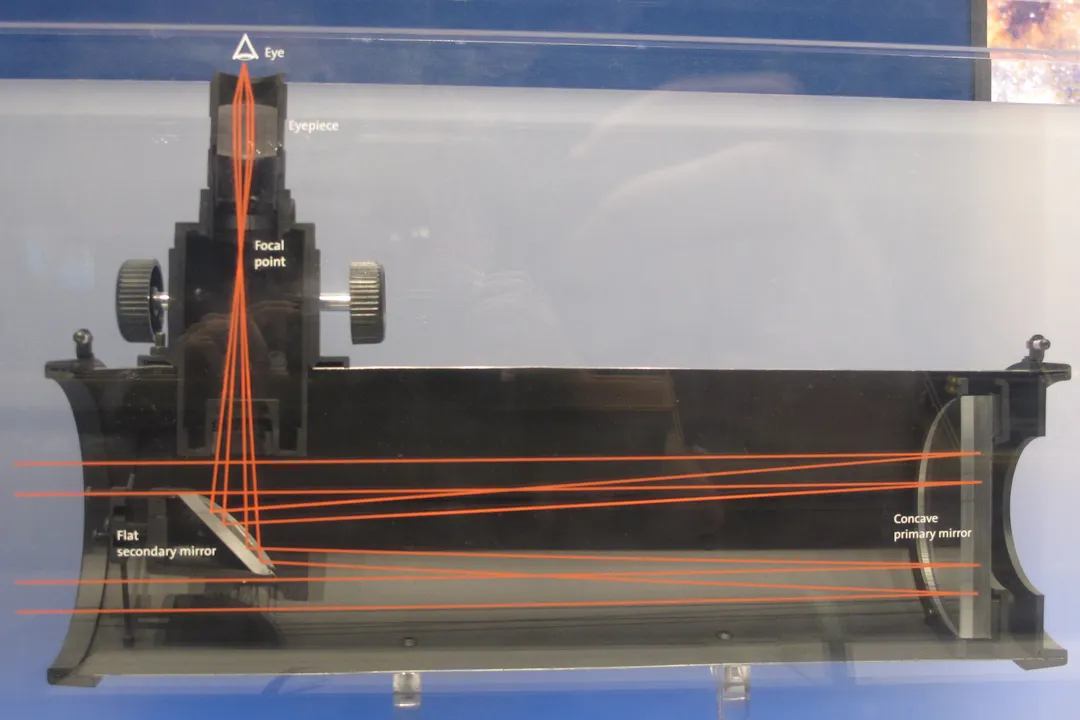
The instrument that Galileo Galilei famously turned toward the heavens, leading to revolutionary discoveries, is generally known today by its classification: the refracting telescope. While we might expect such a world-changing device to have a proper, unique name, like the Voyager or the Hubble, Galileo referred to his instruments simply as a telescope or, in his initial descriptions, as a spyglass. What truly defined his contribution was not a new name, but the fact that he was one of the first, if not the very first, to use such an instrument systematically for serious astronomical observation.
# Dutch Precursor
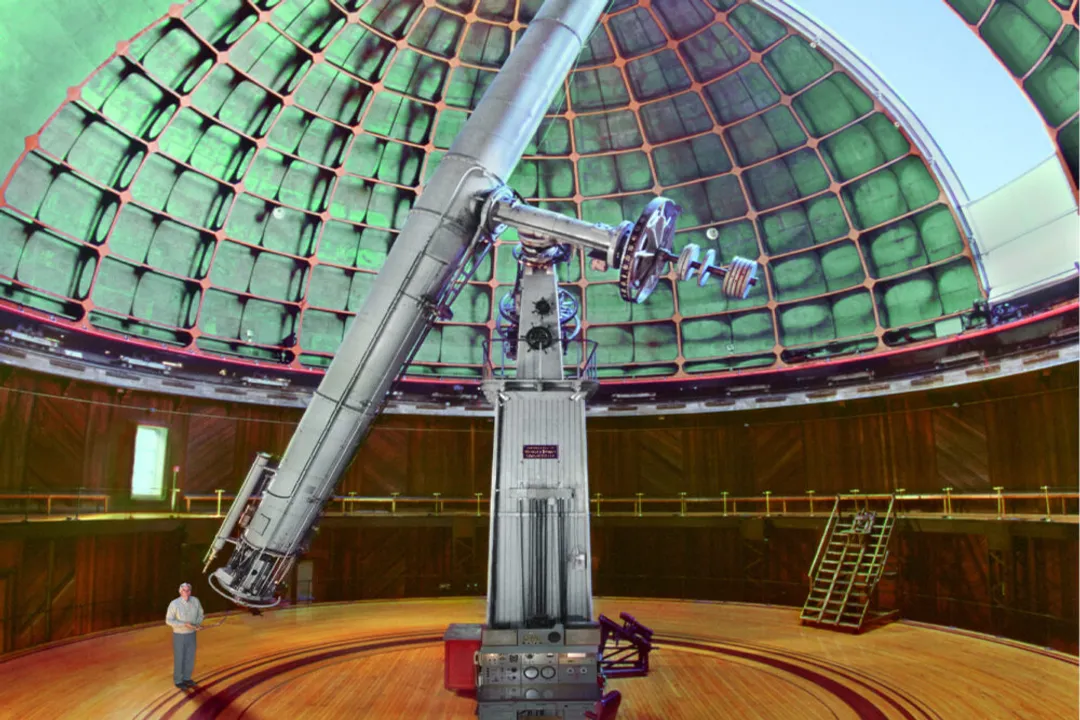
Galileo did not invent the concept of the telescope entirely from scratch. The origin story of this light-gathering device traces back to the Netherlands around 1608. The invention is often credited to spectacles-maker Hans Lippershey, who applied for a patent for an instrument that could make distant objects appear nearer. Other spectacle makers, like Jacob Metius and Zacharias Janssen, were also involved in early designs. These initial Dutch instruments were essentially simple two-lens systems that produced a magnified, but often blurry and reversed, image. They were primarily marketed as military or nautical aids—tools for seeing ships on the horizon—and were known then as spyglasses.
When news of this optical novelty reached Galileo in Padua in 1609, he immediately understood its potential extended far beyond terrestrial viewing. He wrote in Sidereus Nuncius that he heard about the instrument, and within a day, he began experimenting to recreate and improve upon it.
# Refracting Design
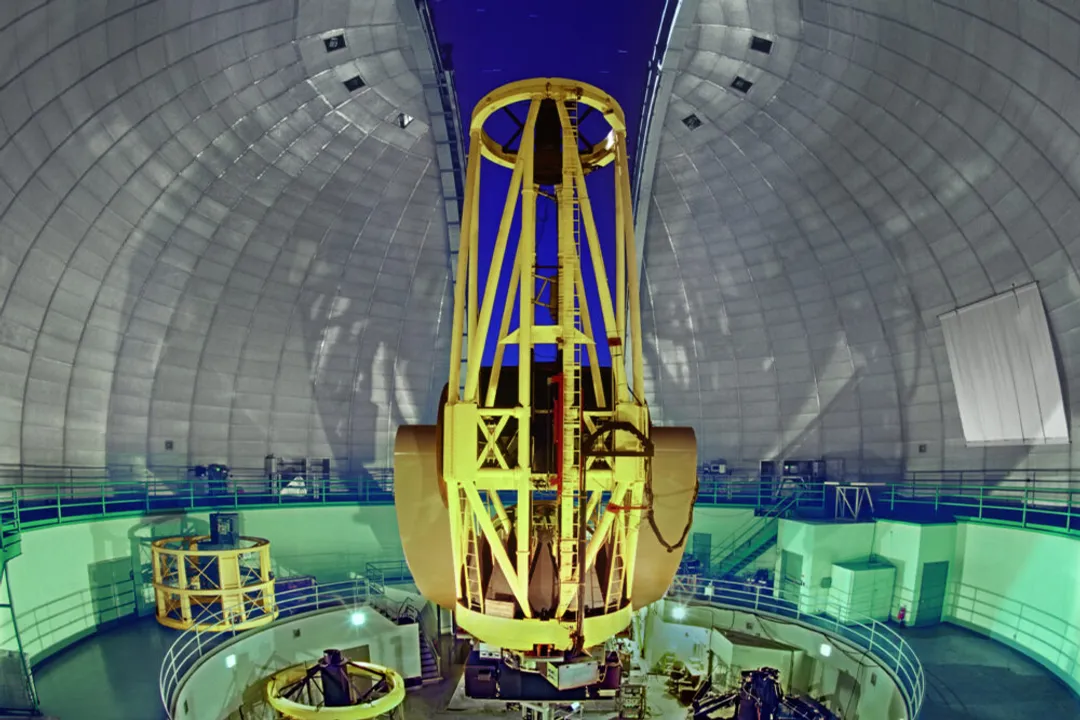
The technology employed by Galileo was fundamentally based on refraction, which is the bending of light as it passes through lenses. This places his device firmly in the category of a refracting telescope, the same basic optical principle used in modern refractors and classic binoculars. A simple refractor consists of two main lenses: the objective lens at the front, which collects the light, and the eyepiece lens, which magnifies the image formed by the objective.
What set Galileo's work apart from the simple spyglasses being sold in the Netherlands was his obsessive refinement of the lens combination and the resulting magnification. While the early Dutch models offered only about magnification, Galileo was rapidly improving his instruments to achieve greater power. He experimented with different glass types, grinding techniques, and precise curvatures to correct optical aberrations inherent in simple designs. His final, best instruments, which he used for his most famous observations, achieved magnifications of around 20x to 30x.
It is fascinating to put that magnification into context. A modern, low-end amateur telescope can easily achieve magnification on a clear night, and even a common pair of binoculars offers a wider field of view and far superior image clarity. Galileo’s achievement was not in raw power, but in extracting such significant detail—enough to overturn centuries of cosmological thought—from such a limited optical capability, all handcrafted by him.
# Optical Power
Galileo’s construction process was meticulous. He crafted his own lenses, often starting with glass blanks that were sometimes imperfect or irregular. One of his most significant early steps was correctly aligning the objective and the eyepiece to produce an upright image, rather than the inverted image common in the initial Dutch models. This was crucial for sustained observation, as viewing the sky upside down through a instrument is difficult for orientation.
The actual construction of the tube often involved securing the lenses within a long, cardboard or wooden cylinder. To manage the light-gathering and resolution—the ability to distinguish fine details—the focal length of the objective lens had to be relatively long compared to the aperture (the diameter of the lens opening). Shorter focal lengths, while making the telescope physically shorter, introduced severe chromatic and spherical aberrations, resulting in fuzzy, colored fringes around objects. Galileo managed to build instruments with focal lengths reaching several feet to achieve the best possible view for his era.
An often overlooked factor, crucial for his detailed charting of the Moon, was the stability of the mounting. While the lenses were his primary innovation, mounting the long tube still posed a significant mechanical challenge. A slight tremor from the wind or the movement of his hand would translate into a massive, blurry shake at magnification. He had to devise ways to steady the instrument, likely using rudimentary mounts or bracing it against a solid structure, allowing the observer to lock onto a celestial body long enough to make careful sketches and notes.
# Celestial Sights
The true measure of Galileo’s telescope—what it was for—lies in what he saw through it between 1609 and 1610. His observations, documented in Sidereus Nuncius (Starry Messenger), fundamentally challenged the long-held Aristotelian and Ptolemaic view of a perfect, unchanging heavens.
His key findings include:
- The Moon: He did not see a smooth, perfect sphere as had been believed for millennia. Instead, his telescope revealed mountains, valleys, and craters on the lunar surface, indicating that the Moon was a world made of rock and soil, much like the Earth.
- The Milky Way: The fuzzy band across the night sky was resolved by his instrument into countless individual, faint stars previously invisible to the naked eye.
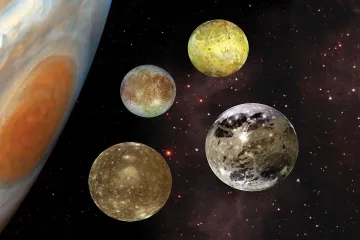
- Jupiter's Moons: Perhaps his most compelling evidence against the Earth-centric model was the discovery of four objects orbiting Jupiter. He named these the Medicean Stars (now known as the Galilean moons: Io, Europa, Ganymede, and Callisto). Their clear, independent orbits proved that not everything in the heavens revolved around the Earth.
- Phases of Venus: Galileo observed that Venus went through a complete set of phases, similar to the Moon. This phenomenon is only geometrically possible if Venus orbits the Sun, a direct confirmation of the Copernican model.
# Instrumental Shift
Galileo’s work established the refracting telescope not just as a curiosity or a novelty for finding ships, but as the indispensable tool of modern astronomy. The question of what it was called matters less than the fact that he adapted and perfected it to such a degree that it became a scientific instrument of authority. His success spurred intense competition among lens-grinders across Europe, who sought to replicate or surpass his levels of magnification and clarity. This era kicked off a technological arms race in optics.
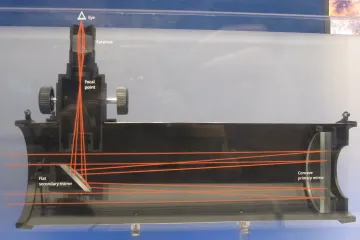
This early device, the Galilean telescope, served as the prototype for all subsequent astronomical instruments for nearly two centuries. Even after Isaac Newton developed the reflecting telescope (which uses mirrors instead of lenses to avoid some chromatic aberration issues), the fundamental act of pointing a large, long tube containing curved glass elements at the sky remained the standard established by Galileo’s initial, simple spyglass turned heavenward. His instrument was, therefore, the first astronomical telescope used for systematic research, regardless of what he chose to call it in his letters.
Related Questions
#Citations
Galilean telescope | Optics, Astronomy, Astronomer - Britannica
Galileo's telescope
Refracting telescope - Wikipedia
Galileo's Refracting Telescope | Multiwavelength Astronomy - eCUIP
Glossary term: Galilean Telescope
Galileo and the Telescope | Modeling the Cosmos | Digital Collections
Extending the Eye - Southern California's gateway to the cosmos!
The First Telescopes (Cosmology - American Institute of Physics
Refracting telescope Facts for Kids