What are two good reasons to use a ground-based telescope instead of a space telescope?
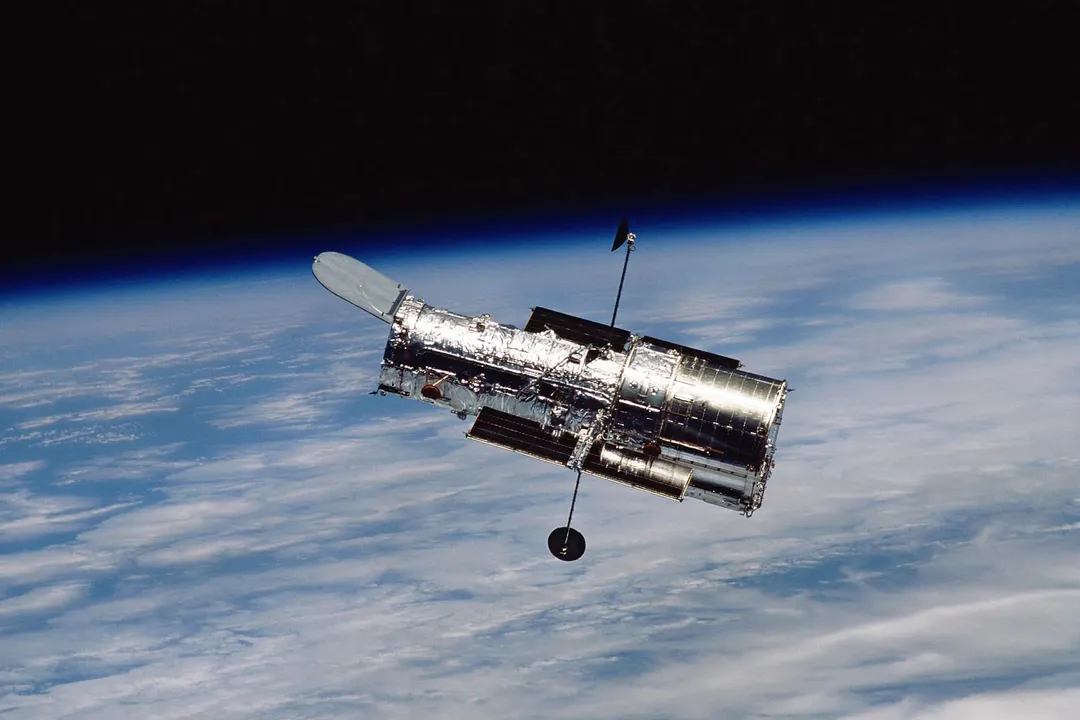
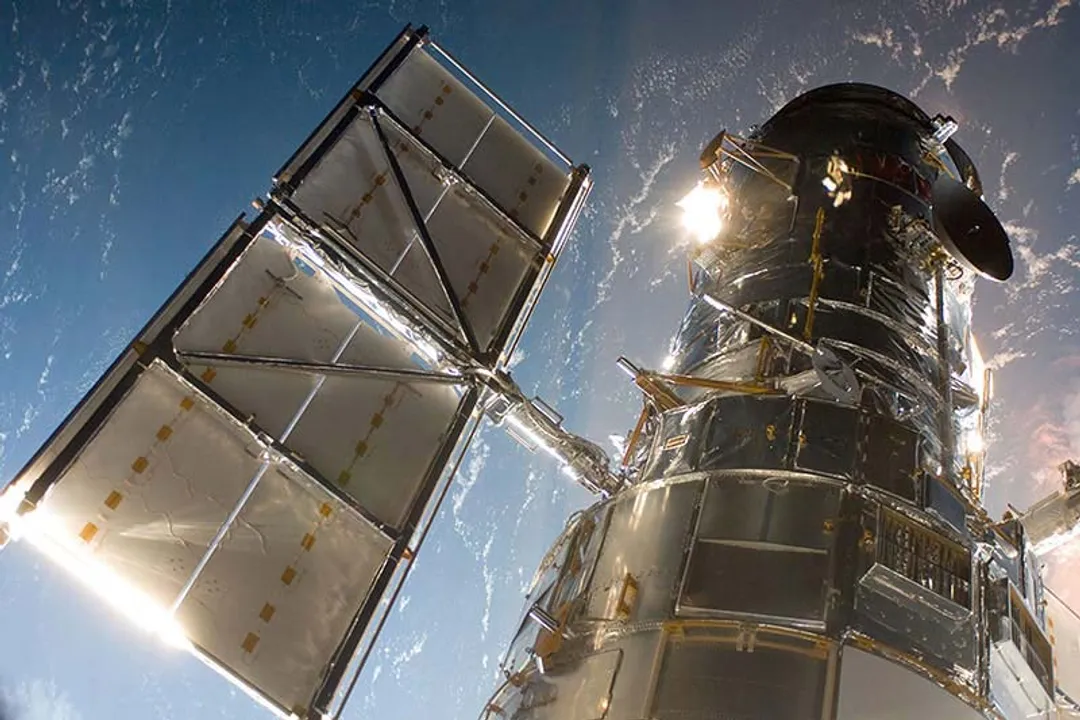
The image of a gleaming space telescope, floating silently above the clouds, often captures the public imagination as the pinnacle of astronomical research. While orbital observatories like Hubble or the James Webb Space Telescope are undeniably revolutionary, offering pristine views unmarred by Earth’s atmosphere, they are not the whole story. For every giant in orbit, there are even more colossal instruments firmly planted on mountain tops, providing astronomical data that is simply impossible or prohibitively expensive to achieve from space. There are several strong arguments for relying on ground-based astronomy, but two reasons stand out as fundamentally practical advantages: the sheer scale achievable due to cost efficiency and the absolute necessity of physical access for maintenance and upgrades.[1][3]
# Investment Scale
The primary, and perhaps most compelling, reason to favor ground-based telescopes comes down to engineering reality and budgets. Putting mass into orbit is an exercise in extreme cost inflation. Every kilogram launched incurs tremendous expense related to the rocket, fuel, launch window logistics, and the complex engineering required to shield the instrument from the harsh vacuum and radiation of space.[9]
This financial barrier dictates the physical limits of space-based mirrors. While the James Webb Space Telescope boasts a $6.5$ billion price tag for its $6.5$-meter segmented primary mirror, constructing an observatory on Earth bypasses the rocket equation entirely.[1] Because ground-based telescopes do not need to be launched, engineers can design primary mirrors that are orders of magnitude larger, built in segments assembled on the ground, and supported by massive, stable structures.
For example, the upcoming Thirty Meter Telescope (TMT) or the Giant Magellan Telescope (GMT), both under construction, plan for mirrors far exceeding $20$ meters in diameter.[1][9] A $30$-meter mirror collects approximately times more light than JWST’s mirror, allowing it to gather data from extremely faint, distant objects in a fraction of the time. Even accounting for the cost of building the massive dome and support infrastructure on a remote mountaintop, the cost per square meter of collecting area is dramatically lower for ground systems than for space missions.[3][9]
This economic reality allows for a different kind of scientific payoff. When an organization like NASA or ESA budgets for a space observatory, that budget typically covers the entire life cycle, from design to launch to initial operations. A ground-based optical telescope, costing perhaps a fraction of that figure, can be built using conventional terrestrial engineering. The savings aren't just banked; they can be reinvested into supporting instrumentation or creating entire suites of specialized ground instruments. An analysis of observatory budgets reveals that the cost disparity isn't merely proportional; it scales multiplicatively. If launching a $6$-meter aperture costs , launching a $12$-meter aperture might cost due to exponentially greater structural and shielding needs, whereas building a $12$-meter mirror on the ground might only cost compared to the $6$-meter ground mirror. This fundamental difference in scaling potential ensures that the largest light-collecting devices will always reside on the surface.[1]
# Service Access
The second critical advantage involves the simple reality of repair. The universe is a harsh environment, and even the best-engineered technology eventually degrades, malfunctions, or becomes technologically obsolete.[5] When an instrument fails on a ground-based telescope, the solution is often an engineering team climbing the dome to replace a circuit board or swap out a faulty detector unit. This physical access allows for unparalleled operational longevity.[7]
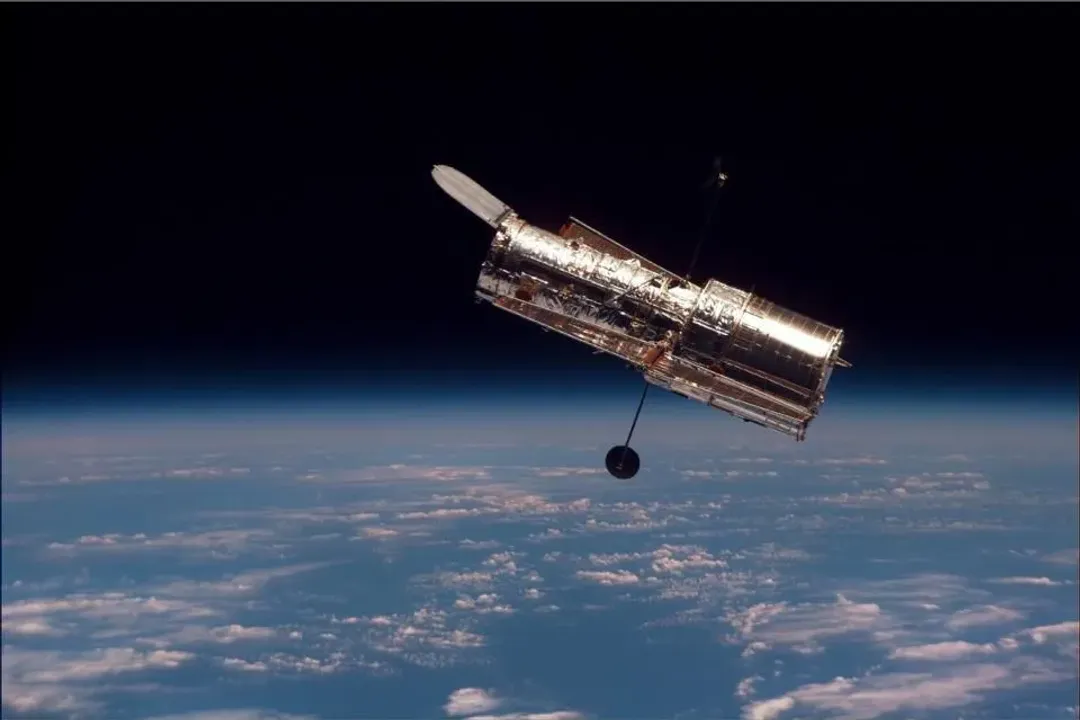
Consider the history of the Hubble Space Telescope. Its initial flaw—a spherical aberration caused by a grinding error—required the famous Space Shuttle servicing mission in $1993$ to install corrective optics. This mission proved that servicing was possible, but it was an extremely complex, multi-billion dollar undertaking reliant on the Space Shuttle fleet, which is no longer operational.[5][7] Future major servicing of new orbital telescopes, like JWST, is generally not planned due to mission complexity and cost, meaning if a critical component fails outside its planned lifespan, the observatory effectively becomes limited to its remaining functional instruments.
Ground-based observatories, however, are designed as platforms. The massive primary mirror and structure are designed to last for decades—often $50$ years or more. The sophisticated instruments that capture the light, however, can be upgraded, replaced, or completely swapped out every $10$ to $15$ years to incorporate the latest detector technology.[5] Imagine a ground telescope built today that is designed to house a $2025$-era detector. In $2035$, as near-infrared detectors become vastly more sensitive, engineers can simply remove the old package and install the new one, instantly upgrading the telescope's performance without needing a new launch vehicle or billions of dollars. This built-in obsolescence mitigation strategy ensures that these ground facilities remain at the cutting edge of sensitivity and spectral capability for generations.
This dynamic leads to a fascinating trade-off when comparing the effective operational lifetime. A space telescope might have an expected hardware life of $15-20$ years before a critical failure shuts it down permanently. A ground telescope, through periodic refurbishment of its front-end electronics and detectors, can maintain peak scientific relevance for $40-50$ years, essentially operating as a continually evolving machine tailored to the newest demands of astrophysics.
# Mitigating the Atmosphere
Of course, the main argument against ground telescopes is the Earth's atmosphere, which blurs starlight—a phenomenon known as "seeing." This turbulence distorts images, effectively limiting the resolution one can achieve, regardless of how perfect the mirror is.[4] For observations that demand absolute sharpness across the visible light spectrum, space is indeed superior.
However, modern observational techniques have drastically narrowed this gap, particularly in the infrared and at specific optical wavelengths. Adaptive Optics (AO) systems are the key innovation here.[4] These systems use extremely fast sensors to measure the atmospheric distortion hundreds or even thousands of times per second. They then deform a secondary, smaller mirror thousands of times per second to precisely counteract the atmospheric blurring.[4]
For many deep-sky science goals, especially those focused on the infrared spectrum where space telescopes excel, highly advanced AO systems on large ground-based telescopes—often situated on very dry, high mountains like Mauna Kea or the Atacama Desert—can produce images that rival or even surpass the resolution of space telescopes in that specific wavelength range, while still retaining the superior light-gathering power mentioned earlier.[4] The trade-off becomes acceptable: a very slightly blurred but deeply observed image versus a perfectly sharp but shallowly observed image from a smaller mirror.
# The Necessary Partnership

Ultimately, the scientific community does not view these two types of observatories as competitors, but as essential partners. The space telescopes often perform the initial, broad surveys, detecting the unexpected or observing targets blocked by cosmic dust that infrared-optimized ground scopes might see more clearly.[2] For instance, space telescopes might discover a population of highly redshifted, early galaxies.[2]
The ground-based giants then take over for the detailed follow-up. They use their massive light buckets to spectroscopically analyze the chemical composition, measure the rotation rates, and map the stellar populations within those newly discovered galaxies—tasks that require long exposure times and massive light collection that a smaller space telescope cannot efficiently provide. The initial discovery is the headline, but the detailed characterization—the true understanding of the physics—often requires the power that only a multi-billion dollar, many-meter mirror on Earth can deliver. This synergy between orbiting eyes and terrestrial titans ensures that astronomy continues to push the boundaries of what we know about the cosmos.[2]
#Videos
Why Do We Need Both Ground-Based and Space Telescopes?
Related Questions
#Citations
5 Reasons Why Astronomy Is Better From The Ground Than In Space
Space-Based vs. Ground-Based Telescopes: Exploring Universe
Why do we need ground based astronomy? : r/SpaceXLounge
Why Have a Telescope in Space? - NASA Science
The key differences between a space and ground telescope.
What are the advantages and disadvantages of using ground-based ...
Why Are Space Telescopes Better Than Earth-Based Telescopes?
Why Do We Need Both Ground-Based and Space Telescopes?
Why are we building larger land-based telescopes instead of ...