Why are there limits to ground-based telescopes?
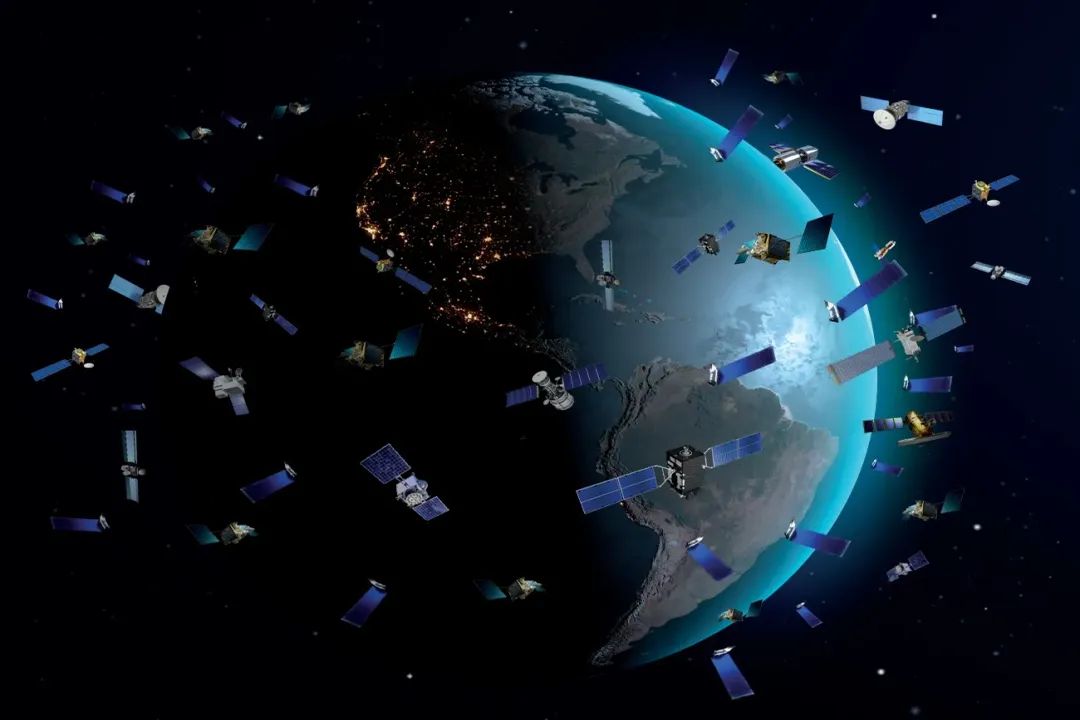
The fundamental challenges facing ground-based telescopes are not about the size of the mirror they can polish, but rather the fact that they must look through something—our own planet’s atmosphere. [2][7] While astronomers have made incredible strides in engineering colossal instruments that gather staggering amounts of light, the very air between the lens and the distant target imposes hard limits on image quality and wavelength access. [2] This means that no matter how large we build a telescope on Earth, we will always face hurdles that space-based observatories like the Hubble or James Webb bypass entirely. [2][4]
# Atmospheric Blur
The most immediate and persistent enemy of ground-based optical astronomy is atmospheric turbulence. [2][3] Starlight travels across nearly empty space for millions of years, only to be distorted in the final few miles as it plunges through the layers of air surrounding Earth. [3] This air is constantly moving, creating pockets of varying temperature and density, which act like many tiny, moving lenses that bend the incoming light randomly. [9]
This effect is known on Earth as "astronomical seeing," and it dictates the finest detail a telescope can resolve, regardless of its physical size. [8] Imagine trying to read a distant billboard while standing next to a bonfire; the heat rising off the fire constantly warps your view of the letters. [3] Similarly, the atmosphere causes a star's pinpoint image to smear into a blurry patch about one arcsecond wide on a typical night. [8]
This phenomenon sets a practical limit on angular resolution. Even if an observatory manages to construct a primary mirror many meters across—the theoretical maximum resolution, known as the diffraction limit, would be incredibly sharp. [8] However, atmospheric seeing often degrades the practical resolution by a factor of ten or more. [8] This means that a massive ground telescope might achieve the resolution currently afforded by a far smaller space telescope, simply because the air is shaking the image too much to take advantage of the giant mirror’s potential sharpness. [2] While the sheer size of the mirror collects more light—allowing us to see fainter objects—it cannot overcome the atmospheric distortion that ruins sharpness. [7]
# Wavelength Barriers
Another significant limitation is that Earth’s atmosphere acts as a selective filter, blocking out large portions of the electromagnetic spectrum. [4] Ground telescopes designed to look at visible light or near-infrared light can function, provided they are placed high and dry. [5] However, most of the ultraviolet (UV), X-ray, and far-infrared radiation emitted by celestial objects is absorbed or scattered high up in the atmosphere. [4]
For instance, observing in the X-ray spectrum is impossible from the ground; the atmosphere absorbs these high-energy photons completely. [4] This necessitates space missions like the Chandra X-ray Observatory. [4] Similarly, the James Webb Space Telescope (JWST) was positioned far from Earth to observe primarily in the mid-to-near infrared. [4] While some infrared light penetrates to the surface, water vapor in the atmosphere strongly absorbs many critical infrared wavelengths, necessitating very cold, high-altitude, and extremely arid locations for ground-based infrared work. [5] The air is simply opaque to large swathes of astronomical information. [4]
# Site Constraints
To minimize these atmospheric and absorption problems, selecting the best possible location is paramount for ground-based observatories. [5] Observatories are typically built on very high mountains in extremely dry regions, often deserts, such as in Chile or Hawaii. [5] Going higher reduces the column of air light must pass through, thinning the atmospheric effects. [5] Dryness is crucial for infrared studies because water vapor is a strong infrared absorber. [5]
However, even the most perfect location cannot eliminate all terrestrial interference. Light pollution from nearby cities casts an artificial glow onto the night sky, drastically reducing the contrast between faint astronomical sources and the background. [2] Furthermore, ground-based facilities are inherently subject to the day/night cycle and bad weather. Cloudy nights, high humidity, or high winds can shut down observation schedules entirely, something a telescope orbiting above the weather never has to contend with. [2]
If we consider the combined effect of these site issues, we see a practical compromise. For example, a telescope situated at a prime site might only achieve 100 clear, high-quality observing nights per year, whereas a space telescope is available nearly 24/7, weather permitting [Implied comparison based on source data on site limitations and space accessibility].
# Resolving The Paradox
Given these profound limitations—the blurring air, the blocked light, and the weather dependency—a natural question arises: why continue to invest billions in building increasingly larger ground-based telescopes, like the Extremely Large Telescope (ELT) project, instead of launching even bigger ones into space? [6]
The answer lies in practical engineering and sheer scale. The cost and complexity of launching massive primary mirrors into orbit are currently prohibitive. [6] Launch vehicle capabilities dictate the size of any payload sent skyward. A 20-meter class mirror, which ground-based projects are now achieving, would be impossible to launch intact, or even as a deployable structure, using current rocket technology. [6] Ground construction allows engineers to create monolithic or segmented mirrors on a scale simply not achievable with current aerospace logistics. [6]
Another key differentiator is serviceability. If a mirror develops a flaw, or if technology advances significantly, a ground telescope can be repaired, upgraded, or even completely refurbished over its operational lifetime. [6] Astronauts cannot visit a telescope at the L2 Lagrange point to swap out a degraded component; once launched, a space telescope's hardware is essentially fixed until its mission ends. [6] This longevity and adaptability make the massive investment in ground infrastructure worthwhile, even with atmospheric handicaps. [6]
# Fighting The Air
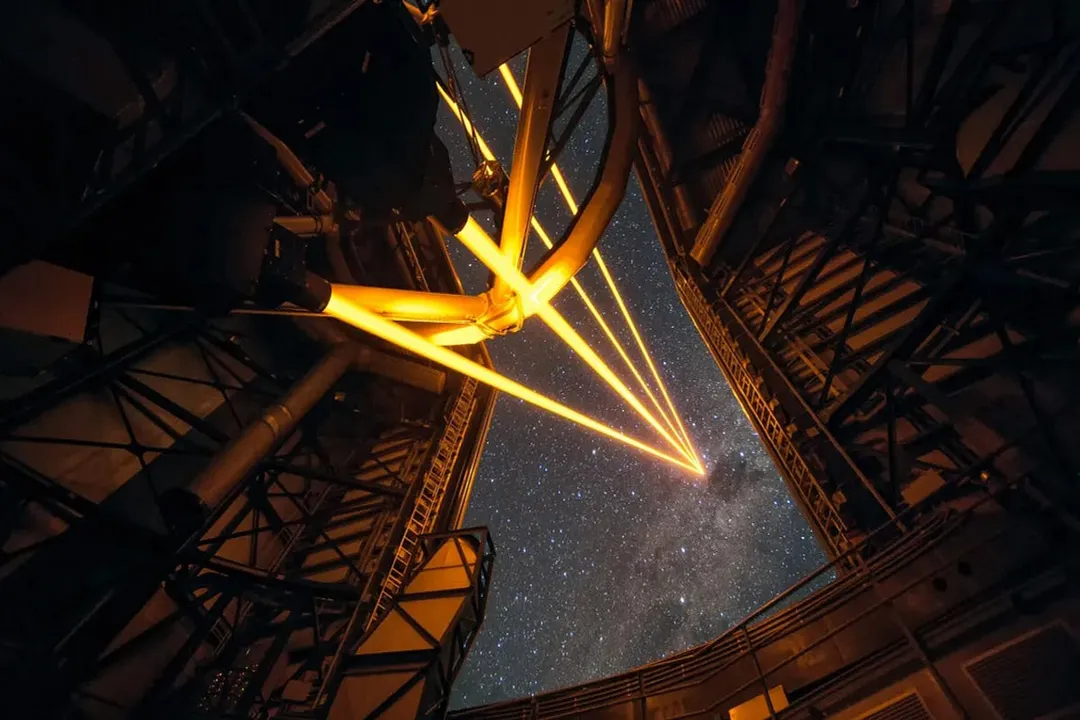
Since the primary optical limitation is the atmosphere, the major technological countermeasure developed by ground-based astronomy is Adaptive Optics (AO). [9] AO systems attempt to correct the blurring in real-time, typically achieving this correction thousands of times per second. [9]
This process involves redirecting the incoming starlight to a wave-front sensor, which measures exactly how the atmosphere has distorted the light wavefront. [9] That error signal is then fed immediately to a deformable mirror, which has thousands of tiny actuators that push and pull its surface to reverse the distortion. [9] To work effectively, the system needs a reference point—either a natural, relatively bright star near the target object, or a powerful laser beamed into the upper atmosphere to create an artificial 'guide star'. [9] When successful, AO drastically sharpens the image, often pushing the resolution of a large ground telescope close to its theoretical diffraction limit for the visible spectrum. [9]
While AO is revolutionary for visible light observations, it does not solve the wavelength blockage problem. [4] It allows a ground telescope to see sharply through the air, but it doesn't allow it to see through the air in parts of the spectrum the atmosphere still blocks entirely, like X-rays or much of the mid-infrared. [4] Thus, the ultimate strategy for modern astronomy is a partnership: massive light buckets on the ground for sheer light-gathering power and serviceability, complemented by space telescopes for clarity in the blocked wavelengths. [6][7]
The continued drive to build larger ground-based telescopes, even with the atmospheric caveat, shows that light collection remains essential for studying the faintest and most distant objects in the universe. [7] However, for the absolute sharpest view of the cosmos in the visible spectrum, or to access those infrared and UV secrets hidden by our air, we remain dependent on placing our instruments in orbit. [4] The limits are set not by our inability to polish glass, but by the density and movement of the air just above our heads. [2][3]
Related Questions
#Citations
Limitations of Ground-based Telescopes | Multiwavelength Astronomy
What are the limitations of using ground-based optical telescopes for ...
Eli5 why is there no telescope that could see people walk ... - Reddit
Are there limits to scaling up telescopes? - Facebook
Topic:ground-based telescopes - Institutional Knowledge Map (KMap)
Why are we building larger land-based telescopes instead of ...
Ask Ethan: Do we still need ground-based astronomy? - Big Think
Theoretical limits of telescopes - Physics, Space Science and Theories
How ground-based astronomers overcome Earth's atmosphere |