What was the problem with early telescopes?
The first true telescopes that appeared in the early 17th century were monumental inventions, capable of turning simple curiosity into genuine astronomical discovery. Yet, for anyone hoping to see the cosmos with crisp detail, these early instruments were deeply flawed. They weren't simply weak; they were fundamentally constrained by the very nature of the glass and simple shapes used to bend light. Before we could map galaxies or photograph nebulae, astronomers were wrestling with lenses that smeared color and distorted features, turning what should have been sharp edges into fuzzy, chromatic messes.[1][8]
# Conception Claims
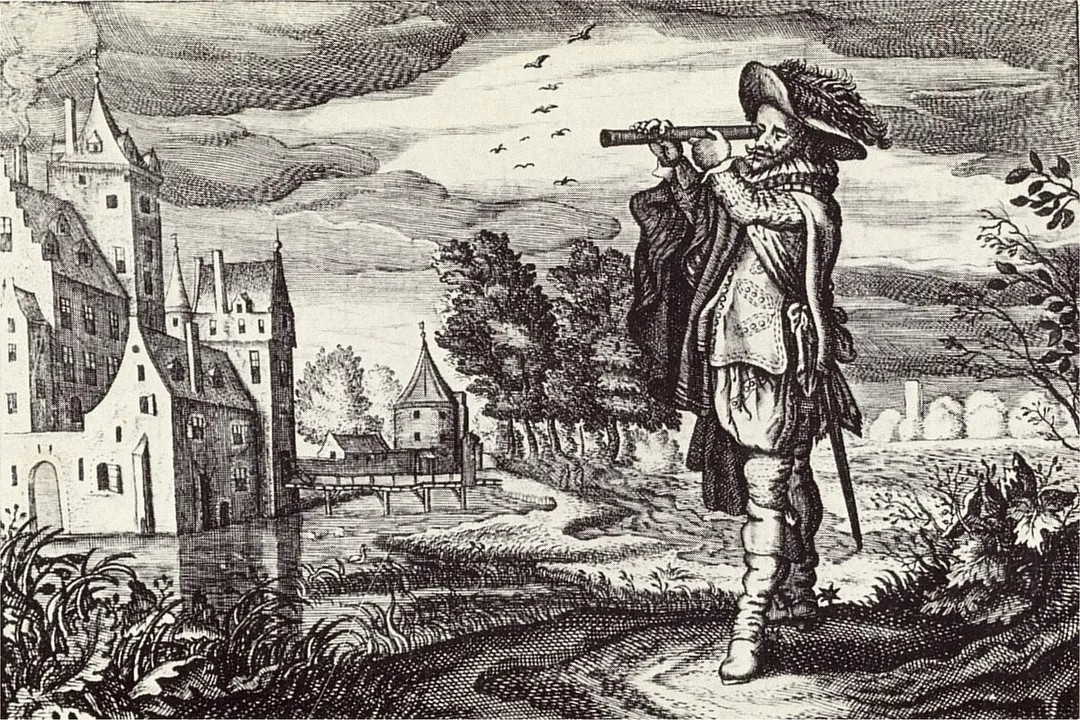
The actual moment of invention remains debated, which is typical for technologies emerging from workshops rather than formal laboratories. Around 1608, claims for the patenting of a spyglass arose almost simultaneously in the Netherlands. Names frequently associated with the earliest practical optical tubes include Hans Lippershey and Zacharias Janssen. [3] It is important to note that these initial devices were not designed primarily for astronomy; they were military or nautical aids intended for terrestrial observation, often providing only modest magnification, perhaps three to five times power. [3][9]
The delay in their arrival is a subtle problem in itself. Why did it take until the early 1600s for someone to combine two known lenses—a convex objective and a concave eyepiece—into a functional instrument? The answer lies in the necessary prerequisite: reliable glassmaking and precise lens grinding. [5] An instrument magnifying or can tolerate significant imperfections in the glass surface. However, pushing that magnification beyond a certain threshold—say, past or —instantly exposes every minute error in curvature or glass consistency. This suggests that the inability to produce consistently good lenses, rather than the conceptual blueprint for the telescope itself, was the primary hurdle preventing its earlier appearance. [5]
# Galileo's Leap
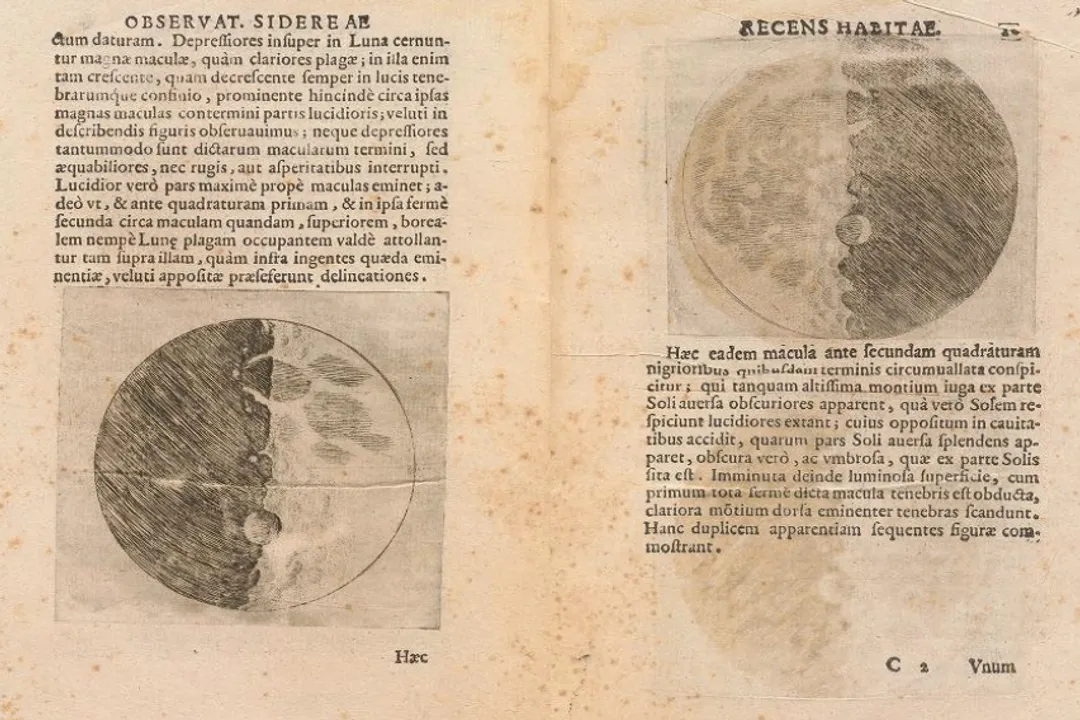
When Galileo Galilei heard of the Dutch spyglass, he didn't just replicate it; he improved it rapidly, recognizing its potential for the heavens. [4] Within a year, Galileo had refined his designs from a instrument to one capable of magnifying around . [6][9] This leap allowed him to observe the mountains on the Moon, the phases of Venus, and the moons orbiting Jupiter—discoveries that shattered the ancient worldview.
However, even Galileo’s best instruments suffered from the optical limitations inherent in the construction method he used. He was working within the confines of refracting telescopes, which use lenses to gather and focus light. These early refractors faced two major, unavoidable enemies of clarity that plagued every astronomer for over a century.[1]
# Lens Imperfections
The core problem with these early designs stemmed from the way simple, single lenses interact with light. When white light passes through a lens, it splits into its constituent colors because each color bends (refracts) at a slightly different angle. This phenomenon, known as dispersion, causes significant visual artifacts in any telescope that relies solely on lenses for light focusing. [1]
# Color Spillage
This dispersion manifests as chromatic aberration, which is perhaps the most infamous fault of early refractors. [1][8] When observing a bright object, like Jupiter or the crescent Moon, the edges of the image are surrounded by halos of color—often a reddish or purplish fringe. Light rays of different colors do not converge on the same focal point. This means that an observer cannot focus sharply on both the red and the blue components of the light simultaneously. [8] The result is an image that is inherently soft and marred by false color, severely limiting the ability to discern fine detail, such as the Great Red Spot on Jupiter.
# Shape Distortion
The second major issue was spherical aberration. Early lens makers, lacking advanced grinding techniques or mathematical understanding, typically shaped their lenses into simple spherical curves. [1] For a lens to focus light perfectly onto a single point, its surface should ideally be a specific, non-spherical curve called an asphere. When light rays strike the edges of a spherical lens, they focus at a different point than the rays striking the center. This caused the resulting image to be blurry or smeared, a distortion that increased as the lens diameter grew larger relative to its focal length. [1][8]
Galileo and others attempted to mitigate these issues through empirical trial and error, often adjusting the physical placement of the lenses by tiny amounts, but they could not eliminate the fundamental physics at play.[4]
# Performance Limits
Beyond the sheer optical flaws, the sheer performance metrics of these instruments were limiting. Galileo’s best creations only achieved magnifications up to about . [6] While this was revolutionary for its time, it contrasts sharply with modern amateur equipment which routinely achieves magnifications over with superior clarity.
Furthermore, the field of view—how much of the sky the observer could see at once through the eyepiece—was extremely narrow. [9] Imagine trying to locate a specific feature on Jupiter when you can only see a tiny patch of the sky; you have to painstakingly move the tube to scan the area. This narrow window made extended observation tedious and the initial process of finding celestial objects challenging, especially for targets not immediately obvious like the Moon or Jupiter. [9]
When Galileo looked at the Pleiades cluster, for instance, he saw only a handful of stars through his telescope, whereas naked-eye observation under dark skies reveals many more. This wasn't because his telescope couldn't gather enough light—it was, after all, a superior light-gatherer to the eye—but because the optical defects blurred the faint light of the distant stars into invisibility or smeared them across the tiny field of view. [9] The problem wasn't one of sensitivity (light gathering) as much as it was one of fidelity (image quality).
# Seeking Clarity
Faced with unavoidable chromatic and spherical aberration, the only viable solution available to 17th-century opticians was to change the geometry of the light path significantly. They couldn't eliminate the problem by using better glass; they had to make the tube longer. [1]
The logical, brute-force method to reduce spherical aberration was to increase the focal length dramatically. If the objective lens had an extremely long focal length, the spherical curve approximated the necessary aspheric curve much better for the light rays hitting the edges. [1] This led to the era of the aerial telescope.
These instruments featured objectives mounted at the top of incredibly long poles or masts, sometimes reaching lengths of over 150 feet (about 45 meters). [1] The observer would sit near the eyepiece, which was positioned far down the line, sometimes requiring complex mirror systems or helper observers to adjust alignment. While these monstrosities offered the sharpest views available at the time—because the aberrations were minimized by length—they were wildly impractical and expensive to construct and maintain. [1] The long focal length also compounded the narrow field of view problem, as the tiny image circle had to be precisely located by the observer. [9]
It took the later work of scientists like Christiaan Huygens and the invention of the achromatic lens (combining different types of glass, like flint and crown glass, to cancel out chromatic aberration) in the mid-18th century to finally overcome these elemental design constraints. [1] The achromatic lens, invented by Chester Moore Hall and later popularized by John Dollond, was the true successor to Galileo’s simple design, allowing for shorter, clearer instruments that finally separated the function of light gathering from the function of color correction. [1]
Ultimately, the primary problem with early telescopes was that they were conceptually sound but physically primitive. They worked just well enough to reveal the universe was not what people thought it was, but they were too flawed to reveal the universe with the necessary precision. The early astronomer was forced to battle against every ray of light, struggling to separate the actual appearance of a planet from the optical noise created by their own imperfect tools.[8]
#Videos
What Were The Limitations Of Galileo's Early Telescopic Technology?
Related Questions
#Citations
History of the telescope - Wikipedia
Hubble's Mirror Flaw - NASA Science
The telescope – claims and counterclaims
Galileo and the Telescope | Modeling the Cosmos | Digital Collections
Telescope | Smith | Encyclopedia of the History of Science
How come people didn't invent telescopes sooner? - Quora
Galileo's telescopes Serious errors and inconsistencies in the ...
What Were The Limitations Of Galileo's Early Telescopic Technology?
How powerful were telescopes used by Galileo Galilei and Giovanni ...