What impact did the telescope have on humanity?
The act of looking up has always defined humanity, but for millennia, what we saw was limited by the constraints of our own eyes. The arrival of the telescope—a relatively simple arrangement of lenses—shattered those constraints, rewriting our understanding of the universe and our place within it in ways that science, philosophy, and culture are still processing today. It was more than just an instrument; it was the key that unlocked a physical reality vastly larger and more complex than previously imagined, forcing a complete revision of cosmological thought.
# Early Lenses
The invention itself is often credited to spectacle makers in the early 17th century in the Netherlands, though the precise origin remains debated. However, the true revolution began when Galileo Galilei turned the device skyward in . He didn't invent the telescope, but he rapidly improved its magnification and, crucially, became the first to systematically direct it toward the heavens for scientific scrutiny. This shift from a curiosity or military aid to a scientific instrument marks the device’s first major impact.
# Celestial Proofs

Galileo's initial observations delivered immediate and profound evidence against the long-held Aristotelian and Ptolemaic view of a perfect, unchanging cosmos centered on Earth. He saw mountains and craters on the Moon, proving celestial bodies were imperfect, much like Earth. Even more damaging to the established order was his discovery of Jupiter's four largest moons orbiting Jupiter, not Earth. If Jupiter had its own celestial system, the idea that everything orbited Earth crumbled. Furthermore, observing the phases of Venus provided direct observational proof that Venus orbited the Sun, not the Earth, lending powerful, visible support to the Copernican, or heliocentric, model. These were not abstract mathematical arguments; they were direct visual confirmations that forced a paradigm shift in how people perceived the physical structure of the universe.
The revelations continued as astronomers observed sunspots, indicating the Sun itself was not an unblemished celestial sphere, and the resolution of the Milky Way into countless individual stars, suddenly expanding the perceived boundaries of the known universe. It’s fascinating to consider that the initial shock of seeing Jupiter's moons was akin to receiving the first high-resolution images from a modern space telescope—both events fundamentally altered the perceived structure of reality, but the former relied on simple visual confirmation while the latter requires processing petabytes of data to even begin interpretation.

# Vastness Revealed
Once the telescope demonstrated that the heavens were populated by more objects than the eye could count, the next great impact was a radical reassessment of scale. Before, the universe felt relatively small, contained within the celestial spheres. Suddenly, the universe became deep, seemingly infinite, and populated with objects whose distances were incomprehensible. This expansion of physical space carried a heavy philosophical weight, suggesting that humanity's central importance was severely diminished.
The progression of optical technology, from Galileo’s simple refractors to the massive mirrors of modern ground-based observatories, has been a continuous pursuit of piercing that cosmic veil further and further. The very concept of "astronomy" transitioned into astrophysics—the study of the physical properties, chemistry, and dynamics of celestial objects—because the telescope provided the data necessary to ask how these distant things worked, not just where they were.
# Space Observation
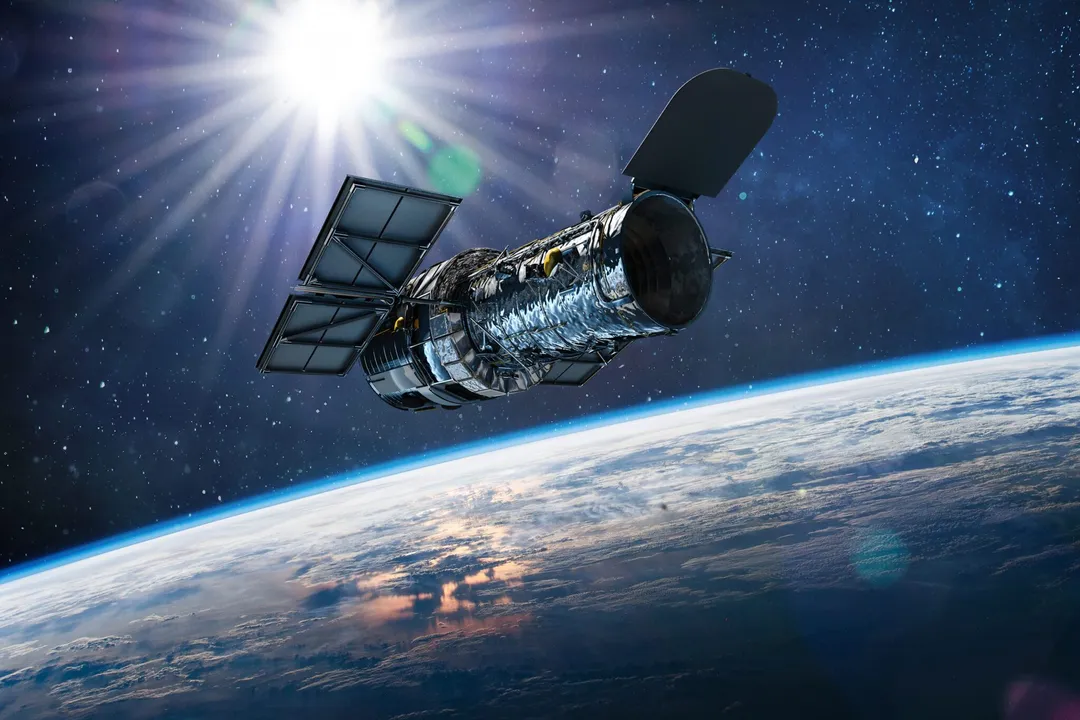
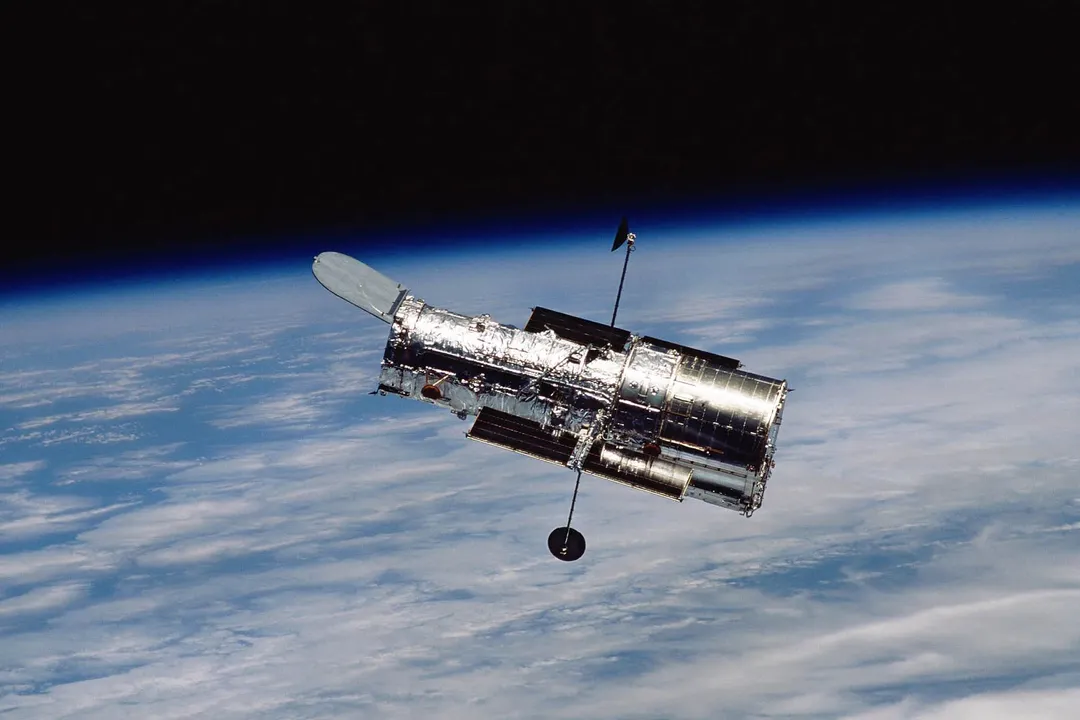
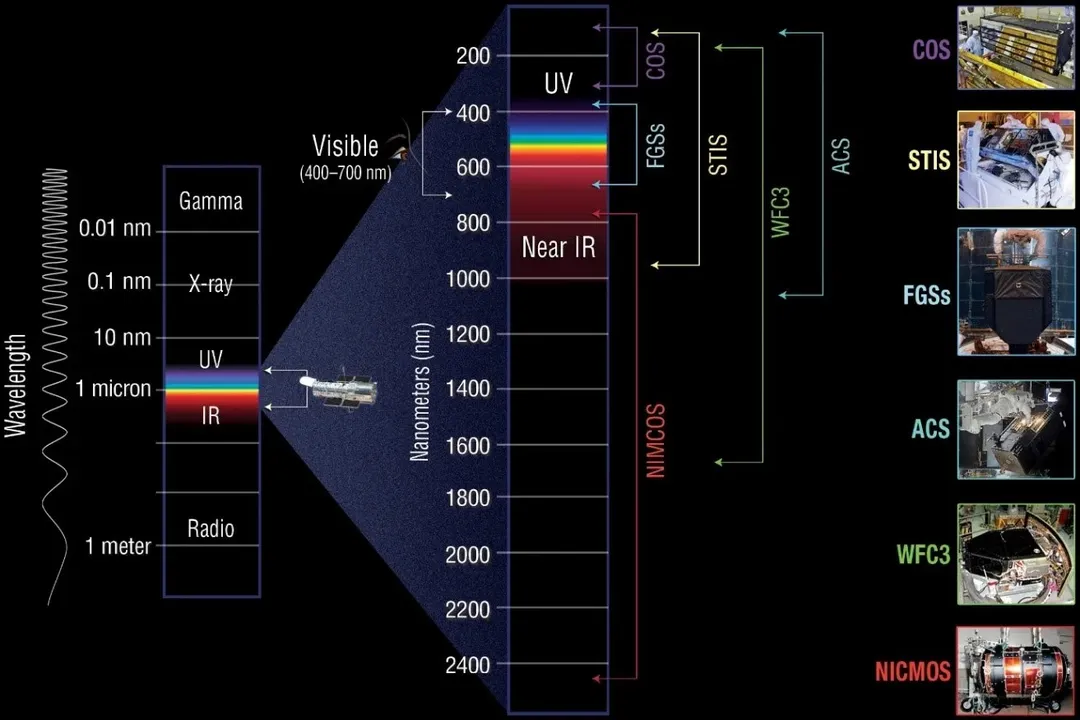
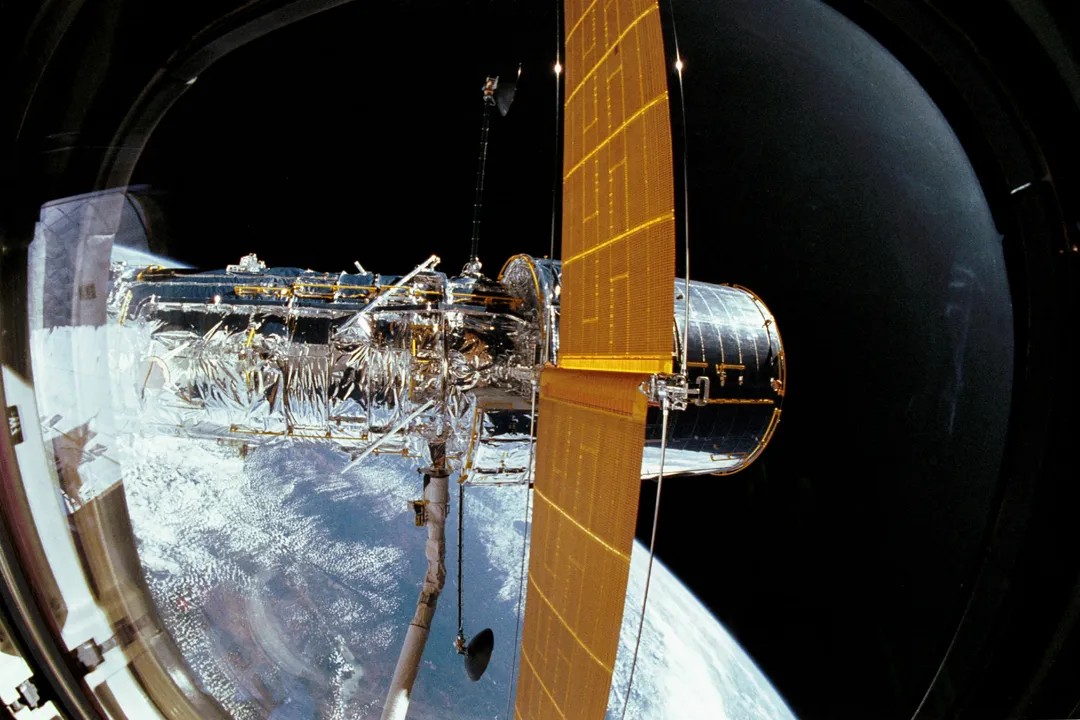
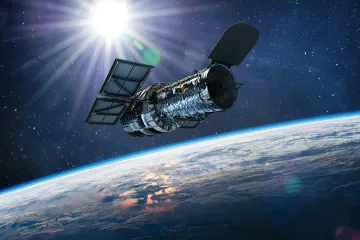
The limitations of observing from Earth—atmospheric distortion, light pollution, and absorption of certain wavelengths—eventually led to the next great leap: placing telescopes into space. The Hubble Space Telescope (HST), launched in , is perhaps the most famous example of this evolution. By operating above the atmosphere, Hubble provided clarity unavailable to even the largest ground-based instruments, allowing scientists to study phenomena with unprecedented sharpness. Missions like Hubble and the Chandra X-ray Observatory demonstrate that the telescope's impact is not a singular event but an ongoing technological race to see fainter, smaller, and more distant objects across the entire electromagnetic spectrum. For instance, the ability of space-based instruments to observe in the infrared or ultraviolet allows scientists to study objects, like very young stars or the dusty remnants of supernova explosions, that are otherwise obscured from ground view.
# Philosophical Repercussions
The most enduring legacy of the telescope might be its effect on the human ego and our self-perception. When the Earth was revealed to be merely one planet orbiting one star among many, it triggered a profound cultural and religious reckoning. The Earth was decentered; humanity was no longer in the privileged location at the center of creation. This shift required societies to build new intellectual structures to accommodate a cosmos that was vast, indifferent, and governed by understandable physical laws rather than divine placement.
This change in perspective is difficult to overstate. Before the telescope, the available knowledge confirmed a familiar, manageable world. After, the world became one of limitless possibility and potential isolation. A practical side effect of this intellectual upheaval was a democratization of discovery, even if initially it was dangerous. While Galileo faced condemnation for his views, the very fact that the observations were public eventually allowed astronomy to move from the purview of elite scholars and theologians into a field accessible to dedicated amateurs. The fact that nearly anyone today can purchase a modest reflecting telescope and confirm the rings of Saturn or the moons of Jupiter is a direct cultural inheritance from that initial, dangerous observation made by Galileo centuries ago. This accessibility, born from a technology once capable of upending empires, is an interesting contrast to the multi-billion dollar infrastructure required for modern deep-field imaging.
# Building New Knowledge
The telescope didn't just confirm old theories; it created entirely new scientific disciplines by providing a steady stream of novel data. The ability to observe distant galaxies, measure their recession speeds, and study the composition of stars through spectroscopy—all developments built upon the foundation of the optical telescope—led directly to the modern understanding of the Big Bang, stellar evolution, and galactic structure.
For example, the development of X-ray telescopes like Chandra allows for the study of extremely energetic phenomena, such as material falling into black holes or the hot gas in galaxy clusters, phenomena entirely invisible to the optical eye. These instruments function as specialized telescopes tuned to different parts of the electromagnetic spectrum, each revealing a different layer of the universe's physical processes, yet all trace their ancestry back to the simple act of magnifying distant light.
The instrument fundamentally altered the scientific method by proving the absolute necessity of empirical, repeatable observation over pure deduction regarding the natural world. It institutionalized the idea that reality can, and often does, defy intuition, provided the tools exist to measure it accurately. The telescope thus stands as one of the primary technological catalysts for the transition from the early modern period to the scientific age we inhabit today, permanently altering humanity’s relationship with time, space, and existence itself.
Related Questions
#Citations
Hubble's Impacts & Benefits - NASA Science
How the Telescope Revolutionized Our World and Ignited…
Telescopes: The Long Lens of History - Chicago Humanities Festival
Q and A of the Day: How Have Telescopes Changed Things?
The Telescope – Science, Technology, & Society: A Student-Led ...
The Telescope – Science Technology and Society a Student Led ...
How the telescope became our window into the universe
Telescope Tales - Discovery Place Science Museum