How did the telescope impact the world?
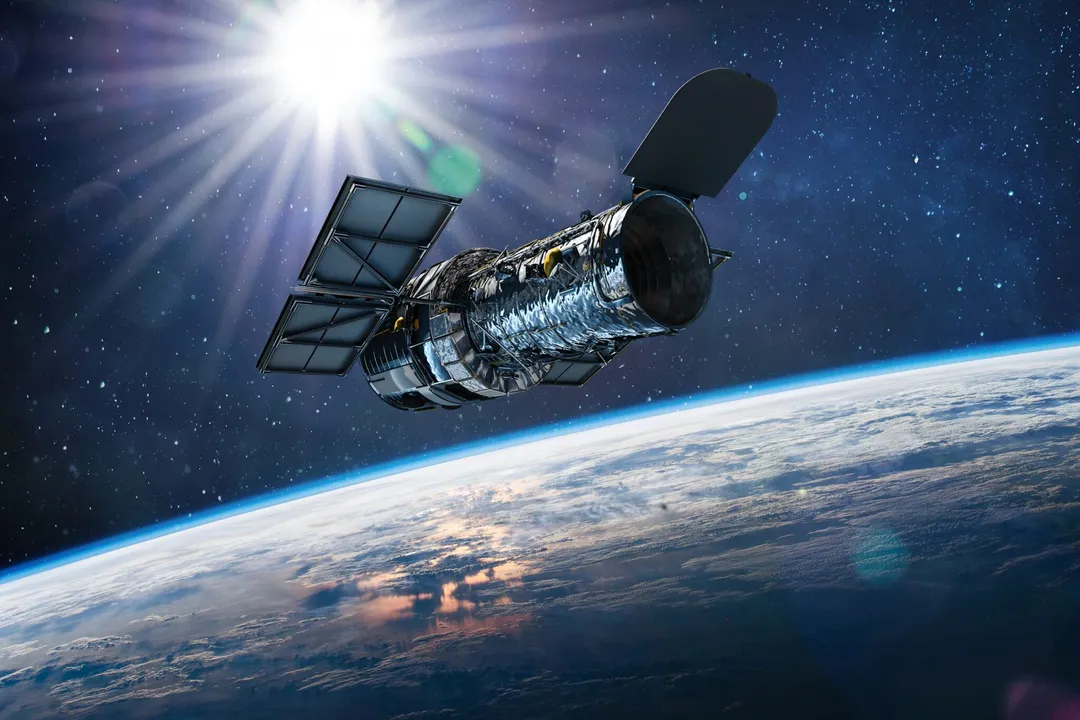
The invention of the telescope did far more than merely bring distant objects closer; it fundamentally fractured the way humanity perceived its place in the universe, acting as the primary catalyst for a profound scientific and philosophical reorientation. When Galileo first turned his modified spyglass skyward around 1609 and 1610, he was not just looking at stars; he was dismantling a millennia-old worldview that placed Earth firmly at the center of a perfect, crystalline cosmos. The immediate impact was a clash between empirical observation and established doctrine, marking a clear demarcation point in history.
# Cosmic Shift
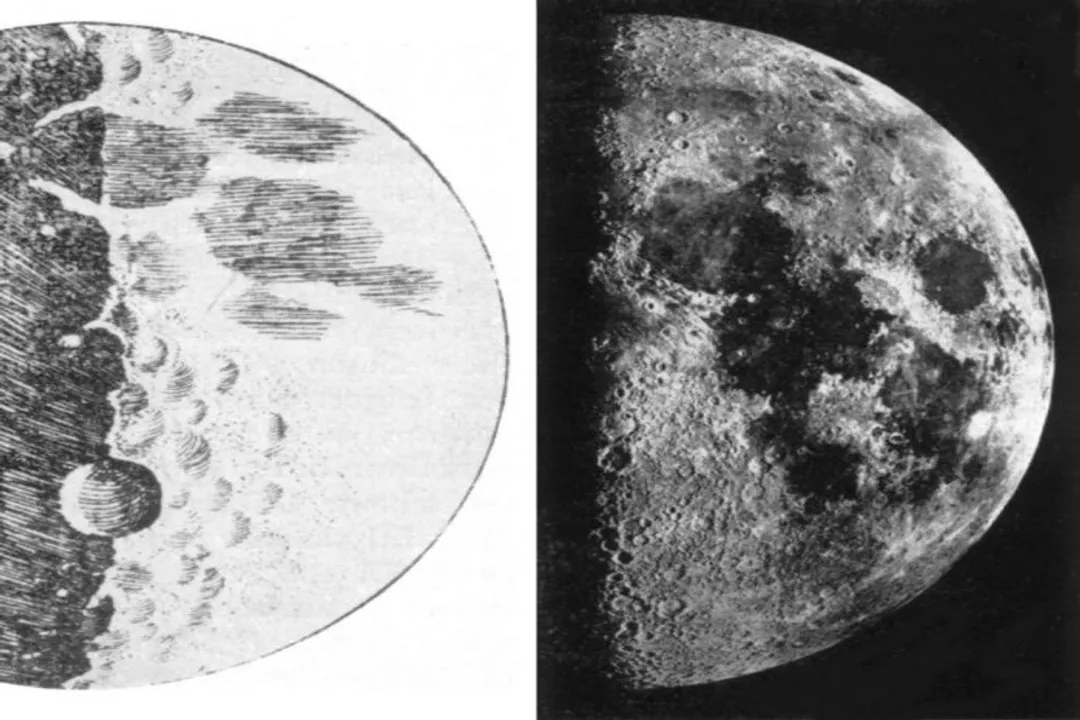
The first and most dramatic consequence of the telescope’s application to the heavens was the verification of the Copernican model. Prior to this, the prevailing Ptolemaic system, supported by Aristotelian physics, posited that celestial bodies orbited a stationary Earth in perfect circles. Galileo's direct observations shattered this comforting certainty. He saw that the Moon was not a perfectly smooth, ethereal sphere but was scarred with mountains and valleys, much like Earth. Even more disruptive was the discovery of four moons orbiting Jupiter. This demonstrated clearly that not everything revolved around the Earth; there was another center of motion in the heavens. Later observations, such as the clear demonstration of Venus exhibiting phases akin to the Moon, provided further visual proof that Venus orbited the Sun, not the Earth.
This evidence was not just academic; it was revolutionary. The telescope provided a physical, repeatable demonstration that the heavens were mutable and that humanity occupied a less central position than previously believed. The old cosmos was finite and neat; the new one, suddenly revealed, suggested staggering scale and complexity. This shift forced intellectuals to reconsider epistemology itself—how they knew things—moving reliance away from ancient authority and toward direct, systematic observation.
# Instrument Design
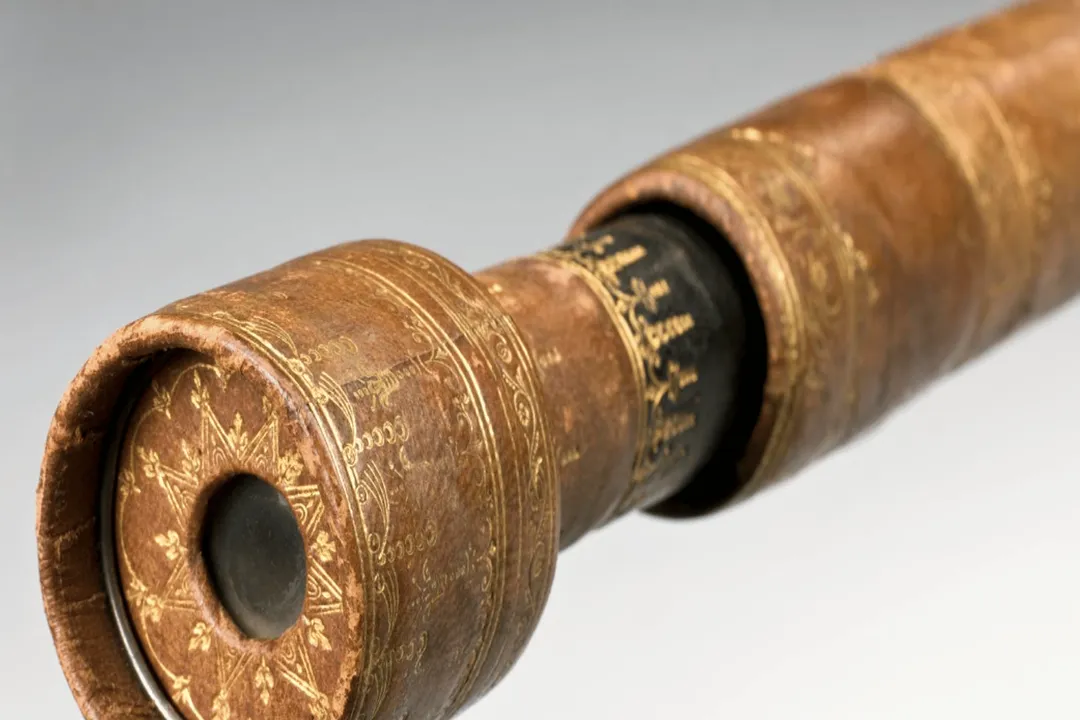
While Galileo’s refracting telescope kicked off the revolution, its early designs were inherently flawed, illustrating that technological limitation often restricts scientific progress. Refracting telescopes, which use lenses to bend light to a focal point, suffered from chromatic aberration. This optical defect caused different colors of light to focus at slightly different points, resulting in fuzzy images surrounded by colored fringes, making precise measurement difficult.
A critical technological advance arrived with Sir Isaac Newton in 1668. He designed and built the first practical reflecting telescope, which utilized mirrors instead of lenses to focus the incoming light. Because mirrors focus all colors of light to the same point, the reflecting design eliminated chromatic aberration, leading to much sharper and clearer views of celestial objects. This improvement in instrument quality was not just an engineering footnote; it allowed for more detailed charting of objects like nebulae and star clusters, setting the stage for deeper cataloging and classification of the universe. It showed that advancing the tool was inseparable from advancing the understanding.
It is fascinating to consider how this early technological race played out. Galileo’s initial instrument likely offered magnifications of around 20x or 30x. By the time Newton presented his reflector, the goal had shifted from mere magnification to achieving color fidelity and image sharpness. This mirrors modern astronomy, where simply making an optical telescope bigger is less impactful than developing instruments that capture light outside the visible spectrum, like X-rays or radio waves, to reveal entirely new physical processes.
# New Windows
The impact of the telescope did not end with visible light or even with the refinement of the reflector. The most significant modern expansion of the telescope's influence lies in its evolution into instruments sensitive to the entire electromagnetic spectrum. The universe speaks in many languages—radio waves, infrared, ultraviolet, X-rays, and gamma rays—and the optical telescope could only hear a tiny sliver of that conversation.
Telescopes like the Chandra X-ray Observatory do not look for visible light; they detect high-energy photons emitted by extremely violent cosmic events, such as matter spiraling into black holes or the superheated remnants of exploding stars. Similarly, radio telescopes detect long-wavelength radiation from phenomena like quasars or pulsars, which are completely invisible to the naked eye or even the best optical lens.
This diversification has fundamentally changed our perception of cosmic events. We now know the universe is far more energetic and chaotic than Galileo could have imagined. What appears as a dark patch of sky to a visible-light telescope might be bursting with radio signals or blazing with X-ray emissions. The concept of "seeing" the universe has become synonymous with measuring its full electromagnetic output.
# Cultural Resonance
The effect of the telescope rippled far outside the observatory walls and into the broader culture and intellectual life of the time, creating an environment where skepticism and new ideas could flourish. When the physical reality of the heavens was proven to be radically different from accepted dogma, it created a space for questioning other accepted realities on Earth, feeding the spirit of the Scientific Revolution.
One subtle, yet profound, impact was the psychological effect of scale. Before the telescope, the cosmos felt immediate, almost personal; the Moon was just a short hop away, residing in a perfect, immutable sphere above the corrupted terrestrial realm. The telescope imposed a new sense of cosmic distance. The realization that our Earth was simply one small body orbiting one average star among countless others introduced a permanent sense of humility and wonder regarding our location. This realization continues to inform literature, art, and philosophical inquiry today; it’s the core of what many people seek when they first look through an eyepiece—a direct confrontation with the vastness.
Furthermore, the modern astronomical endeavor, built upon the telescope's foundation, has become inherently collaborative in a way that was impossible in the early 17th century. While Galileo worked largely alone or with a few immediate colleagues, today’s major observatories require international teams, massive funding, and shared datasets. An original insight here relates to the democratization paradox of astronomical knowledge: while the tools themselves—like the James Webb Space Telescope—are accessible only to massive governmental or academic consortiums, the data they collect are often made public rapidly. This allows a university student or an advanced amateur to participate in analyzing the same raw signals as the principal investigator, a feedback loop Galileo could never have experienced. The technology centralizes production, but the scientific output decentralizes analysis.
# Key Contributions Summarized
The telescope’s impact can be distilled into several key areas where it shifted human understanding and capability:
| Area of Impact | Pre-Telescope Understanding | Post-Telescope Discovery | Source of Change |
|---|---|---|---|
| Cosmology | Geocentric, Earth at the center | Heliocentric evidence confirmed | Galileo's observations of Jupiter's moons and Venus's phases |
| Celestial Bodies | Perfect, ethereal spheres | Imperfect, physical worlds (Moon mountains) | Direct visual confirmation of lunar topography |
| Optical Science | Refraction limited by chromatic aberration | Reflection provided clearer focus | Newton's development of the reflecting telescope |
| Astrophysics | Limited to visible light | Access to X-ray, radio, and infrared spectra | Development of specialized instruments like Chandra |
The legacy of the telescope is not just about what it shows us, but how it trained us to look. It established the primacy of observation, forcing a necessary break from tradition when that tradition conflicted with evidence gathered through improved technology. Every subsequent technological leap in astronomy, from the giant reflectors to the space-based observatories that look for gravitational waves alongside light, owes its existence to that initial, terrifying glimpse of a non-Earth-centered universe. It remains the ultimate tool for confronting the unknown, perpetually redefining the boundary between what we think we know and what is.
#Videos
How the Telescope Changed Everything We Know About the Universe
Related Questions
#Citations
Galileo and the Telescope | Modeling the Cosmos | Digital Collections
[PDF] - How Telescopes Changed our Understanding of our Universe
How the Telescope Revolutionized Our World and Ignited…
Telescopes | Center for Astrophysics | Harvard & Smithsonian
The Telescope & the Scientific Revolution
Q and A of the Day: How Have Telescopes Changed Things?
The Telescope – Science, Technology, & Society: A Student-Led ...
How Newton's Telescope Changed the World - Insight Observatory
How the Telescope Changed Everything We Know About the Universe
Telescope Tales - Discovery Place Science Museum